 Skip to content

Updated June 2026: Clarified K20A and K20Z variants, corrected factory aspiration and output details, and added practical guidance for choosing between them.
Two widely discussed Honda K-series engine families are the K20A and K20Z. They share the same basic K-series architecture, but differences in cylinder heads, compression ratios, intake and exhaust layouts, electronics, and vehicle applications can make them feel very different.
So which one is better, the K20A or the K20Z?
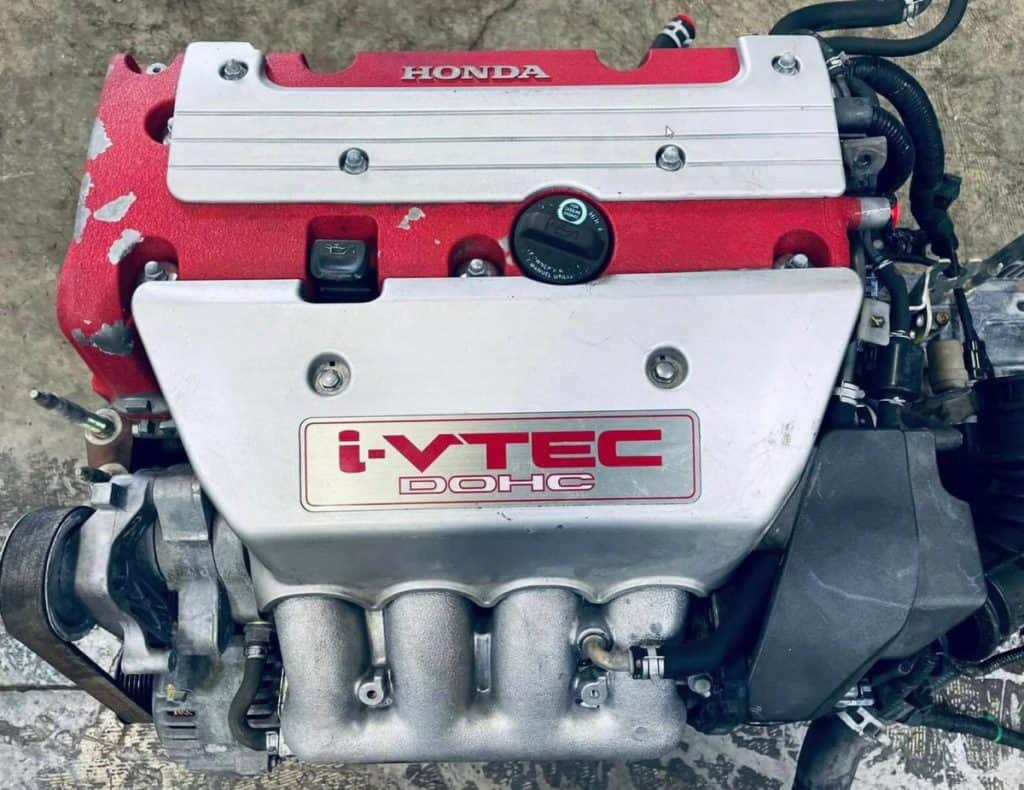
Choosing which engine would work best for you requires studying how they differ and what they can do for your vehicle. Don’t let some reading and a few math problems scare you off!
Read on and learn all you need to know about which is better, the K20A or the K20Z.
Quick Answer: Is the K20A or K20Z Better?
Neither engine family is automatically better. The right choice depends on the exact variant, the car it came from, your budget, and whether you want a factory-style build, a high-revving naturally aspirated setup, or a modified engine.
Performance-oriented K20A variants are often prized for their high-revving character, strong cylinder heads, and Type R connection. K20Z engines can be easier to source in some markets and may offer newer electronics or useful features depending on the specific version.
The important part is comparing exact engine codes, such as the K20A, K20Z1, and K20Z3, rather than treating every K20A and K20Z as identical.
K20A and K20Z: The Differences Between the Engines
Honda makes several different types of K20 engines. These engines inhabit a wide range of vehicles, and some of the Z model engines offer jaw-dropping performance. Honda has produced these engines since 2001, and they feature different types of fuel delivery and power ranges.
Important: K20A and K20Z are family designations. Honda produced several versions of each, so horsepower, torque, compression ratio, cylinder head design, and compatible parts vary by engine code and vehicle.
The K20A is a Japanese Engine with International Appeal
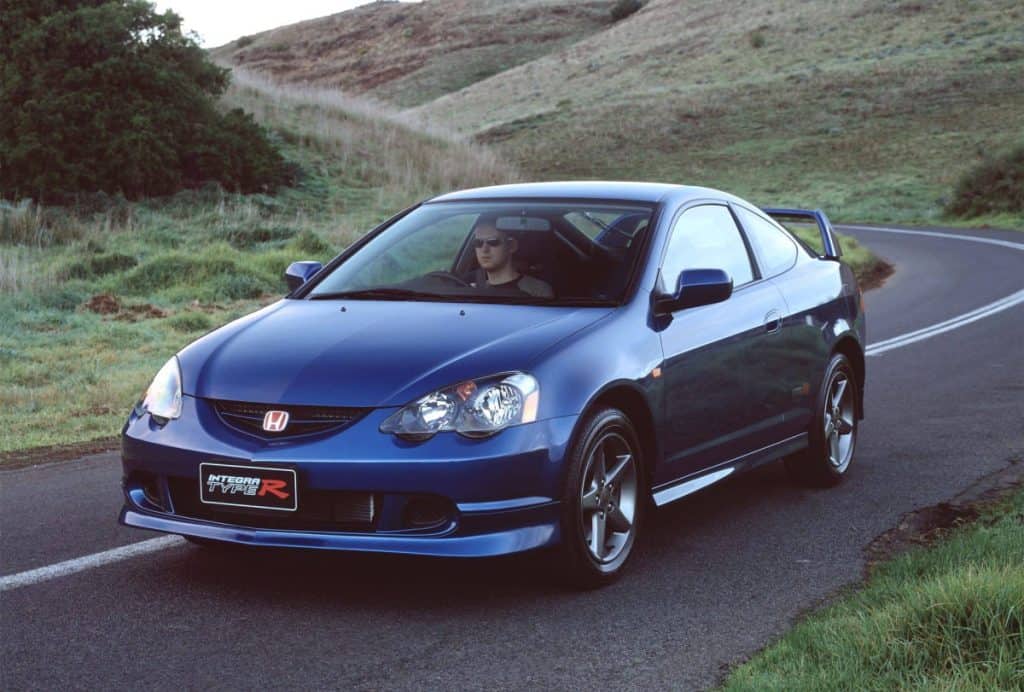
Image from autoevolotuion.com
The plain K20A code is most closely associated with Japanese-market applications, but even K20A engines were produced in different performance levels. The high-output Type R version is the one most enthusiasts usually mean when discussing the K20A.
The Japanese have mastered creating efficient engines that provide years of service with regular maintenance. You will most commonly find these engines in the Honda Civic and Accord, with several other models also including them. These cars are known for their dependability, and the K20A is why they have this reputation.
Example Specifications of a High-Performance K20A
- High-performance K20A variants generally produced roughly 200 to 225 horsepower, depending on the vehicle, market, and model year. Torque also varied by application.
You wouldn’t expect this power from a four-cylinder engine, but the K20A is full of surprises. It also offers several options that make it even more appealing.
The Performance Options on the K20A are Impressive
When the engine takes up a small space under the hood, you don’t expect it to have options that make it a versatile street racer with a grocery-getter costume.
Most factory K20A and K20Z variants were naturally aspirated and electronically fuel-injected. Their important differences come from the exact cylinder head, compression ratio, cam profiles, intake and exhaust design, sensors, electronics, and vehicle application.
Depending on the exact K20A variant and the goal of the build, common factory features or performance upgrades may include:
- High-Compression Pistons: These allow the air and fuel mixture to provide more power by compressing with more force.
- Strong crankshaft and rotating assembly: Increases torque production and power handling.
- PRC Intake Manifold: Ensures correct air intake for high-compression pistons.
- 4-2-1 Headers: Improves airflow and engine performance.
- Upgraded Exhaust: Enhances engine performance by improving exhaust flow.
The upgrades you can get with the K20A help the naturally aspirated fuel delivery system. These upgrades focus on air management within the engine.
What Makes the K20A Different?
Some differences make the engines differ. They might not be apparent to the untrained eye, but a few checks can reveal them.
A few differences that the K20A Honda engine has are:
- Low-End Torque: The K20A does not produce torque at low RPMs. Performance-oriented K20A variants are known for making their best power higher in the rev range. They may not feel as strong at low RPM as a larger-displacement or turbocharged engine, but they come alive as the revs climb.
- Variable Lift Camshafts: Present in the intake and exhaust tubes, improving aspiration.
- Naturally Aspirated: No supercharger or turbocharger. The K20A engine isn’t forced air.
- Exhaust layout: Exhaust manifold and cylinder-head designs vary between K20A and K20Z versions, which can affect swap compatibility and aftermarket header choices.
The K20Z Is a Newer Evolution of the K20 Family
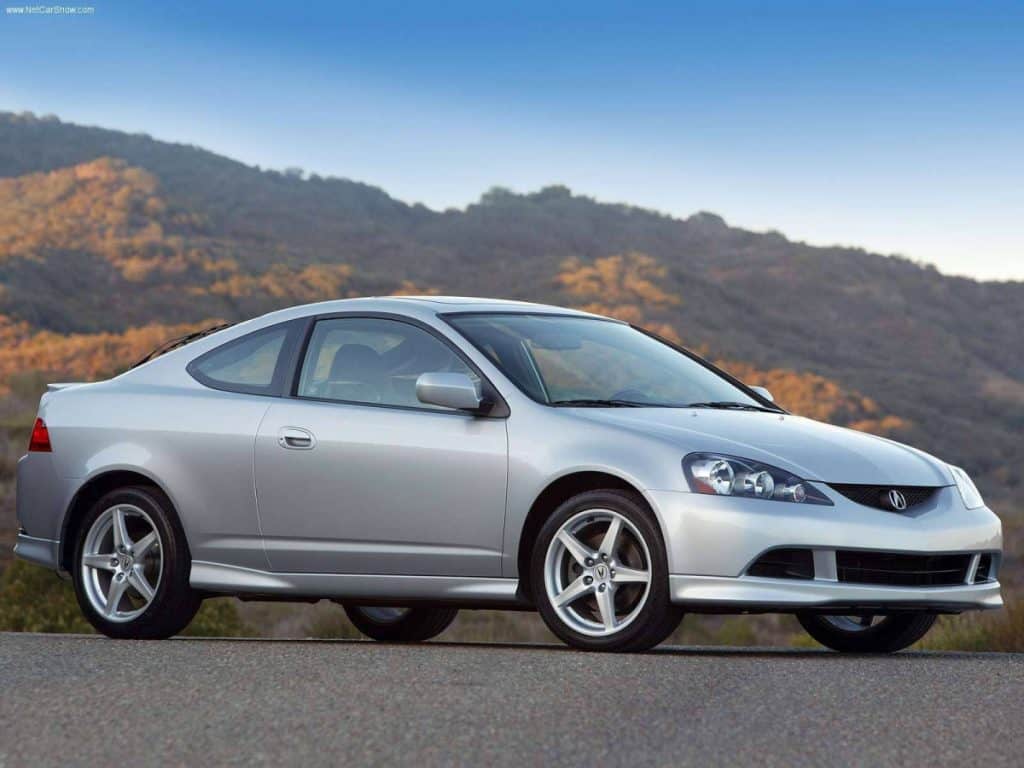
Image from netcarshow.com
The K20Z family appeared in several Honda and Acura models during the mid-to-late 2000s. Like the K20A family, it includes multiple versions with different power outputs and hardware. Common performance-oriented examples include the K20Z1 from the Acura RSX Type-S and the K20Z3 from the Civic Si.
Example K20Z Specifications
- Specifications depend on the exact variant. For example, the K20Z1 in the later Acura RSX Type-S produced around 210 horsepower, while the K20Z3 in the 2006 Civic Si produced 197 horsepower and 139 lb-ft of torque.
The K20Z embodies enormous power in a small package. Output depends on the exact K20Z variant. A high-output Type R K20A generally makes more peak horsepower than a Civic Si K20Z3, while the K20Z1 and K20Z3 still offer strong naturally aspirated performance in their original applications.
What Makes the K20Z Different?
A few differences between the K20Z and K20A are:
- Different applications: K20Z versions appeared in vehicles such as the later RSX Type-S, Civic Si, Accord, and other regional models.
- Updated electronics: Some variants use different throttle controls, sensors, ECUs, and wiring than earlier K20 engines.
- Cylinder-head and exhaust design: Certain K20Z versions use layouts that affect header choice and swap compatibility.
- Different power characteristics: Performance varies substantially between the K20Z1, K20Z2, K20Z3, and other versions.
- Aftermarket support: There is still strong support, but parts compatibility should always be checked by exact engine code.
Which Is Better: K20A or K20Z?
The K20A is usually the more desirable choice for enthusiasts chasing a high-revving Type R-style build, especially when comparing one of the performance-oriented Japanese-market versions.
A K20Z can still be an excellent option. It may be easier or less expensive to source, and variants like the K20Z1 and K20Z3 offer strong factory performance. The best choice often depends less on the letter at the end of the engine code and more on availability, condition, wiring, transmission compatibility, emissions requirements, and the goal of the build.
For a stock replacement, matching the original engine is usually easiest. For a swap or performance project, compare the exact engine codes and required parts before deciding.
Similarities Between the Engines
- Four-Cylinder: Both are 2.0-liter inline-four engines from Honda’s K-series family.
- Block Construction: Both use aluminum engine blocks, although internal components and specifications vary by version.
- Design: Both use an open deck block design made from aluminum.
- K Series: Both are part of the famous K Series line by Honda.
- Engine Control Units: Both have strong tuning support, but ECU compatibility and tuning options depend on the engine, chassis, wiring, and throttle system.
FAQ
What are the key differences between the K20A and K20Z engines?
Both are naturally aspirated, fuel-injected members of Honda’s K-series family. Neither the K20A nor the K20Z came turbocharged or supercharged from Honda.
The real differences depend on the specific variant and can include the cylinder head, compression ratio, cam profiles, intake and exhaust layout, electronics, throttle control, and original vehicle application. The performance-oriented K20A is known for its high-revving Type R heritage, while K20Z variants such as the K20Z1 and K20Z3 may be easier to source in some markets.
Which engine is better for performance?
Neither is automatically better. It depends on the exact engine code and the goal of the build.
A high-output Type R K20A is usually the preferred choice for a high-revving naturally aspirated build. A K20Z1 or K20Z3 may be the more practical option when availability, condition, compatibility, and cost matter more. Compare the specific variants rather than choosing based only on the A or Z designation.
Are there any common issues with the K20 engines?
Yes, some common issues include engine vibration, lobe galling, and camshaft seal leaks.
Which engine is more reliable for everyday use?
Both can be reliable everyday engines when properly maintained. Reliability depends more on the exact variant, condition, maintenance history, tune, and quality of any swap or modification than on whether the engine is a K20A or K20Z.
Can the K20A and K20Z engines be swapped easily?
A swap may be possible, but it is not always direct. Depending on the engine and chassis, you may need changes to the ECU, wiring, immobilizer, throttle control, sensors, transmission, accessories, mounts, and exhaust system.
What kind of maintenance do these engines require?
Regular maintenance for both engines includes oil changes, spark plug replacements, air filter changes, and periodic inspections of the timing chain and camshaft seals.
How do the fuel efficiencies of both engines compared?
Fuel economy depends on the exact engine, transmission, gearing, vehicle weight, tune, and driving style. You cannot assume every K20A is more efficient than every K20Z because both families include naturally aspirated variants with different specifications and applications.
Are performance upgrades available for both engines?
Yes. Both have strong aftermarket support, including intake and exhaust parts, headers, camshafts, engine management, internal upgrades, and forced-induction kits. Compatibility should always be checked using the exact engine code.


