 Skip to content

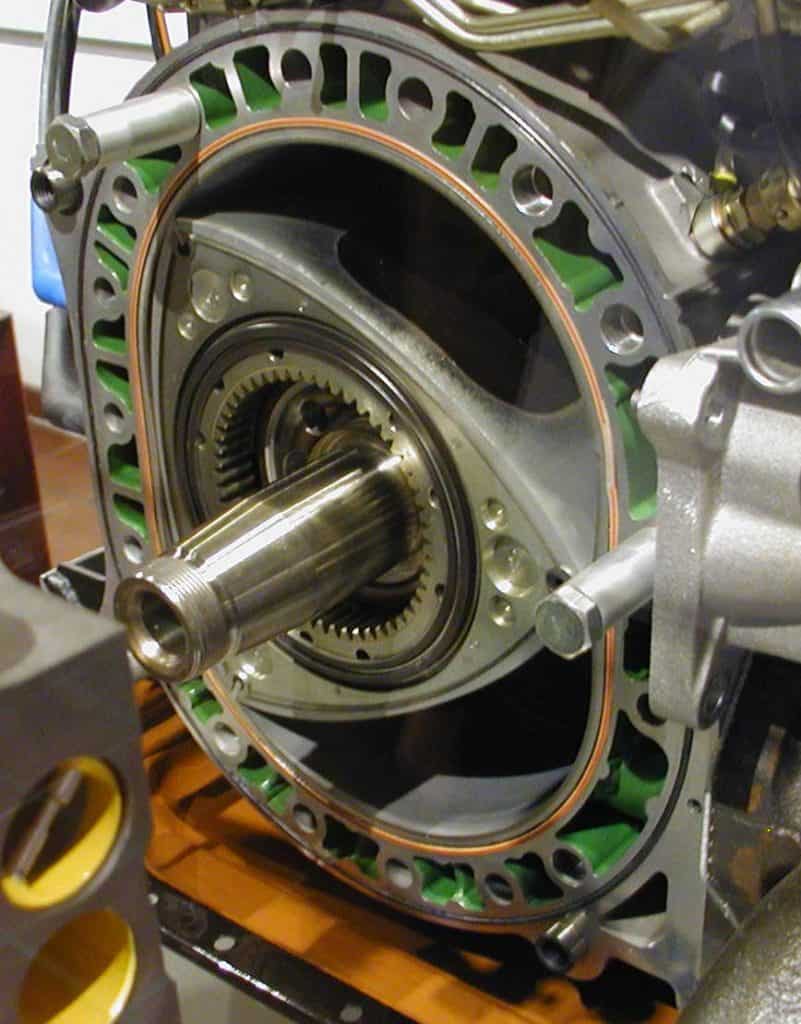
Image from wikipedia.com
The rotary’s design, performance potential, and years of love from car enthusiasts make it special. In contrast with conventional piston engines, rotary engines have rotors that rotate inside a housing, facilitating quite a different method of tuning an engine and achieving enhancements in its performance. Among the most popular ways to increase power in a rotary engine is through rotary porting.
But how does Rotary Porting really work? Let’s dive into the details.
Rotary Porting: The Basics and Its Importance in Engine Tuning
Rotary porting involves modifying a rotary engine’s intake and exhaust ports to enhance air passage to the engine for increased performance. The ports in a rotary engine control the amount of air and fuel coming into the combustion chambers and the outgoing exhaust gases. If you can change the shape, size, and timing of the ports, you can effectively change an engine’s power output, torque, and efficiency.
Because rotary engines were designed with fewer moving parts and higher RPM capabilities, they are very responsive to changes in airflow. Rotary porting becomes critical in tuning a rotary engine because it dictates how an engine breathes. More airflow equates to more oxygen for combustion and more power. Suppose you’re looking to squeeze more horsepower out of your vehicle. In that case, whether for racing or to have more control when pounding the pavement, understanding rotary porting is extremely important when rebuilding a rotary engine.
Different Types of Rotary Ports and Their Functions
Multiple types of ports provide specific performance functions.
Street Port: The most common porting is also the mildest in the aggression department. Street porting can be done simply by slightly enlarging your intake and exhaust manifold ports so you can have more airflow without drastically changing their behavior. It is good for your daily drivers, where a little bit of extra power can be reached.
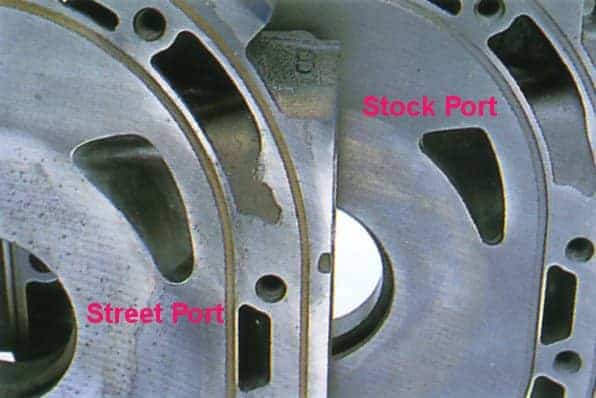
Image from rotary-miata.com/porting
Bridge Port: This is a higher level of porting compared to street porting. This process consists of cutting extra openings, aka ‘bridges,’ right next to the port that was initially made. It increases airflow to a really huge extent. This would give one a more raucous and aggressive tone in the exhaust and, of course, more power. Drivability and fuel efficiency might stand compromised.
J-Port: J-Port is an even more aggressive form of bridge porting. A J-shaped cut continues the port, opening further into the housing. It is favored for providing considerable gains in power, although the idle is choppy and low-end torque suffers; therefore, it usually finds an application in racing.
Peripheral Port: This is the most extreme porting. New ports are actually added onto the face of the rotor housing. This allows for maximum airflow while dramatically affecting the engine’s characteristics. It is best reserved for track use as it can render the engine a little too unreliable for daily use.
How Port Shape and Size Impact Rotary Engine Performance
The port size and shape define a rotary engine’s performance. Below is what these porting modifications are in relation to performance:
Improved Airflow: An increase in port size allows for a larger flow of air and fuel into a combustion chamber. This increased airflow can directly relate to the engine’s power output becoming more efficient.
Higher RPM Capabilities: Larger ports generally have the potential to increase an engine’s RPM levels, which is beneficial in Racing or high-performance engines.
Changes in Power Delivery: By changing the ports, the entire power band can be moved and altered. For example, a street port will give you a smooth power curve, whereas a bridge port on the same engine will give you more detonative power, as it will lift the engine’s power band to give more top-end power.
However, these modifications are not without their downsides. Larger ports can lead to:
Increased Fuel Consumption: The larger the air quantity, the more fuel there is, which can reduce fuel efficiency.
Potential Loss of Low-End Torque: Larger ports may kill the engine’s torque at lower rpm, making it less responsive during everyday driving.
Pros and Cons of Different Rotary Porting Types
When considering rotary porting, it’s important to weigh the pros and cons of each type:
| Porting Type | Pros | Cons |
| Street Port | – Balanced performance boost – Maintains drivability – Minimal impact on fuel economy | – Modest power gains compared to more aggressive porting |
| Bridge Port | – Significant power increase – Enhanced high RPM performance – Aggressive exhaust note | – Reduced fuel efficiency – Rougher idle – Potential drivability issues |
| J-Port | – Major power boost – Ideal for high RPM racing – Increased top-end performance | – Poor drivability for daily use – Requires higher maintenance – Accelerated wear on components |
| Peripheral Port | – Maximum power output – Optimal for track use – Superior airflow characteristics | – Impractical for daily driving – Increased engine wear – Extremely high fuel consumption |
Street Port: This is very effective for adding a little more power without losing streetability. The enhancements are moderate, so they provide balanced gains while the engine remains somewhat stock-like in nature.
Bridge Port: This results in several high-RPM power improvements and is desirable to many hard-driving enthusiasts. However, it will exact some penalties in fuel economy and a slightly raw idle quality.
J-Port: Best suited for race applications where one needs high power. This sharply alters engine behavior by making the engine geometrically more difficult to maintain and the car less realistic to use for daily activities.
Peripheral Port: The most extreme form of rotary porting, destined exclusively for track use. This provides the highest power profit, making tractability, fuel consumption, and durability seriously low.
The right type of porting depends on your goals. Street and bridge ports are the way to go if you need to balance high performance and everyday usability. J-ports or peripheral ports will be more appropriate if this is a dedicated race car.
The Process of Rotary Porting and What’s Involved
For any rotary porting, it is not a simple DIY job. Precision, the right tools, and a deep understanding of the rotary engines are required. An overview of the process in general is:
- Disassembly: The engine must be disassembled to expose the rotor housings and the ports.
- Porting: Reshaping and increasing the ports to the desired specifications are done with specialized tools.
- Reassembly: The engine is reassembled following porting, ensuring all components are properly aligned and tightened.
- Tuning: After porting, the engine will need some tuning to ensure that everything meshes.
Tools required include:
- Rotary tools for precise cutting.
- Templates for port shapes.
- Measurement devices to ensure accuracy.
This is a delicate task, usually best left to professional hands with years of extensive experience in rotary engines. Inaccurate porting may reduce the engine’s life or even lead to an outright catastrophic failure.
Avoiding Common Mistakes During Rotary Porting
Rotary porting offers exciting performance benefits, but it’s easy to make mistakes. Here are some common pitfalls:
Inaccurate Measurements: You will need the right measurements when porting an engine. Even slight errors can cause poor performance and sometimes even engine damage.
Over-Porting: Over-aggressive porting work will result in drivability problems, increased fuel consumption, and decreased engine life expectancy. This mainly happens when the ports become too big to be useful for their application, and it may cause a number of other problems, like stalling or bad idle quality.
Improper Sealing: Poor sealing can result in engine leaks, lower compression, and generally poor engine performance.
Fuel Efficiency and Emissions: What to Expect After Rotary Porting
Rotary porting is very influential about fuel efficiency and emissions. Reaming the ports allows more air to pass through an engine, making it guzzle more fuel.
Image from https://www.youtube.com/watch?v=Uv_C3llR6Hk
In most cases, this contributes to fewer MPGs. More aggressive porting also tends to raise emissions levels, which can compromise the attainment of regulatory standards, especially for those whose vehicles are subject to emissions testing on public roads.
If you want to remain fuel-efficient and keep your emissions as low as possible, consider more conservative porting measures. Keep in mind that the legalities regarding emissions vary from place to place. Therefore, you must consider whether your car will still be within the local legal limits after the porting. Proper tuning after porting can also help mitigate these effects to ensure you have an efficient running engine while staying within acceptable emission levels.
The Importance of Tuning After Rotary Porting
Tuning is critical after rotary porting. If the engine is not properly tuned, it will malfunction or even get spoiled, thus working in worse conditions.
- Air-Fuel Ratio Adjustments: This ensures that a proper mix of air and fuel reaches the modified ports and the engine.
- Ignition Timing: Ignition timing has to be adjusted to match the new characteristics of airflows.
- Throttle Response: Proper throttle response sets the tone for good driveability and smooth power delivery.
Wrapping Up: Making the Most of Rotary Porting
Rotary porting is one of the highest-level modifications that can be done to your rotary engine, with some serious performance gains as a result. Knowing the types of ports, how they work, and what can be expected will help you make informed decisions about how to approach porting.
Be it for a bit of a power hike or you want to get the most from your vehicle on the track, there it is—rotary porting at your service. Remember how much you would like to change your performance with the engine’s life and maintenance factors in mind. With the proper approach, proper rotary porting can transform an engine and take the driving experience to a different level of perception.


