Skip to content

Two Ways to Buy a Used Car, but Not the Same Experience
Buying a used car can feel overwhelming, and choosing between a Certified Pre-Owned (CPO) vehicle and a regular used car is one of the first big decisions.
Both options offer savings compared to buying new, but they are definitely not created equal. The differences go beyond just the price tag, extending to warranties, inspection quality, and overall peace of mind.

Understanding the differences makes it easier to decide whether the extra cost of certification is really worth it for the buyer’s situation. For some drivers, the premium makes perfect sense. For others, it might be money better spent elsewhere.
What Exactly Is a Certified Pre-Owned Car?
A Certified Pre-Owned car is a used vehicle that has been inspected, refurbished, and certified by the manufacturer or dealership. These aren’t just any used cars plucked from the lot and given a fancy name.

These cars usually come with extended warranties, roadside assistance, and a long checklist of quality standards they must meet. Most manufacturers require vehicles to be relatively new (typically less than 5-7 years old) with reasonable mileage (usually under 80,000 miles) to even qualify for certification.
CPO programs vary by brand, but the goal is to offer a like-new experience without the new car price tag. Toyota’s certification might involve a 160-point inspection, while BMW might conduct a 192-point inspection. Each manufacturer sets their own standards.
What Defines a Regular Used Car?
A regular used car is simply a vehicle being sold without official inspection, certification, or manufacturer-backed warranties. There’s nothing inherently wrong with these vehicles, they just haven’t gone through an official certification process.
A dealership, an independent lot, or a private party could sell it. The price will typically reflect this lack of formal backing, making regular used cars the more budget-friendly option.
While many used cars are perfectly good, they often come “as-is,” meaning the buyer assumes more risk. The previous owner’s maintenance habits, driving style, and honesty about the car’s history all become more important factors to consider.
Key Differences Between CPO and Used Cars
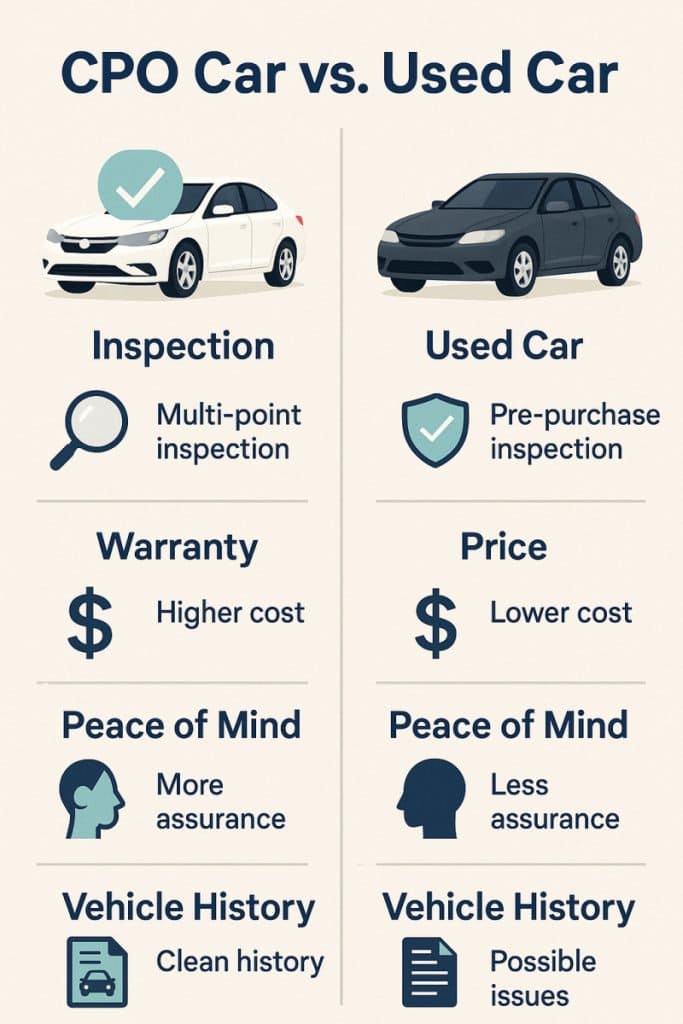
Inspection: CPO vehicles undergo multi-point inspections, while regular used cars may not be inspected at all. When buying a regular used car, arranging your own pre-purchase inspection becomes essential.
Warranty: CPO vehicles often come with extended warranties and additional perks like free maintenance. Used cars might only have remaining factory coverage, if any. This difference alone can justify the higher CPO price for some buyers.
Price: CPO cars cost more, often by a few thousand dollars, compared to similar used models. This premium reflects the inspection, potential repairs, warranty, and other benefits included in the certification.
Peace of Mind: CPO cars generally offer more buyer protections, but at a cost. For those who worry about unexpected repairs or hidden problems, this peace of mind can be valuable.
Vehicle History: CPO vehicles typically must have clean history reports with no major accidents or title issues. Regular used cars might have more complicated backgrounds that could affect long-term reliability.
When Paying More Might Make Sense
Buying a car for long-term ownership or heavy daily use can make the extra cost of CPO worthwhile. The longer a vehicle is kept, the more likely it is that extended warranty coverage will come in handy.
For buyers who value warranty coverage and lower risk of unexpected repairs, a CPO vehicle provides added security. Someone who depends on their vehicle for work or lacks emergency funds for sudden repairs might find particular value here.
Financing deals for CPO cars are often better, with lower interest rates available through manufacturer programs. This can sometimes offset a portion of the higher purchase price, making the gap between CPO and regular used less significant.
In high-mileage or rough-use scenarios, the confidence that comes with certification can be reassuring. Vehicles that will be driven extensively or in challenging conditions benefit from the thorough inspection and warranty backing.
When a Regular Used Car Could Be the Smarter Choice
Buyers with mechanical know-how or access to trusted mechanics might save thousands by choosing a regular used car. The ability to spot potential issues or handle minor repairs can eliminate much of the risk that certification programs address.
Short-term buyers planning to keep the vehicle only a few years often find the lower price more attractive than extended warranties. Why pay for coverage that extends beyond planned ownership?
Private party sales typically offer the best deals, though they also carry the most risk. Buying directly from an owner cuts out the middleman markup that dealerships charge, whether for regular used or CPO vehicles.
Another overlooked opportunity comes from bank-repossessed cars, which are often sold below market value through auctions or dealers looking to move inventory quickly. While they require careful inspection, they can offer deep savings for buyers willing to do their homework.
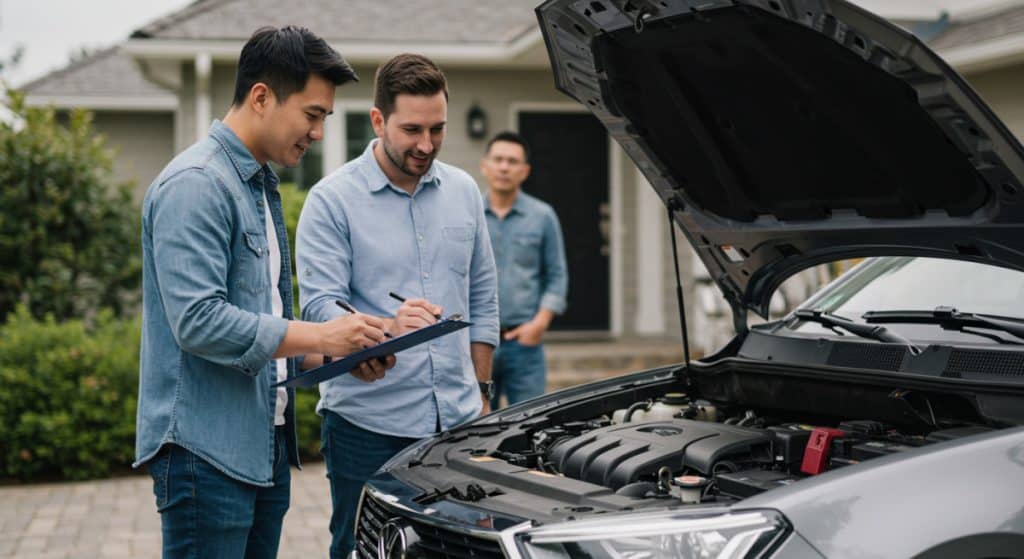
A thorough pre-purchase inspection by a trusted mechanic can help balance the risk when skipping certification. For $100-200, this inspection can identify many of the same issues that a certification process would catch.
Pitfalls to Watch Out For
Some dealerships advertise cars as “certified” without participating in official manufacturer programs. Always check what certification actually means. Dealer-certified is not the same as manufacturer-certified, and the warranties and inspections can be significantly different.
CPO programs vary widely in quality depending on brand. Some brands have stricter standards than others. Luxury brands like Lexus and Porsche tend to have particularly rigorous certification programs, while some economy brands might be less comprehensive.

A certified car is not automatically perfect. It is still a used car and can still have hidden issues if the inspection was not thorough. The certification process is only as good as the technicians performing it, and some dealerships may be more diligent than others.
Sometimes, the CPO premium might be better spent on a newer or lower-mileage non-certified vehicle. A two-year-old regular used car might be a better value than a four-year-old CPO car at the same price point.
How Much Extra Are You Actually Paying?
On average, CPO vehicles cost about 6% to 10% more than their non-certified counterparts. This premium varies by brand, with luxury vehicles often commanding higher certification premiums.
This could mean paying $1,500 to $3,000 more, depending on the car’s value, brand, and certification program. For a $20,000 vehicle, expect to pay approximately $1,200 to $2,000 more for the certified version.
Deciding whether that premium is worth it depends largely on your personal tolerance for risk, maintenance costs, and how long you plan to keep the car. The value equation changes dramatically between someone planning to keep a car for two years versus ten years.
The math becomes more favorable for CPO when considering the cost of extended warranties purchased separately, which can range from $1,500 to $2,500 for comparable coverage to what comes with many certification programs.
It Depends on the Driver, Not Just the Car
Certified Pre-Owned cars offer real advantages, but they come at a price. For many buyers, the question isn’t whether CPO programs provide value, but whether that specific value matters to their situation.
For some buyers, that price buys peace of mind, fewer surprises, and a smoother ownership experience. Those who hate dealing with repairs or who need reliable transportation might find the premium well worth it.
For others, the extra money could be better spent on a lower-mileage used car or simply saved for future repairs. Mechanically inclined buyers or those comfortable with some uncertainty might prefer to pocket the difference.
There is no one-size-fits-all answer, but understanding the pros and cons of each path helps make the smartest decision for any situation. The right choice ultimately comes down to individual priorities, budget constraints, and comfort with risk.
Related Resources:
- https://www.kbb.com/car-advice/buying-used-vs-certified-pre-owned-vehicles
- https://www.edmunds.com/car-buying/certified-pre-owned-vs-extended-service-contract.html
- https://www.cars.com/articles/are-certified-pre-owned-cars-worth-it-426164
- https://www.consumerreports.org/cars/buying-a-car/should-you-buy-a-new-certified-pre-owned-or-used-car-a8156571174