Skip to content

Rear-wheel drive (RWD) might seem like old-school tech in a world now dominated by all-wheel drive (AWD) crossovers and electric vehicles with motors at every axle. But there’s a reason car enthusiasts, engineers, and performance purists still care about RWD—and why it’s not going away anytime soon.

Let’s take a closer look at the roots of RWD, how it stacks up today, and why it continues to earn a place in modern automotive design.
The Legacy and Fundamentals of Rear-Wheel Drive
Rear-wheel drive has been around since the early days of the automobile. For decades, it was the default setup for everything from sedans and coupes to pickup trucks and full-size SUVs. In fact, nearly every classic American car from the muscle car era was built on a RWD platform.
The basic layout sends power from the engine to the rear wheels through a driveshaft, differential, and axle. This separation of propulsion (rear wheels) and steering (front wheels) helps balance the car’s dynamics and keeps the front end lighter, improving handling.
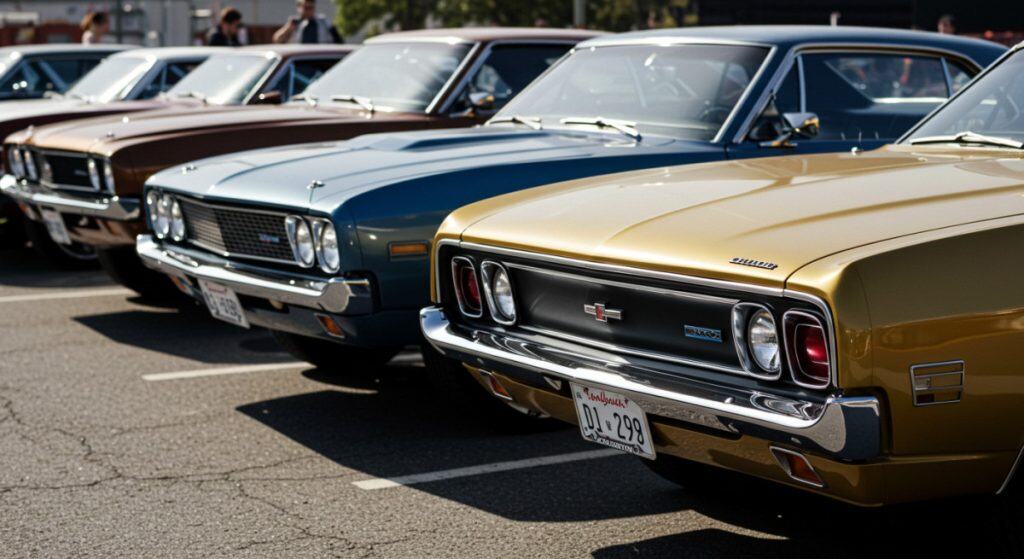
Because of this layout, RWD cars have long been prized for their performance. The weight distribution tends to be more even, which contributes to better balance, especially during cornering. This is why RWD became the standard for sports cars and racing vehicles.
How AWD and EV Architectures Are Shaping the Industry
Today’s automotive market looks a lot different than it did twenty or thirty years ago. All-wheel drive has become increasingly common, not just in trucks and SUVs but also in sedans and crossovers. Consumers have gravitated toward AWD for its safety and all-weather capability, especially in areas with rain, snow, or varying terrain.
Electric vehicles are another game-changer. Many EVs use one motor per axle or even motors at each wheel, making AWD the default for high-performance or high-efficiency models. Tesla, Rivian, and Lucid all offer multi-motor setups that provide instant torque and smart traction control.
With this shift toward AWD and electric platforms, it might seem like RWD is getting left behind. But that’s not quite the case.
Why Enthusiasts and Engineers Still Value Rear-Wheel Drive
Ask any driving enthusiast, and they’ll probably tell you RWD offers a more “pure” driving experience. It delivers power to the rear, allowing the front wheels to focus solely on steering. This makes handling feel more balanced and predictable.
RWD platforms also allow for better weight transfer under acceleration, which helps the car launch more effectively without overwhelming the front tires. That’s why you’ll still find RWD in drag racing and performance driving.

There’s also the emotional side. RWD offers that classic rear-push feel, especially in cars with manual transmissions and limited-slip differentials. It invites drivers to be more engaged and in control, especially when cornering or applying throttle out of a bend.
From a technical standpoint, motorsports and drifting also heavily favor RWD because it allows for more driver input and finesse. It’s easier to induce and control oversteer, something performance drivers actively seek out.
Rear-Wheel Drive in the Modern Performance Market
Despite the AWD boom, RWD hasn’t disappeared. It’s still the drivetrain of choice in some of today’s most celebrated cars.
BMW is known for its RWD roots, and many of its sedans and coupes still offer a RWD option. Mercedes-Benz continues to use RWD in their rear-biased platforms, offering confident dynamics in everything from the C-Class to the AMG lineup. Dodge muscle cars like the Challenger and Charger also ride on RWD platforms, delivering massive torque to the rear wheels for classic American performance.
Even lightweight roadsters like the Mazda MX-5 Miata stick with RWD because it delivers that signature nimble, rear-biased feel that enthusiasts crave.
Modern traction and stability control systems have also made RWD safer and more versatile than ever. Technologies like launch control, torque vectoring, and adaptive suspension help mitigate the traditional drawbacks of RWD, making it more approachable for everyday drivers.
The Role of RWD in Electric Vehicle Platforms
Interestingly, many single-motor EVs use rear-wheel drive. That’s because rear-mounted electric motors help optimize cabin space and weight balance while still delivering responsive power.
EVs also benefit from the instant torque of electric motors. RWD layouts allow that power to go straight to the rear wheels, reducing torque steer and helping with performance tuning.
Models like the Tesla Model 3 RWD or BMW i4 showcase how electric cars can still maintain the fun-to-drive nature of traditional RWD platforms. Even as the industry embraces new propulsion methods, RWD remains part of the design toolbox.
Limitations and Trade-Offs of Rear-Wheel Drive
That said, RWD isn’t perfect for every situation.
Without proper tires or electronic aids, RWD vehicles can struggle in snow or slippery conditions. The lack of front-wheel pull makes it harder to climb steep, slick hills or maintain grip on icy roads.
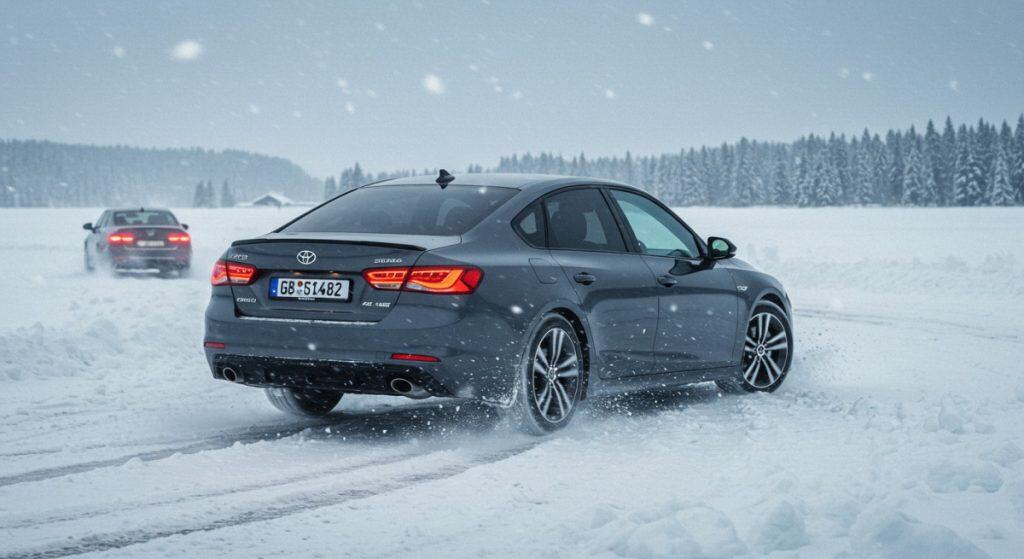
RWD also isn’t ideal for rugged, off-road terrain where all-wheel traction is critical. This is why 4×4 and AWD systems dominate in trucks, crossovers, and adventure vehicles.
Finally, RWD systems are sometimes more expensive and space-consuming to build, especially in compact cars. That’s one reason FWD dominates the economy car market—it’s cheaper, lighter, and more space efficient.
Why RWD Still Has a Future Despite Market Shifts
Even though AWD and EVs are rising in popularity, RWD isn’t going extinct. It’s evolving.
Niche markets like luxury sedans, sports cars, and performance EVs continue to rely on RWD for its driving dynamics and layout advantages. Brands that prioritize handling, balance, and driver engagement aren’t moving away from it anytime soon.
At the same time, traction control and stability systems are getting smarter. These tools help RWD cars cope with low-grip situations more effectively than ever before, making them practical even outside of sunny climates.
Electric platforms also make it easier to experiment with drivetrain layouts. With fewer mechanical constraints, engineers can use RWD or rear-biased AWD to fine-tune handling without compromising packaging.
Choosing Between RWD, AWD, and FWD Today
So how do you know if RWD is the right choice for you?
It comes down to your needs, driving habits, and preferences. If you prioritize performance, road feel, and driving enjoyment, RWD might be your perfect match—especially in a sports sedan or coupe.
If you live in an area with heavy snow or drive off-road regularly, AWD is likely the better option. For city driving, tight budgets, and simplicity, FWD cars make the most sense.
The good news is that today’s market has options for every driver. Rear-wheel drive isn’t just a relic of the past. It’s a driving experience that still delivers where it counts.
And in the right vehicle, it might just be the thing that puts a smile on your face every time you turn the key.
| Drivetrain | Best For | Pros | Cons |
| RWD | Enthusiasts, performance | Balanced handling, better weight transfer | Poor in snow, less cabin space |
| AWD | Mixed climates, off-road | All-weather traction, high-tech EVs | Heavier, more complex, costlier |
| FWD | Economy, urban | Compact packaging, better in snow | Less balanced, torque steer |