Skip to content

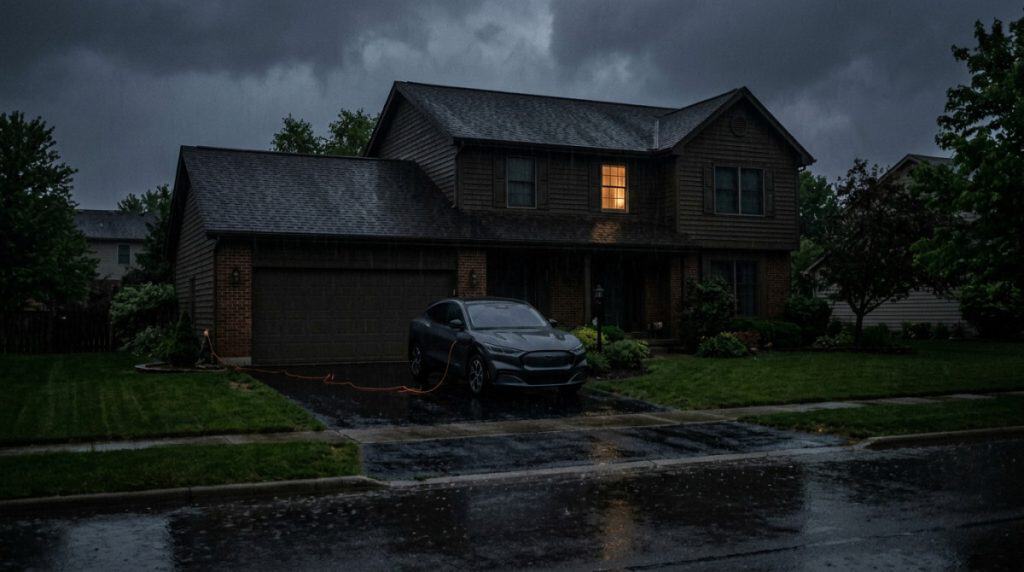
Spring outages have a way of making everything feel chaotic fast. One minute the house is normal. The next, the wind picks up, the lights flicker, and the whole neighborhood goes dark. A few minutes later, the sound outside changes. Somebody is dragging out a gas generator. Somebody else is trying to get one started in the rain.
If you own the right EV, your night can look a little different.
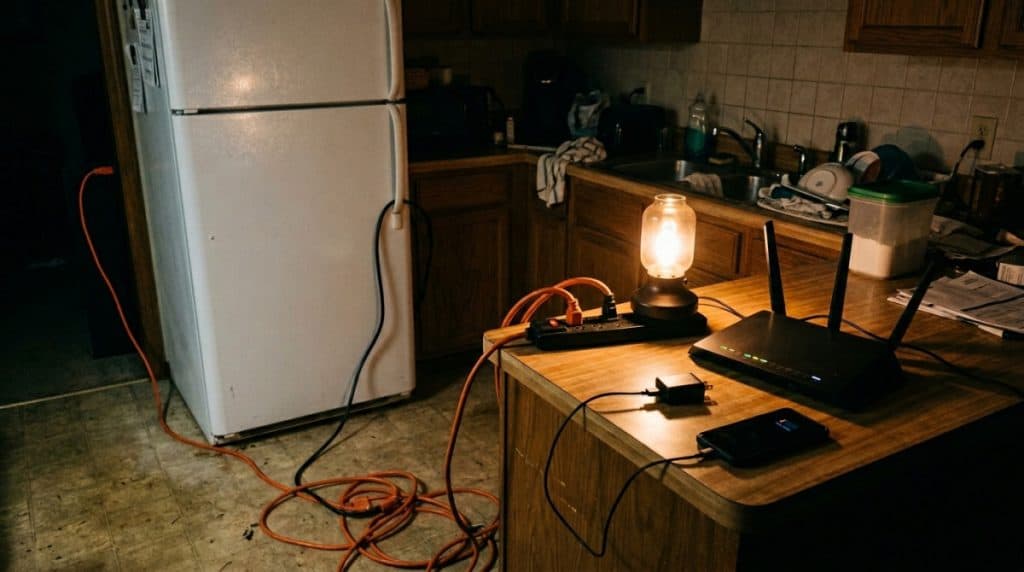
Not perfect. Not like a whole-house generator magically took over. But a lot better than sitting in the dark hoping the fridge stays cold long enough. Some EVs can do more than just wait in the garage for the roads to clear. If your vehicle supports V2L, it may be able to keep the most important things running while the power is out. That might mean your fridge, your Wi-Fi, your phone chargers, a lamp or two, and maybe a few other small essentials if you manage the load carefully.
That is really what this article is about. Not the overhyped version where your car suddenly becomes a seamless luxury backup system for the entire house. Just the practical version. What V2L actually is, what it can realistically power, what gear matters, what mistakes can get dangerous, and when it makes sense to go beyond cords and start thinking about a more serious home backup setup.
Quick terms to know
This topic gets packed with abbreviations fast, so it helps to get the simple versions out of the way first.
- V2L: Vehicle-to-Load. Your EV powers devices directly.
- V2H: Vehicle-to-Home. Your EV works with installed home hardware to power parts of the house.
- V2G: Vehicle-to-Grid. Your EV sends power back to the grid through approved equipment.
- SOC: State of Charge, or your battery percentage.
- kW: How much power something is using right now.
- kWh: How much total energy the battery has stored.
- AWG: Wire thickness on extension cords. Lower number means thicker wire.
- Transfer switch: Hardware that safely isolates your house from the grid before backup power is used.
You do not need to memorize all of that. The main idea is much simpler than the jargon makes it sound.
V2L is the simple version. You plug things into the car and run them directly.
V2H is the more advanced version. That is where the car becomes part of the home’s backup setup through installed hardware.
What V2L actually means in real life
A lot of people hear about V2L and immediately go too far in one direction. Either they assume it is a gimmick, or they imagine they can live exactly as normal through a blackout because the car will somehow do everything.
The truth is somewhere in the middle.
V2L is genuinely useful, especially during a short or medium outage. It can take the edge off in a big way. It can save the food in your fridge, keep communication up, make the house feel functional again, and give you some breathing room while the grid is down. What it usually cannot do is let you ignore power use completely. You are still working with a limited energy budget, and the more realistic you are about that, the better the experience tends to go.
The easiest way to think about it is this: your EV becomes a large battery on wheels. Instead of only storing energy for driving, it can also send some of that energy outward to power a few important things in your home. That is a big deal, especially when the alternative is a noisy gas generator or no backup at all.
It also helps to remember that there are two very different levels to this conversation. With V2L, you are usually working directly from the car to the appliance or device. With V2H, the car is connected into home hardware, which makes the whole thing cleaner, safer, and more convenient, but also more expensive and more involved.
So for most readers, V2L is the place to start. It is the most realistic entry point.
Why this matters more now
Part of the reason this topic is getting more attention is that EV backup power no longer feels like a niche enthusiast trick. More people are starting to see the car as part of a broader home energy picture, especially in places where outages happen often or storms are getting worse.
That still does not mean every EV can do this. Compatibility depends on the exact model, trim, hardware, and software. Some vehicles support V2L. Some do not. Some have built-in outlets. Some need specific adapters. Some are much better suited to this use than others.
That is why the first step is still the least exciting one: check your exact vehicle before buying anything. Read the owner’s manual. Look at the official specs. Confirm what your EV actually supports. It sounds basic, but it saves a lot of bad assumptions.

Once that is settled, the rest of the planning gets much easier.
Build a simple V2L go-bag
This is one of those things that is easy to ignore until you actually need it.
When the power is already out, the wind is blowing, and the house is dark, that is not the moment you want to start hunting for the right adapter or wondering whether your extension cord is good enough. A simple V2L go-bag solves a lot of that stress before storm season even starts.
A practical setup usually includes:
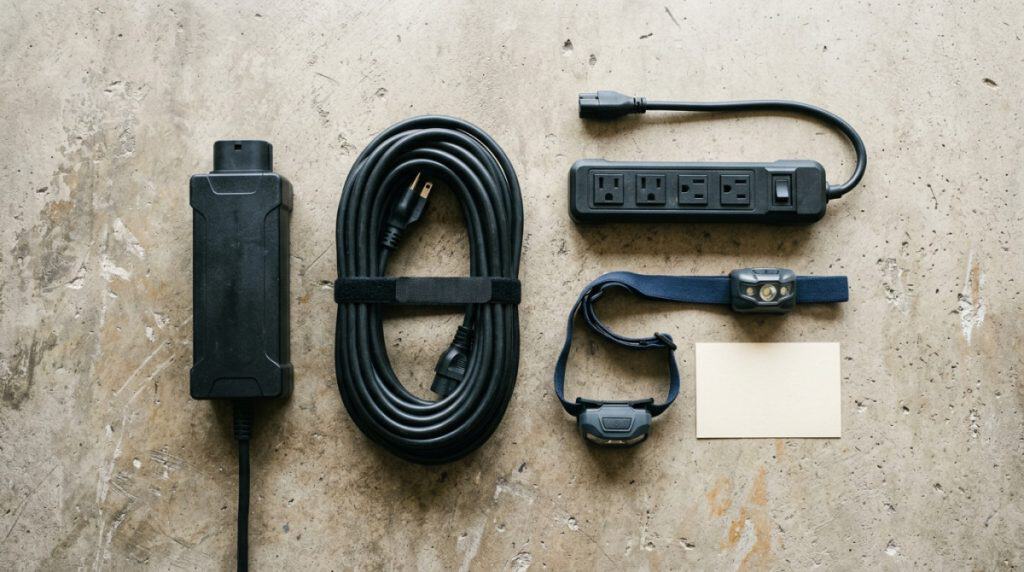
- the correct V2L adapter, if your EV needs one
- at least one heavy-duty outdoor-rated extension cord
- a grounded power strip for smaller electronics, if appropriate
- a flashlight or headlamp
- a short written list of the devices you plan to power first
The cord matters more than a lot of people think. This is one of the easiest places to get lazy, and one of the easiest ways to make the whole setup worse. A light-duty cord might seem fine because it powers small things around the house all the time, but backup power is different. When you are running a refrigerator or another appliance with startup surges, cord quality suddenly matters a lot more.
That is why a 12-gauge outdoor-rated cord is such a good baseline. It gives you more margin and helps avoid the kind of heat buildup and voltage drop that make cheaper, thinner cords a bad choice for serious loads. A 16-gauge cord might work for a lamp or charger, but it is not the kind of thing you want to trust with an appliance that actually matters during an outage.
So yes, the EV is the star of the setup, but the supporting gear still has to be taken seriously.
The 3.6 kW reality check
This is where the planning part begins.
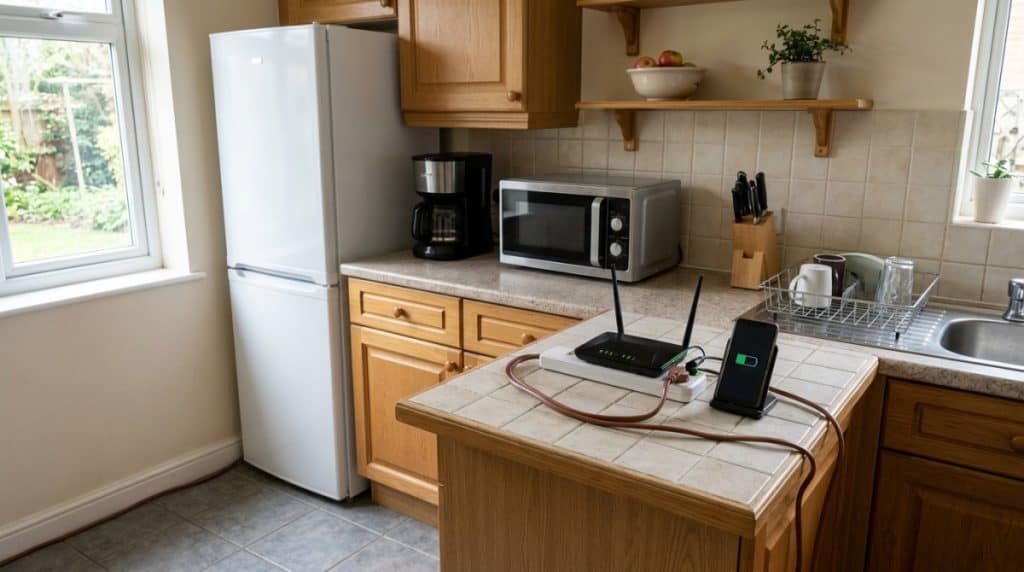
On paper, V2L can sound generous. In practice, it starts to feel a lot smaller once you think in terms of actual household appliances. The little stuff usually is not the issue. Your router, phone chargers, laptop charger, and a couple of LED lights barely make a dent compared with the bigger loads.
The pressure comes from appliances that heat, cool, or spin.
A refrigerator is one of the most useful things to keep running, but it also has startup surges that matter. A coffee maker only runs for a short time, but it still takes a meaningful bite out of your available power while it is on. A space heater is where things really start to tighten up, because it can eat through a big chunk of your power budget all by itself.
That is why V2L works best when you stop asking, “What can I leave on?” and start asking, “What can I rotate in?”
The fridge and internet might stay on. The coffee maker comes in for a few minutes, then goes back off. Maybe you watch TV for a while at night, but not at the same time you are heating water or trying to run a heater. That shift in mindset is the whole game. You are no longer using the grid like normal. You are managing a backup battery.
A useful way to think about it is in three buckets.
The first bucket is the easy stuff: chargers, router, modem, laptop, LED lamps, small electronics. These are the loads that usually make sense to keep available without much thought.
The second bucket is the manageable stuff: TV, fan, microwave for short bursts, coffee maker, maybe a few small kitchen devices. These are not impossible at all. They just work better when you are deliberate about when you use them.
The third bucket is the demanding stuff: refrigerator, space heater, electric kettle, toaster oven, and anything else with a heating element or a motor surge. These are the loads that make you pay attention. They are usually the reason a setup feels either well-managed or frustrating.
Once readers understand that, the whole article starts to make more sense. V2L is not weak. It just rewards people who think in terms of priorities.
Battery chemistry matters, but not in a scary way
You do not need to turn this into a chemistry lesson, but it is worth knowing that not all EV batteries behave exactly the same.
The two big names most people will hear are LFP and NMC.
LFP batteries are usually talked about as the more relaxed option. They are often seen as durable and a little less fussy about being charged fully. NMC batteries are often associated with longer range and stronger energy density, but they also tend to come with slightly more caution around how they are charged and discharged over time.
For storm use, though, the practical advice is less dramatic than the internet sometimes makes it sound.
The most important thing is not the chemistry itself. It is the reserve.
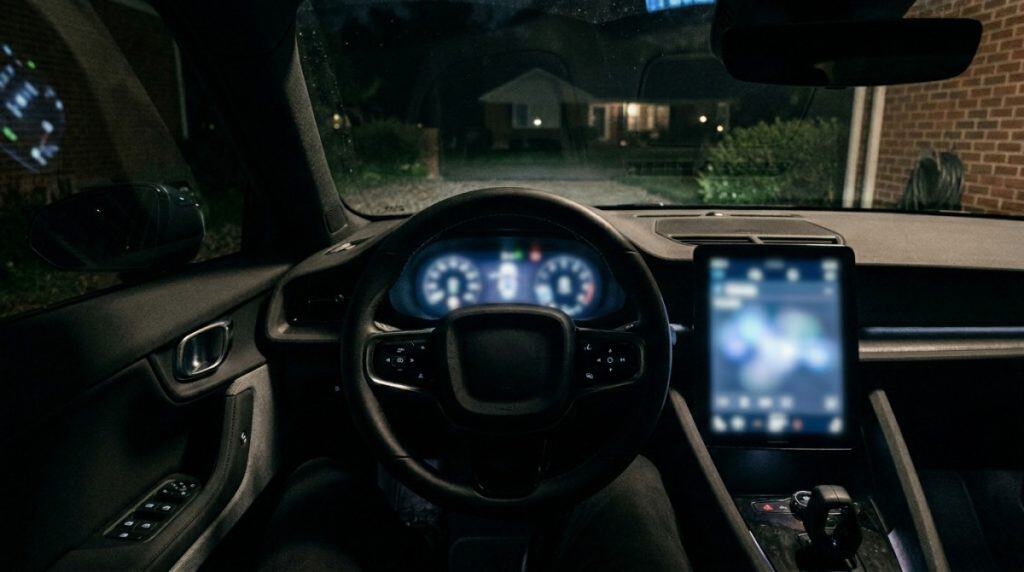
Whatever battery type your EV uses, you do not want to run it down so far that the house is comfortable but the vehicle is basically stranded afterward. That is why it makes sense to keep some battery in hand. If your vehicle lets you set a floor for export power, something around 25% to 30% is a smart habit. That gives you room to drive later, find a charger, or just avoid the stress of squeezing every last bit out of the pack during one bad night.
So yes, battery chemistry matters. But for most readers, it matters less than simple discipline.
A practical 24-hour outage approach
A lot of power-outage stress comes from trying to solve everything at once. It is easier if you think in phases.
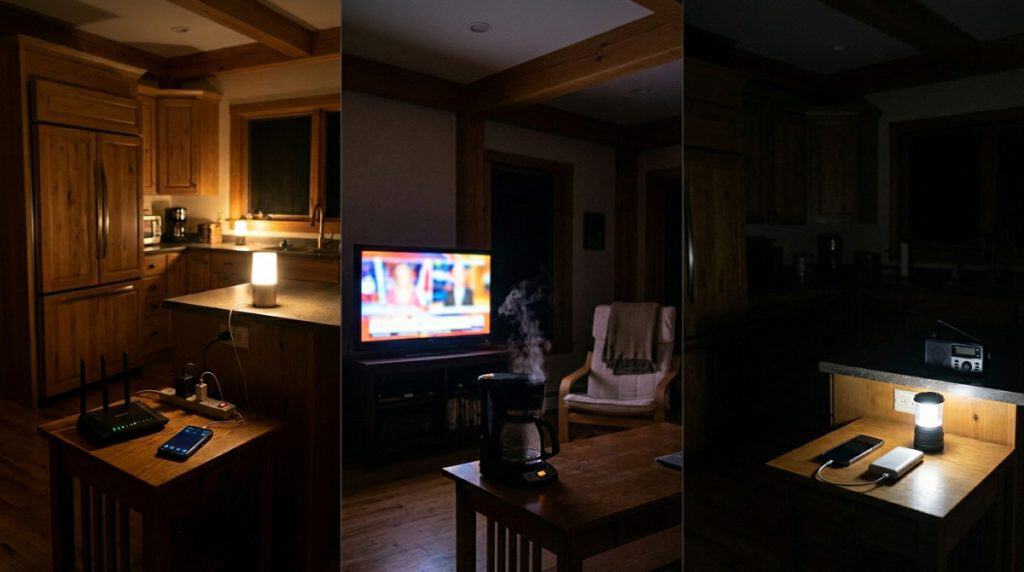
In the first hour, the goal is not comfort. It is stability. Get the fridge connected. Get the Wi-Fi or communication gear up. Charge phones. Add one or two lights. That alone changes the mood of the house immediately because now you have food protection, information, and a sense that things are under control.
A few hours in, once it is clear the outage is not ending anytime soon, then you can start thinking about comfort. Maybe that means a TV for a while. Maybe it means making coffee. Maybe it means one extra light in the room everybody is using. The important thing is that comfort loads come after the essentials, not before them.
Overnight is usually where it pays to get disciplined again. Turn off what does not need to stay on. Protect your battery for the next morning. Let the fridge do its thing. Keep the house functional, not fully normal.
Then in the morning, do an honest check. How much battery is left? How much longer could this continue? Do you need to save range for driving, charging, or leaving if conditions change?
That kind of phased thinking makes outages feel much more manageable because you are not making random decisions in the dark. You are simply moving from triage, to comfort, to conservation.
The safety rules that actually matter
This section should stay simple and serious.
The biggest rule is this: never backfeed your house through a wall outlet.
That means no male-to-male “suicide cord.” No improvised shortcut because the plugs seem to fit. No, trying to energize your home’s wiring through a regular receptacle. That is not just sloppy. It can be dangerous to you, dangerous to your home, and dangerous to utility workers who may be dealing with lines they believe are dead.
The other important habits are less dramatic, but still worth respecting. Keep cords dry whenever you can. Do not pinch them under a sharp door edge. Do not use damaged connectors. Do not overload a cheap power strip. Do not leave connections sitting where water can collect. And do not assume that “it powers on” means “it is safe.”
It is also normal for the EV itself to make some noise while doing this work. Cooling fans may kick on because the vehicle is converting stored battery power into usable household power, and that creates heat. So if the car sounds like it is waking up even while parked, that does not automatically mean something is wrong.
A short way to remember the safety side:
- never backfeed through an outlet
- never use damaged cords or adapters
- keep connections dry
- avoid pinching or crushing cords
- expect the car’s cooling system to run
When it makes sense to go beyond extension cords
For a lot of people, V2L is enough.
If outages are occasional and you just want a practical way to keep essentials alive, a simple setup with the right gear can do a lot. But there does come a point where extension cords start to feel like a temporary answer instead of a real plan.
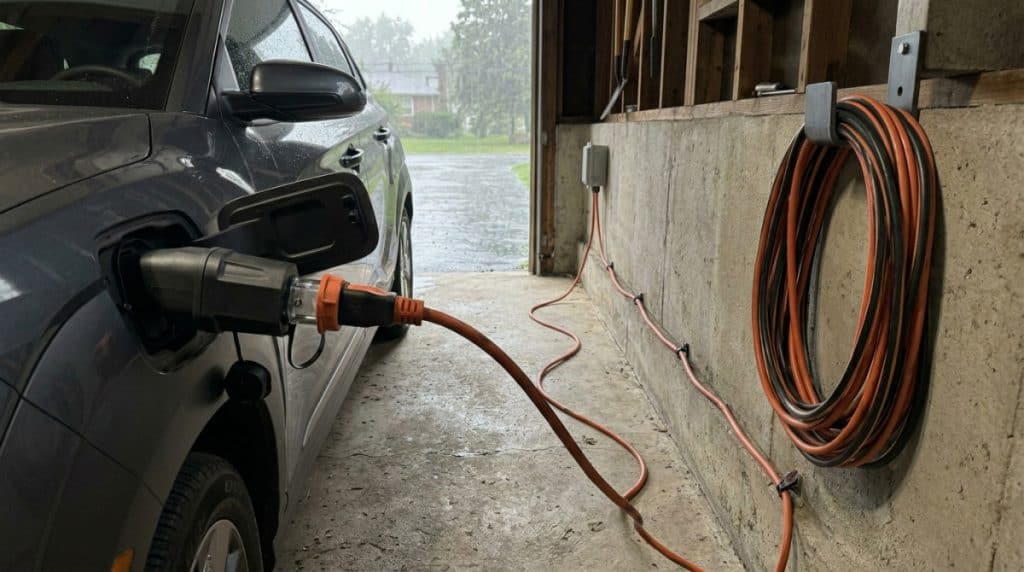
That is usually when one of two things happens. Either outages start happening often enough that you want something cleaner and safer, or you already think about your house in energy-management terms and want the car to be part of that system more intentionally.
That is the point where a manual transfer switch starts to make a lot of sense. It is the middle ground between “run cords everywhere” and “install a full premium backup system.” It gives you a safer, cleaner way to power selected circuits without trying to fake a whole-house solution.
And if somebody wants to go even further, that is where full V2H comes in. That route is more expensive and more complex, but it is also where things start to feel much closer to a true integrated home-backup setup.
So the ladder really looks like this:
- V2L if you want the simplest and cheapest useful option
- manual transfer switch if you want a safer, more permanent middle ground
- full V2H if you want a more seamless, whole-system approach
After the storm
When utility power comes back, it is tempting to just unplug everything and move on. But a few minutes of cleanup now makes the next outage a lot easier later.
Recharge the EV. Check the adapter ends. Look over the extension cords for wear, heat marks, or damaged insulation. Dry everything before storing it. Replace anything that seemed questionable during use. This is the part people skip, and then the next time a storm shows up, they find out the weak link when they actually need the setup.
That is why post-storm care matters. Good backup gear is not just about having it. It is about keeping it ready.
Your EV is still a way to get to work. But during a spring outage, it can also be something a lot more useful than most people realize: a quiet backup power source that is already sitting at home.
Related Resources:
- Tesla: Bidirectional Charging 101: Vehicle-to-Home
- Ford: What is Home Backup Power?
- Ford: How do I control Home Backup Power for my F-150 Lightning?
- Ford: Home Backup Power overview
- Hyundai USA: 2026 IONIQ 9 Features & Specs
- Hyundai Europe: Charging and V2L overview
- Joint Office of Energy and Transportation: SAE J3400 Charging Connector
- IEA: Global EV Outlook 2025, Electric vehicle batteries
- CPSC: Stop Using Male-to-Male Extension Cords
- CPSC: 2026 warning on male-to-male extension cords
- OSHA: Flexible Cords Safety Guidance