Skip to content

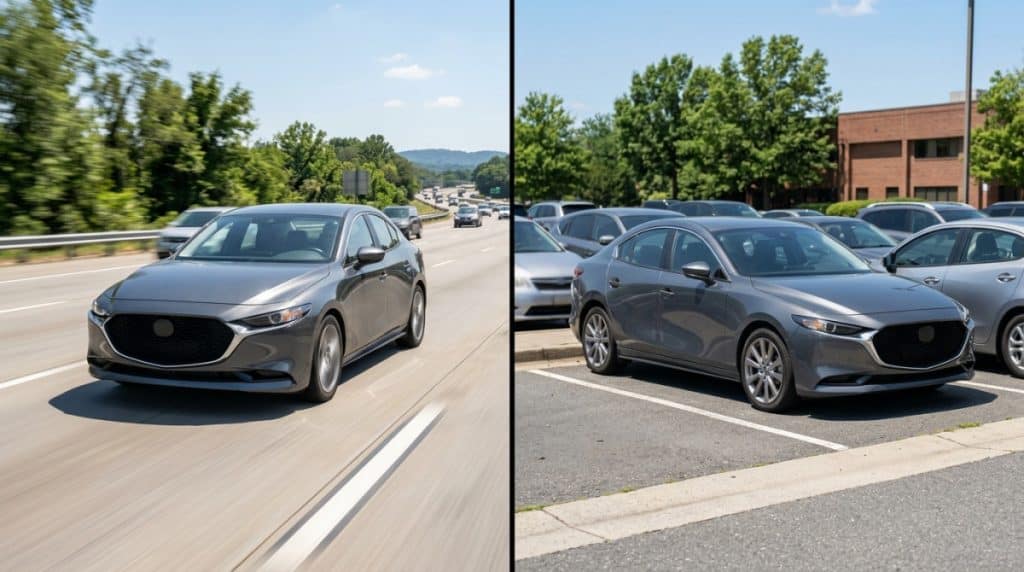
If your car’s AC blows cold while you’re moving but starts getting warm at stoplights, in traffic, or while idling in a parking lot, the system usually is not completely dead. More often, it is a system that can still cool when speed helps it, but struggles once the car is sitting still.
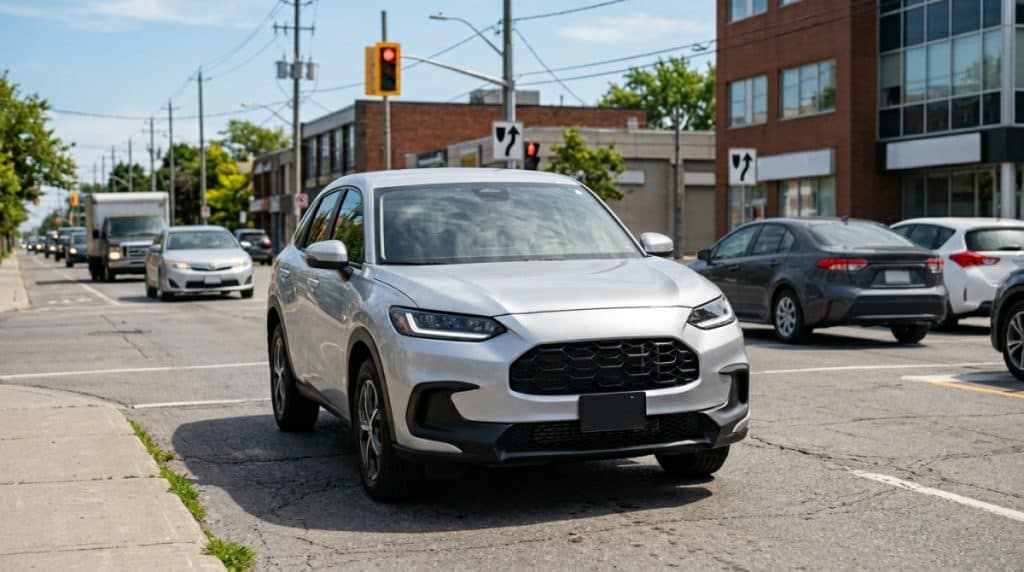
The most common reason is weak airflow across the condenser at idle, usually caused by a bad or weak condenser fan. But that is not the only possibility. Low refrigerant, a tired compressor, a dirty condenser, an overcharged system, or even an engine-cooling problem can create the same pattern.
The key idea is simple: if your AC only works while moving, the car is using road speed to cover up a weakness.
Quick answer

The short version is this: when the car is moving, the AC gets extra help from two things:
• more airflow through the front of the car
• higher engine speed, which usually means better compressor performance

When the car is sitting still, both of those advantages shrink. The AC has to rely much more on the condenser fan and the system’s own health. If something is weak, idle is where it usually shows up.

The most common causes are:
• a weak or failed condenser fan
• low refrigerant from a leak
• a weak compressor
• a dirty or blocked condenser
• an overcharged system
• engine cooling problems
• electrical or sensor issues
Why your AC works while driving but fails at idle
This problem makes more sense once you stop thinking of the AC as just “cold air” and start thinking of it as a heat-moving system.
Your AC does not create cold out of nowhere. It removes heat from inside the cabin and dumps that heat outside through the condenser at the front of the car. That is where airflow matters so much.
When you are driving, the AC gets two big advantages.
First, the engine is turning faster, so the compressor is usually turning faster too. That helps refrigerant move through the system more effectively.
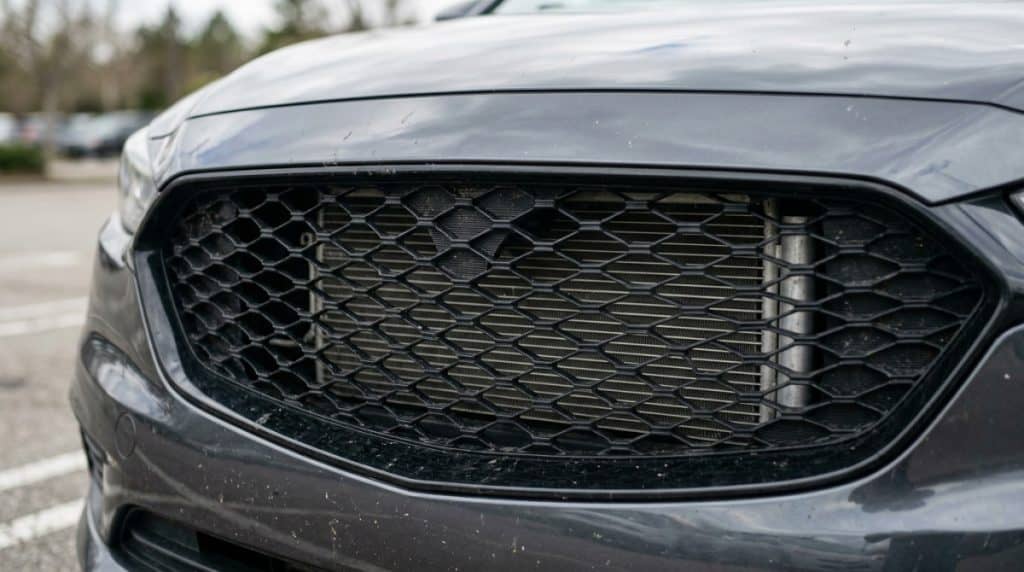
Second, the car’s movement pushes outside air through the grille and across the condenser. That extra airflow helps the condenser get rid of heat much more easily.
At idle, both of those advantages drop off. Compressor speed is lower, and the car loses the natural airflow it gets from moving down the road. At that point, the condenser fan has to do almost all the airflow work. If the fan is weak or something else is already borderline, vent temperatures start climbing.
That is why this problem often feels backward. The AC seems “fine” on the highway, so it is easy to assume nothing serious is wrong. But what is really happening is that road speed is hiding the issue.
A quick AC system overview
You do not need to know every part of the system to understand this symptom, but it helps to know the basics.
A typical car AC system works in four main stages:
1. Compression
The compressor pressurizes the refrigerant and moves it through the system.
2. Condensation
The condenser, which sits near the radiator, dumps heat outside the car.
3. Expansion
The refrigerant pressure drops as it passes through the expansion device.
4. Evaporation
The evaporator absorbs heat from cabin air, which is what gives you cold air at the vents.
For this specific symptom, the condenser is the part that matters most. If it cannot reject heat well enough at idle, the whole system starts struggling.
The most common causes, ranked by likelihood
1. Bad or weak condenser fan
This is the first thing to check.
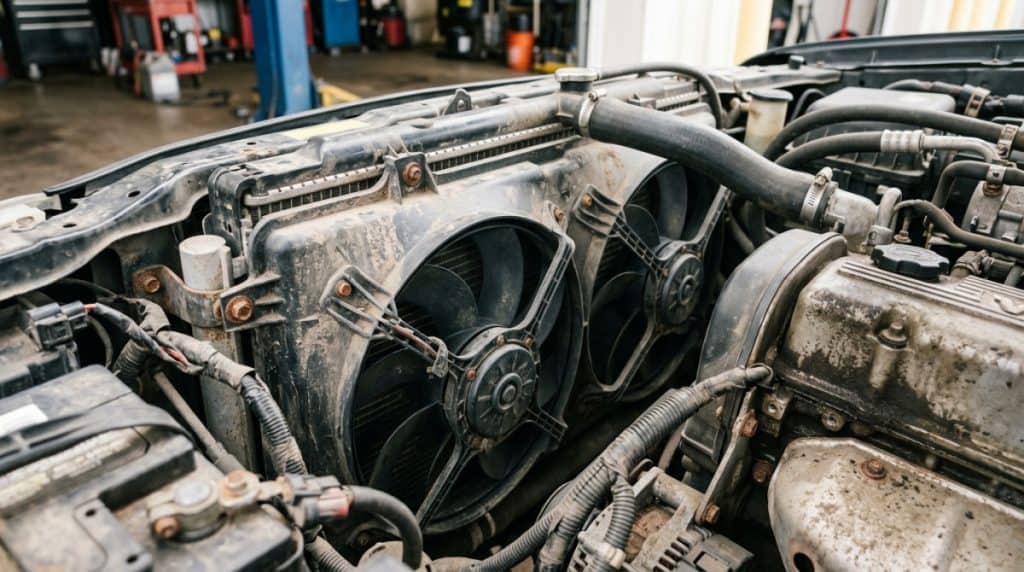
At idle, the condenser depends heavily on the fan to move air through it. If the fan does not come on, spins weakly, or is slowing down because the motor is tired, the condenser cannot get rid of heat properly. Pressure builds, cooling performance drops, and the air at the vents gets warmer.
Then the car starts moving again, outside airflow takes over, and the AC feels cold again. That is why a weak fan is such a common cause of this exact symptom.
Signs that point here:
- AC gets warm at stoplights
- AC gets cold again once the car starts moving
- the fan is not spinning or seems weak
- the problem gets worse on hot days or in traffic
On some newer vehicles, active grille shutters can cause a similar issue if they get stuck and restrict airflow at low speed. That is not as common as a basic fan problem, but it is worth keeping in mind.
2. Low refrigerant from a leak
Low refrigerant is another major possibility, especially if cooling has been getting weaker over time rather than suddenly.
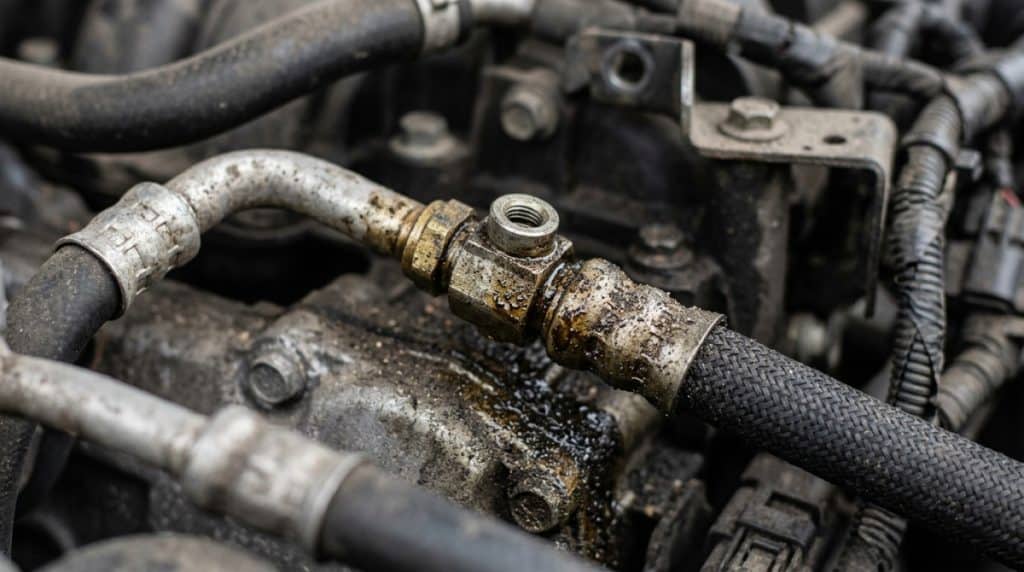
A low-charge system may still cool decently while driving because the higher compressor speed helps move what refrigerant is left. At idle, that margin disappears. The system may not be able to maintain the pressure balance it needs, so vent temperatures rise.
One important point here: refrigerant does not get used up like fuel. If it is low, there is a leak somewhere. It might be small and slow, but it is still a leak.
Clues that point toward low refrigerant:
- cooling gradually got worse over weeks or months
- the system works better at higher RPM
- the problem seems worse in hotter weather
- the AC may cycle oddly or take longer to cool down
3. Weak or failing compressor
A worn compressor can also cause this exact pattern.
If the compressor is getting weak internally, it may still pump well enough at higher RPM to give you decent cooling while driving. But at idle, it may not build enough pressure difference to keep the system working the way it should.
This tends to show up as:
- cold air mostly at highway speed
- weaker cooling in traffic
- cooling that has been fading gradually
- possible whining, grinding, or inconsistent compressor behavior
This is one of the more expensive causes, which is why it makes sense to rule out airflow and refrigerant issues first.
4. Dirty or blocked condenser
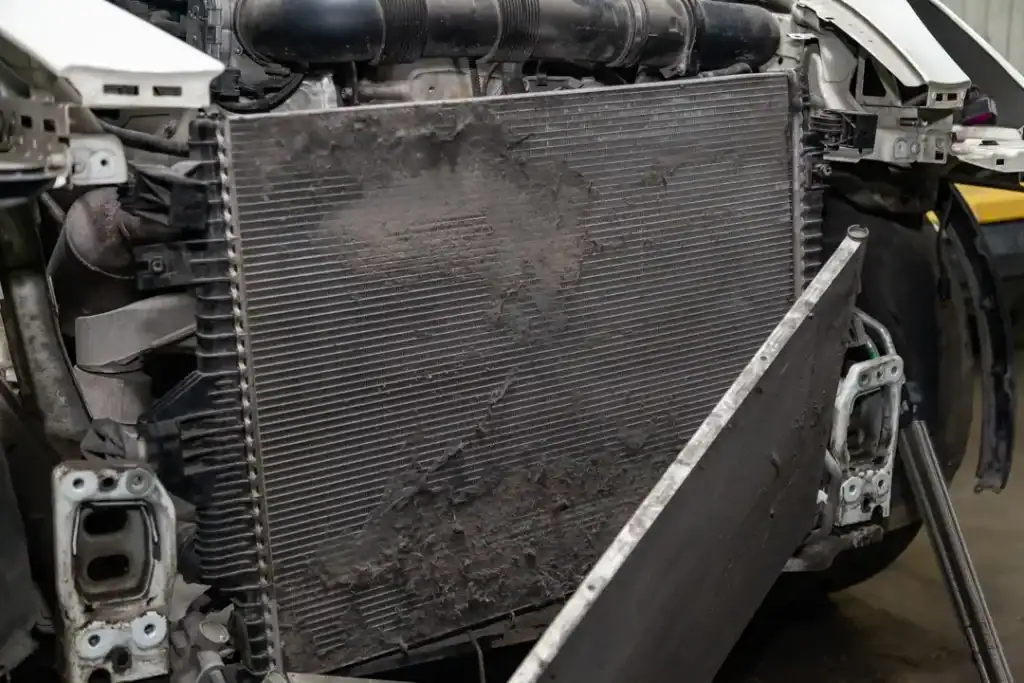
A condenser packed with dirt, bugs, leaves, or bent fins can also act fine while driving and weak at idle.
That happens because highway airflow can sometimes brute-force enough air through the restriction to keep the system working. At idle, the weaker fan airflow may not be enough to overcome the blockage.
This is especially common on older vehicles or vehicles that spend a lot of time on dusty roads, highways, or in areas where debris collects in the front grille.
5. Overcharged AC system
Too much refrigerant can be just as problematic as too little.
If the system has been overcharged, high-side pressure can climb too much, especially at idle when condenser airflow is limited. The system may cycle poorly, cool inconsistently, or even shut itself down to protect components.
This is one reason a quick DIY recharge can backfire. People see weak cooling and assume the system just needs more refrigerant, when the real problem might be airflow, fan performance, or something else entirely.
6. Engine cooling problems
Sometimes the issue is not the AC loop by itself.
If the engine cooling system is running hot, the car may cut back AC performance or shut off compressor load to reduce strain and protect the engine. So if the AC gets warm at idle and your engine temperature is climbing, that is no longer just an AC comfort problem.
At that point, the cooling system itself needs attention too.
7. Electrical or sensor issues
Pressure sensors, relays, fan-control circuits, temperature sensors, and control modules can all create weird AC behavior.
These are not usually the first things to suspect, but they move higher on the list if:
- the fan seems to work normally
- refrigerant charge looks okay
- cooling behavior is inconsistent or random
- the car has related warning lights or odd temperature readings
Quick troubleshooting guide
Here is the easiest way to think about the symptom pattern:
| Symptom | Most likely cause | What to check first |
|---|---|---|
| Warm at idle only | Condenser fan | Make sure the fan comes on with the AC |
| Cooling slowly got worse over time | Low refrigerant | Look for leak signs or get system pressures tested |
| Cold mostly at higher speed | Weak compressor | Compare vent temps at idle versus slightly raised RPM |
| Cooling got weird after a recharge | Overcharge | Review service history before adding anything else |
| AC gets weak and engine temp rises | Cooling-system issue | Check fans, coolant level, and overheating signs |
How to diagnose it step by step
You can do a useful first-round check without gauges or special tools.
Step 1: Turn the AC on and check the fan
Start the car, turn the AC on, and look under the hood. On many cars, the condenser or radiator fan should come on quickly once the AC is commanded on.
If it does not come on, spins weakly, or sounds rough, that is one of the best early leads you can get.
Step 2: Compare idle versus a small rev
Let the car idle and feel the air from the vents. Then raise engine speed a little.
If the air gets noticeably colder when RPM rises, that strongly suggests the system is struggling at low speed rather than completely failing.
Step 3: Inspect the condenser face
Look through the grille and check the condenser for dirt, bugs, leaves, or obvious bent fins. If airflow is being blocked, that can absolutely cause warm-at-idle behavior.
Step 4: Watch for patterns
Pay attention to when the problem gets worse.
Ask yourself:
- Is it worse in traffic?
- Is it better at night?
- Did it get weaker gradually?
- Did someone recently add refrigerant?
- Does the engine also seem to run hotter when the AC gets weak?
Those patterns help narrow things down much faster than random guessing.
What this can cost in the real world
This is one of those problems where the final bill depends a lot on what is actually wrong.
A weak condenser fan, dirty condenser, or minor airflow issue is usually much easier to deal with than a failing compressor or a contaminated system. That is why it makes more sense to pay for a proper diagnosis before authorizing parts. A fan problem and a compressor problem can feel surprisingly similar from the driver’s seat, but the repair bills can be very different.
The practical takeaway is simple: get the cause confirmed before committing to a repair. That matters more here than chasing a rough number too early.
Why DIY recharge cans can make this worse
This is worth saying clearly: a quick recharge can can absolutely make an idle-only AC problem worse.
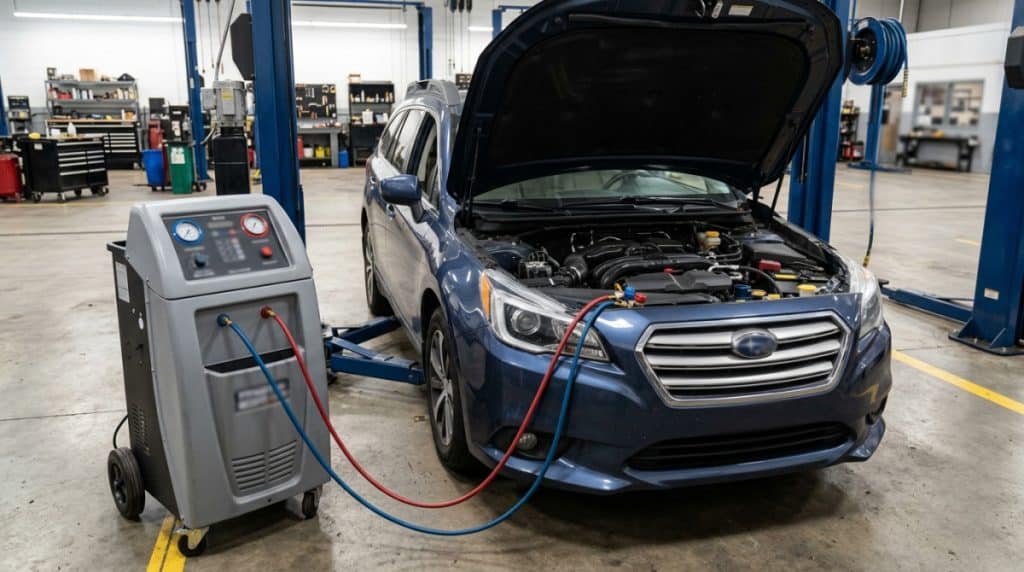
The reason is simple. A lot of warm-at-idle AC problems are really airflow and pressure-management problems, not just “low refrigerant” problems. If high-side pressure is already too high because airflow across the condenser is weak, adding more refrigerant can make the system even less stable.
That can lead to:
- worse cooling
- compressor cycling problems
- overcharge
- seal damage
- more expensive repairs later
Some sealant-based products can create even bigger trouble by contaminating the system.
So if the symptom is specifically cold while moving, warm at idle, do not automatically assume it just needs a recharge.
When it is safe to drive and when it is not
If the issue is only the AC and the engine is staying at normal temperature, the car is usually still drivable. It may be uncomfortable, but that is different from being immediately dangerous.
It is not something to brush off if:
- the engine temperature starts climbing
- the fan is not working at all
- the AC cuts off and the engine also seems hotter in traffic
- the compressor is making ugly noises
- the serpentine belt is slipping or squealing
At that point, the problem may be bigger than cabin comfort.
How to help prevent this problem
A few simple habits can help reduce the odds of dealing with this later:
- keep the condenser face clean
- run the AC regularly, even in cooler months
- do not ignore weak cooling early
- avoid guessing with refrigerant cans
The earlier you catch an airflow or fan problem, the better your odds of keeping it from turning into a larger compressor or system repair.
What this usually means
If your AC only works while moving, start by checking airflow and condenser fan operation before assuming the whole system is bad.
FAQ
Why does my AC get warm when I stop?
Usually because airflow across the condenser drops too much at idle. A weak condenser fan is the most common reason.
Can low refrigerant cause this?
Yes. A low-charge system may still cool better at higher RPM, but struggle at idle because it cannot maintain pressure as easily. And if refrigerant is low, there is a leak somewhere.
How do I know if my condenser fan is working?
With the engine running and the AC on, the fan should usually come on quickly. If it does not spin, spins weakly, or sounds rough, that is one of the first things to check.
Can a dirty condenser cause the same symptom?
Yes. If the condenser is packed with bugs, dirt, or bent fins, airflow gets restricted. Driving speed can sometimes mask that. Idle usually cannot.
Is this expensive to fix?
It depends on the cause. A fan or airflow problem is usually much less serious than a compressor replacement. That is why diagnosis matters more than guessing.
Can I keep driving with this issue?
Usually yes, if the problem is only the AC and the engine is not overheating. But if engine temperature rises or the car starts struggling in traffic, stop treating it like just a comfort problem.