Skip to content

Seeing your tire pressure rise on a hot summer day can make it seem like the tires contain too much air. You might even feel tempted to release a few pounds of pressure before continuing your drive.
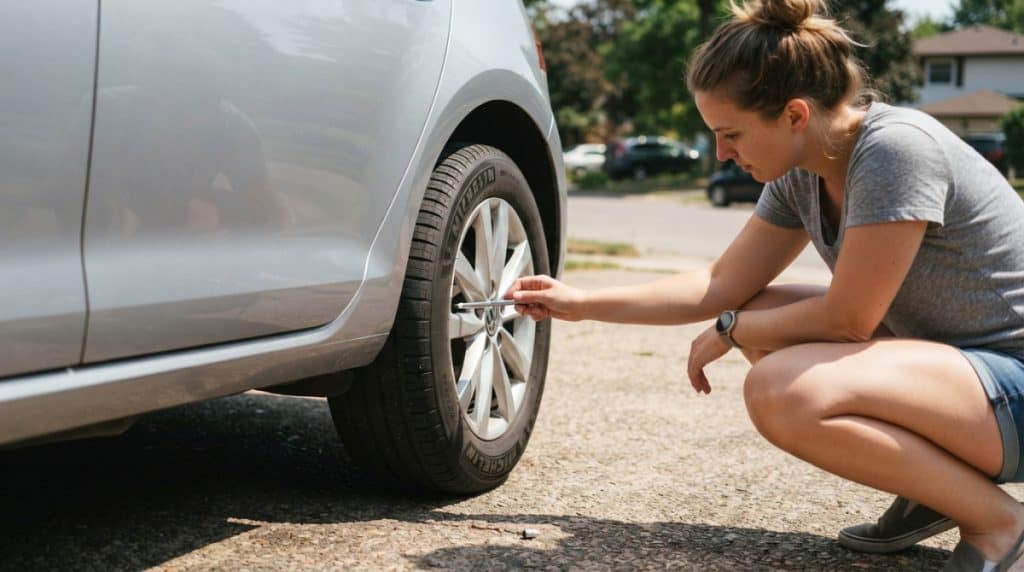
However, that higher reading is often completely normal. Tires warm up in hot weather, and driving creates even more heat inside them. Releasing air based on a warm reading could leave your tires underinflated once they cool down.
Quick Answer: Should You Let Air Out of Your Tires in Hot Weather?
No, you should not let air out of your tires simply because the pressure rises during hot weather or after driving.
The recommended PSI shown on the vehicle’s tire information placard is a cold tire pressure. Warm tires normally read higher than cold tires, so let them cool before deciding whether they are overinflated.
Only release air when a cold pressure reading is above the vehicle manufacturer’s recommendation.
Why Tire Pressure Goes Up in Hot Weather
The air inside a tire responds to temperature changes. As the air becomes warmer, the pressure inside the tire increases.
Summer heat can warm the tire while the vehicle is parked, but driving adds more heat through tire flexing and contact with the road. Hot pavement, longer trips, higher speeds, and heavy loads may all contribute to a higher pressure reading.
A tire sitting in direct sunlight may also read slightly higher than one on the shaded side of the car. That difference does not automatically indicate a leak or an inflation problem. It may simply mean the tires are being measured under different temperature conditions.
Most importantly, a higher warm reading does not mean someone overfilled the tire.
Cold Tire Pressure vs. Warm Tire Pressure
The recommended PSI listed on the driver-side doorjamb or in the owner’s manual refers to the pressure when the tires are cold.
The National Highway Traffic Safety Administration defines cold tires as tires on a vehicle that has not been driven for at least three hours. NHTSA recommends checking all tires under these conditions for the most accurate reading.
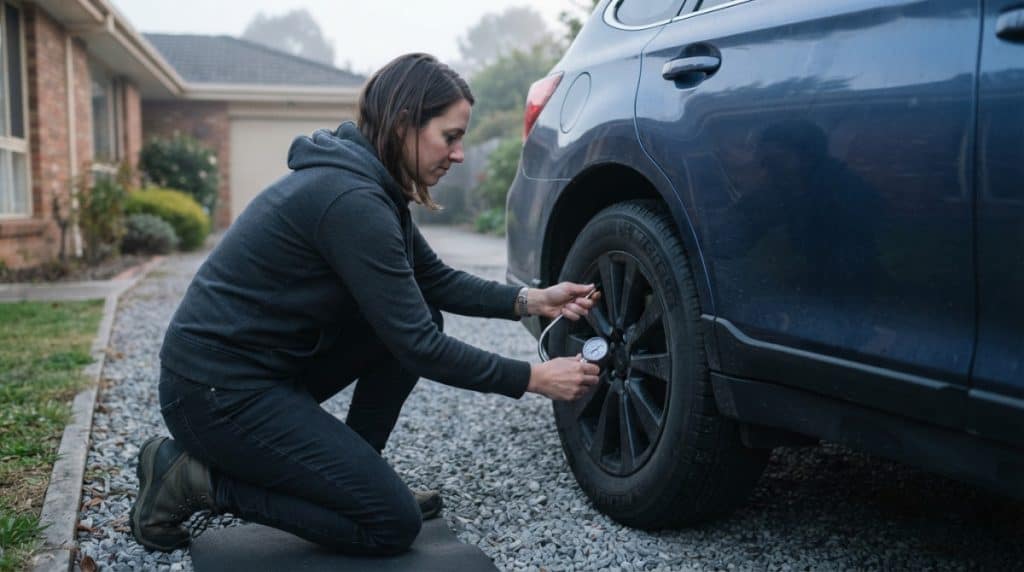
After driving, the tires naturally become warmer and their pressure rises. You should not lower that warm pressure until it matches the cold recommendation.
For example, suppose your vehicle placard recommends 35 PSI. After driving for an hour on a hot afternoon, your gauge reads 38 PSI. That does not necessarily mean you need to release three pounds of air.
Park the vehicle, let the tires cool, and check them again. Lowering them to 35 PSI while they are still warm could cause the pressure to fall below the recommendation once the tires cool.
When Should You Actually Let Air Out?
Removing air may be appropriate when the tires are cold and the reading is still above the vehicle manufacturer’s recommended PSI.
This can happen when:
- The tires were accidentally overfilled
- Someone adjusted them while they were warm
- The pressure was set using the number printed on the tire sidewall
- The vehicle has different recommended pressures for the front and rear tires
The PSI printed on the tire sidewall is not the normal pressure target for your vehicle. NHTSA explains that this number represents the tire’s maximum pressure, while the correct cold pressure is listed on the vehicle placard or in the owner’s manual.
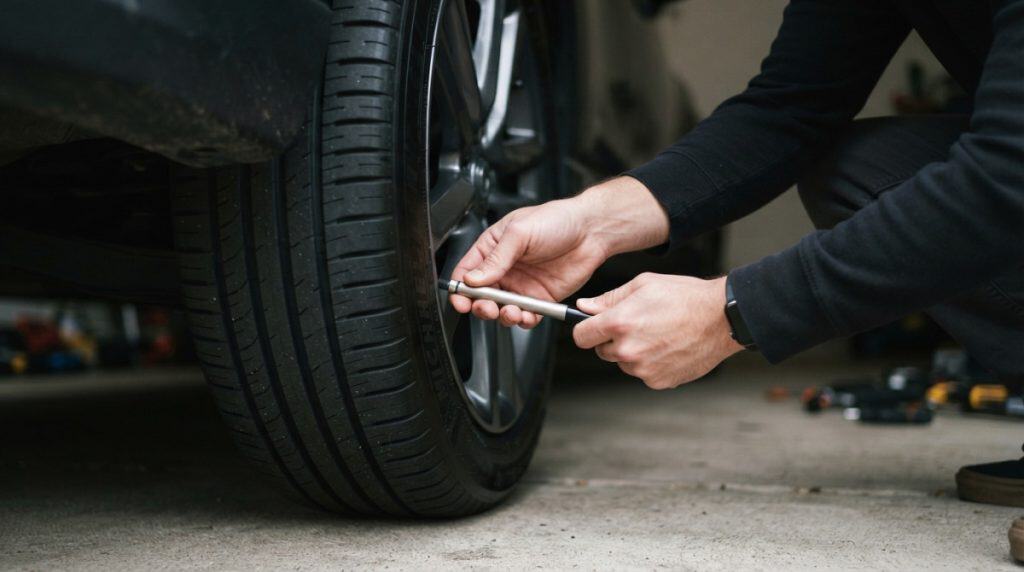
When a cold tire is genuinely overinflated, release air in small amounts and recheck the pressure with a reliable gauge.
What to Do in Three Common Situations
The Pressure Is High After Driving
Do not release air immediately.
A higher reading after driving is expected because the tires have warmed up. Park the vehicle and check them again after they have cooled for at least three hours. Michelin also advises drivers not to reduce pressure while the tires are hot.
The Pressure Is High Before Driving in the Morning
A morning reading is often more useful because the vehicle has usually been parked for several hours.
Compare each tire with the pressure shown on the vehicle placard. If a cold reading is genuinely high, slowly release a small amount of air and check it again.
Remember that some vehicles specify different pressures for the front and rear tires.
A Warm Tire Is at or Below the Recommended Cold PSI
A warm tire that is only at, or already below, the recommended cold pressure may be underinflated.
NHTSA advises adding air to the recommended cold pressure when a tire appears underinflated after the vehicle has been driven. It can then be checked and corrected more precisely once it is cold. Driving on a significantly underinflated tire is riskier than temporarily adding enough air to continue safely.
Can Direct Sunlight Affect Tire Pressure Readings?
Direct sunlight can warm one side of a parked vehicle more than the other. As a result, a sun-exposed tire may show a slightly higher reading than a shaded tire.
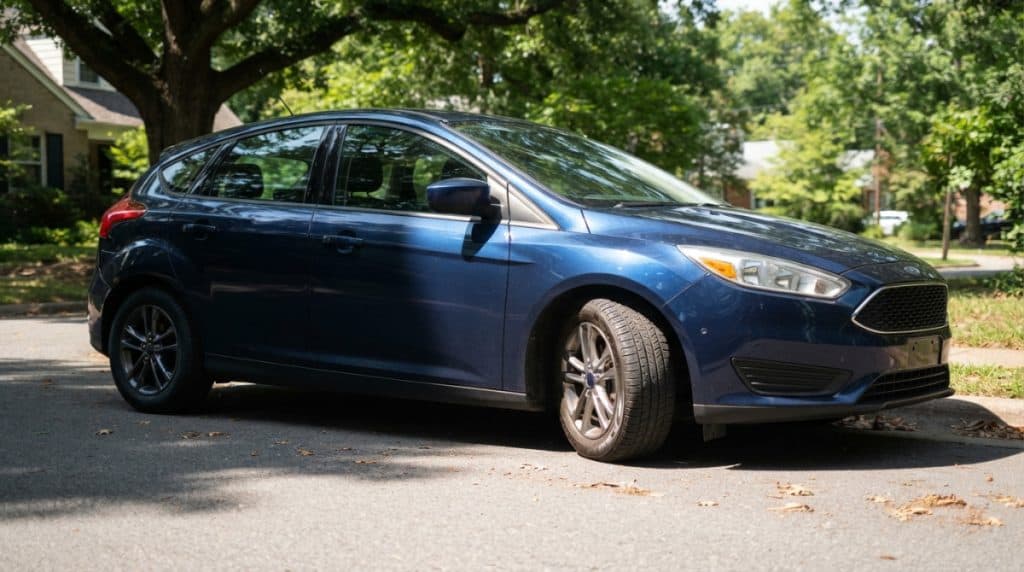
For the most consistent comparison, measure all four tires under similar conditions. Early morning is often convenient, or you can park the car in a shaded area for several hours before checking.
Do not immediately assume that uneven warm readings indicate a leak. However, a tire that repeatedly loses pressure after being checked under the same cold conditions should be inspected. Our guide on how to tell if a tire is flat or just needs air explains what to watch for.
Should You Lower Tire Pressure for Summer?
Most drivers do not need a separate summer tire-pressure setting.
Continue using the vehicle manufacturer’s recommended cold PSI unless the owner’s manual provides different instructions. Do not intentionally lower the pressure because the weather is hot, and do not add extra air based on the maximum PSI printed on the tire.
Seasonal temperature changes affect the reading, but the method remains the same throughout the year: check the tires while cold and compare them with the vehicle placard. The same principle applies when adjusting tire pressure during winter.
Separate pressure recommendations may apply when towing or carrying a heavy load. Check the owner’s manual rather than guessing how much additional pressure is needed.
What About Long Summer Road Trips?
Check your tires while they are cold before beginning a long drive. Adjust them to the manufacturer’s recommendation and look for visible cuts, bulges, cracking, or obvious air loss.
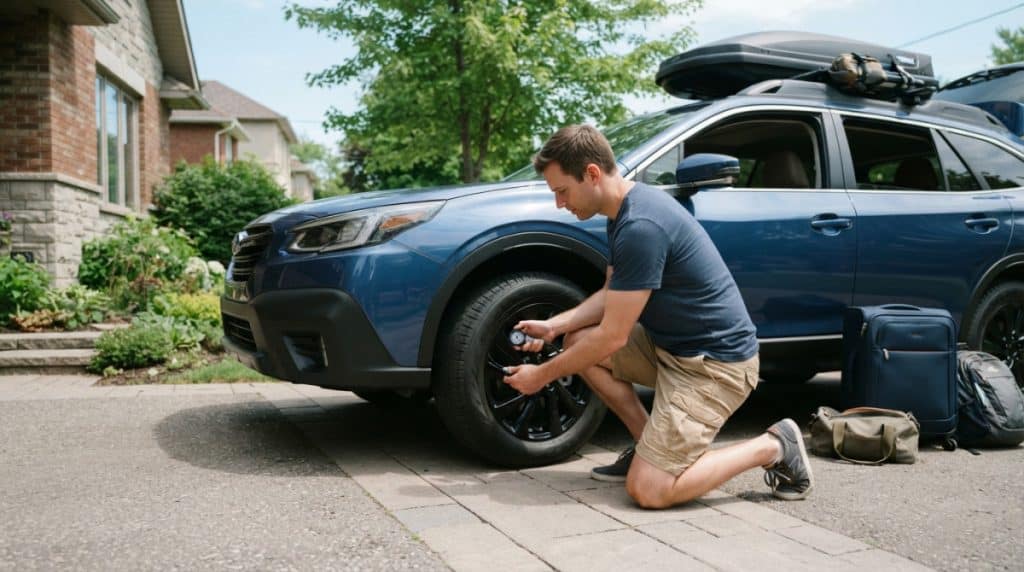
Do not release air at a fuel stop simply because the tires feel hot or show a higher reading. Pressure normally rises during a long drive.
If a reading appears unusual, check it again after the tires have cooled. For a more complete pre-trip inspection, follow our beginner’s guide to checking tire health.
Sustained high temperatures can contribute to tire deterioration, especially when combined with underinflation, overloading, or existing damage. Our guide to tire blowout causes and prevention covers those risks in greater detail.
Common Hot-Weather Tire Pressure Mistakes
Bleeding air from warm tires: This may leave the tires underinflated after they cool.
Using the sidewall PSI as the target: The sidewall number is not a replacement for the vehicle manufacturer’s recommendation.
Checking only one tire: Temperature, leaks, and vehicle specifications can produce different readings across the vehicle.
Comparing sunny and shaded tires: Measure them under similar conditions whenever possible.
Depending only on the TPMS light: NHTSA notes that TPMS warnings normally activate only after a tire becomes significantly underinflated. Manual pressure checks are still necessary.
Ignoring repeated pressure loss: A tire that regularly needs more air may have a puncture, damaged valve, wheel problem, or another leak.
FAQs
How much can tire pressure increase in hot weather?
There is no exact increase that applies to every situation. Outdoor temperature, sunlight, driving time, speed, load, road temperature, and tire construction can all affect the reading.
Can hot tire pressure cause a blowout?
The normal pressure increase that occurs while driving is expected. Blowout concerns are more closely connected with severe underinflation, excessive loading, existing damage, deterioration, or improper inflation.
Should tire pressure be lower during summer?
No. Use the vehicle manufacturer’s recommended cold pressure unless the owner’s manual states otherwise.
Should I check tire pressure in the morning?
Morning is often a good time because the vehicle may have been parked for several hours. What matters most is that the tires are cold and have not recently been driven.
Can hot weather turn on the TPMS light?
Hot weather usually raises pressure rather than lowering it. A warning light may instead point to a leak, incorrect inflation, a sensor issue, or pressure changes from shifting temperatures.
How long should tires cool before checking the pressure?
NHTSA recommends checking them after the vehicle has not been driven for at least three hours.
Let the Tires Cool Before Removing Air
A higher tire-pressure reading during hot weather or after driving is usually normal. Do not release air until the tires have cooled and you have compared the readings with the vehicle manufacturer’s recommended cold PSI.
Checking every tire under consistent conditions helps prevent an unnecessary adjustment from turning properly inflated tires into underinflated ones.