Skip to content

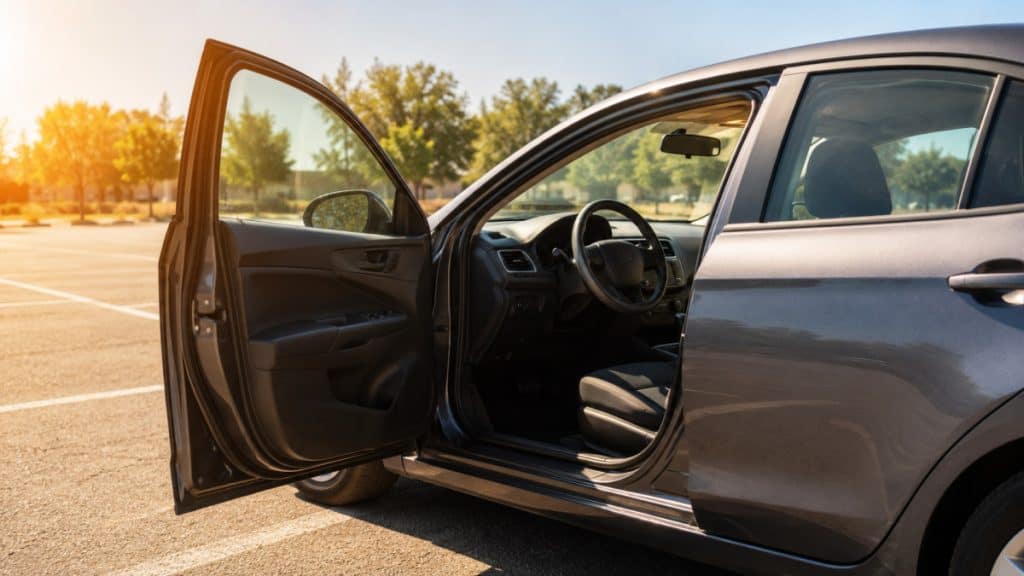
Getting into a car that has been sitting in the summer sun can feel like opening an oven door.
The steering wheel is hot, the seats are uncomfortable, and the air inside feels heavier than the air outside. Your first instinct might be to blast the AC right away. Someone else might tell you to roll the windows down first.
The real answer is not choosing one forever. It is using each one at the right time.
This guide is about cooling the passenger cabin after the vehicle has been parked in the sun. It is not about an overheating engine. If the temperature gauge is climbing or an engine-temperature warning appears, that is a separate mechanical issue.
Quick Answer: What Cools a Hot Car Faster?
Opening the windows is usually the fastest way to release the hottest trapped air inside a parked car. However, open windows can only bring the cabin closer to the outdoor temperature.
For the fastest overall cooling:
- Open the doors or windows briefly.
- Start driving with the windows down.
- Turn on the AC.
- Close the windows once the worst heat is out.
- Use recirculation once the cabin starts cooling.
In hot and humid summer weather, the AC will usually provide the lower and more comfortable final temperature.
Simple rule: vent the hot air first, then let the AC cool what remains.
Why a Parked Car Gets So Hot
A parked car heats up quickly because sunlight passes through the glass and warms the dashboard, steering wheel, seats, floor, and trim.
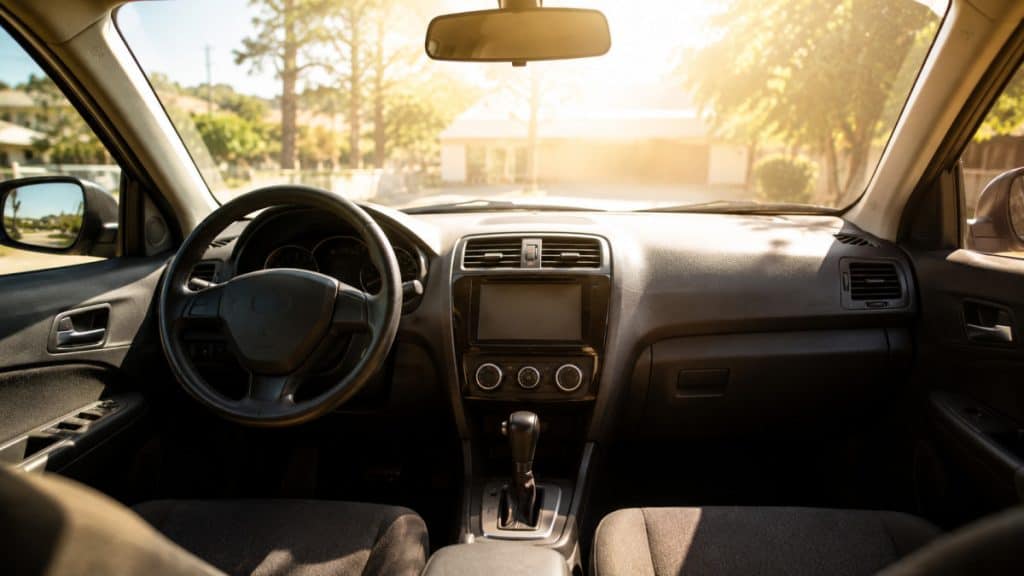
Once those surfaces get hot, they keep releasing heat into the cabin. The glass lets sunlight in, but the enclosed interior does not let heat escape quickly. That is why the inside of the car can feel much hotter than the outdoor air.
Dark dashboards, black seats, large windshields, and direct sun exposure can make this worse. Even after you start the car, the cabin materials may continue releasing heat for several minutes.
That is why blasting the AC inside a sealed, heat-soaked cabin can feel slow at first. The system is not just cooling the air. It is also fighting all the hot surfaces around you.
Windows Remove Heat, AC Lowers Temperature
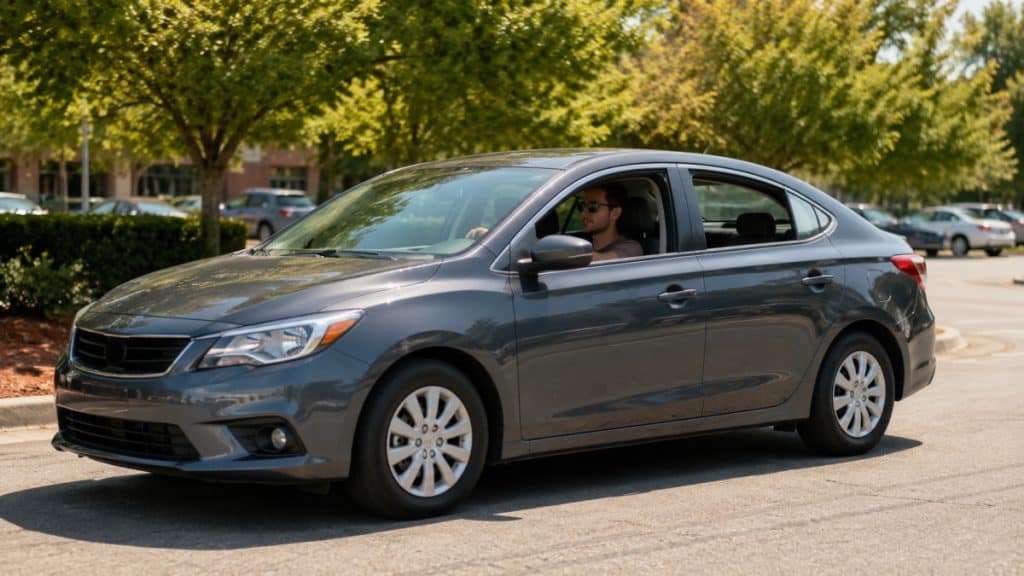
Opening the windows gives the trapped hot air somewhere to go.
If the air inside the car is hotter than the air outside, opening the windows can create a quick first drop in cabin temperature. Starting to drive helps even more because moving air pushes heat out faster than letting it sit.
Opening more than one window can improve airflow through the cabin. A front window and an opposite rear window may move air better than one cracked window.
But windows have a clear limit. They do not actively cool the air. They can make the cabin closer to the outdoor temperature, but they cannot make it cooler than the air outside.
That is where the AC takes over. Once the worst trapped heat is gone, the AC can lower the cabin below the outdoor temperature and remove moisture from the air. That matters during humid summer weather, especially in places like Georgia.
Windows are for the first rush of heat. AC is for real comfort.
The Fastest Way to Cool a Hot Car
Here is the routine that works for most drivers.
Step 1: Open the Doors or Windows
Let the hottest trapped air escape before expecting the AC to cool the cabin.
This does not need to take long. Even a short venting period can make the car feel less brutal before you start driving.
Step 2: Start Driving
The cabin usually ventilates better once the vehicle is moving.
Idling with the AC on can cool the car eventually, but driving helps push air through the cabin and gives the AC system better airflow.
Step 3: Turn On the AC
Use a strong fan setting at first if the cabin is extremely hot.
If your car has automatic climate control, it may already use aggressive cooling at the beginning and then settle down once the cabin temperature drops.
Step 4: Close the Windows
Once the cabin no longer feels much hotter than the outside air, close the windows.
Leaving them open for the whole drive makes the AC cool air that immediately escapes.
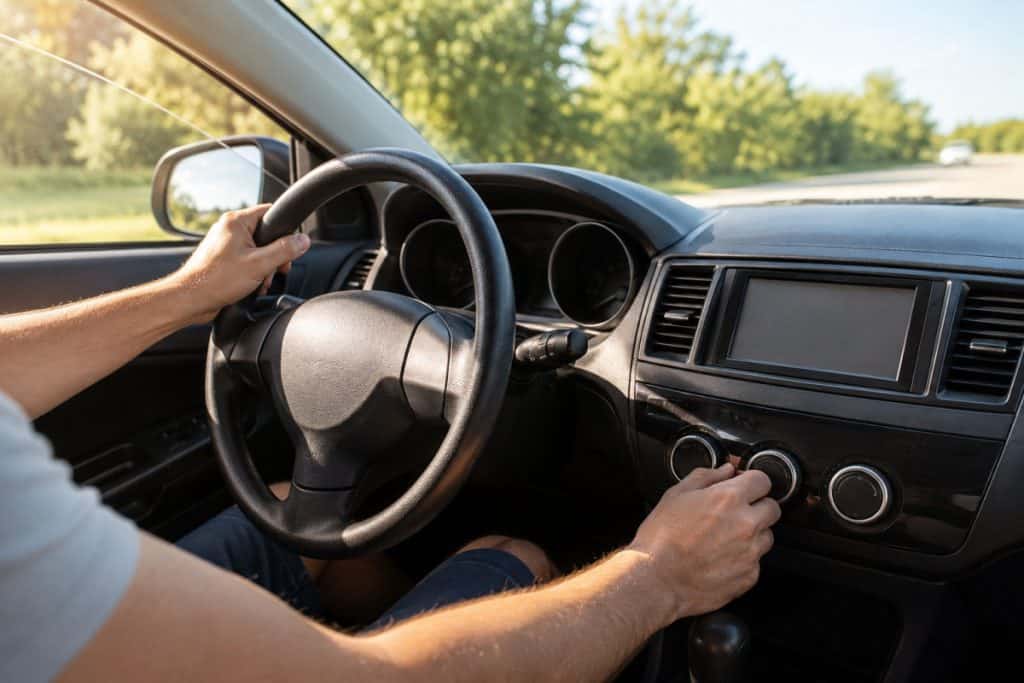
Step 5: Use Recirculation
Recirculation is most useful after the hottest air is gone.
At that point, the system can keep cooling air that is already inside the cabin instead of constantly pulling in hot outdoor air.
Step 6: Back Off Once It Feels Comfortable
You usually do not need maximum fan speed for the entire drive.
Lower the fan, raise the temperature slightly, or let automatic climate control maintain the cabin. The goal is comfort, not turning the car into a refrigerator.
AC vs. Windows Down in Different Driving Conditions
| Situation | Better choice | Why |
|---|---|---|
| Car parked in direct sun | Windows first, then AC | Releases trapped heat quickly |
| First minute of driving | Windows down briefly | Moving air pushes hot air out |
| Stop-and-go traffic in extreme heat | AC with windows closed | Open windows may not move enough air |
| Mild city driving | Windows may be enough | Outdoor air may already feel comfortable |
| Hot and humid weather | AC | Lowers temperature and removes moisture |
| Highway driving | AC with windows closed | Keeps cooling steady and reduces drag |
| Rain or fogging | AC | Helps manage humidity and visibility |
| Smoke, dust, pollen, or poor air quality | AC with windows closed | Limits outside air entering the cabin |
Comfort and visibility matter more than chasing a tiny fuel difference. If the cabin is hot enough to distract you, cool it down and drive safely.
Does AC or Windows Down Use More Gas?
AC and open windows can both affect fuel economy, but they do it in different ways.
AC adds load to the engine in a gasoline-powered vehicle. The harder the system works, especially when cooling a heat-soaked cabin, the more energy it needs.
Open windows create aerodynamic drag. At low speeds, that drag usually matters less. At highway speeds, open windows disturb airflow around the vehicle and can make the engine work harder to maintain speed.
A practical way to think about it:
- Low speed and mild weather: windows may be enough.
- Highway speed: closed windows and AC usually make more sense.
- Hot and humid weather: AC is usually worth using.
- Short trips after parking in the sun: venting first reduces the AC’s hardest job.
There is no exact speed where the answer changes for every vehicle. A boxy SUV, small sedan, pickup truck, older AC system, hybrid, and EV can all behave differently.
For this article, fuel use is the secondary question. The main goal is cooling a hot cabin quickly without making the process harder than it needs to be.
Should You Idle With the AC On Before Driving?
A short moment of idling while you buckle up, load passengers, or set your mirrors is normal.
But idling for a long time just to cool the car is usually not the best routine. It burns fuel while the vehicle is not moving, and the cabin often cools better once the car is moving and air is flowing.
A better routine is to vent the cabin briefly, start driving, then let the AC settle the temperature.
If you use remote start, follow your vehicle’s instructions and local rules. Never leave a running vehicle unattended where it is unsafe or prohibited.
Keeping the Cabin Cooler Before You Get Back In
The fastest way to cool a hot car is useful, but it is even better if the cabin does not get as hot in the first place.
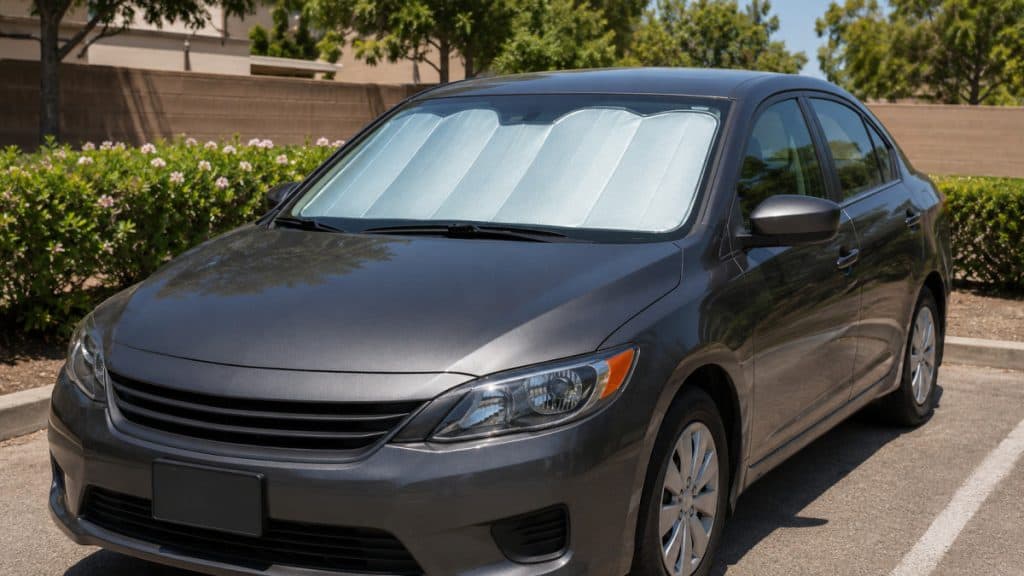
A windshield sunshade can reduce direct sunlight on the dashboard, steering wheel, and front seats while the car is parked. Window tint can also reduce some solar heat entering through the glass, depending on the type of film and the windows covered.
These do not replace AC, and they do not make a parked car safe for people or pets. They simply reduce the starting heat load so the cabin may feel less brutal when you get back in.
This also leads into the next useful question: should you rely on a removable sunshade, window tint, or both? Tint works all the time on treated glass, while a sunshade gives stronger parked protection through the windshield.
For a deeper breakdown, see our guide on whether car window tint is worth it.
When Slow Cooling May Point to an AC Problem
Technique only helps if the AC system is actually working.
If the air stays warm after several minutes of driving, the system may have a problem. Other warning signs include weak airflow, cooling that only works while the car is moving, unusual noises when the AC turns on, or cooling that has become noticeably weaker than it used to be.
Do not assume every hot cabin is normal summer behavior. If the AC cannot cool the car after the trapped heat is gone, the system may need inspection.
For more help, read our guide on how to troubleshoot a vehicle’s air conditioner.
Common Mistakes That Make a Hot Car Take Longer to Cool
Keeping the Windows Closed From the Start
This traps the hottest air inside and forces the AC to work harder at the beginning.
Leaving the Windows Open for the Entire Drive
Once the AC is cooling effectively, open windows let cooled air escape.
Running the AC While Parked for Too Long
The cabin usually cools better once the vehicle is moving. Long idling also wastes fuel.
Using Recirculation Too Early
Recirculation works better after the worst heat has escaped.
Expecting Open Windows to Beat the Outdoor Temperature
Natural airflow can make the car feel better, but it cannot cool the cabin below the outside air temperature.
Confusing Cabin Heat With Engine Overheating
A hot interior is uncomfortable. An overheating engine is a separate mechanical problem. If the temperature gauge rises, read our guide on how to cool down a car engine while driving.
Never Leave Children or Pets in a Parked Car
Open windows and cracked windows do not make a parked car safe.
A parked vehicle can heat up quickly, even when the outside temperature does not feel extreme. Cracking the windows does little to prevent dangerous heat buildup.
Do not leave children, pets, older passengers, or anyone vulnerable inside a parked vehicle while you run an errand. This article is about making the car comfortable before driving, not making a parked car safe to wait in.
Frequently Asked Questions
Is it better to turn on the AC immediately or open the windows first?
Open the windows first when the cabin is much hotter than the outside air. Then turn on the AC and close the windows once the trapped heat is gone.
How long should the windows stay open?
Until the cabin no longer feels dramatically hotter than the outdoor air. For many drivers, that may only be the first minute or two.
Should I open all four windows?
Opening more than one window can improve airflow. The best setup depends on the vehicle, speed, and wind direction.
Does turning the AC to the lowest setting cool the car faster?
It depends on the climate-control system. In many cars, strong fan speed and good recirculation timing matter more than forcing the lowest temperature setting forever.
Is recirculation better for cooling?
Yes, but usually after the hottest trapped air has escaped. It helps the AC keep cooling air that is already inside the cabin.
Do black cars take longer to cool?
They can. Dark paint and dark interior surfaces may absorb more heat, but glass area, parking direction, tint, interior material, and sun exposure also matter.
Does cracking the windows while parked keep the car cool?
Not enough to rely on. It may release a small amount of heat, but it will not keep the cabin safe or comfortably cool during intense summer heat.
Can I leave a child or pet in the car if the windows are open?
No. Partially open windows do not prevent dangerous heat buildup inside a parked vehicle.
Does running the AC make an overheating engine worse?
AC adds load to the engine, but engine overheating is a separate issue. If the engine temperature rises, treat it as a mechanical warning.
The Bottom Line
The fastest way to cool a hot car is not a debate. It is a sequence.
Dump the trapped heat first. Then close the cabin and let the AC do the real cooling.
That is the whole trick: windows for the first minute, AC for the rest of the drive.
External Resources
- Department of Energy: Fuel Economy in Hot Weather
- NHTSA: Child Heatstroke Prevention
- Stanford Medicine: Parked Cars Get Dangerously Hot
- Pediatrics: Heat Stress From Enclosed Vehicles
- Oak Ridge National Laboratory: Effects of Air Conditioner Use on Real-World Fuel Economy
- NREL: Light-Duty Vehicle Thermal Management