Skip to content

Two Heavyweights, Still Throwing Punches
Midsize sedans might not dominate headlines like SUVs or electric vehicles these days, but models like the Toyota Camry and Honda Accord continue to hold their ground.
Both have long-standing reputations for reliability, value, and practicality, but in 2025, the competition feels tighter than ever.
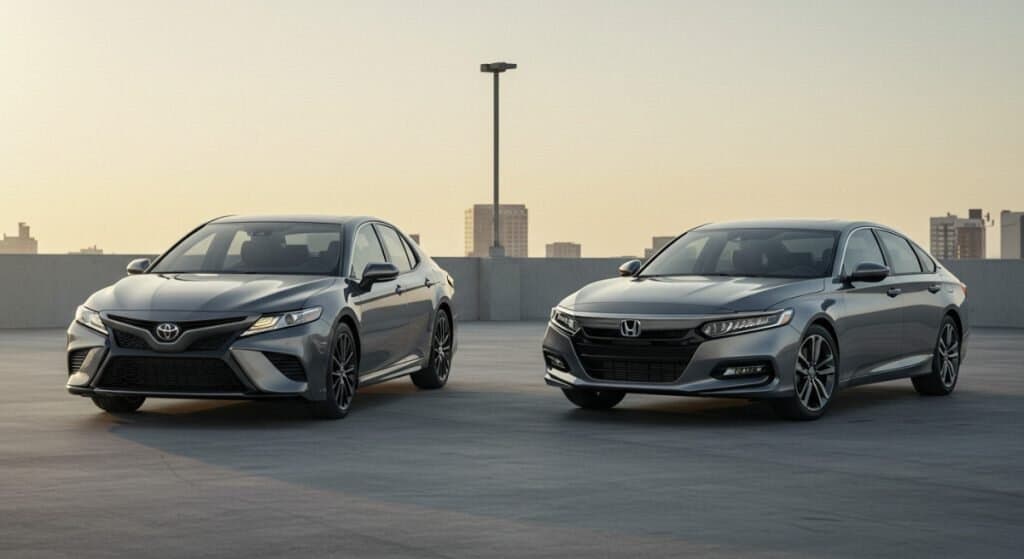
The goal here isn’t just picking a winner, it’s figuring out which one fits best for real-world drivers who need a car that actually works for their lives.
Overall First Impressions
Camry and Accord both offer sharp designs for 2025, moving far away from the “boring commuter car” image of old.
The Camry leans slightly sportier, especially with its aggressive front grille and angular headlights. Anyone who hasn’t seen a Camry in a few years might do a double-take; this isn’t your uncle’s beige sedan anymore.
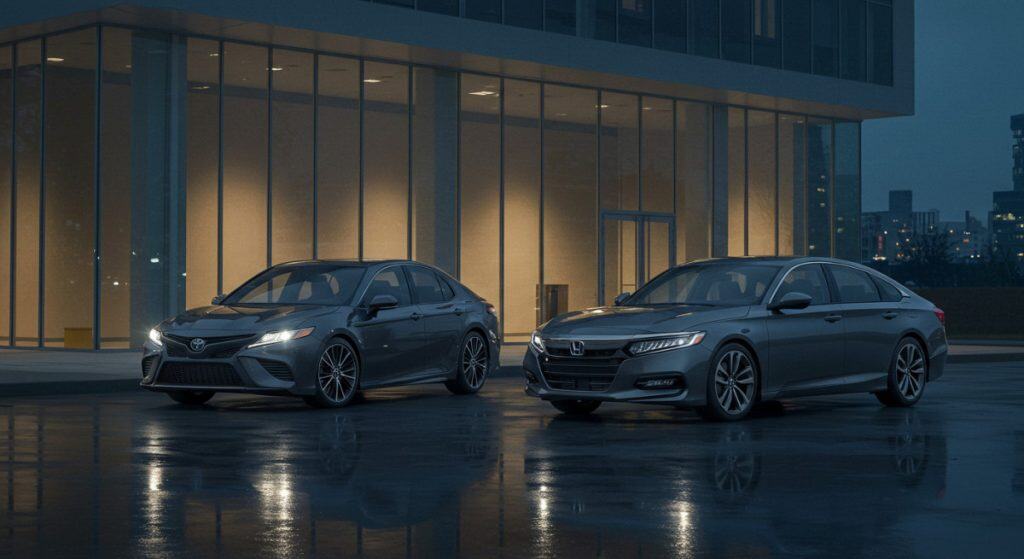
The Accord aims for a sleeker, more understated elegance. Honda’s design language feels more European-inspired, with clean lines and a fastback-like profile that looks good from any angle.
Choosing between them feels a little like deciding between athletic sneakers and stylish dress shoes — both practical, just tuned differently.
Performance and Driving Feel
Camry offers a new hybrid-only lineup in 2025, balancing power and fuel economy impressively. The base hybrid puts out 208 combined horsepower while delivering an estimated 51 mpg in city driving. Higher trims offer more power at the slight expense of efficiency.
Accord sticks with traditional gas engines and hybrids, giving buyers more choice. The 1.5-liter turbo feels peppy around town, while the hybrid system offers a smooth 204 horsepower and up to 48 mpg combined.
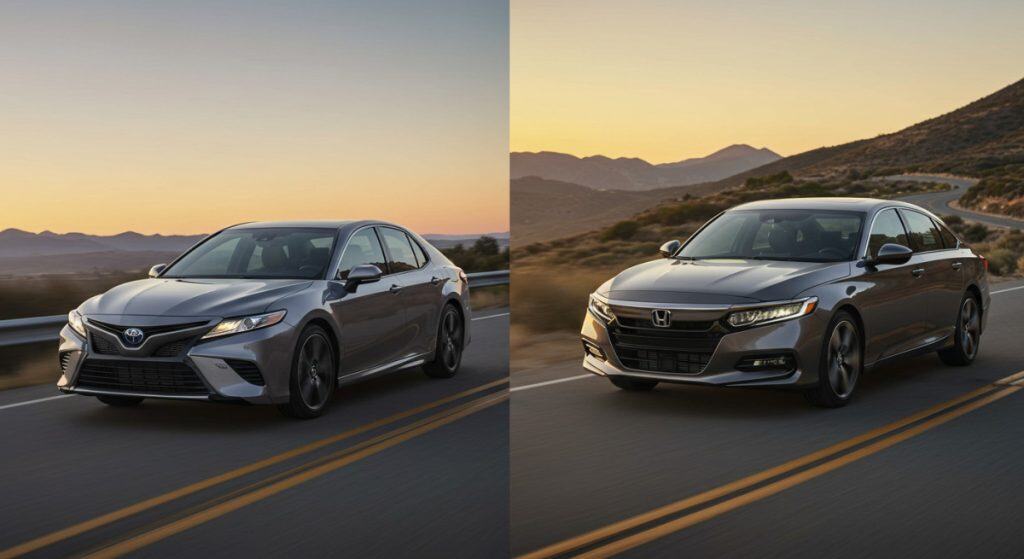
In terms of handling, the Accord tends to feel slightly more refined and responsive at speed. The steering provides better feedback, and there’s a certain planted confidence through corners that enthusiast drivers will appreciate.
Camry leans toward comfort first, but the sportier trims add a surprising amount of fun when pushed. The suspension soaks up bumps beautifully while maintaining enough control to easily handle emergency maneuvers.
Neither is truly a “sports sedan,” but both are lively enough to surprise drivers who are used to older, softer models from a decade ago.
Interior Comfort and Features
Accord’s cabin design feels more open and minimalistic, with clean horizontal lines and a real focus on driver visibility. The greenhouse is generous, creating an airy feeling that makes even long drives feel less claustrophobic.
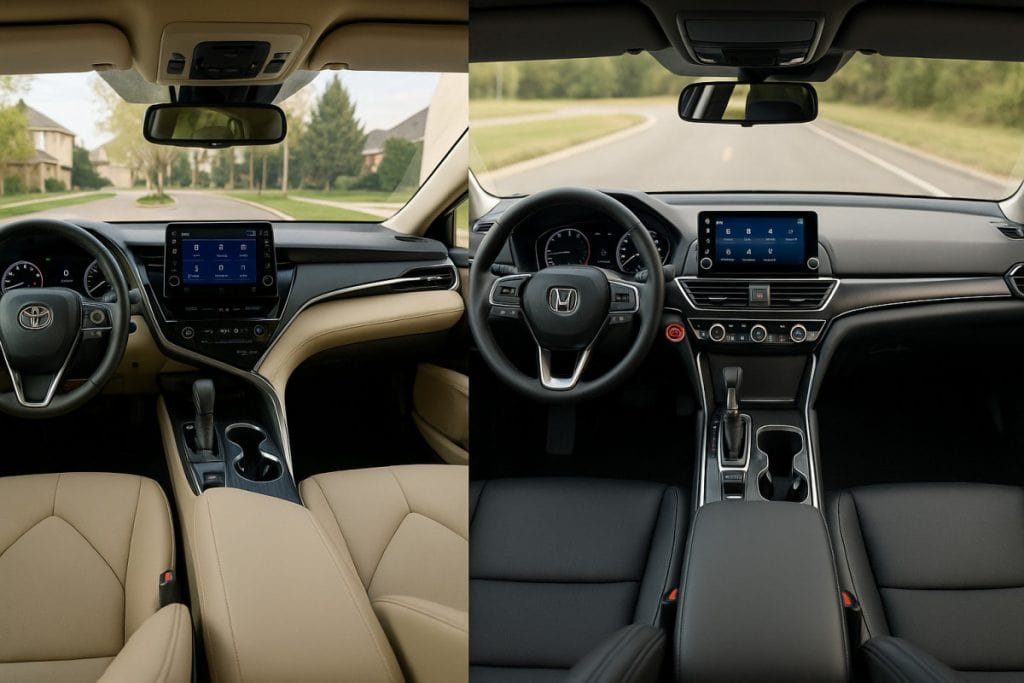
Camry brings a cozier, almost cockpit-like vibe, with bold styling around the center stack. Controls wrap slightly toward the driver, making everything feel within easy reach.
Both offer excellent materials for the price point, but Accord leans a little more upscale, with soft-touch surfaces in more places and slightly more refined stitching. The Camry feels a bit more robust and durable, built for years of hard use rather than making an immediate luxury impression.
Rear seat space is good in both, but taller passengers might appreciate the Accord’s slightly flatter floor and legroom advantage. For family duty, either one works beautifully, though the Accord might edge out slightly for adults in the back seats.
Technology and Infotainment
Accord pulls ahead slightly with a larger standard touchscreen (12.3 inches versus Camry’s 8-inch unit in base trims). Higher Camry trims do offer a competitive 12.3-inch display, but you’ll pay more to get it.
Camry counters with a highly intuitive interface and better physical controls for climate and volume, small things that make daily driving easier. Sometimes, tried-and-true buttons outperform fancy touch panels when you’re trying to adjust temperature while keeping eyes on the road.
Both now offer wireless Apple CarPlay and Android Auto as standard, along with multiple USB ports and available wireless charging pads.
It’s one of those cases where newer isn’t always better; some drivers might prefer fewer screens and more buttons, while others will value the tech-forward approach of a larger display. The Accord feels more Silicon Valley, the Camry more pragmatic.
Safety and Reliability

Both cars score top marks for safety, year after year. The 2025 models continue this tradition with standard advanced driver assistance features across the lineup.
Honda Sensing and Toyota Safety Sense are standard across all trims, offering adaptive cruise control, lane keeping, emergency braking, and more. The systems work similarly in practice, though Toyota’s feels slightly less intrusive during everyday driving.
Historically, Toyota has edged out slightly in terms of long-term maintenance costs and resale value, but both are among the safest bets in the auto world. Someone buying and maintaining either car could reasonably expect 200,000+ miles without major issues.
If absolute bulletproof reliability matters more than anything else, it’s hard to ignore the Camry’s record. But the gap is narrower than ever, with both manufacturers constantly refining their engineering.
Pricing and Value
Pricing between the two is closer than ever in 2025.

Base models start around $28,000, with hybrids pushing into the low $30,000s. Fully loaded versions can cost around $40,000, which may make budget-conscious shoppers think twice about how many features they really need.
Honda offers a slightly richer feature set at each trim level, while Toyota focuses on its brand strength to maintain its price. The Accord LX has more standard equipment than the Camry LE, although you’ll pay a bit extra.
For those planning to keep their car for 10 years or more, the total cost of ownership could tilt slightly in favor of the Camry. Better depreciation rates and marginally lower repair costs add up over time, potentially saving thousands in the long run.
Final Thoughts: Which One Feels “Right”?
Camry and Accord both deliver incredible value, strong performance, and legendary reliability. Neither choice is wrong, just different flavors of excellence.
Drivers focused on maximum comfort and long-haul durability might lean toward the Camry. Toyota’s track record is reassuring, making it the perfect choice for those who view cars as appliances rather than passions.
Those looking for more sharpness in the drive and a more modern interior design might find the Accord more appealing. Honda has always brought more driver engagement to its vehicles, and the current Accord continues that tradition.
The right choice can depend on whether the commute is across town on potholed streets or across states on smooth highways. Context matters when choosing between evenly matched competitors.
Two Classics, Two Different Flavors
Midsize sedans might not grab headlines, but the Camry and Accord prove that being “sensible” can still be stylish, fun, and smart.
Whether the decision leans toward Toyota’s rock-solid reliability or Honda’s crisp execution, either way, it’s a win for drivers who want real-world excellence without paying luxury prices.
In a world obsessed with the newest thing, sometimes the best choice is something that’s been perfected over decades. Both the Camry and Accord have earned their legendary status, and their 2025 versions show exactly why.