Skip to content

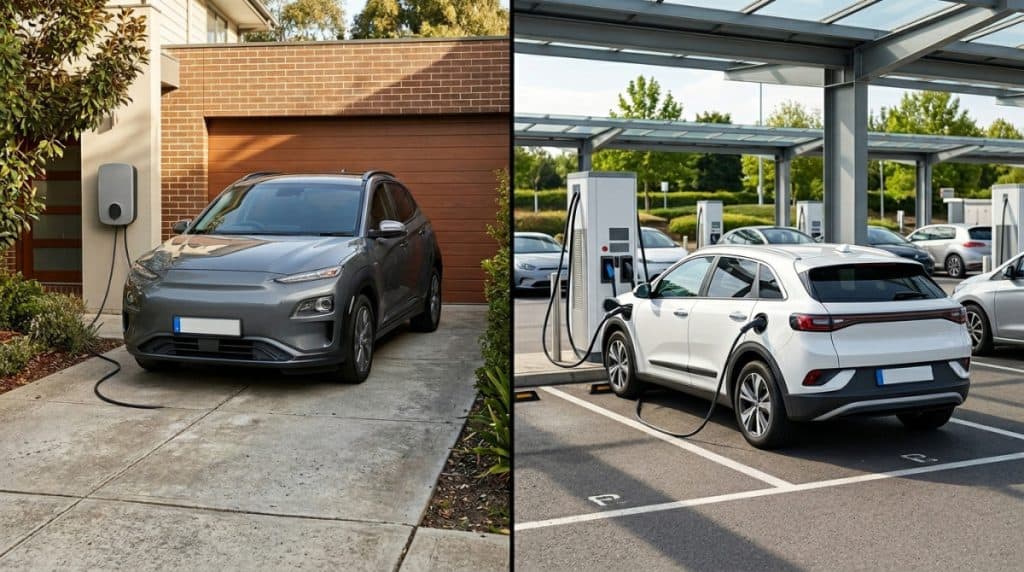
Yes, you can own an EV without charging at home in 2026. The bigger question is whether it would actually fit your life. DOE’s National EV Charging Network page, published in November 2024, says about 80% of charging happens at home, which tells you something important right away: living without home charging is possible, but it is not the easy mode of EV ownership.
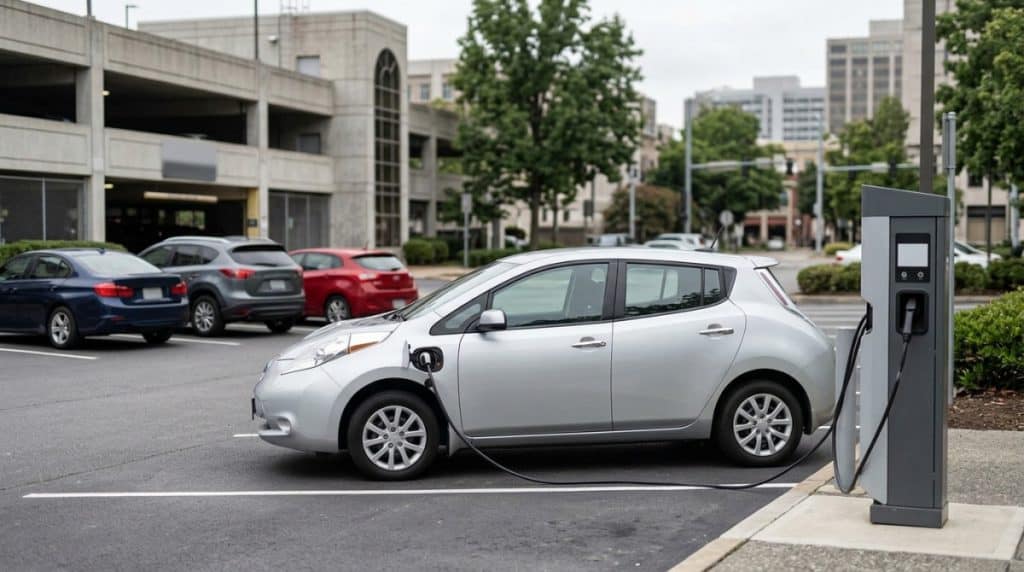
That is the real angle here. This is not about whether an EV can technically survive without a garage. It can. The real question is whether your routine makes that ownership experience smooth or annoying. If you live near reliable chargers, spend time at places with charging, or can plug in at work, it can work surprisingly well. If every charge means a special trip, a wait, and a crossed-fingers hope that the station is working, it can get old fast. DOE and the Alternative Fuels Data Center both frame public and workplace charging as useful complements to home charging, not perfect replacements for every driver.
Quick Answer

The blunt answer is this: owning an EV without home charging is viable now, but it is not equally practical for everyone. Public charging has grown steadily, DOE says public charging options continue to expand, and AFDC’s infrastructure data shows U.S. public EV charging ports climbed from 168,388 in 2023 with updates continuing into 2026. That means the problem is much easier than it was a few years ago, but it still depends heavily on where you live and how you drive.

It tends to work best for people who drive in and around cities, commute predictable distances, and can fold charging into places they already stop. It gets harder for drivers who cover big miles every day, live far from reliable chargers, or want the same convenience as a gas car without changing anything about their routine. That is why the better question is not “Can it be done?” It is “Would it be annoying for me?”
Why this is a bigger issue than people think
A lot of early EV advice was built around homeowners. That made sense because a driveway and a home charger cover up a lot of the friction. But the next wave of EV buyers is not only suburban homeowners with garages. It is renters, apartment dwellers, condo owners, and people who park on the street. AFDC’s home-charging page makes that distinction clearly, noting that charging at multifamily housing often works differently from charging at a single-family home and may look more like public charging.
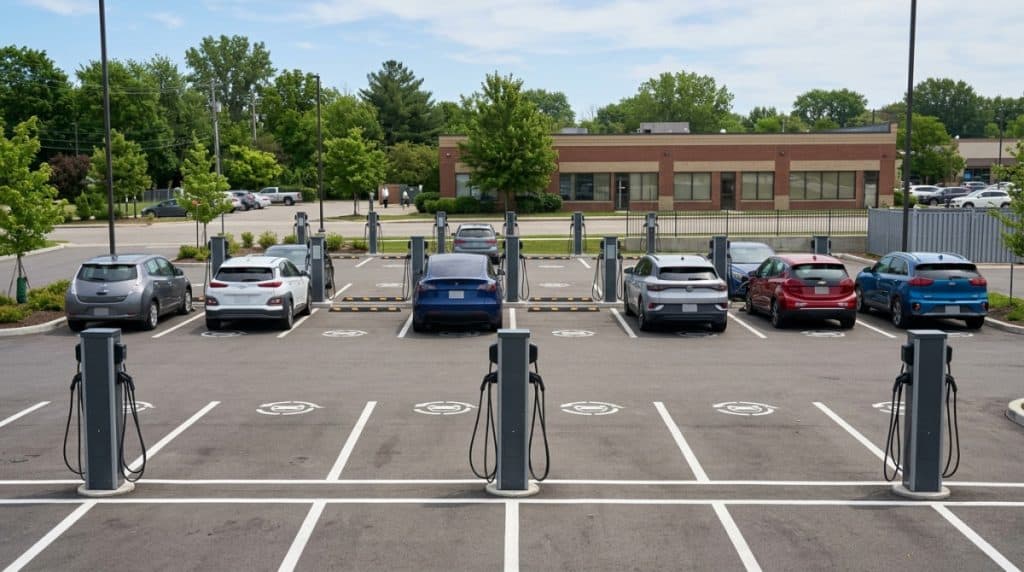
That shift matters because the stress point has changed. For many drivers, the problem is no longer whether the EV has enough range on paper. The problem is whether charging is nearby, reliable, simple to pay for, and easy to fit into the week. Public charging can absolutely make EV ownership possible, but it also adds more planning and more variables than home charging.
How people actually make it work
The people who make this work usually stop thinking about charging like a gas station stop. They build it into their week instead.
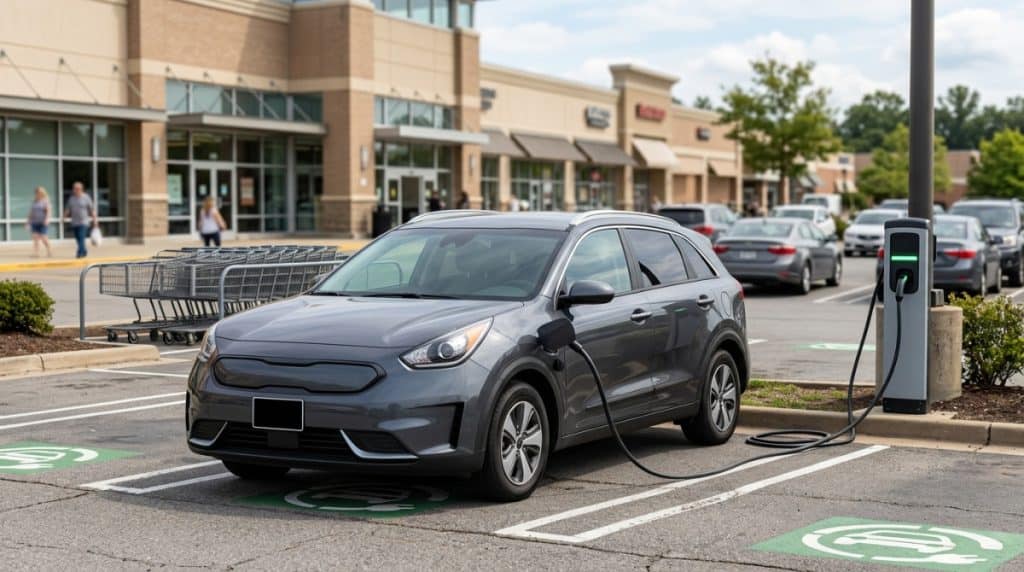
One common method is called anchor charging. That means picking one main place where charging already fits your schedule, like a grocery store, shopping center, gym, or another stop where the car would already sit for a while. DOE says DC fast charging can provide about 100 to 200-plus miles of range after 30 minutes, which is exactly why these routine stops matter so much. If the charger lines up with a normal errand, the session feels useful instead of disruptive.
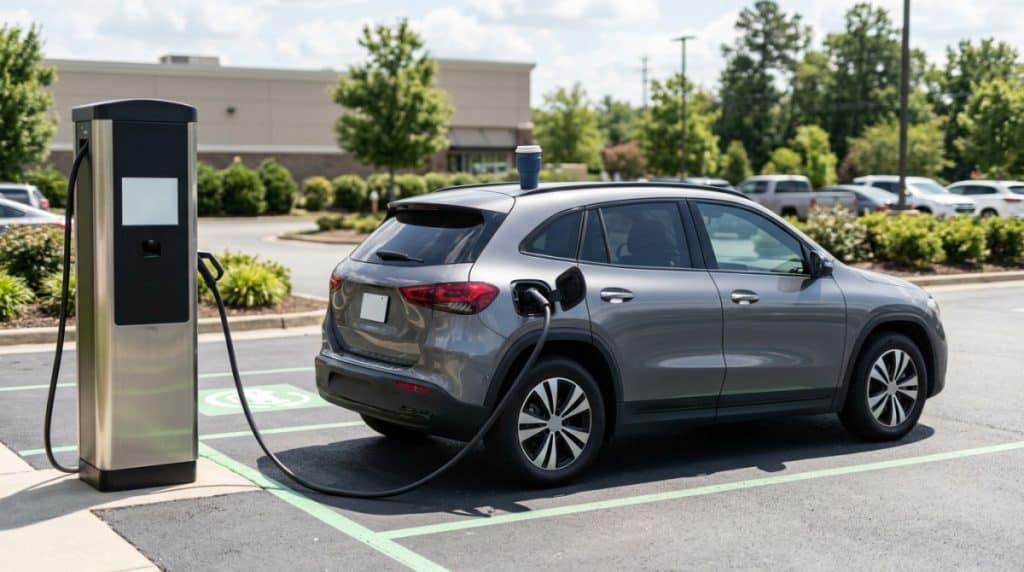
The second habit is the top-up mindset. Gas drivers often wait until the tank is low, then refill. Public-charging EV owners usually do better when they think the opposite way. If you are already parked somewhere and the charger is open, a 15- to 25-minute top-up can be smarter than waiting until the battery is low and suddenly needing a longer session. The basic reason is simple: faster charging is most useful when it fits into dead time you were already going to spend somewhere else.
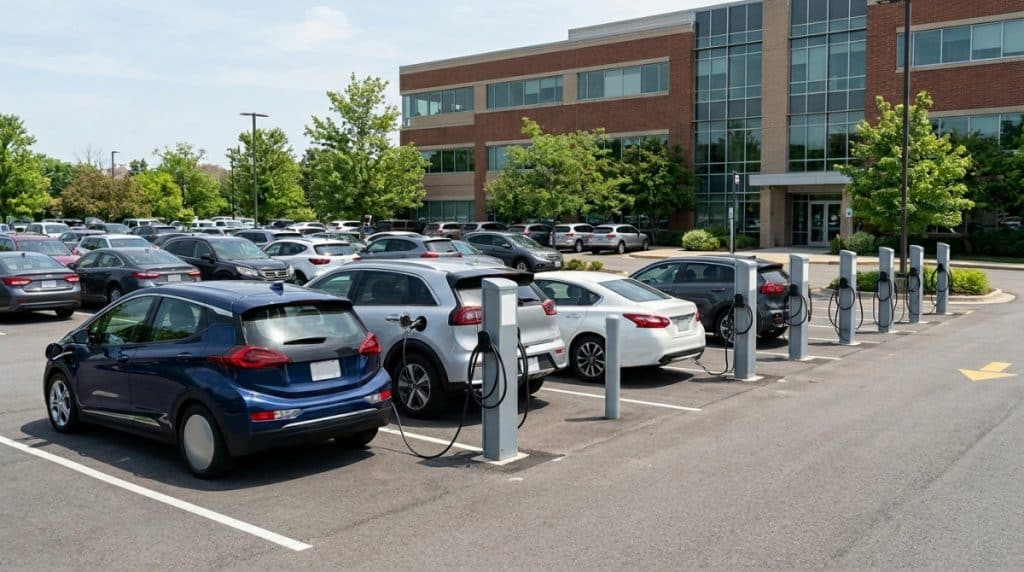
Then there is workplace charging, which is probably the closest thing to a cheat code for this whole problem. The best widely cited workplace snapshot still comes from ChargePoint and CBRE’s May 2024 report based on 2023 data. In that dataset, workplace charging sessions jumped 64% while active ports grew 22%, 69% of workplace sessions were free, and 27% of all charging sessions happened at work, second only to home charging. It is not a 2026 dataset, but it is still a useful signal that workplace charging had already become a major part of EV ownership before the latest wave of infrastructure growth. More recent ChargePoint network data from February 2026 shows overall charging sessions up 34% year over year while ports rose 16%, suggesting demand is still rising faster than supply.
The math behind workplace charging is why it matters so much. DOE says Level 2 charging provides about 25 miles of range per hour, and AFDC says Level 2 is common for public and workplace charging. So if your car sits at work for eight hours, you are looking at something like 200 miles of range added in an ideal scenario, which is enough to replace home charging entirely for some commuters.
The other rule is simple: always have a backup plan. Public chargers can still be busy, broken, blocked, or just slower than you expected. DOE’s charging guidance tells drivers to plan ahead and understand the options where they live and travel. In real life, that means having at least two or three regular charging choices instead of one favorite charger you hope is always available.
The real cost of owning an EV without home charging
This is where the conversation gets more honest.
Home charging is usually the cheap, easy version. Public charging is usually the convenience version. Those are not always the same thing. EIA’s latest monthly data shows U.S. residential electricity averaging 17.55 cents per kWh on a year-to-date basis through February 2026. AAA’s live national average for public/commercial EV charging is about 41.8 cents per kWh, and AAA’s national average gas price was $4.53 per gallon on May 9, 2026.
Using rough but realistic assumptions of 30 kWh per 100 miles for a typical EV, 30 mpg for a compact gas car, and 48 mpg for an efficient hybrid, the fuel bill for 1,000 miles a month looks about like this:
| Vehicle / charging style | Approx. cost per mile | Approx. monthly energy/fuel cost |
|---|---|---|
| EV with home charging | 5.3¢ | $53 |
| EV using average public charging | 12.5¢ | $125 |
| 30-mpg gas car | 15.1¢ | $151 |
| 48-mpg hybrid | 9.4¢ | $94 |
Assumes roughly 30 kWh/100 miles for EV efficiency, 30 mpg for a typical gas compact, and 48 mpg for an efficient hybrid.
That table explains the whole issue pretty well. An EV without home charging can still beat a normal gas car on pure energy cost. But once you rely heavily on paid public charging, the savings get thinner. In some situations, especially if you are using a lot of DC fast charging, the EV ends up much closer to a hybrid than many people expect.
There are also hidden costs people forget to include. Some networks charge idle fees if you stay parked after your session ends. Electrify America says pricing varies by location and charger power, its Pass+ membership can cut charging costs by about 25%, and idle fees can apply. So the real price is not just kWh. It is also time, memberships, and how often you are paying extra for convenience.
What about battery health?
This is one of the biggest fears, and the honest answer is: yes, heavy fast charging can age a battery somewhat faster, but the difference is not as dramatic as a lot of people think.
Geotab’s 2026 battery-health analysis of 22,700 vehicles found average EV battery degradation at about 2.3% per year. Vehicles that relied heavily on high-power DC fast charging were closer to 3.0% per year, while those leaning more on lower-power charging were nearer 1.5% per year. The bigger picture from the study is still reassuring: modern EV batteries generally remain robust, and the faster-degrading group still usually stays above common warranty thresholds after years of use.
Weather matters too, but it needs to be framed carefully. Geotab found vehicles operating in hotter conditions degrade about 0.4% faster per year than those in mild ones, and its methodology defined the “hot” group as vehicles spending more than 35% of days above 25°C. That is more precise than simply saying “hot climates are bad,” and it matters because not every driver in a warm region is putting the battery under the same stress.
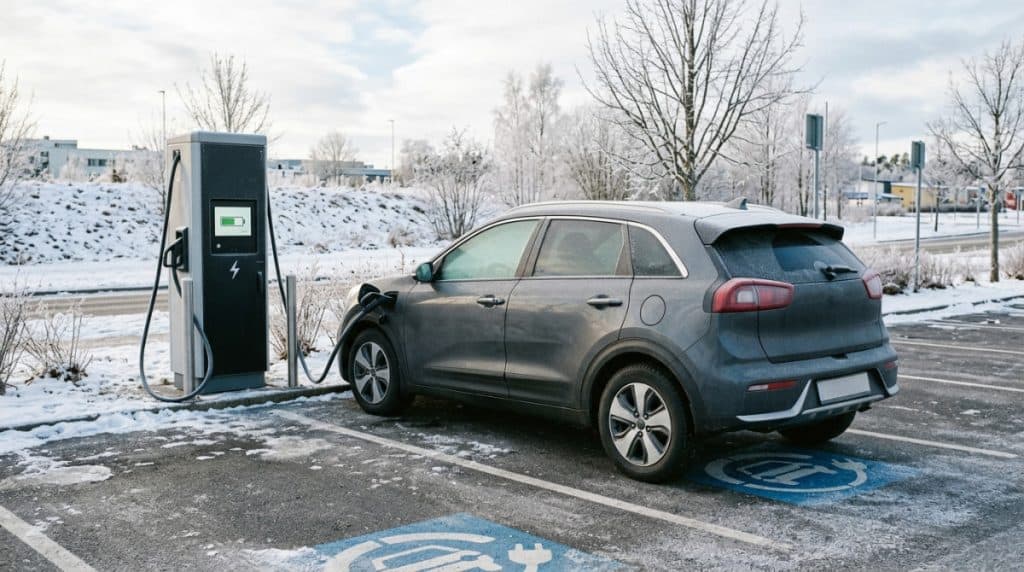
Cold weather is a different kind of problem. DOE says cold temperatures can reduce EV range significantly and also make charging less convenient. That does not automatically mean the same kind of long-term battery damage as heat, but it absolutely makes public charging feel more annoying in winter because slower charging and lower usable range mean you may need to stop more often.
You can also check our blog about How to Read an EV Battery Health Report to help you on reading such reports.
When it makes sense
This setup makes the most sense when charging fits into your life without too much effort.
It tends to work well if you live in a city or suburb with decent charger coverage, have a regular weekly routine built around places that already have charging, or can plug in at work even part of the time. AFDC’s public-charging guidance and DOE’s charging basics both point toward that same idea: destination and workplace charging matter most when they line up with how people already park and move through the day.
If you have workplace charging, the whole equation changes. If you do not, destination charging can still make it workable, but it has to fit naturally. The minute charging becomes a separate chore, the ownership experience gets worse fast. That is really the dividing line.
When it does not make sense
There are also clear cases where this is probably the wrong setup.
It probably does not make sense if you drive long distances every day, the nearest reliable chargers are not near places you already go, or winter range loss would make your routine too tight. It also does not make much sense if what you really want is maximum convenience with minimal planning, because public-charging EV ownership still asks more of you than simply stopping for gas. DOE’s own guidance on charging and EV range in cold weather reinforces those limitations.
The future is making this easier, just not overnight
The next few years should help. Cities are experimenting with curbside charging instead of assuming everybody has a driveway. New York City says curbside charging can fill an immediate need in areas with above-average EV adoption and limited off-street parking, and its broader EV vision includes a long-term push toward thousands more curbside charge points. Washington, D.C. launched a neighborhood curbside charging pilot in February 2026 specifically to expand charging in residential areas where off-street parking is limited.
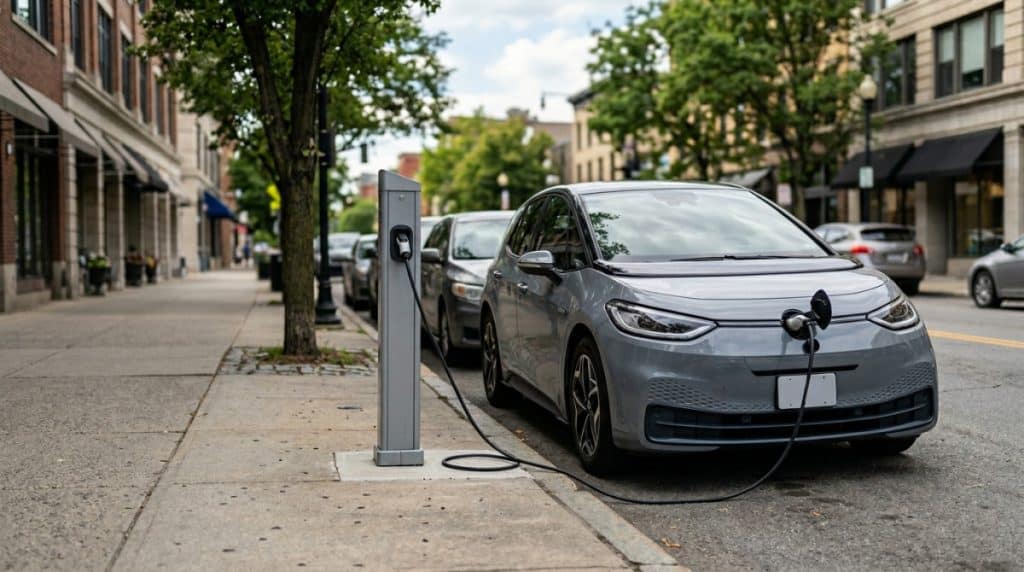
That does not solve the apartment problem overnight, but it does show where the ecosystem is going: less “special trip to refuel,” more “charge while the car is already parked.” That is the direction that matters most for renters and street parkers.
Final verdict
So, can you own an EV without home charging?
Yes. In 2026, it is completely possible.
But the honest answer is still lifestyle-dependent. If charging fits into places you already go, the car can work just fine. If you can charge at work, it may barely feel like a compromise at all. If every charge means a detour, a wait, a higher bill, or a gamble on whether the station is working, the experience can get frustrating in a hurry.
The simplest rule is still the best one:
If charging fits into your routine, it works. If it does not, it becomes a problem.
FAQ
Can you charge an EV without a home charger?
Yes. Public charging, workplace charging, and destination charging can all cover your needs. DOE still says most charging happens at home, though, so living without home charging usually means more planning and less convenience.
Is public charging still cheaper than gas?
Often yes, but not by as much as home charging. Using current U.S. averages, public charging can still beat a typical 30-mpg gas car on pure energy cost, but it can be close to or worse than an efficient hybrid depending on rates and memberships.
Does fast charging damage the battery?
It adds wear somewhat faster than lower-power charging, but Geotab’s 2026 data still showed overall EV battery health remains strong. The difference matters, but it is not usually catastrophic.
What is the biggest advantage if you do not have home charging?
Workplace charging. A normal workday gives a Level 2 charger enough dwell time to add serious range, and many workplaces still offer charging free.
What if my apartment building has no chargers?
You still may be able to make an EV work, but it depends on what is near your normal routine. Public Level 2, DC fast charging, workplace charging, and destination charging can all help, but if every charge requires a separate trip, ownership gets a lot less convenient. AFDC also notes that charging in multifamily housing often works differently from charging at a single-family home and needs its own planning.
Related Resources
- DOE: National EV Charging Network
- AFDC: Charging Electric Vehicles in Public
- DOE: How To Charge Electric Vehicles
- EIA: U.S. electricity price data
- AAA: EV charging prices and national gas prices
- Geotab: 2026 EV battery-health analysis
- NYC DOT: curbside EV charging program
- DDOT: neighborhood curbside EV charging pilot