Skip to content

(Updated February 2026: corrected transmission control details, refined tuning cost ranges, clarified modern ECU security, and expanded warranty considerations.)
Today, the ECU and TCU are arguably the two most crucial components in a vehicle. While functioning harmoniously to offer better performance, efficiency, and drivability, people tend to argue a lot about which one they should start working on first when looking to tune.
Again, there is no simple answer; it honestly depends on your vehicle and exactly what kind of improvements you’re looking for out of performance. Let us now delve deeper into what every unit does the pros versus cons of tuning each, and how to make the best decision for your car.
How to Choose: ECU or TCU?
Knowing what each unit controls and the effect it has on the vehicle is very important in choosing between ECU and TCU tuning. In detail, let’s break down the key functions, advantages, and drawbacks of both ECU and TCU tuning.
Also, before we begin, it’s important to understand what both these acronyms stand for. ECU stands for (Engine Control Unit) and TCU (Transmission Control Unit). Often times these are also referred to as ECM (Engine Control Module) and TCM (Transmission Control Module).
Engine Control Units (ECU): Striking a Balance between Performance and Technology
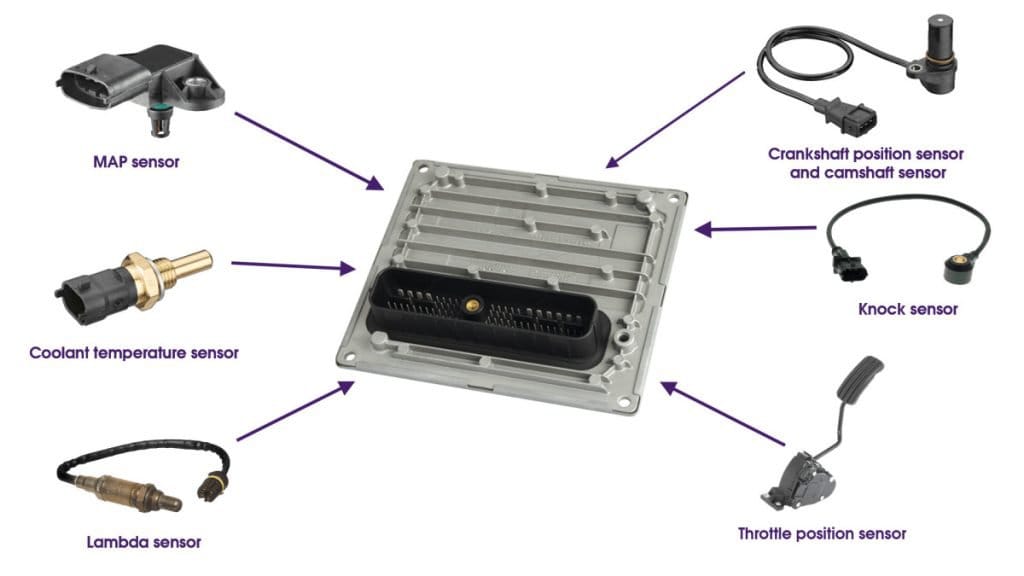
Image from actronics.co.uk
State-of-the-art ECUs have made vehicle tuning a whole new ball game, facilitating finer needles of adjustment that were earlier possible only with mechanical changes. Following are the parameters of performance of the engine governed by modern-day ECU :
- Fuel-to-Air Ratio: This is adjusted by the ECU to ensure either optimum performance or the best fuel economy. The proper balance is required for day-to-day driving and high performance.
- Timing: The ECU dictates the timing of the engine’s ignition, firing fuel at the most opportune moment to achieve maximum power and efficiency.
- Fueling: It controls the quantity of fuel that gets to an engine, thus having an effect on power output and fuel economy; this is a key function in performance tuning.
Modern ECUs also control advanced systems: variable valve timing, throttle response, and stability control. This makes an ECU an integral component of arriving at the correct balance between performance and efficiency.
One modern wrinkle is access. Many newer platforms use encrypted ECUs and torque-based logic, and some require bench unlocking or specialized tools before you can even flash a tune. Some systems also log flash counts and software changes that may still be visible during dealership diagnostics.
Costs and Considerations of ECU Tuning
ECU tuning costs vary widely depending on vehicle platform and complexity:
Basic Flash Tunes: Off-the-shelf tunes typically range from $400 to $1,200 depending on the vehicle and tuning ecosystem.
Custom Dyno Tuning: Professional dyno calibration often ranges from $800 to $2,000, especially when dialing in supporting modifications like intake upgrades, downpipes, injectors, or turbo changes.
Standalone ECUs: Standalone engine management systems typically start around $3,000 and can exceed $10,000 once wiring, sensors, fuel system upgrades, and professional calibration are included.
A few places to search for an engine control unit are:
Module Experts – Module Experts, is a great place to search for your make and model of control unit. The search engine for the site is magnificent, and with a few clicks, you can have a new unit on the way.
Amazon – When you are looking for anything, one of the best places to find it is on Amazon. They have a wealth of new and used options for most makes and models, and some even have two-day shipping.
Specialty/Custom Shops – If you have a high-end performance racecar and are looking for a control unit, you might need help finding one on Amazon. Also, check in your area for specialty or custom racing shops. You could have one designed or talk to someone who could get you what you need with a visit.
While ECU tuning can increase performance greatly for any vehicle, be aware that damage to the engine is likely to occur with the wrong style of tuning. Also, tuning may void your vehicle’s warranty unless it is done through manufacturer-approved channels.
Pros and Cons of ECU Tuning
Pros:
- Improved Performance: ECU tuning allows you more power and responsiveness, making it feel like your car has come to life.
- Increased Efficiency: ECU tuning may also help in fuel management by simply optimizing fuel delivery and timing.
- Increased Control: More advanced modern tuning platforms, such as HP Tuners and Cobb Accessport, give very fine control over many varied parameters of the engine.
Cons:
- Warranty: Most manufacturers will automatically invalidate the warranty if they detect any non-approved ECU tuning.
- Damage: Poor tuning can result in engine-related issues if the owner pushes his car too much beyond the limit.
- Cost: It is pretty expensive at the high end of pricing while tuning may not be that costly since some cars require custom dyno tuning.
Transmission Control Units (TCU): Controlling the Power
The TCU controls how the transmission will behave regarding gear shifting, torque distribution, and generally the performance of the transmission. A well-calibrated TCU will ensure that all power produced by the engine is successfully delivered to the wheels.
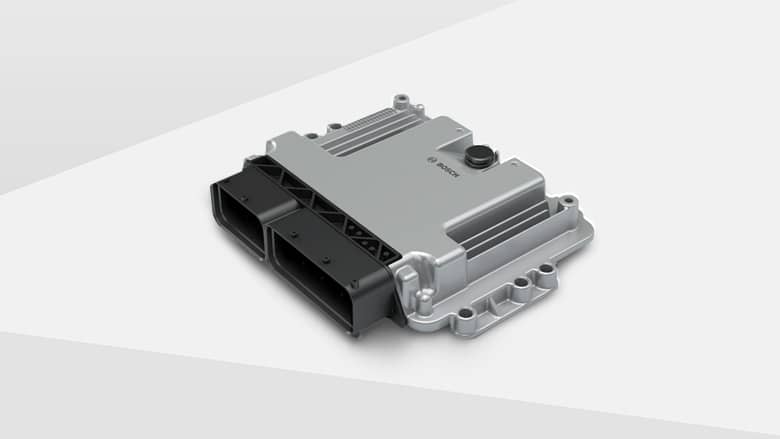
Image from bosch-mobility.com
Key Functions of the TCU
- Torque Limitation: The TCU controls the torque output in order to prevent the transmission from slipping and provides smooth power output.
- Shift Points: With this, the TCU can increase acceleration, responsiveness, and driving dynamics by shifting shift points.
- Hydraulic Pressure: Hydraulic Pressure: On automatic, dual-clutch, and CVT setups, the TCU can adjust hydraulic pressure to prevent clutch slip and control shift feel. Traditional manual transmissions don’t use a TCU in this way, although some modern manuals still rely on ECU torque management to smooth drivability.
Especially useful on cars equipped with an Auto, Dual Clutch, or CVT gearbox, TCU tuning will provide more aggressive or customizable shift strategies to match ECU calibration.
Costs and Considerations of TCU Tuning
The cost of TCU tuning normally ranges from $300 to $1,500, based on the vehicle and the extent of changes desired. It is generally more affordable than ECU tuning; however, in performance-oriented vehicles, this is as crucial.
Pros and Cons of TCU Tuning
Pros:
- Better Power Delivery: TCU tuning does not increase engine horsepower directly, but it allows the transmission to hold gears longer, reduce torque intervention, and apply power more efficiently.
- Optimized Shift Strategy: Improving shift timing and firmness can make acceleration feel significantly quicker and more responsive.
- Reduced Torque Limiting: Many factory TCUs limit torque in lower gears. A tune can reduce these restrictions within safe limits.
Cons:
- Warranty Concerns: Changing the TCU, like ECU tuning, will invalidate your vehicle’s warranty if it is not done through an approved provider.
- Increased Wear: More aggressive transmission settings increase the wear of transmission components, shortening their life expectancy.
Recommended Tool for ECU and TCU Tuning
If you’re serious about ECU and TCU tuning, having a capable diagnostic and programming tool is essential. Advanced tuning often requires live data logging, module access, and the ability to read and clear manufacturer-specific codes. That’s why I highly recommend the Autel MaxiSys MS906TS.

Just so you know, this product is an Amazon Affiliate product, which means I might earn a small commission if you decide to buy it—at no extra cost to you. I only recommend products I genuinely believe in and would use myself. All opinions here are totally my own.
This scanner isn’t just your average tool—it offers full diagnostics and ECU programming, along with a wide range of features that make it ideal for both ECU and TCU tuning. Plus, it has specialized functions like TPMS service and active tests, making it incredibly versatile for all kinds of vehicle work.
Whether you’re a professional or a car enthusiast, this scanner helps ensure your tuning is spot-on, so you can achieve the best performance possible.
Maximizing Performance the Right Way
The ECU vs TCU debate is not about choosing sides. It is about understanding how both systems work together.
The ECU determines how much power the engine produces. The TCU determines how that power is delivered. If one is tuned aggressively while the other remains stock, you may leave performance on the table or create drivability issues.
The most effective approach is balanced tuning that considers engine output, transmission capacity, cooling, fuel quality, and long-term reliability. Modern vehicles are highly torque-managed, and both modules communicate constantly.
If you plan to tune, make sure your supporting hardware is ready. Work with reputable tuners, understand warranty implications, and keep expectations realistic for your drivetrain.
When done properly, ECU and TCU tuning can dramatically improve performance while maintaining reliability.
FAQ
1. What is the difference between ECU and TCU tuning?
ECU Tuning: This involves modifying the engine control unit to optimize engine performance, including fuel-to-air ratio, ignition timing, and fuel delivery. It directly affects the engine’s power output, fuel efficiency, and responsiveness.
TCU Tuning: This involves adjusting the transmission control unit to optimize gear shifts, torque management, and transmission behavior. It ensures that the power generated by the engine is effectively transmitted to the wheels, improving acceleration and overall driving dynamics.
2. Can I tune both the ECU and TCU at the same time?
Yes, tuning both the ECU and TCU simultaneously is often recommended for the best performance results. Coordinating the tuning of these two units ensures that your engine and transmission work together harmoniously, reducing the risk of imbalances that could harm your vehicle.
3. Will tuning my ECU or TCU void my vehicle’s warranty?
Tuning can affect warranty coverage if a failure is directly tied to the modification. In many cases, manufacturers or dealerships can detect software changes through diagnostic logs even if the stock tune is reinstalled. If your vehicle is under warranty, it’s smart to ask your dealer how they handle tuned vehicles before you flash anything.
It’s also worth considering emissions compliance. Some areas use inspections or OBD checks that can flag certain calibrations, so make sure your setup remains street legal where you live.
4. How much does it cost to tune an ECU or TCU?
ECU Tuning: Costs can range from $200 for basic plug-and-play tuners to $3,000 for custom tuning, with standalone ECUs for high-performance vehicles potentially costing upwards of $5,000 to $10,000.
TCU Tuning: Typically costs between $300 and $1,500, depending on the complexity of the tuning and the specific vehicle.
5. Is it safe to perform ECU or TCU tuning myself?
While some basic tuning can be done with plug-and-play devices, more advanced tuning should be left to professionals. Incorrect tuning can lead to engine knock, transmission slippage, or other issues that could damage your vehicle.
If you’re deciding where to start, ECU tuning usually delivers the biggest seat-of-the-pants change, while TCU tuning improves how the power is applied, especially on modern automatics. The safest path is matching the tune to your supporting mods, using a reputable tuner, and keeping your expectations realistic for your drivetrain.