Skip to content

Sick of crossovers pretending to be practical? Wondering when the real family haulers would catch up to the EV game?
Good news – the electric minivan era is finally rolling in. Quiet, roomy, and smarter than you’d expect. But perhaps more surprising is how these electric family movers are somehow making minivans cool again.
For the longest time, electric vehicles meant compact cars, maybe a mid-size sedan if you were lucky. SUVs eventually joined the party, but families who actually needed space, like real space for three kids, strollers, sports gear, and whatever else modern family life demands, were mostly left out of the EV revolution.
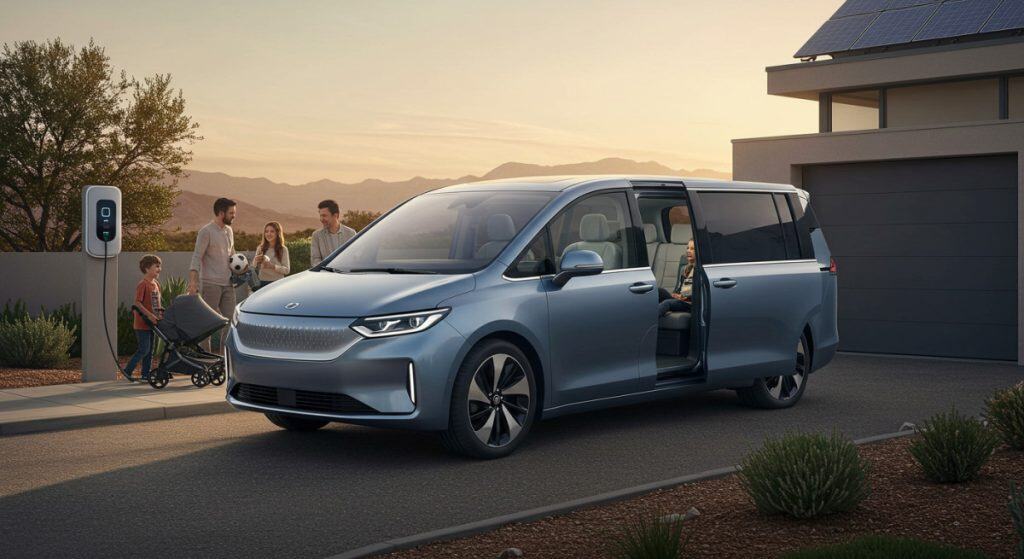
That’s changing now, and the transformation goes beyond just swapping gas engines for batteries. These aren’t your suburban-mom-stereotype minivans. They’re tech-forward, surprisingly stylish, and designed for people who care more about function than looking “rugged” with a vehicle they’ll never take off-road anyway.
Yeah, Electric Minivans Are Actually Happening
The EV world spent years focused on sedans and compact SUVs, which makes sense from a market perspective but left a pretty obvious gap. Families who needed genuine utility, not just the appearance of it, had to stick with gas-powered vans or make compromises with three-row SUVs that promised the world but delivered cramped third rows and awkward cargo access.
Electric minivans aren’t just concepts anymore. Real companies are building real vehicles that real families can actually buy and drive daily. Some have been around for a few years already, others are just hitting dealerships, and a few more are coming soon enough that they’re worth paying attention to.
The early models are hitting the streets, and honestly, some are surprisingly cool. The retro-futuristic Volkswagen ID.Buzz looks like it drove out of a science fiction movie, while others take a more refined approach that focuses on luxury and tech integration rather than making a visual statement.
What’s Out There Right Now?
In North America, your options are still pretty limited, but what’s available is genuinely compelling.
The Volkswagen ID.Buzz is the headline act – VW’s modern take on the classic Microbus, now with all-electric power and contemporary safety tech. It started at around $60,000, comes with either rear-wheel or all-wheel drive, and manages about 234 miles of range. The styling is deliberately nostalgic, but underneath it’s a thoroughly modern electric vehicle with fast charging capability and a spacious, flexible interior.
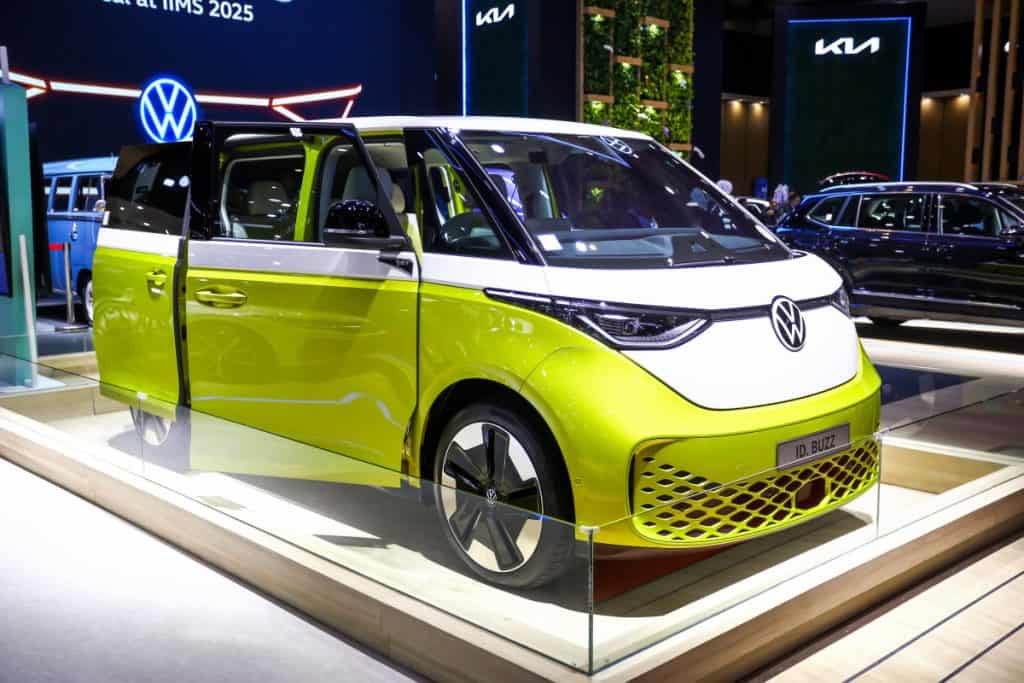
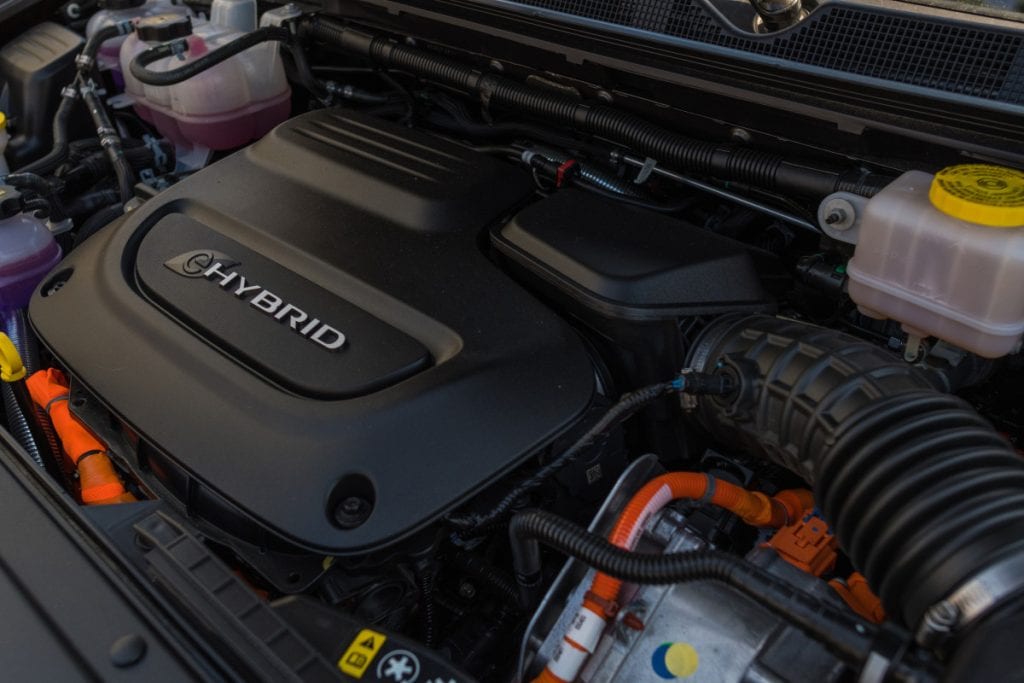
The Chrysler Pacifica Plug-In Hybrid isn’t fully electric, but it’s been the closest thing to an electrified minivan for years. With 32 miles of electric-only range and 520 miles total, it lets you do most daily driving on electricity while keeping the gas engine for longer trips. It qualifies for the federal EV tax credit and starts around $50,000, making it one of the more accessible options.
The Kia EV9 technically isn’t a minivan – it’s classified as a three-row SUV – but it offers minivan-like functionality with EV power. It’s got the space, the sliding second-row seats, and the family-friendly features that matter, just wrapped in a more SUV-looking package.
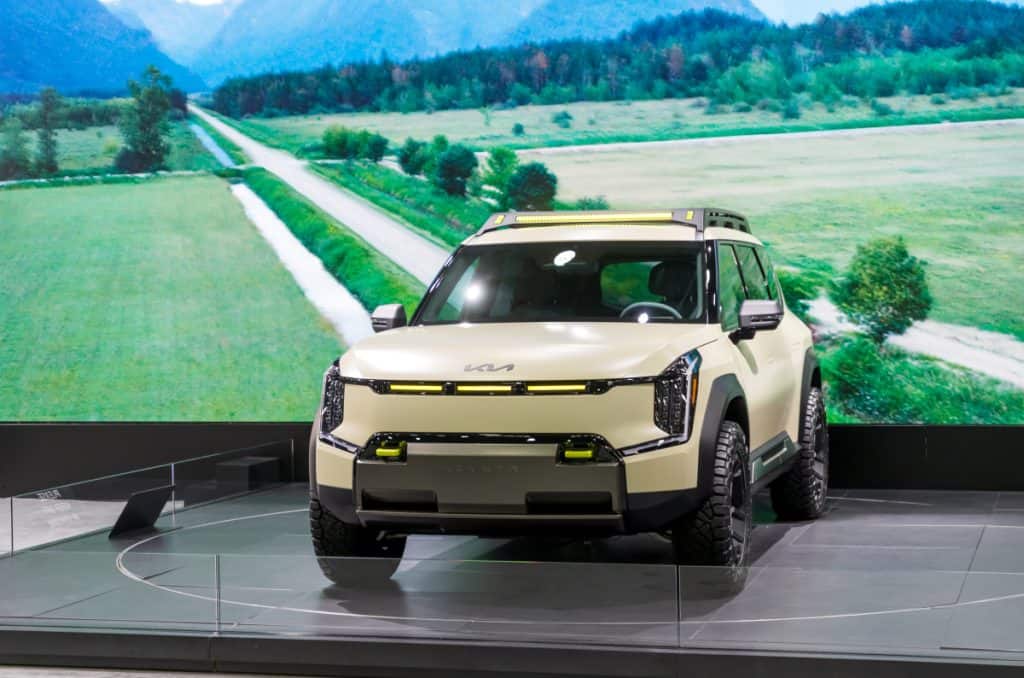
Globally, things get more interesting. The Chinese market, in particular, has embraced luxury electric minivans in a way that might surprise American buyers.
The Zeekr 009 represents what happens when you throw serious money at the electric minivan concept. With 436-511 miles of range (by Chinese standards), dual motors making 525 horsepower, and an interior that’s more like a first-class airline cabin than a family vehicle, it’s priced between $70,000-110,000 and shows what’s possible when you don’t worry about traditional minivan price points.
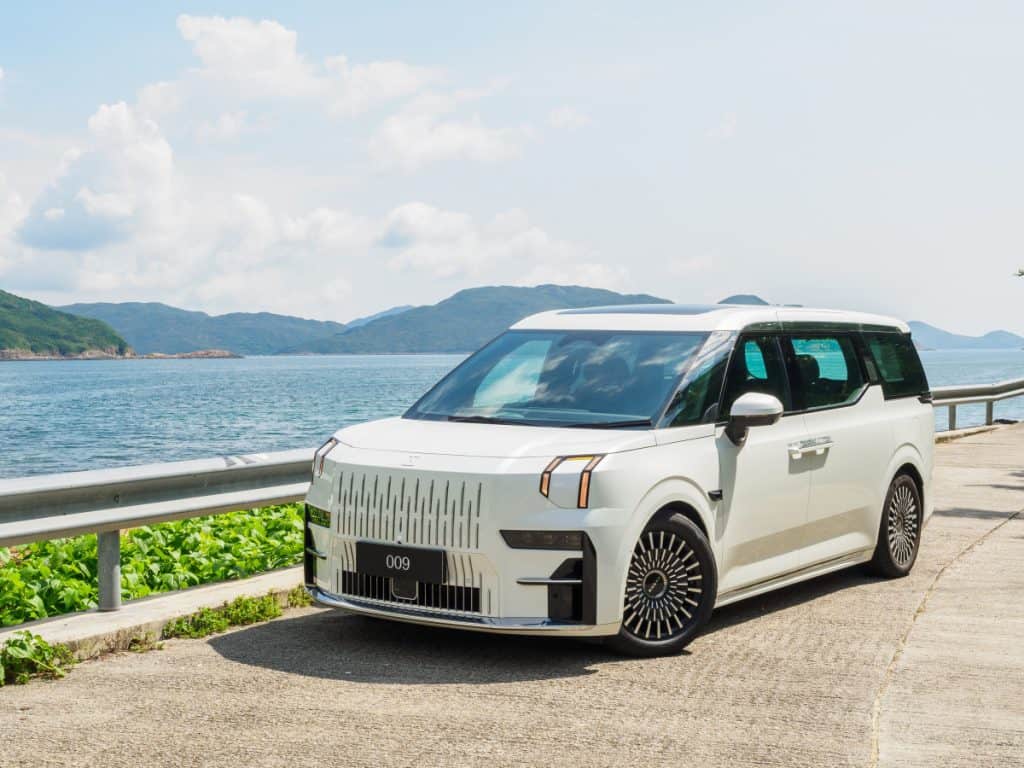
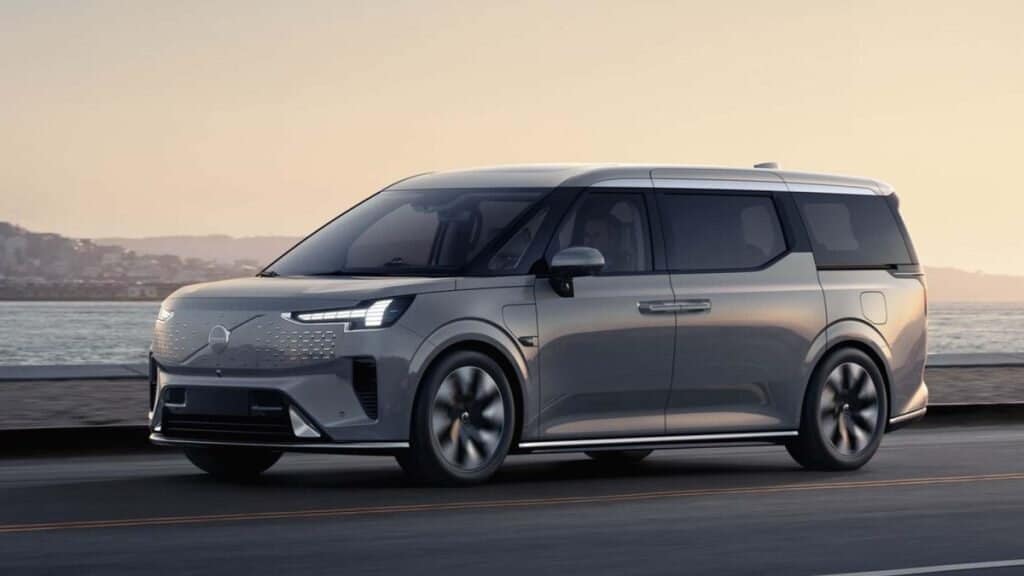
The Volvo EM90 is essentially a Zeekr 009 with Scandinavian minimalism and Volvo’s safety focus. It’s currently China-only but represents how traditional luxury brands are approaching the electric minivan space.
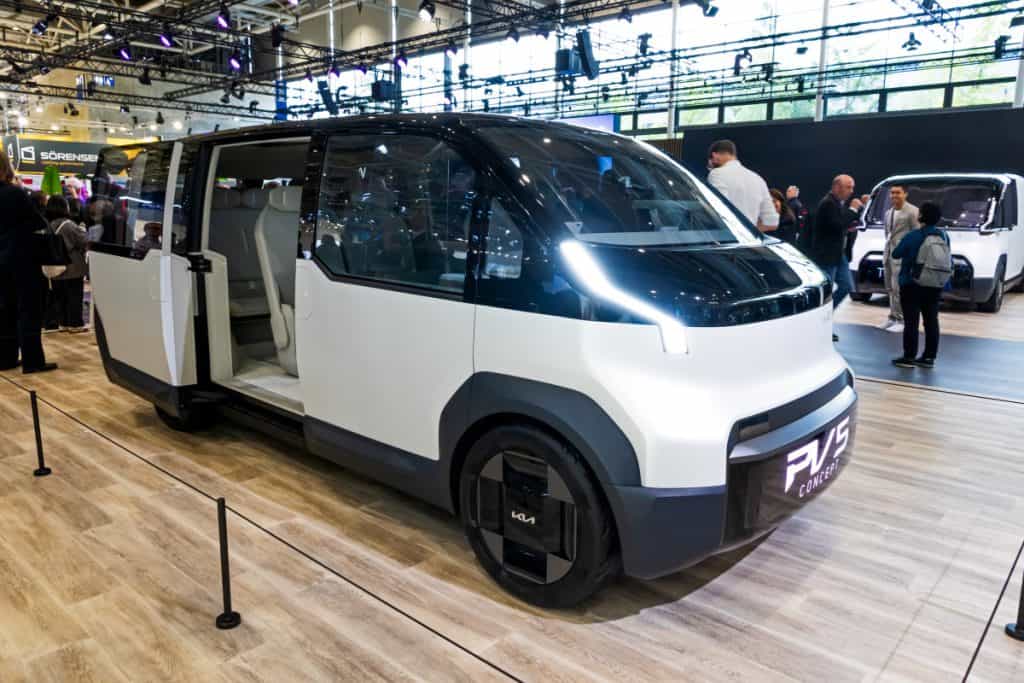
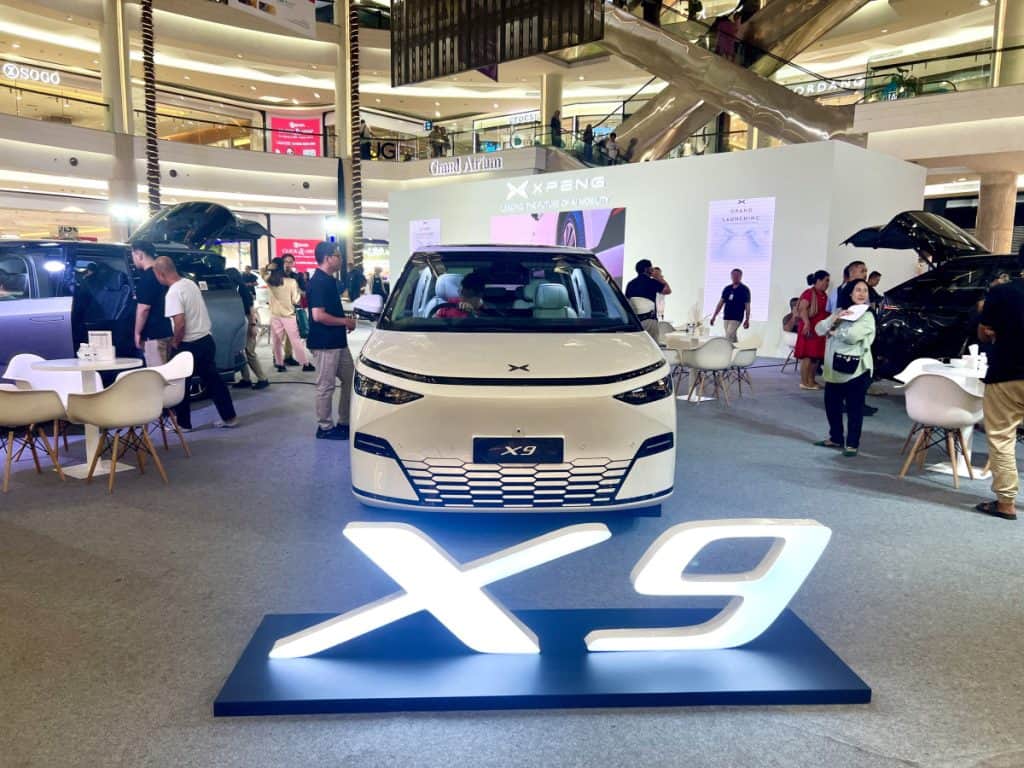
The XPeng X9 offers 7-seat capacity with futuristic design and up to 702 km of range, while future models like the Kia PV5 promise modular setups that could redefine what we expect from family vehicles.
Why Families Might Actually Want One
The space advantage is obvious, but electric powertrains amplify what makes minivans good family vehicles in the first place.
That instant EV torque makes a huge difference when you’re hauling a full load of people and cargo. No more sluggish acceleration from traffic lights or struggling to merge onto highways when the van is packed. Electric motors deliver their full torque immediately, which transforms how these vehicles feel to drive when loaded down.
The silence factor is genuinely life-changing for family road trips. No engine noise means conversations don’t require raised voices, sleeping passengers stay asleep, and the overall stress level drops noticeably on long drives. When you’ve got tired kids in the back, the difference between a quiet electric drivetrain and a rumbling V6 can make or break a family vacation.
Flat floors and smart packaging become even more valuable when you don’t need to accommodate a transmission tunnel, exhaust system, or gas tank. Electric minivans can maximize interior space in ways that gas-powered versions simply can’t match. Some use the extra space for more cargo room, others for more flexible seating arrangements.
The tech integration tends to be more sophisticated since these vehicles are designed from the ground up for modern families. Expect better infotainment systems, more USB ports, wireless charging, and family-oriented features like rear-seat entertainment systems that actually work well.
What’s the Catch?
Limited options, especially in the US market. Right now, you’ve basically got the ID.Buzz, the Pacifica Hybrid, and whatever three-row EVs you’re willing to consider as minivan alternatives. That’s not a lot of choice for such an important purchase.
Prices aren’t exactly budget-friendly. Most electric minivans start around $50,000-60,000, with some luxury models approaching six figures. The Pacifica Hybrid offers the best value proposition, but even that’s not cheap once you add options.
Charging with a full family load adds complexity you don’t face with gas vehicles. Road trips require more planning, and charging stops take longer than gas fill-ups. When you’ve got restless kids and a schedule to keep, that extra time can be challenging. Though honestly, family road trips already involve frequent stops, so maybe this isn’t as big a deal as it sounds.
Range anxiety hits differently when you’re responsible for getting a whole family somewhere safely. Most current electric minivans offer 200-250 miles of real-world range, which is fine for daily use but requires some trip planning for longer journeys.
Who Are These For (and Who They’re Not)?
Best fit for suburban families with home charging who do most of their driving locally. School pickups, grocery runs, weekend activities – all the stuff that defines family life – work perfectly with current EV ranges and charging capabilities.
Daily drivers who care more about function than image will appreciate what electric minivans offer. If you’re tired of pretending your three-row SUV is actually practical, these vehicles deliver the utility you’ve been missing.

Parents who want to reduce their environmental impact without sacrificing the space their families actually need. You can feel good about the reduced emissions while still fitting three car seats and a week’s worth of groceries.
Maybe not yet for frequent long-distance travelers or anyone who regularly drives beyond the vehicle’s range. The charging infrastructure is improving, but it’s still not as convenient as gas stations for spontaneous long trips.
Budget-conscious families might want to wait a few more years for prices to come down or more options to appear. Current electric minivans represent the premium end of the market.
Anyone relying on sparse public charging infrastructure should think carefully about whether an electric minivan fits their actual usage patterns rather than their ideal usage patterns.
The Minivan Stigma Is Breaking – Thanks to EVs
Here’s something fascinating: electric powertrains are somehow making minivans acceptable again.
For years, minivans carried this image of suburban resignation – the vehicle you bought when you gave up on being cool. Soccer mom jokes, boring beige interiors, the whole stereotype. But electric minivans are approaching the market differently.
The Volkswagen ID.Buzz deliberately embraces retro-cool aesthetics that hearken back to the counterculture era rather than suburban practicality. It’s a minivan that people actually want to be seen driving, which is a remarkable shift for the segment.
Clean, minimalist designs from companies like Volvo show that minivans can be genuinely stylish without sacrificing functionality. The EM90’s Scandinavian aesthetic feels more like a luxury living space than traditional family transportation.
Tech-forward features position these vehicles as innovative rather than utilitarian. When your minivan has the latest EV technology, advanced driver assistance, and cutting-edge infotainment, it feels less like settling and more like making a smart choice.
Even the Chinese luxury minivan market demonstrates how different cultural attitudes can reshape an entire vehicle category. In China, high-end minivans are status symbols for successful executives, not symbols of domestic surrender.
The EV transition is giving minivans permission to be desirable again. When everything about the vehicle is modern and forward-thinking, the old stereotypes don’t stick as easily.
What’s Coming Next
Chrysler confirmed they’re working on a fully electric Pacifica for around 2027, which should bring more mainstream EV minivan options to American families. Given Chrysler’s experience with the hybrid version, they understand what families actually need from these vehicles.
More luxury options are likely as automakers see how well high-end electric minivans perform in markets where they’re available. The success of vehicles like the Zeekr 009 suggests there’s demand for premium family transportation that prioritizes comfort and technology over rugged appearance.
Battery technology improvements will continue extending range and reducing charging times, addressing two of the main concerns families have about electric minivans.
Charging infrastructure expansion particularly along family travel corridors, will make electric minivans more practical for the vacation trips and weekend adventures that define family vehicle usage.
The segment feels like it’s at a tipping point. Electric minivans are no longer a “maybe someday” concept – they’re real vehicles solving real family transportation needs while somehow making the whole category cooler in the process.
Bottom line: Electric minivans aren’t a fringe idea anymore. They’re real, functional, and slowly carving out a niche for families who want the space and practicality minivans have always offered, plus the benefits that come with electric powertrains. The cultural shift might be even more significant than the technological one – these vehicles are proving that practical doesn’t have to mean boring.
Would you drive an EV minivan over an SUV? Spotted one on the road yet? The transformation is happening faster than most people realize, and it’s worth paying attention to.
Related Resources
- https://www.motortrend.com/reviews/2025-volkswagen-id-buzz-vs-chrysler-pacifica-hybrid-honda-odyssey-kia-carnival-toyota-sienna-comparison-test-review
- https://www.caranddriver.com/volkswagen/id-buzz-microbus
- https://www.tomsguide.com/vehicle-tech/evs/i-drove-the-chrysler-pacifica-phev-for-a-week-and-its-the-last-great-minivan
- https://www.edmunds.com/electric-car/articles/electric-minivans.html
- https://www.caranddriver.com/rankings/best-vans/electric
- https://carbuzz.com/cars/hybrid-minivans/
- https://www.autoinfluence.com/how-the-asian-market-turned-the-minivan-into-a-new-type-of-luxury-vehicle/
- https://www.carexpert.com.au/car-news/2025-zeekr-009-price-and-specs-luxury-ev-people-mover-starts-at-135900
- https://carnewschina.com/2025/01/31/top-10-most-expensive-electric-mpvs-in-china-the-growing-segment/
- https://www.carscoops.com/2023/08/volvos-em90-electric-minivan-is-a-zeekr-009-with-a-scandi-twist/
- https://www.caranddriver.com/news/a45823115/volvo-em90-details/
- https://www.theautopian.com/i-love-minivans-but-the-electric-volvo-em90-feels-like-a-lazy-rebadge-for-the-chinese-marketfgeely/
- https://www.carscoops.com/2024/11/chrysler-pacifica-ev-will-reportedly-battle-the-vw-id-buzz/
- https://topelectricsuv.com/news/chrysler/chrysler-pacifica-ev/
- https://daxstreet.com/list/275529/5-minivans-that-still-impress-in-2025-vs-5-that-havent-changed-in-a-decade/
- https://cars.usnews.com/cars-trucks/rankings/minivans
- https://www.thecarmomofficial.com/blog/minivan-features-show-down
- https://www.vw.com/en/models/id-buzz.html
- https://www.chrysler.com/pacifica/hybrid.html
- https://www.kia.com/us/en/ev9