Skip to content

Not Just a Fancy Battery on Wheels
Electric cars are becoming more common every year, yet many people still aren’t exactly sure how they work.
Some assume they’re just gas cars with a big battery. Others imagine something closer to a giant smartphone on wheels. A few might picture some mysterious, futuristic technology that seems almost magical.
The truth is a little more nuanced, and it helps to understand the basics, not just for curiosity, but for making informed decisions as a driver. Electric vehicles aren’t complex rocket science, but they do work quite differently from the cars most people grew up with.
The Core Idea Behind Electric Cars
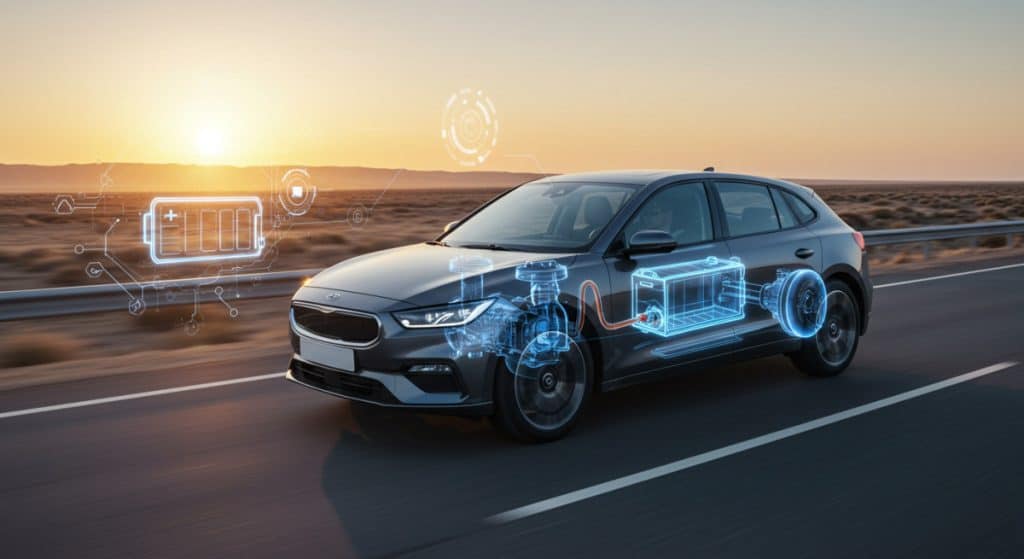
Instead of using gasoline and an engine, electric cars use electricity stored in a battery to power an electric motor. This fundamental difference shapes everything about how these vehicles function.
The motor turns the wheels, just like an engine does, but without combustion or emissions. No tiny explosions of fuel, no exhaust gases, just the smooth transfer of electrical energy into mechanical motion.
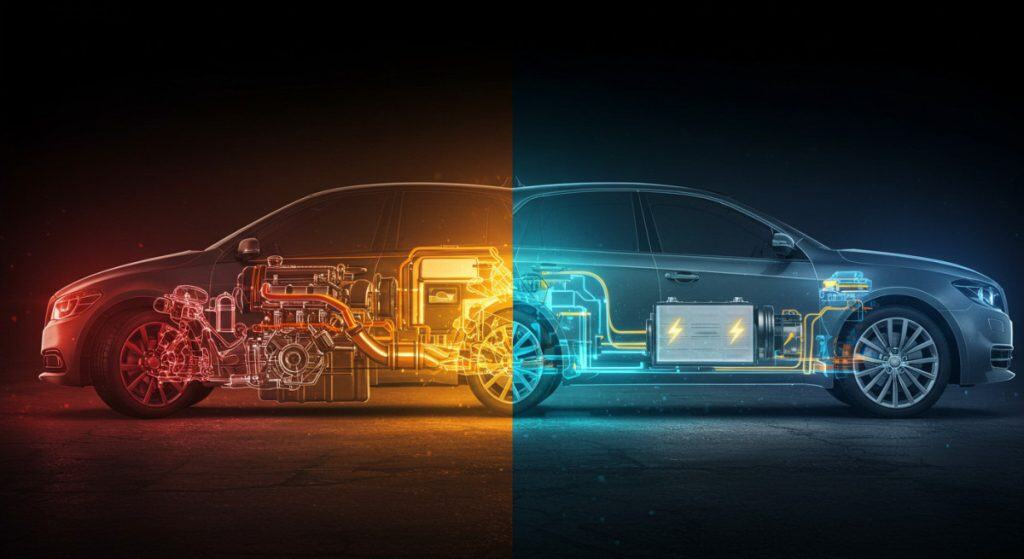
Everything else builds from this one key idea: store energy, then use it to move. The simplicity is actually quite elegant compared to the hundreds of moving parts in a conventional engine.
The Battery: Where the Power Comes From
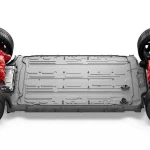
The battery is usually the heaviest and most expensive part of the car. Located typically along the floor of the vehicle, it serves as both a power source and a structural element.
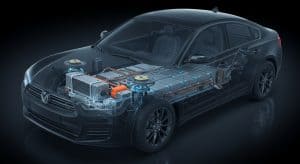
Most EVs use lithium-ion batteries, similar to what’s in phones or laptops, but much larger and more advanced. These aren’t just bigger versions of AA batteries, but sophisticated systems with cooling, heating, and management electronics.
Battery size is measured in kilowatt-hours (kWh), which determines how much energy the car can store and how far it can drive. A typical modern electric car might have a battery between 60-100 kWh, allowing ranges of 200 and 350 miles.
Larger batteries mean more range, but also more weight and cost. This creates an ongoing balance for manufacturers between affordability, driving distance, and vehicle weight.
The Electric Motor: Quiet, Instant Power
Electric motors use magnetic fields to create rotation, which spins the wheels. Unlike gas engines that need to build up to their optimal power range, electric motors deliver their maximum torque instantly.
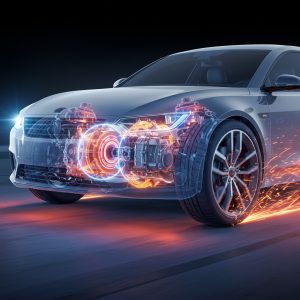
They produce torque instantly, giving EVs that well-known quick acceleration. This explains why even modest electric cars can feel surprisingly zippy from a standstill.
Fewer moving parts than a traditional engine means less maintenance and a smoother driving experience. An electric motor might have just one moving part, compared to hundreds in a combustion engine.
In some cars, each axle has its own motor, allowing for all-wheel drive without traditional mechanical linkages. This setup allows for precise power delivery to each wheel and even torque vectoring in more advanced systems.
The Inverter and Controller: Translating the Energy
The inverter converts the battery’s DC (direct current) power into AC (alternating current) for the motor, depending on the car’s design. It’s essentially the translator between the battery’s stored energy and the motor’s power needs.
It also controls how much power flows to the motor based on how hard the driver presses the accelerator. This creates the direct, responsive feeling drivers often describe when driving electric vehicles.
The controller acts like the brain of the powertrain, constantly adjusting power delivery for smooth, responsive driving. Modern controllers make thousands of calculations per second to optimize performance, efficiency, and battery life.
These components might sound technical, but they work together seamlessly to create a driving experience that many people find more enjoyable than conventional vehicles.
Regenerative Braking: Charging While Slowing Down
Regenerative braking captures energy that would normally be lost during braking and sends it back into the battery. Traditional cars convert their momentum into heat when braking, essentially wasting that energy.
This process helps extend driving range, especially in stop-and-go city driving. Some urban drivers report getting significantly better efficiency than highway drivers due to this energy recapture.
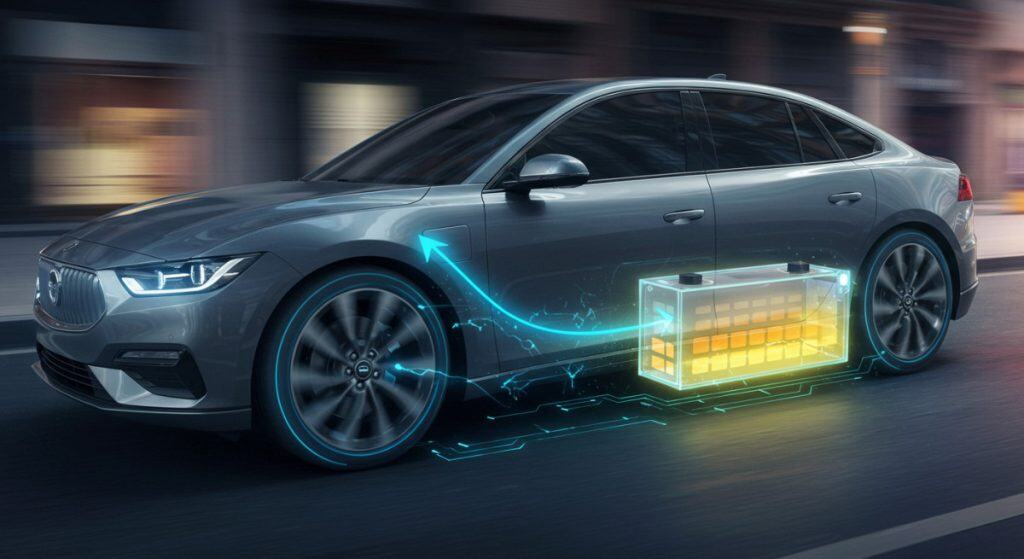
Drivers often describe it as feeling like gentle engine braking or one-pedal driving in certain modes. The sensation takes a bit of getting used to, but many EV drivers come to prefer it over traditional braking.
It reduces wear on brake pads and increases overall efficiency. Some electric car owners report going over 100,000 miles before needing brake service, since the regenerative system handles much of the slowing down.
Charging: From Wall Outlet to Fast Charger
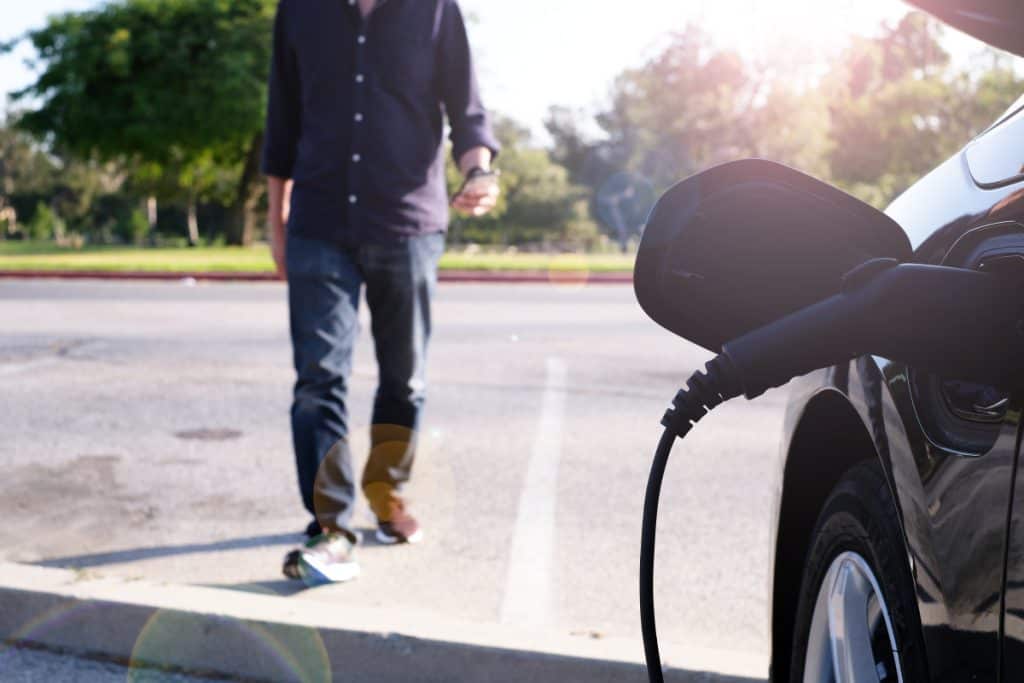
Charging methods vary depending on equipment and time available. Unlike gas cars with their single refueling method, electric vehicles offer multiple charging options.
Level 1: Standard household outlet, slowest, good for overnight charging. This 120-volt option adds about 3-5 miles of range per hour, making it suitable mainly for plug-in hybrids or very short commutes.
Level 2: Home or public stations, much faster, common for daily use. These 240-volt systems typically add 25-30 miles of range per hour, perfect for overnight home charging or topping up during errands.
DC Fast Charging: Public stations that deliver a large amount of power quickly, ideal for road trips. These can add 100-200 miles of range in 30 minutes, depending on the vehicle and charger capability.
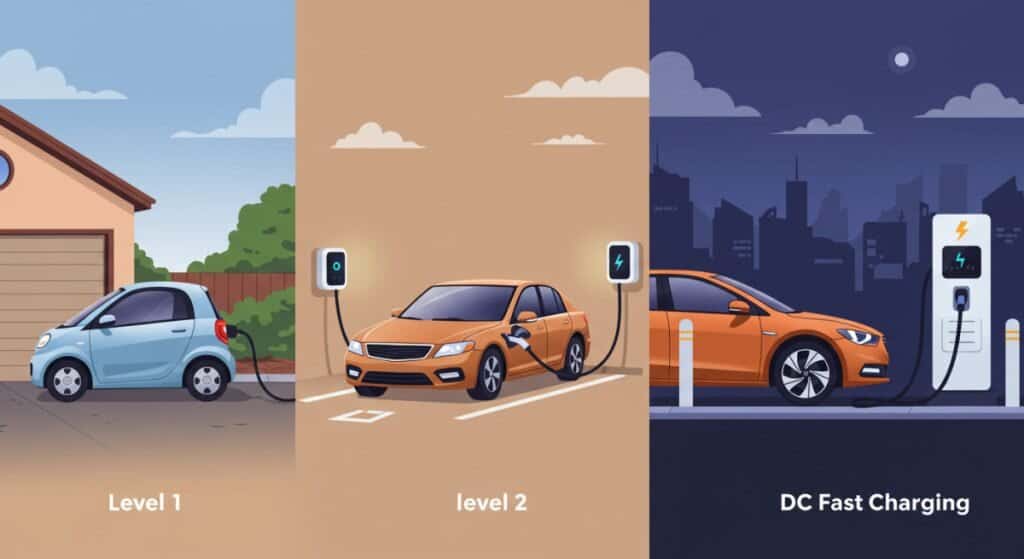
Charging speed depends on both the charger and the car’s onboard hardware. Not all vehicles can accept the highest charging rates, which is why understanding the specs matters when shopping.
What’s Missing Compared to Gas Cars
No gas tank, no engine oil, no transmission (in the traditional sense), and far fewer moving parts. This simplified mechanical design translates to different maintenance needs and often lower service costs.
No tailpipe or exhaust system either, since there’s no combustion. The absence of these components creates more design flexibility for manufacturers and eliminates emissions testing for owners.
Less noise, no idling, and fewer fluids to maintain. The quiet operation surprises many first-time electric car drivers, as does the lack of vibration when “running.”
Some drivers are surprised by how little there is to “check” under the hood. Many electric cars use this space for additional storage or electronics rather than mechanical components.
The Software Behind the Scenes
EVs rely heavily on software to manage battery health, energy flow, and driver interface. This digital layer controls everything from power distribution to climate settings.
Software updates can improve performance, fix issues, or even add features over time. Unlike traditional cars that generally stay the same throughout their life, electric vehicles can actually gain capabilities as they age.
This makes electric cars feel more like digital devices in some ways, especially when updates are delivered wirelessly. The experience resembles updating a smartphone more than traditional car maintenance.
The growing importance of software also explains why tech companies have become increasingly involved in the automotive industry, blurring the lines between Silicon Valley and Detroit.
Simpler Than It Seems, Smarter Than It Looks
At its core, an electric car takes stored electricity, sends it to a motor, and moves the vehicle forward, cleanly and quietly. Despite all the high-tech components, the fundamental operation is surprisingly straightforward.
Though the details can get complex, the basic system is actually more straightforward than most gas-powered vehicles. No timing belts, spark plugs, fuel injectors, or complex transmissions means fewer potential failure points.
Understanding how it all works helps drivers feel more confident about what they’re driving, charging, and maintaining. Knowledge removes the mystery and makes the transition to electric driving less intimidating.
Electric cars represent not just a change in fuel, but a different approach to transportation altogether. They combine automotive engineering with electrical systems and software in ways that create new possibilities and driving experiences.
Resources:
- https://afdc.energy.gov/
- https://www.edmunds.com/
- https://www.electricforall.org/
- https://lightningemotors.com/
- https://industrial.panasonic.com/