Skip to content

There’s something magnetic about a good engine swap. Maybe it’s the idea of taking something ordinary and making it extraordinary. Or perhaps it’s just the thrill of dropping a screaming high-rev motor into a chassis that was never meant to have it.
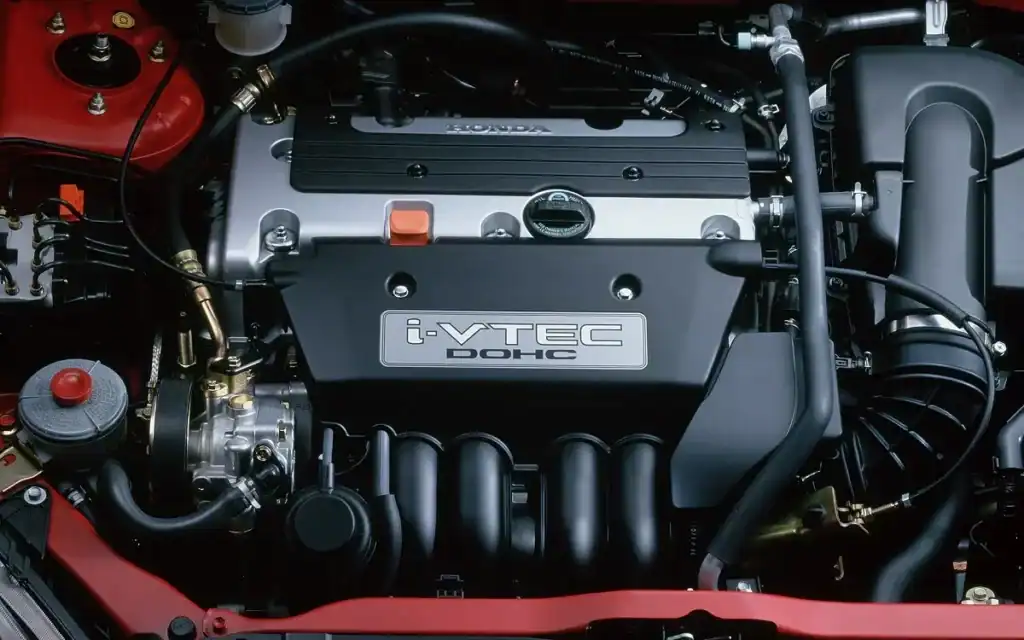
The K20Z has become legendary in swap circles for good reason. Honda’s engineers built an engine that loves to rev, makes decent power naturally aspirated, and somehow fits into the most unlikely places. But here’s the thing – not every K20Z swap makes sense. Some are brilliant, others are expensive exercises in proving a point.
After watching countless builds over the years, these five cars stand out as the ones that actually get transformed by a K20Z heart transplant. Not just faster, but fundamentally different machines.
1. Honda Civic (EG/EK Generation)
The Classic Choice
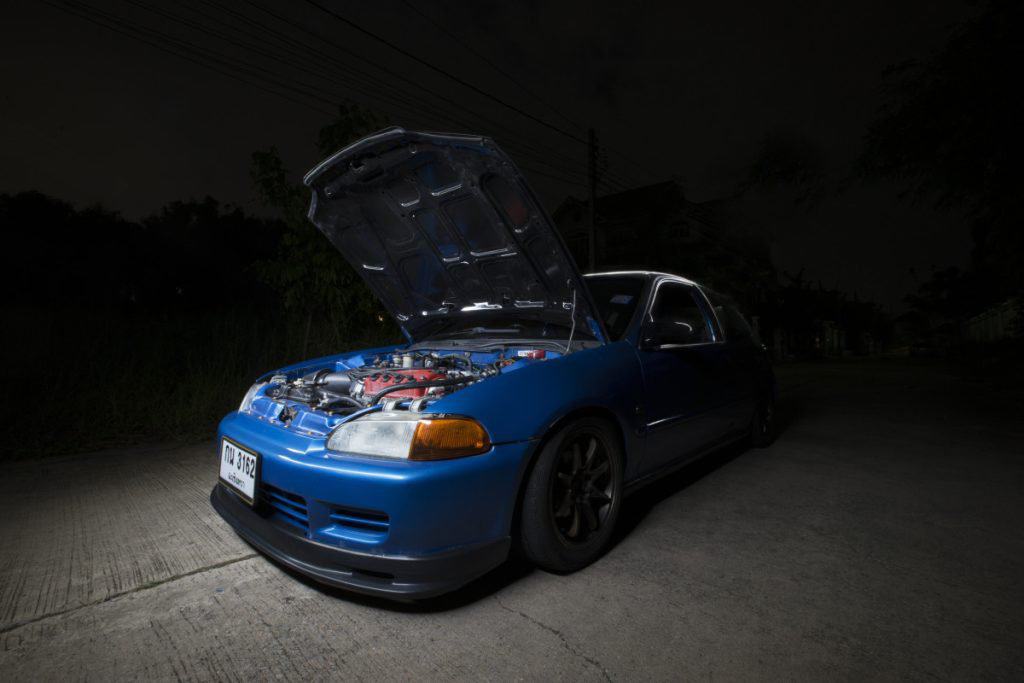
This one probably seems obvious, but there’s a reason why EG and EK Honda Civics remain the gold standard for K-swaps. These cars were built when Honda still cared about weight, which means you’re starting with something that’s maybe 2,300-2,400 pounds when stripped down.
The swap itself is surprisingly straightforward. You’ll need conversion mounts (Hasport makes good ones), new axles, shift cables instead of the old linkage setup, and either a K-Pro ECU or complete harness conversion. Most people budget around $5,000-7,000 for a clean swap if they’re doing it themselves.
What actually changes: A stock EG hatch with a tired D-series might make 90 horsepower on a good day. Drop in a K20Z3 and suddenly you’re looking at 200+ wheel horsepower in a car that weighs less than a modern Corolla. The power-to-weight ratio becomes genuinely silly.
The real magic happens in how the car feels. That K-series loves to rev, and in something this light, you can actually use all those RPMs. Third gear pulls become properly violent. Highway on-ramps turn into opportunities for mayhem.
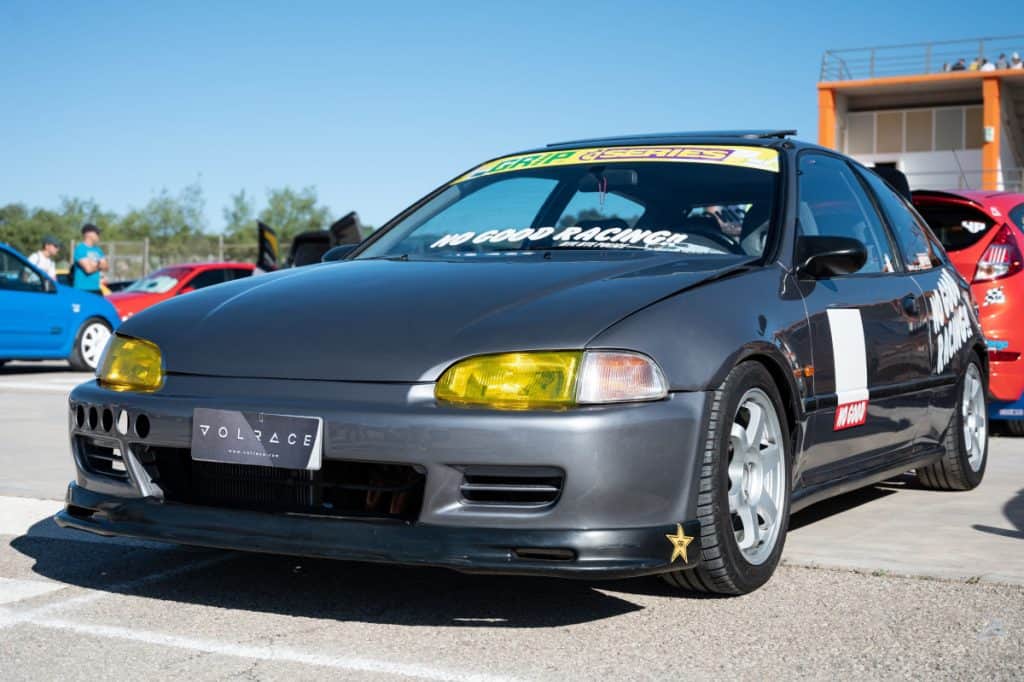
The reality check: These swaps aren’t plug-and-play despite what forums suggest. Expect to solve weird electrical gremlins. Perhaps the throttle response doesn’t feel quite right at first, or maybe the idle hunts around until you sort the tune. But when it’s dialed in, few things drive better than a K-swapped EG.
2. Mazda Miata (NA/NB)
The RWD Revolution

Honda makes the engine, Mazda made the chassis. Seems like a match made in heaven, though getting them together requires some serious work.
The K20Z swap in a Miata means ditching the entire Mazda subframe for a custom tubular setup. Companies like KMiata have figured out the engineering, but you’re looking at $8,000-10,000 minimum to do it properly. The kit alone runs $3,750, then you need the engine, ECU, and probably some custom fabrication.
What actually changes: A stock NA Miata makes about 115 horsepower and feels quick because of the chassis balance. A K20Z Miata makes 220+ horsepower and becomes something entirely different. We’re talking about a 2,300-pound car with modern engine power and RWD handling.
The transformation is dramatic. Suddenly you have a car that can keep up with modern sports cars in the straights while still maintaining that classic Miata feel in the corners. Track days become exercises in managing grip rather than willing the car forward.
The complications: This isn’t a weekend project. You’re essentially building a kit car. Everything from cooling to exhaust requires custom solutions. And if something breaks on a road trip, good luck finding a shop that knows what they’re looking at.
Still, for people who’ve driven one, there’s something special about a K-swapped Miata. It keeps the playful character while adding the power the chassis always deserved.
3. Toyota MR2 Spyder (ZZW30)
The Underrated Option
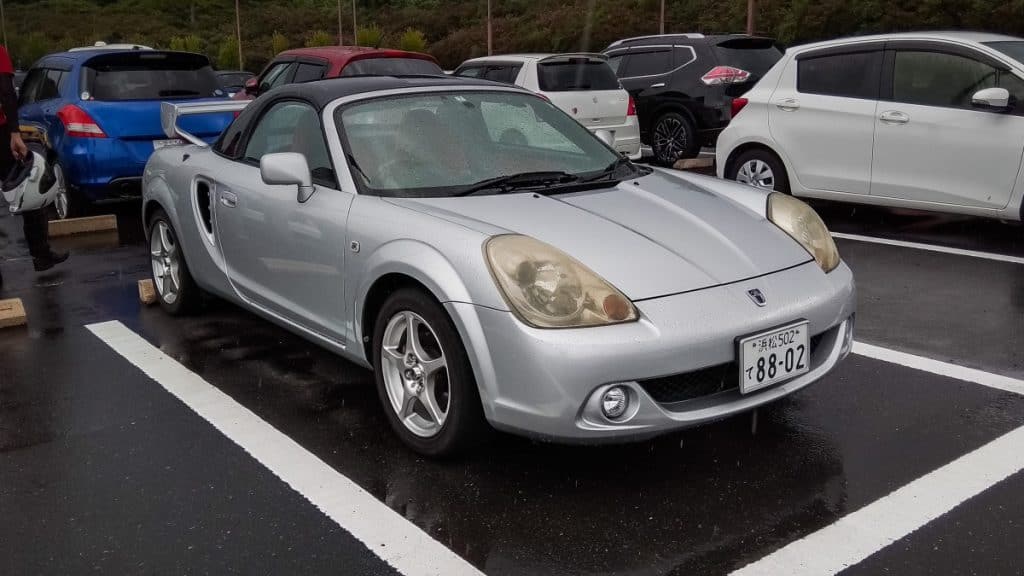
Most people forget the third-generation MR2 even exists, which is a shame. These little mid-engine roadsters are actually perfect candidates for a K20Z swap.
The beauty of this swap is that you can keep more of the Toyota bits than you’d expect. The shift cables, radiator, and fuel system can all stay. You’re mainly swapping engine mounts, harnesses, and obviously the motor itself. Figure $10,000-13,000 for a professional installation.
What actually changes: The stock 1ZZ engine in these cars makes 138 horsepower, which sounds adequate until you drive one. They feel gutless, especially compared to the turbocharged SW20 that came before. A K20Z changes everything.
With 200+ horsepower in a 2,200-pound mid-engine chassis, the MR2 transforms from a budget roadster into something genuinely quick. The mid-engine layout means the weight distribution stays nearly perfect, and unlike the Miata swap, you’re working with a platform that was designed for this power level.
The catch: Parts availability can be tricky since these cars sold in smaller numbers. And that mid-engine layout, while great for handling, makes some maintenance tasks properly annoying. Hope you enjoy removing the engine to change spark plugs.
But for someone wanting a unique build that flies under the radar, a K-swapped MR2 Spyder is hard to beat. They look innocuous parked next to modern cars, then surprise people when the lights turn green.
4. Acura Integra (DC2)
The Natural Evolution
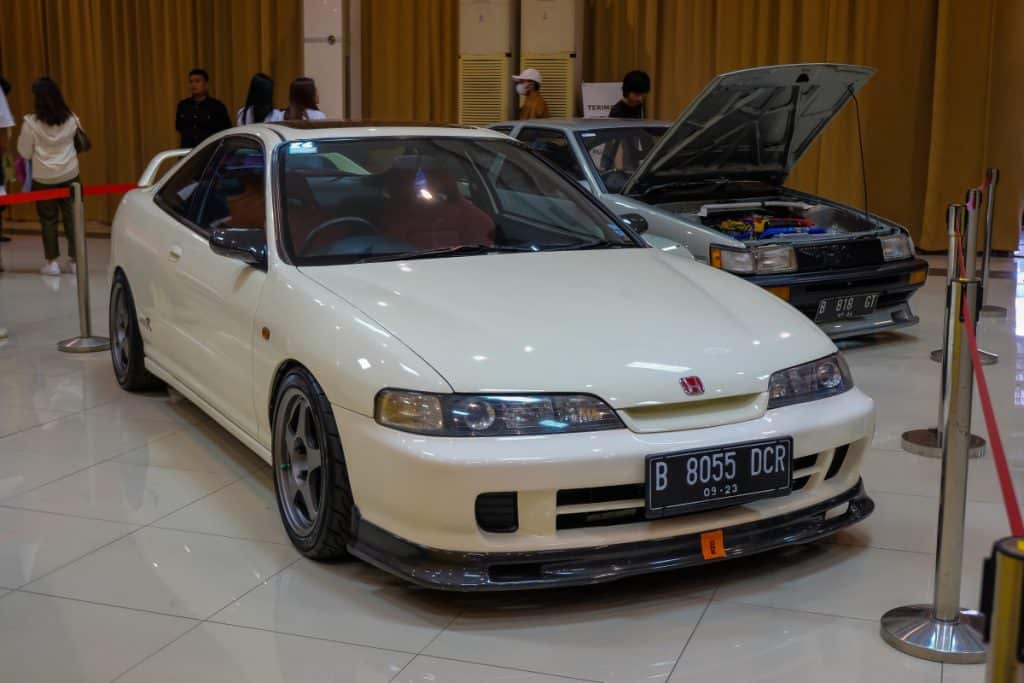
Integras and K-series engines should have come together from the factory. The DC2 chassis is legendary for a reason – Honda’s engineers got the suspension geometry exactly right, and the structure is stiff enough to handle serious power without turning into a pretzel.
The swap process is similar to the Civic, though perhaps slightly easier since Integras came with better wiring from the factory. Budget the same $5,000-7,000 for parts if you’re doing the work yourself.
What actually changes: Even a healthy B18C5 Type R only makes about 195 horsepower. A K20Z3 starts there and has room to grow. But the real improvement isn’t peak power – it’s the torque curve. The K-series pulls hard from 4,000 RPM all the way to 8,000+, while the B-series felt more peaky.
Driving characteristics improve dramatically. The car feels more modern, with better throttle response and a wider powerband that’s easier to use on both street and track. You can actually stay in gear longer without falling off the power curve.
The controversial part: Purists hate this swap. They’ll argue you’re ruining a perfectly good Type R, and maybe they have a point. But if you’re starting with a beat-up GSR or RS, swapping to K-series power makes perfect sense.
The result is an Integra that drives like Honda should have built it in 2005. All the classic DC2 handling with power that doesn’t feel dated by modern standards.
5. Honda S2000 (AP1/AP2)
The Ultimate Experiment
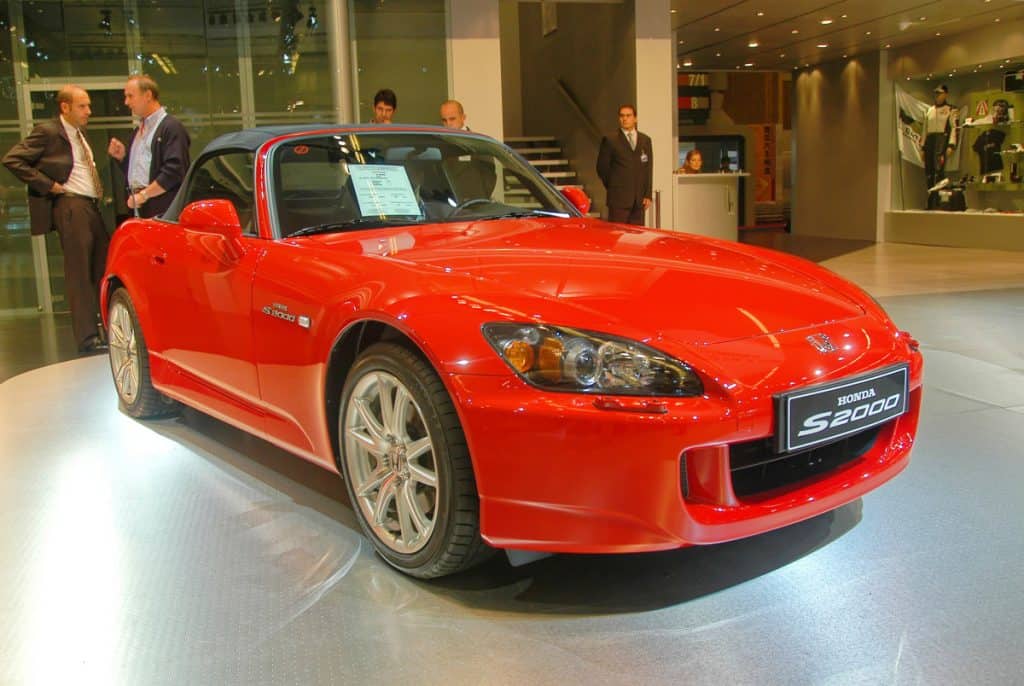
This one’s controversial, and for good reason. The F20C and F22C engines that came in S2000s are already phenomenal. So why would anyone swap them out?
Usually it comes down to a blown motor or the desire for easier power gains. The K20Z can make big power with less money than rebuilding an F-series for the same output. Turbocharging a K-series is also more straightforward than boosting the high-compression F20C.
What actually changes: Peak power might be similar, but the character is completely different. The F20C needed to be revved to 8,000+ RPM to make power. A K20Z makes more torque lower in the rev range, which changes how the car drives daily.
For track use, this can actually be an improvement. The broader powerband means you’re not constantly rowing gears to stay in the sweet spot. Road courses with long straights become less about managing the transmission and more about managing the chassis.
The reality: This swap makes the least sense of any on this list. The S2000 was engineered around its specific engine, and changing that alters the car’s fundamental character. Most people would be better off just buying a different car.
But for someone who already owns an S2000 with a blown motor, or wants to build something truly unique, the swap can work. Just understand you’re creating something different, not necessarily better.
The Hidden Costs Nobody Mentions
Every swap guide focuses on the big-ticket items – engine, transmission, mounts, ECU. But the little stuff adds up fast and can easily double your budget if you’re not careful.
Custom driveshafts alone can run $400-800. A proper tune from someone who knows what they’re doing? Another $600-1,000. Fabricating a decent exhaust system might cost $500-1,500 depending on your requirements.
Then there are the inevitable surprises. Maybe the clutch master cylinder doesn’t play nice with the new setup. Perhaps the alternator doesn’t charge quite right and needs a different regulator. These problems aren’t impossible to solve, but they take time and money.
Plan for 20-30% more than your initial budget. Better to overestimate and have money left over than get stuck with a half-finished project in your garage.
Making It Work Long-Term
The builds that succeed share a few common traits. They’re done by people who either have solid mechanical skills or deep pockets for professional installation. They’re planned carefully with realistic budgets and timelines. And most importantly, they’re finished properly instead of rushed together.
A well-executed K20Z swap creates something special – a car with modern power in a classic chassis, combining the best of both worlds. But done hastily or cheaply, it becomes an expensive headache that never quite works right.
The engine itself is bulletproof. Honda built these things to run for 200,000+ miles in family sedans. Treat the swap with the same attention to detail, and you’ll have something that’s both fast and reliable.
Bottom line: K20Z swaps work best when they fill a specific need rather than just chasing power numbers. Want a lightweight track car? The Civic or Integra makes sense. Need RWD thrills? The Miata is worth the complexity. Looking for something unique? The MR2 Spyder delivers.
But don’t do it just because you can. These swaps take serious money, time, and skill to execute properly. Make sure the end result is actually what you want to drive.
Related Resources
- https://www.drifted.com/honda-k20/
- https://en.wikipedia.org/wiki/Honda_K_engine
- https://www.k20a.org/
- https://www.7thgenhonda.com/threads/estimated-cost-of-k20-swap.27757/
- https://www.8thcivic.com/threads/k20-swap-whats-needed.52586/
- https://honda-tech.com/forums/k-series-153/how-much-will-k-swap-cost-2781638/
- https://exoracing.co.uk/blog/the-ultimate-kswap-installation-guide/
- https://kpower.industries/products/ultimate-k24-miata-swap-conversion-package
- https://engineswapdepot.com/?p=2832
- https://did-it-myself.com/k24-miata-swap/
- https://kpower.industries/pages/faqs
- https://www.miataturbo.net/build-threads-57/k20-swap-goodness-inside-96876/
- https://www.mitchsautoparts.com/pages/how-to-swap-a-k20a2-into-a-mr2-spyder-zzw30
- https://www.mitchsautoparts.com/pages/faqs-about-k-swaps
- https://toyonda206.com/k-swap-faq
- https://www.spyderchat.com/threads/k20-swap.156879/
- http://speed.academy/k-series-honda-swap-guide-k20-k24-how-to-parts-needed-part-1/
- https://www.hotcars.com/best-honda-k-swapped-cars/
- https://www.speedhunters.com/2021/10/k-powered-10-best-k-swapped-spotlights/
- https://www.7thgenhonda.com/threads/kswap-shop-install-rates.16608/
- https://www.7thgenhonda.com/threads/k20-swap-worth-it.35361/
- https://www.k20a.org/threads/cost-of-a-k-swap-eg.87571/