Skip to content

Moab always gets treated like a show. Big tires, loud builds, concept paint, cool photos. But the useful part of Easter Jeep Safari is usually not the obvious part. It is the stuff hiding underneath the attention-grabbing details. This year, at the 60th Easter Jeep Safari in Moab, Jeep and JPP showed six concepts that felt less like random one-off toys and more like a rough draft of where off-roading is headed next: the Anvil 715, Buzzcut, Laredo, Gladiator Red Rock, XJ Pioneer, and Grand Wagoneer Commander. Jeep’s own event rollout positioned the lineup as both a heritage moment and a preview of future off-road thinking.
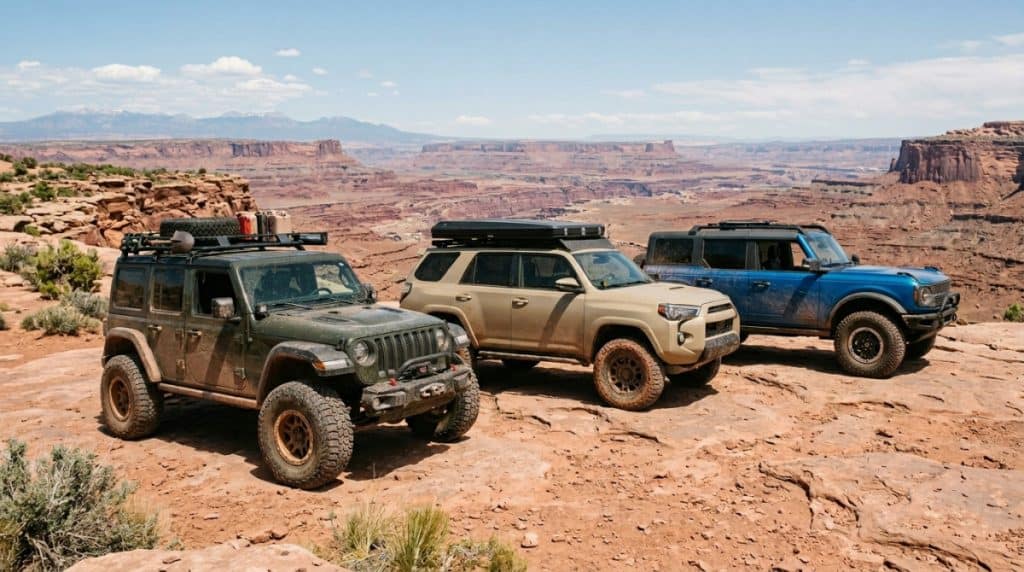
That is what makes this one worth talking about. The 60th anniversary could have easily turned into a nostalgia parade. Instead, a lot of the concepts kept circling around the same themes: easier-to-clean interiors, overlanding that lives more inside the vehicle than on top of it, hardware that feels integrated instead of bolted on as an afterthought, lighter and more deliberate build logic, and trail tech that is finally useful without pretending it can replace common sense. That is a much better story than just “look at these six Jeeps.”
The hose-out interior is back, and that is a good thing
One of the clearest signals from Moab 2026 was the move away from plush, delicate interiors and back toward cabins that feel like they belong in a trail rig. Jeep’s official concept summary says the Laredo concept was built around simplicity and mechanical feel, while coverage of the concept lineup points to vinyl flooring in the Laredo and Armorlite flooring in the Gladiator Red Rock. That is not just styling. That is a real shift in priorities.
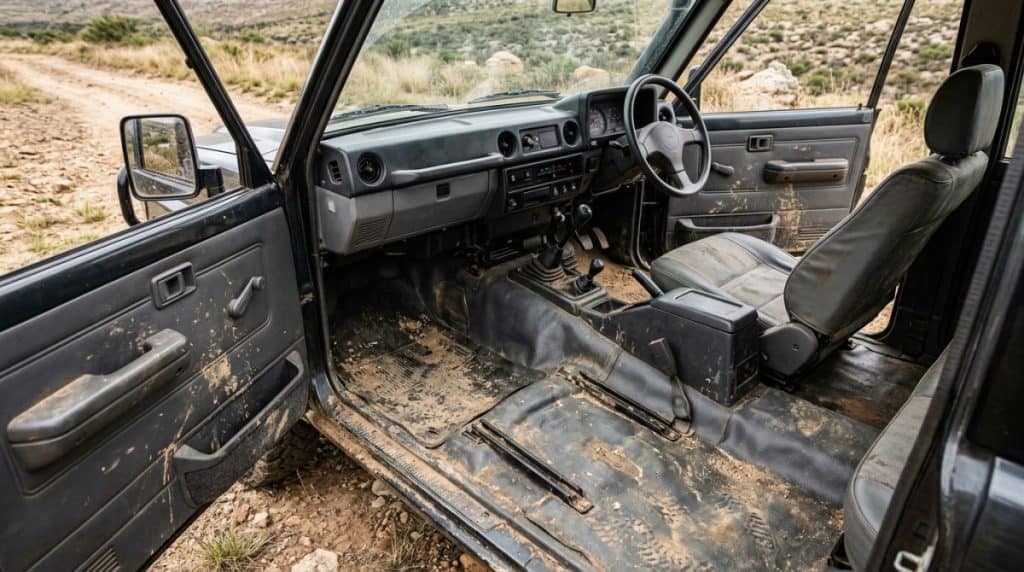
It makes sense too. Off-roaders have been creeping toward luxury-SUV interiors for a while now. Nice in a showroom, annoying in the real world. Mud, sand, wet boots, river crossings, spilled drinks, dog hair, dust from a dry trail day, all of that turns carpet into a bad idea pretty quickly. Armorlite’s own product language is blunt about the appeal: it is a full washout replacement floor with built-in drainage, heat and noise insulation, and a surface that is meant to be cleaned instead of babied. That lines up almost perfectly with what Jeep was hinting at with Red Rock.
This is one of the most realistic Moab trends for regular owners to copy. You do not need concept-car money to make your interior easier to live with. Better flooring, better drain management, and less absorbent junk down low will improve the ownership experience more than another cosmetic mod ever will. If your rig is supposed to get dirty, it should not be designed like dirt is a crisis.
Overlanding is starting to move inward instead of upward
The Anvil 715 was easily one of the most interesting builds at the event, and not just because it looked cool. Jeep framed it as an overland-focused Wrangler built without unnecessary bulk, and the details back that up: a custom front clip inspired by the old Kaiser M715, a nose stretched about four inches forward, and a fixed raised roof with about four extra inches of headroom and four skylights. The center screen was even replaced with a driver-facing tablet loaded with Trails Offroad maps.
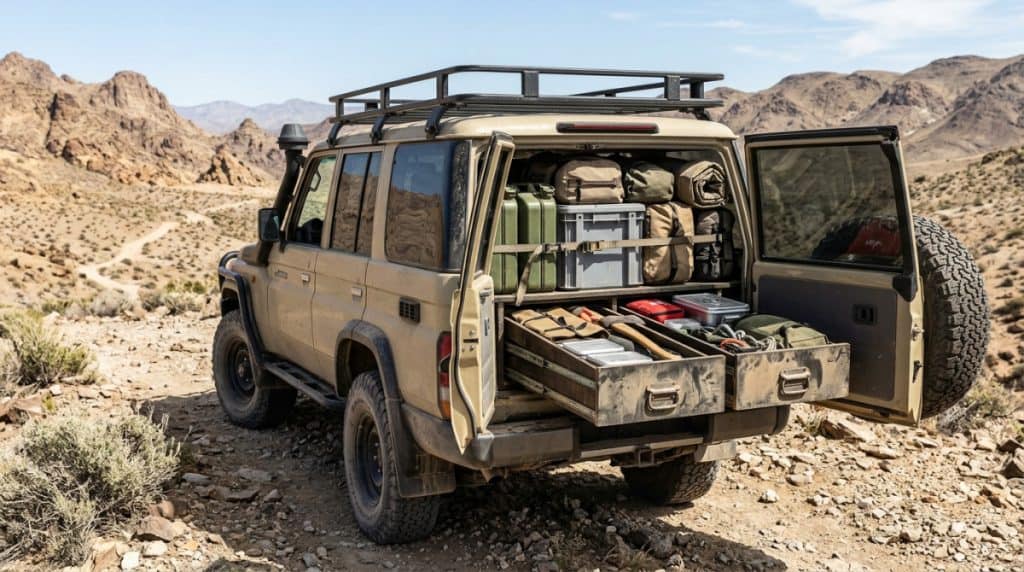
That build matters because it pushes back against the rooftop-tent arms race that has been swallowing overlanding for years. Too many rigs now look like they are trying to solve every problem by adding more stuff to the roof. Rack, tent, boxes, jack, shovel, fuel, lights, traction boards. It looks serious, but it also adds drag, height, and a whole lot of weight in the worst possible place. The Anvil 715 pointed in a different direction. More living space inside the vehicle. More light. More headroom. Less dependence on a giant tower of gear bolted up top.
That is better physics, not just better design. Roof weight raises the center of gravity fast, which matters on off-camber trails and side-hills. That is still one of the most overlooked problems with modern overland builds. The practical lesson here is simple: more comfort does not have to mean more roof junk. If you can move living space and heavy gear lower and farther inside the body, the vehicle usually gets better, not worse.
The best rigs are getting cleaner, not busier
This might be the most useful trend of the whole batch. The Gladiator Red Rock and Buzzcut both pushed hard toward integrated infrastructure, and that matters more than another batch of concept graphics ever will. Jeep’s official event release described Buzzcut as a compact, sporty two-seat design with expanded storage for longer adventures, and broader concept coverage showed how Red Rock was built around onboard air, organized cargo, and a bed setup that looked like it was designed to work instead of just photograph well.
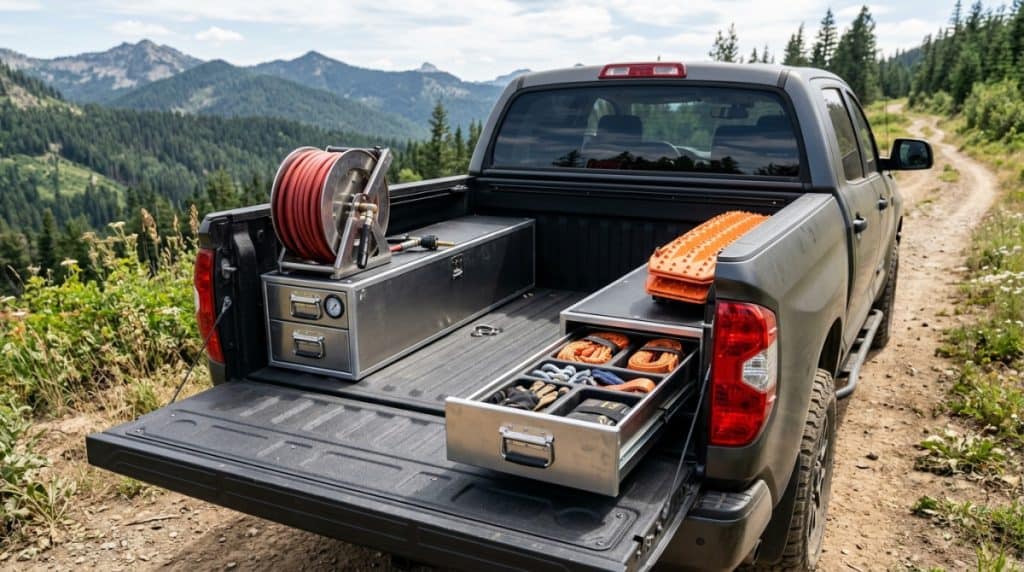
That is a big shift from the old “more stuff bolted outside means more capable” mindset. Red Rock was especially telling because it was built as a working support rig for trail stewardship, not just a show truck. Buzzcut made the same point from the Wrangler side, packaging storage and trail gear more intentionally instead of turning the exterior into a hardware aisle. The theme across both was clear: capability is starting to look more like built-in systems and less like visible clutter.
For real owners, this is a great reset. Before adding another light bar, exterior jack mount, or random bracket, it makes more sense to sort out the basics: secure storage, onboard air, a recovery setup that does not rattle, and a place for trail gear that is actually easy to access. The coolest rig in 2026 is not the one with the most stuff hanging off the outside. It is the one where everything has a home and nothing feels improvised.
Weight is quietly becoming more important than horsepower
Horsepower still gets the spotlight, but Moab 2026 made a pretty good case that weight is the more interesting story. The Anvil 715 brought the 392 V-8 energy, and Jeep’s 2026 Wrangler 392 still posts 470 horsepower and 470 lb-ft. But the Buzzcut’s 2.0-liter turbo setup tells a different story, one that may matter more on real trails than another horsepower war.
A lighter engine package means less mass over the nose, and that affects more than people think. It can help balance, make the front end feel less heavy, and reduce the sense that the vehicle is always trying to drop its face into obstacles. The concept research around Buzzcut leaned heavily into that logic, and even without treating Jeep concepts like hard engineering white papers, the basic point still holds up: a lighter, more deliberate build often works better than a heavier one trying to brute-force everything with engine size.
The XJ Pioneer reinforced the same idea in a more relatable way. It did not go full cartoon build. Instead, it kept a two-inch lift, 33-inch all-terrains, and custom carbon-fiber flares to make room without blowing up the whole package. That is a much smarter signal than another giant-tire trophy build. The whole recipe feels restrained in a good way: modest lift, sensible tire size, and a stance that keeps the vehicle useful instead of bloated.
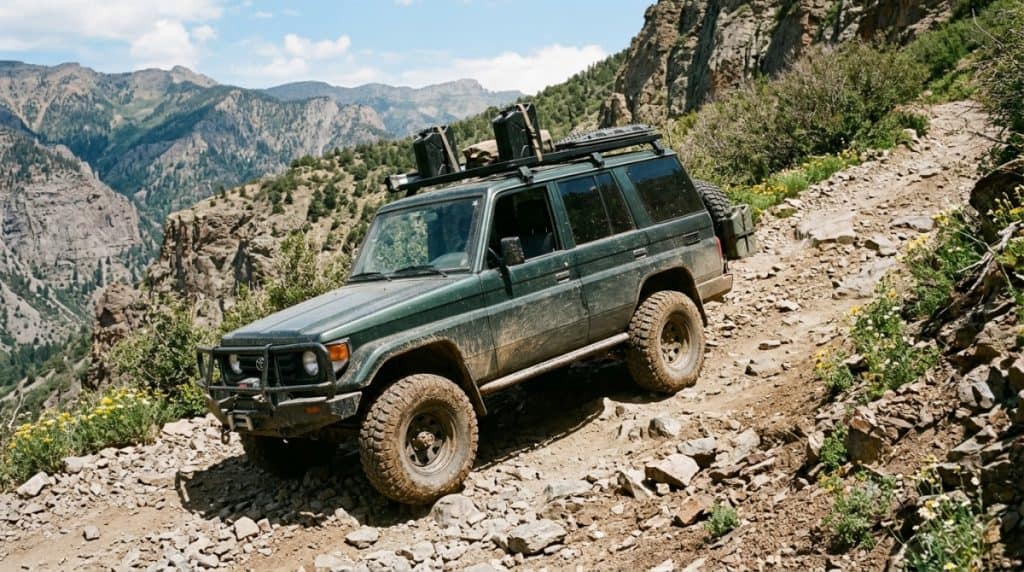
This is where a lot of normal builds get lost. Bigger tires, more armor, more power, more everything feels exciting for a while. Then the rig gets heavier, less balanced, less fun on the road, and harder to live with. Moab 2026 quietly argued for something better: lighter, tighter, more nimble, and more intentional.
Trail tech is finally getting useful, but it is still not a substitute for judgment
Digital trail mapping was another real shift this year, but only if you keep your expectations in check. Jeep’s 2026 Wrangler tech page now openly promotes Off-Road Trail Guides from Trails Offroad, with easy access to trails and off-roading video support through the platform. On the concept side, the Anvil 715 went even further by replacing the normal center-screen setup with a driver-oriented tablet loaded with Trails Offroad maps. That is not just more screen for the sake of more screen. That is Jeep treating trail guidance like a core part of the off-road experience.
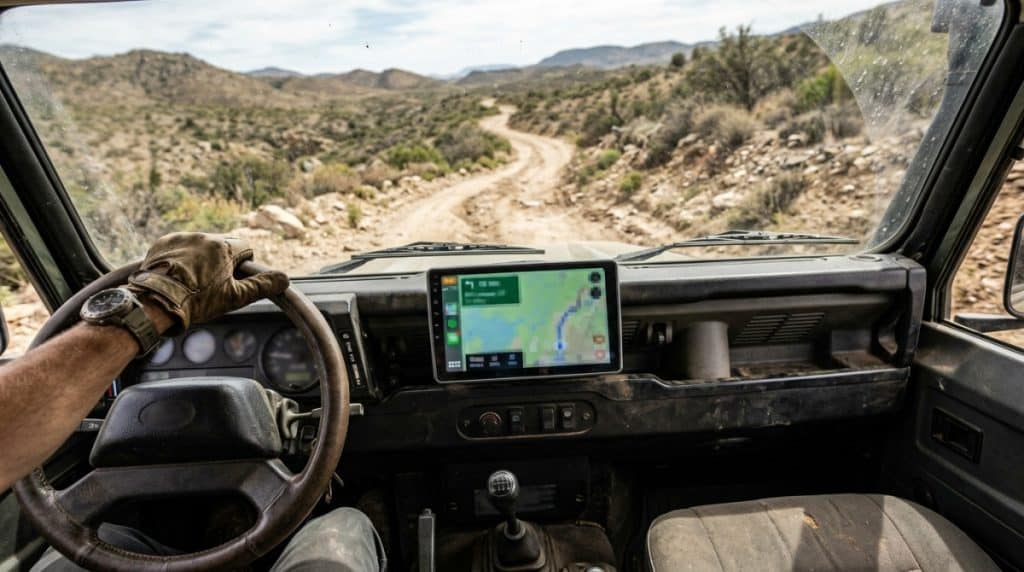
That matters because dedicated trail data is way more useful than generic navigation once you leave pavement. Offline maps, difficulty ratings, route details, waypoints, and planning tools all help reduce bad decisions before they happen. Jeep is not the only reason that matters, of course. Trails Offroad itself has become a legit tool because it is built around actual off-road use, not just repackaged street navigation.
Still, this is where people need to stay grounded. Trail tech is a good tool, not a replacement for trail judgment. Jeep’s own off-road guidance on the Wrangler and Gladiator still treats the driver as the main decision-maker, not the screen. That is the right mindset. Cameras, trail guides, pitch and roll readouts, and on-screen mapping can all help. None of them can replace reading terrain, knowing your vehicle’s limits, or using a human spotter when the obstacle actually matters.
The Moab blueprint for your own build
This is the part that matters most if you are not building a six-figure concept.
The best thing about Moab 2026 is that a lot of the ideas actually translate. Not the exact parts. Not the custom bodywork. But the logic behind them. If you own a used Wrangler, Gladiator, or even an older Cherokee, the practical version of this year’s Moab playbook looks pretty simple:
- Start with the hidden upgrades. Better flooring, better drainage, and an interior that is easier to clean will improve real ownership faster than cosmetic mods.
- Treat storage and air like infrastructure. Organize cargo first. Add onboard air before you add another piece of exterior clutter.
- Stop assuming more roof gear equals more adventure. Lower, simpler, and better-packed usually works better.
- Keep weight in check. A balanced rig on 33s often makes more sense than a bloated rig chasing bigger numbers.
- Use tech as a helper, not a crutch. Good maps and trail guides are great. They still do not replace good decisions.
That is really the story of Moab 2026. Not more power for the sake of it. Not more stuff. More purpose. More function. More thought behind the build.
And honestly, that feels like the right direction for off-roading.
Related Resources
- Jeep / Stellantis official 60th Easter Jeep Safari
- MotorTrend’s first look at the 2026 Easter Jeep Safari concepts
- Jeep’s 2026 Wrangler technology
- Jeep’s 2026 Wrangler capability
- Armorlite’s FAQ and features pages
- Kelley Blue Book and Car and Driver concept coverage for the XJ Pioneer, Laredo, Buzzcut, and Red Rock