 Skip to content

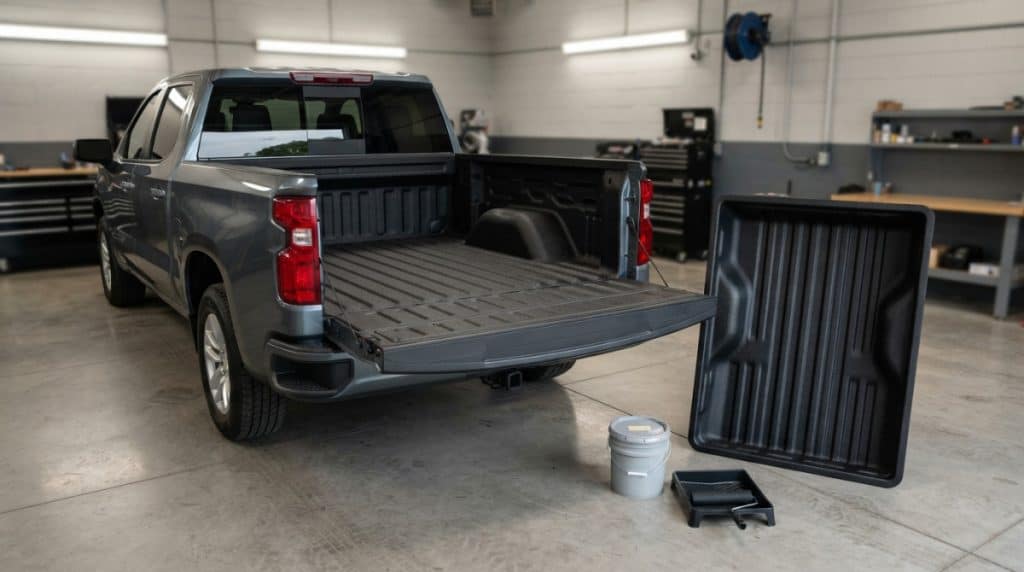
A bedliner should do more than hide scratches. It should match the way you actually use your truck.
A professional spray-in liner gives most long-term owners the best balance of grip, appearance, abrasion protection, and resistance to hidden corrosion. It bonds directly to the bed instead of sitting loosely on top of it.
But spray-in is not automatically best for everyone.
A thick drop-in liner can cushion heavy impacts better, costs less, and can be removed later. A DIY roll-on or spray-on kit is the cheapest route and may be completely reasonable for an older work truck.
The right choice depends on your cargo, climate, budget, bed material, and how long you plan to keep the truck.
Quick Answer: Spray-In vs. Drop-In Bedliner
For most owners keeping their truck for several years, a professionally installed spray-in bedliner is the best long-term choice. It follows every contour, does not shift or rattle, gives cargo more grip, and creates a continuous protective barrier over the prepared bed.
Choose a drop-in bedliner when you want lower upfront cost, strong cushioning from heavy dropped objects, easy cargo sliding, or a removable option for a leased or short-term truck.
Choose a DIY roll-on or spray-on kit when the budget matters most and you are willing to spend time cleaning, scuffing, masking, and applying the coating correctly.
For severe work use, one of the strongest combinations is often a professional spray-in liner with a removable rubber bed mat over the floor.
Professional Spray-In vs. DIY Kit vs. Drop-In
| Category | Professional Spray-In | DIY Coating Kit | Drop-In Liner |
| Typical 2026 cost | About $500 to $1,000+, depending on bed size, preparation, coverage, and premium options | About $100 to $200 before extra supplies | Commonly about $170 to $400 |
| Main strength | Long-term, seamless protection | Lowest-cost bonded coating | Thick impact cushioning and removability |
| Rust protection on steel | Strong when preparation and coating remain intact | Good only if preparation and coverage are thorough | Depends heavily on fit, drainage, paint condition, and maintenance |
| Cargo grip | Usually high | Usually high | Varies; traditional hard plastic can be slick |
| Protection from heavy dropped loads | Moderate; bed can still dent | Limited to moderate | Often stronger because of the thick molded shell |
| Appearance | Clean and integrated | Depends heavily on prep and application | Functional but visibly added |
| Installation | Professional equipment and masking | Labor-intensive DIY project | Usually simple vehicle-specific installation |
| Removable | Not easily | Not easily | Yes, although fasteners or rubbing may leave marks |
| Best for | Long-term owners and frequently used trucks | Older trucks, projects, and tight budgets | Leases, occasional use, heavy impacts, and easy cargo sliding |
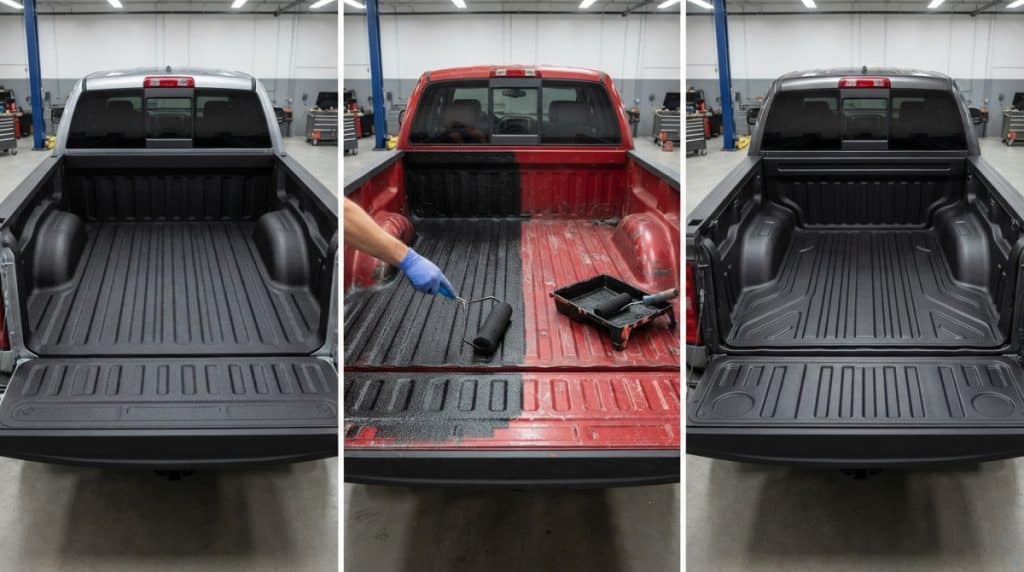
These are broad ranges and tendencies. Bed length, over-rail coverage, surface repairs, color, local labor, and product quality can change the comparison.
What Is a Professional Spray-In Bedliner?
A professional spray-in liner is a coating applied directly to the truck bed after the surface has been cleaned, masked, and mechanically scuffed.
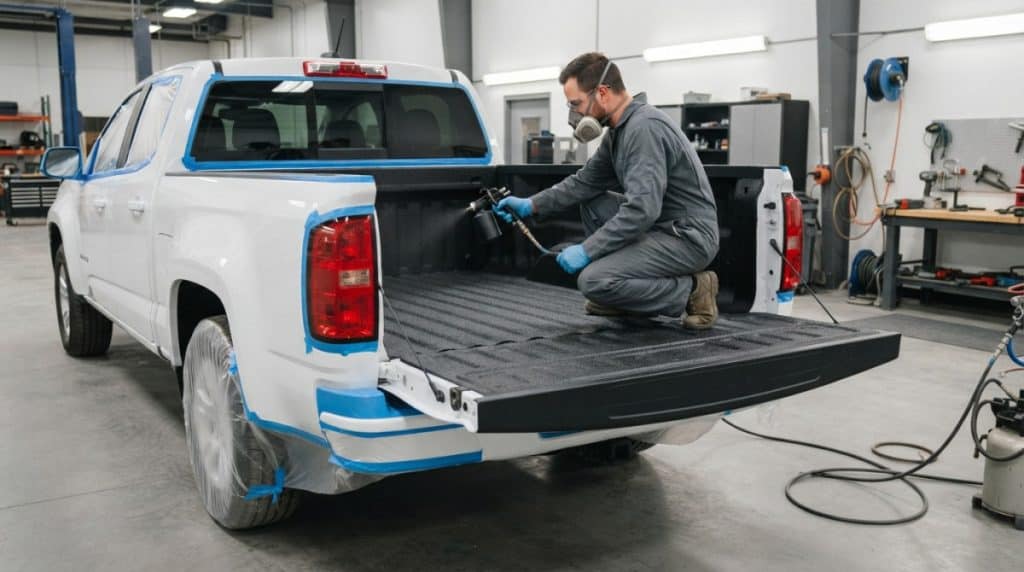
Once cured, it follows the shape of the floor, wheel wells, walls, tailgate, and bed rails if those areas are included. There is no separate shell moving against the paint.
Its biggest advantages are:
- A fitted, permanent appearance
- Strong abrasion and scratch resistance
- More grip for cargo
- No plastic liner rattling or shifting
- Coverage around unusual shapes and factory contours
- The ability to repair localized damaged areas
The quality of the finished liner depends heavily on preparation. Spraying over contamination, loose paint, or existing rust can lead to peeling or allow corrosion to continue underneath.
A spray-in coating is also not a dent shield. A generator, concrete block, or sharp piece of scrap dropped hard enough can still dent the metal beneath it.
What Is a Drop-In Bedliner?
A traditional drop-in liner is a molded plastic shell shaped for a specific truck bed.
It rests over the painted bed and is held in place by its fit, clips, bolts, or other fasteners. Some cover only the area below the rails, while over-rail versions extend across the upper edges.
Drop-ins remain useful because they offer benefits that spray coatings do not:
- A thick barrier between cargo and sheet metal
- Strong cushioning from dropped loads
- Lower upfront cost
- Quick installation
- Easy removal or replacement
- A smoother surface for sliding cargo
That slick surface can be a real advantage. Someone who regularly moves pallets, lumber, feed, or heavy boxes may prefer cargo that slides rather than grips.
The same smooth surface can also let unsecured cargo move while driving, so proper tie-downs remain necessary.
What Counts as a DIY Bedliner?
DIY bedliner products include roll-on coatings, aerosol cans, and multi-part coatings applied with a basic spray gun.
They are closer to a professional spray-in than a plastic drop-in because they bond to the prepared surface. However, the application equipment, coating thickness, consistency, finish, and durability may be different from a shop-installed system.
A DIY coating makes the most sense when:
- The truck is older
- The bed is already scratched
- Appearance is not the top priority
- The budget is limited
- You have enough time for proper preparation
- You are comfortable accepting an imperfect texture
It is less appealing on a new or high-value truck when you want an even, factory-style result.
The Biggest Difference Is What Happens Underneath
Picture a 1990s Ford F-150 that has spent decades hauling feed, fencing supplies, tools, and equipment around a farm. The truck still starts every morning, and the plastic drop-in liner looks fine from above.
Then the liner is removed.
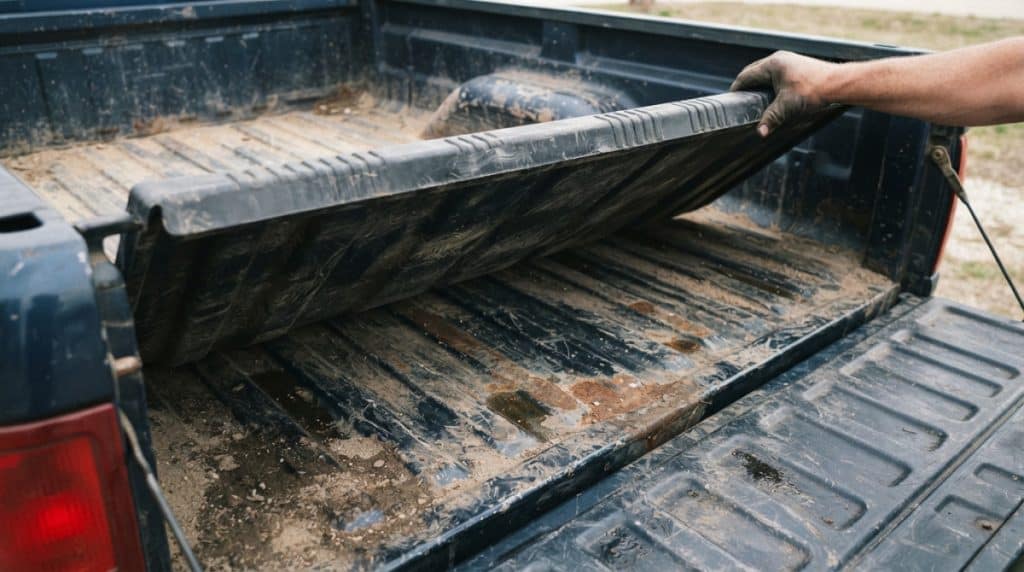
Underneath, years of dirt, moisture, and movement have worn through parts of the paint. Rust has been spreading across the bed floor where no one could see it.
This is a common risk with older trucks, especially when a drop-in liner is never removed for cleaning and inspection. It does not mean every drop-in liner causes rust. It shows why the condition underneath matters just as much as the protection you can see.
A rigid drop-in can allow water, salt, sand, and dirt to work underneath through its edges, tie-down openings, drainage points, or tailgate area. If the liner shifts, that grit can rub against the paint.
Once the paint wears through on a steel bed, trapped moisture and road salt can accelerate corrosion. Because the liner is opaque, the owner may not see the damage until it has spread.
Water alone is not the entire problem. The risk usually comes from a combination of:
- Moisture reaching the space below the liner
- Dirt or salt staying against the bed
- Movement wearing through the protective paint
- Poor drainage or blocked factory drain points
- The liner never being removed for inspection
Road salt is particularly corrosive to vehicle metal, while protective coatings help by separating the underlying metal from the environment.
A professional spray-in avoids the same open cavity because it bonds to the surface. However, it only protects properly where the coating is well adhered and unbroken. Deep gouges, poor preparation, missed seams, or coating applied over active rust can still create problems.
For more general protection beyond the bed, read our guide on how to keep a truck from rusting.
A Drop-In Does Not Automatically Ruin the Bed
A well-fitted liner over intact paint is much less concerning than a loose liner that is never removed. Some modern designs include molded ribs or drainage paths that help prevent water from sitting directly against the bed.
Choose a liner made for the exact truck and bed length, keep the factory drains open, and remove the liner periodically to wash, dry, and inspect underneath. Repair damaged paint or exposed steel before reinstalling it.
Where a Professional Spray-In Genuinely Wins
A professional spray-in is usually the stronger choice when the truck is used frequently and will be kept for years.
Abrasion Protection
Gravel, tools, lumber, boxes, and equipment can scrape through ordinary paint. A properly applied spray-in creates a replaceable wear surface over the bed.
Cargo Grip
The textured finish helps prevent coolers, tools, storage bins, and smaller items from sliding as easily.
Cargo still needs to be secured. A grippy liner is not a replacement for straps or tie-downs.
Fit and Appearance
The coating follows every shape instead of adding a bulky molded shell. Lights, tie-downs, outlets, steps, and access panels can be carefully masked rather than hidden behind a generic liner.
Noise and Movement
Because the coating is bonded to the bed, it does not flap, shift, squeak, or rub against the paint like a loose plastic shell can.
Long-Term Ownership
A clean professional application is generally viewed as a useful truck upgrade. That does not guarantee a specific increase in resale price, but it usually presents better than a scratched bare bed or a poorly fitted liner hiding unknown damage.
The Main Drawbacks
A professional spray-in costs more, permanently changes the painted bed, and depends on installer quality.
Some standard black coatings can also fade or develop a chalky appearance after years of sunlight. A UV-resistant premium coating or compatible topcoat can help when appearance matters. LINE-X, for example, distinguishes its Standard, UV-resistant Premium, and thicker-floor MAX options, while Rhino offers separate impact-, grip-, and UV-focused products.
Where a Drop-In Genuinely Wins
A drop-in is not simply the inferior budget choice. It is better at several specific jobs.
Heavy Impact Cushioning
A thick molded liner can spread or absorb some of the force from heavy dropped objects. That can help when hauling bricks, scrap, landscaping materials, firewood, or machinery.
A spray coating may resist scratching better, but it cannot stop the sheet metal from denting under a severe impact.
Easier Loading and Unloading
A hard plastic surface lets heavy cargo slide. That can be useful when pushing lumber, loading pallets, or repositioning bulky equipment.
Reversibility
The liner can be removed if the truck is leased, sold, or returned to mostly stock form.
“Removable” does not always mean the bed will look untouched. A loose liner may leave rub marks, and some installations use holes or permanent fasteners.
Lower Initial Cost
Drop-in liners usually cost less than professional spray-in applications. Current vehicle-specific products commonly fall between roughly $170 and $300, although complete sets, tailgate protection, freight, and premium designs can raise the total.
Before ordering, confirm the truck’s year, bed length, rail style, outlets, lighting, cargo-management system, and other factory options.
Easy Replacement
A cracked shell can be removed and replaced. Repairing it is often impractical, but replacement is easier than stripping a failed bonded coating from an entire bed.
Before ordering, confirm the exact year, bed length, rail style, outlets, lighting, cargo-management system, and other factory options. Our guide to Flareside and Styleside truck beds explains why bed shape matters beyond the advertised length.
The DIY Tier: Straight Talk
A DIY coating can be a smart choice, but preparation decides whether it looks respectable or starts peeling.
The three steps that matter most are:
- Clean completely. Remove oil, wax, dirt, rust, and loose paint.
- Scuff every coated surface. Glossy paint gives the new coating less to grip.
- Degrease and dry it. Do not leave sanding dust, solvent residue, or moisture behind.
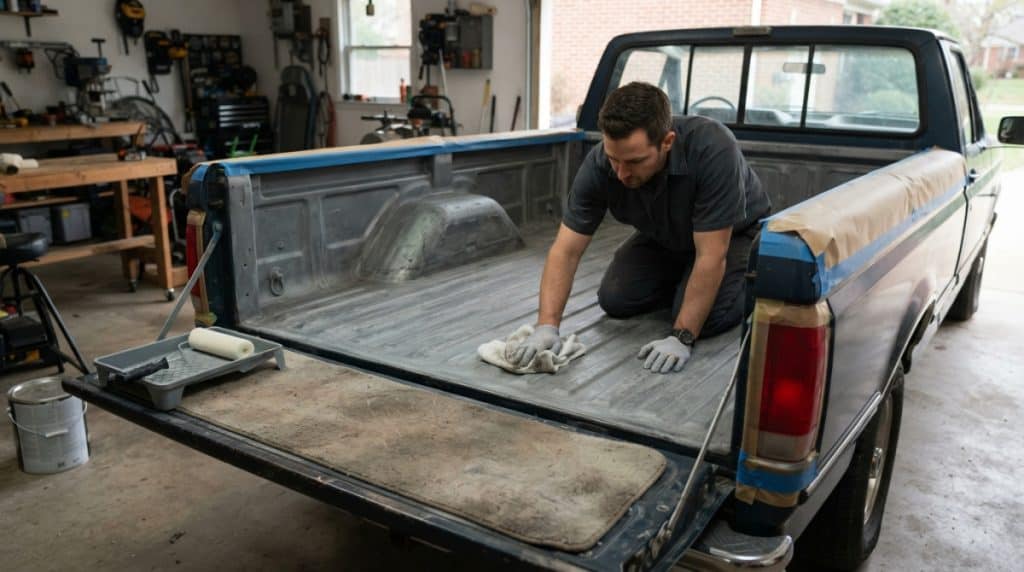
Masking also takes longer than many first-time installers expect. Bed bolts, drain openings, tie-downs, lights, wiring access, tailgate gaps, and threaded holes need protection.
DIY kits commonly cost about $100 to $200 before preparation supplies and tools. Current Herculiner kits, for example, fall roughly between $110 and $170 depending on the size and application system.
Extra brushes, masking materials, cleaners, abrasives, protective equipment, and possibly a spray gun can increase the actual project cost.
It is a poor bargain when you rush the preparation and later pay someone to remove the failed coating.
Abrasion Protection and Dent Protection Are Not the Same
This distinction is easy to miss.
A spray-in liner is excellent at taking repeated scraping, sliding, and general surface abuse. It acts as a durable wear layer over the paint.
A drop-in liner provides a thicker physical barrier that may cushion a hard impact better.
Neither one makes the truck bed indestructible.
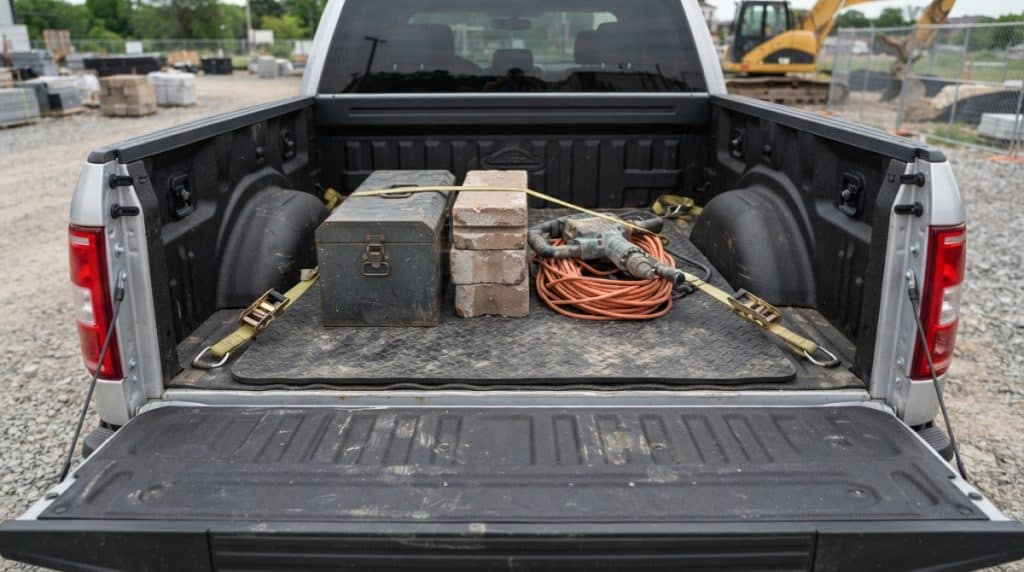
For owners who haul very heavy or sharp objects, a strong setup is often:
- Professional spray-in for continuous surface and corrosion protection
- Removable rubber mat for extra floor cushioning
- Proper tie-downs to prevent movement
The mat can be replaced after it becomes damaged without removing the bonded liner underneath.
Does the Truck Bed Material Change the Answer?
Yes. Not every modern truck has an ordinary steel cargo bed.
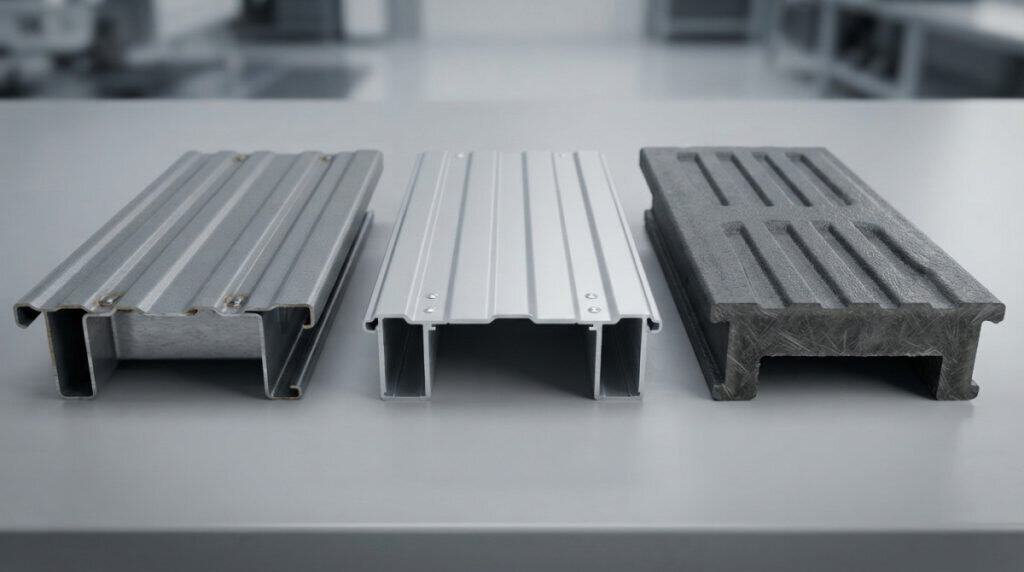
Steel Beds
The hidden-rust discussion matters most here. Once movement or cargo damage exposes bare steel, moisture and salt can start corrosion.
Aluminum Beds
Aluminum does not develop red iron rust, but it can still corrode, suffer paint damage, gouge, and dent.
The Ford F-150 uses an aluminum-alloy body and cargo box, so the decision becomes less about classic rust beneath the liner and more about abrasion, impact, coating compatibility, grip, and preserving the finish.
Composite Beds
Some trucks already have molded composite cargo beds. Current Toyota Tacoma and Honda Ridgeline models are examples. These beds do not need protection from steel rust in the same way, and applying an aftermarket coating may require special preparation or may be unnecessary.
Check the owner’s manual and ask the coating installer whether the product is approved for the specific bed material before sanding or modifying it.
What Bedliners Cost in 2026
Prices vary by truck size, bed condition, region, product, and installation requirements. Use these amounts as budgeting ranges rather than guaranteed quotes.
Professional Spray-In
Budget approximately $500 to $1,000 or more for a professional full-bed application.
A standard black coating on a clean short or standard-length bed will usually fall toward the lower or middle portion of that range. The price may increase for:
- Long beds
- Over-the-rail coverage
- UV-resistant topcoats
- Thicker floor coatings
- Custom colors
- Removal of an old liner
- Rust, paint, or dent repair
- Extra masking around accessories
Professional brands normally require a local quote because labor and preparation needs vary considerably.
Drop-In
Budget roughly $170 to $400 for many vehicle-specific liners.
The total depends on the truck, bed length, material, freight, and whether the package includes a separate tailgate liner. Verify that the liner matches every factory opening and accessory before ordering.
DIY Coating
Budget approximately $100 to $200 for the main coating kit.
Cleaning products, abrasives, rollers, masking supplies, protective equipment, and spray tools can increase the final cost. A cheaper kit is not a bargain when poor preparation causes the coating to peel and the entire job must be removed or redone.
The lowest purchase price is not automatically the lowest long-term cost. Installation quality, bed condition, maintenance, and how the truck is used matter as much as the liner category.
Bedliner Brands Worth Knowing
This is not a ranking, but these names represent the main approaches.
LINE-X
Its lineup includes a standard liner, a Premium option with added UV resistance, and MAX with a thicker floor coating. Local franchises provide quotes and installation.
Rhino Linings
Rhino offers multiple coatings instead of one universal texture. HardLine emphasizes impact and abrasion resistance, TuffGrip emphasizes slip resistance, and SolarMax focuses on UV and color stability.
Penda DuraLiner
This is a traditional vehicle-specific molded drop-in. Current designs advertise drainage paths, molded ribs, no-drill installation on many applications, and UV-protected plastic.
DualLiner
DualLiner takes a modular approach, combining hard side panels with a removable rubber floor mat. That can provide sidewall impact protection while making the floor easier to lift for cleaning and inspection.
Herculiner
Herculiner sells roll-on, aerosol, and larger DIY sprayable kits. The Original kit targets budget home application, while its multi-part kit includes application equipment.
RAPTOR
RAPTOR offers roll-on and sprayable coating kits in several sizes, including a one-gallon kit intended for full pickup-bed projects.
The installer’s preparation and application quality can matter more than choosing between two well-known professional brands.
Which Bedliner Should You Choose?
Choose a Professional Spray-In When:
- You plan to keep the truck for years.
- The truck is used for work most days.
- You haul abrasive cargo.
- You want cargo to slide less.
- You live near the coast or where road salt is common.
- You want a clean, integrated appearance.
- You do not need the liner to be removable.
Choose a Drop-In When:
- You want a lower upfront cost.
- Heavy objects are regularly dropped into the bed.
- You need cargo to slide easily.
- The vehicle is leased or may be sold soon.
- You want to remove or replace the liner later.
- You are willing to inspect and clean beneath it.
Choose a DIY Kit When:
- The truck is older or already cosmetically rough.
- Your budget is around $100 to $200.
- You have time for careful preparation.
- You care more about function than a factory-style finish.
- You are comfortable repairing worn areas yourself.
Choose Spray-In Plus a Rubber Mat When:
- You want the sealed, grippy base of spray-in protection.
- You also haul concrete blocks, engines, scrap, or other heavy loads.
- You want a replaceable cushioning layer on the bed floor.
- You kneel or work inside the bed frequently.
Common Bedliner Mistakes
Spraying Over Rust
A coating does not reverse existing corrosion. Rust should be properly repaired and the surface prepared before application.
If the bed is already perforated or structurally damaged, a liner is not the repair. The bed may require body work or replacement. Our guide explains how a truck bed is attached to the frame if the damage has reached that point.
Assuming Thicker Is Always Better
Thickness helps in some conditions, but adhesion, flexibility, even coverage, and preparation also matter.
Ordering the Wrong Drop-In
A liner for the wrong bed length or factory configuration may block lights, outlets, tie-downs, steps, drains, or access panels.
Ignoring Drainage
Do not cover or clog the bed’s intended drainage paths.
Skipping Periodic Inspection
A removable liner should occasionally be lifted so the bed can be cleaned, dried, and checked for worn paint, blocked drains, or developing corrosion.
Expecting a Liner to Secure Cargo
Grip helps, but heavy cargo still requires properly rated tie-downs.
Treating a DIY Kit Like Ordinary Paint
Bedliner preparation takes more than washing the truck and opening a can. Skipping the scuffing and degreasing work is one of the easiest ways to create peeling later.
Frequently Asked Questions
Does a spray-in bedliner really prevent rust?
A properly prepared and intact spray-in coating creates a barrier between a steel bed and the moisture, oxygen, and salt that contribute to corrosion. It cannot stop rust that was left underneath, and deep damage through the coating should be repaired before exposed metal begins corroding.
Can you put a rubber mat over a spray-in bedliner?
Yes. A removable rubber mat can add cushioning, make kneeling more comfortable, and protect the floor from severe impacts. Remove it periodically to clean both surfaces and make sure moisture or debris has not collected between them.
Can you install a drop-in over a spray-in liner?
It may be physically possible on some trucks, but it is rarely necessary. The rigid liner may not sit correctly on the textured coating and can rub against it. A removable rubber mat is usually the simpler way to add cushioning over a spray-in liner.
Does a spray-in bedliner fade?
Some standard black coatings can fade or develop a chalky appearance after extended sun exposure. UV-resistant product tiers or compatible topcoats help preserve the color. Fading does not always mean the liner has lost all protective ability, but severe cracking, lifting, or exposed metal should be repaired.
Does a bedliner add resale value?
There is no dependable dollar amount. A clean professional liner may make a used truck more appealing by showing a protected, finished bed. A poor DIY job, peeling coating, or drop-in hiding corrosion can have the opposite effect.
Is a DIY bedliner kit worth it?
It can be worth it for an older truck, work vehicle, trailer, or tight budget. The finish and durability depend heavily on cleaning, scuffing, masking, and application. Owners expecting a uniform professional appearance are usually better served by a shop-installed coating.
Which option protects best against dents?
A thick molded drop-in generally provides more cushioning against heavy dropped objects than a thin coating. A professional spray-in is usually better at resisting abrasion. For both benefits, consider a spray-in liner with a removable heavy rubber floor mat.
Choose the Liner That Fits the Work
A professional spray-in is the best all-around choice for most owners keeping their truck long-term. It offers a clean fit, strong cargo grip, and excellent protection from scraping and everyday bed wear.
A drop-in is the smarter choice when impact cushioning, easy cargo sliding, lower initial cost, or removability matters more.
A DIY coating earns its place on an older truck or budget project when the owner is prepared to handle the surface preparation properly.
Choose spray-in for long-term protection, drop-in for impact and flexibility, and DIY when affordability matters more than a perfect finish.
External Resources
- Association for Materials Protection and Performance: Corrosion Prevention by Protective Coatings
- U.S. EPA: The Corrosive Effects of Road Salt
- LINE-X: Truck Bedliner Cost and Product Tiers
- Rhino Linings: Automotive Protective Coatings
- Penda: DuraLiner Drop-In Bed Protection
- Herculiner: Original DIY Roll-On Bedliner Kit
- RAPTOR: One-Gallon Bedliner Kit
- Ford: F-150 Body and Cargo-Box Materials
- Toyota: 2026 Tacoma Composite Bed
- Honda: 2026 Ridgeline Composite Truck Bed


