Skip to content

Sure, everyone knows EVs don’t need oil changes. But here’s what they don’t mention: you’re trading one set of ev maintenance headaches for a completely different set. Some of these might actually cost you more than you’d expect, though honestly, after owning an EV for a while, the whole thing starts to make more sense.
The good news? Once you know what to expect, EV maintenance is actually pretty manageable. Maybe even easier in some ways, depending on how you look at it.
The Fluids Your EV Actually Uses (And Yeah, There Are Still Fluids)
Most people assume EVs are just giant batteries on wheels. Not quite. Your EV has three fluids that actually matter, though you probably haven’t thought about any of them. Which is fair, because nobody really talks about this stuff.
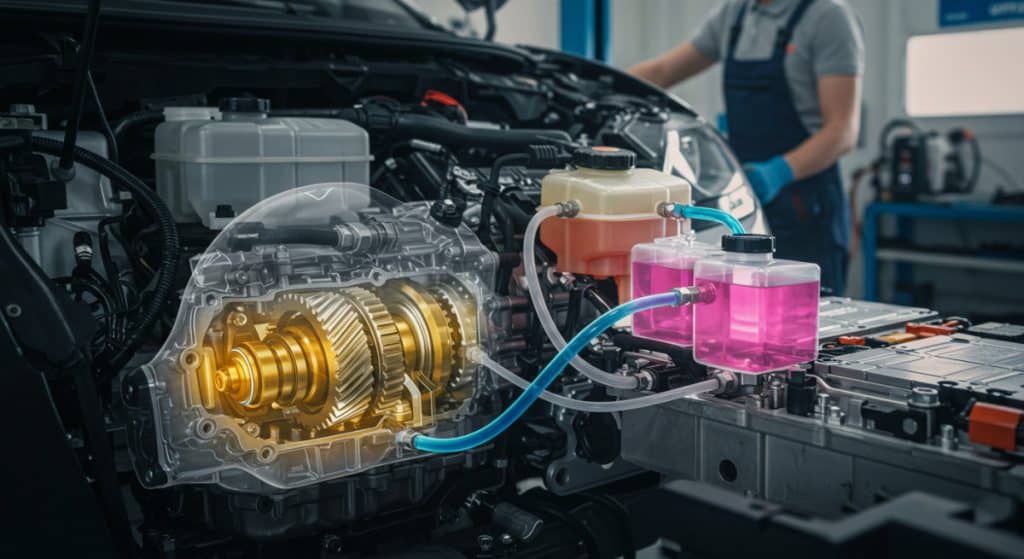
Gear reduction fluid sits in what’s basically a single-speed transmission. This stuff can last anywhere from 75,000 to 100,000 miles, which sounds great until you realize it costs $200-400 to change. Tesla wants you to check it every 12,500 miles, but actual changes happen closer to 100K. Maybe that’s overkill, maybe not.
What happens if you ignore it? The fluid breaks down, and your drivetrain gets noisy, then expensive. Think of it like ignoring engine oil, but slower. Much slower.
Battery coolant keeps your battery pack from overheating. This is probably the most important one, though it’s also the one most people forget exists. Most manufacturers say flush it every 4-6 years or 50,000-75,000 miles. Skip this and you might see your range drop permanently. Not like, a little bit either. We’re talking real range loss that doesn’t come back.
Brake fluid still needs attention every 2-3 years, same as any car. Regenerative braking doesn’t change basic chemistry. Moisture still gets in, fluid still goes bad, and your brakes get spongy. Physics is physics.
Tires Will Probably Be Your Biggest Headache
Here’s where things get genuinely expensive, depending on how you drive. EVs can eat tires faster than you’d expect, though it’s not always as bad as people make it sound.
That battery pack weighs somewhere between 800 and 1,200 pounds. It’s usually sitting low in the car, which is good for handling but not so good for tire wear. More weight pressing down means more tire wear, especially if you’re the type who enjoys that instant torque.
And about that instant torque thing. Zero to sixty in under 5 seconds feels amazing until you realize you might be replacing tires every 25,000 miles instead of 50,000. Though to be fair, if you drive like a normal person instead of launching from every red light, tire wear is pretty reasonable.
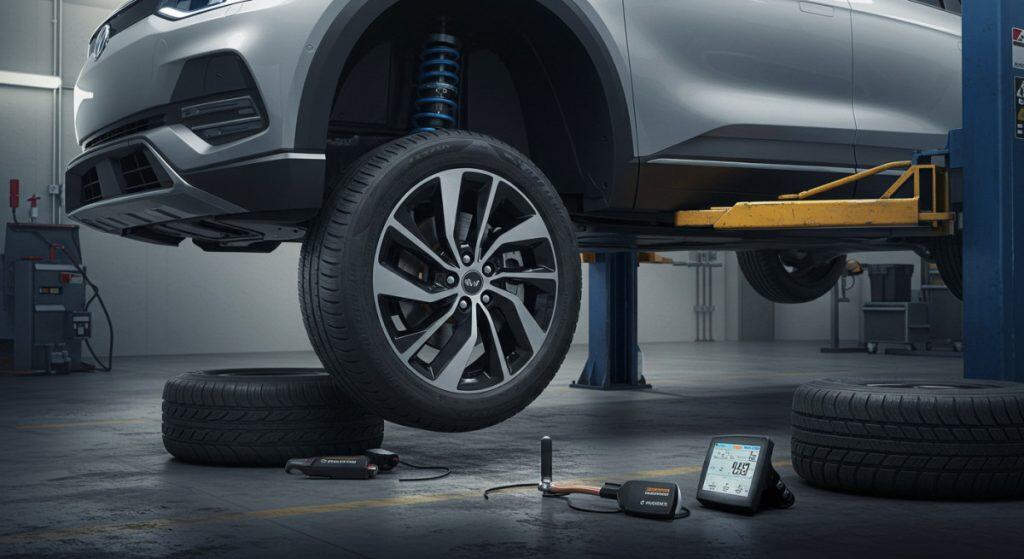
Most EVs also come with these low rolling resistance tires that prioritize range over longevity. They work great for efficiency but don’t last as long. These specialized tires can cost $200-350 each, compared to $120-200 for regular tires. You can switch to regular tires when the originals wear out, but you’ll lose some range. Trade-offs everywhere.
What you can actually do about it: Rotate tires religiously every 5,000-7,500 miles. Check tire pressure monthly, because EV tires seem more sensitive to pressure changes. Consider switching to standard tires when the originals wear out if you don’t need maximum range. Your wallet will thank you.
Actually, one more thing about tires. The tire pressure monitoring systems in EVs are usually pretty good, but they still won’t catch slow leaks until you’ve lost significant pressure. Check manually sometimes.
Brake Maintenance Gets… Weird
Regenerative braking sounds like a win for brake maintenance. Your brake pads might last 75,000-100,000 miles, which is fantastic. But there’s this strange catch nobody warns you about.
Sometimes brake pads can actually seize up because you don’t use them enough. This was a bigger problem with early EVs like the BMW i3, but most modern ones run these “brake cleaning” cycles that deliberately use the friction brakes every so often. It’s like your car reminding itself how to brake properly.
You’ll still need brake fluid changes every 2-3 years. Still need rotor inspections, though the rotors might look weird because they don’t get used much. Some develop surface rust that looks concerning, but usually isn’t.
Overall, this is probably where you’ll save the most money compared to a traditional car. Brake pads that last 80,000+ miles? That’s pretty nice.
Software Updates Are EV Maintenance Now (Still Feels Weird)
This part still feels weird to some people, but software updates are real ev maintenance. Skip them and you might actually lose functionality or efficiency. Which seems backwards but here we are.

Range optimization updates can improve your car’s efficiency by 5-10%. That’s not marketing fluff either, that’s real miles you’re leaving on the table. Charging updates might unlock faster charging speeds or access to new charging networks. Sometimes they add features you didn’t even know you wanted.
Tesla does most of this over WiFi, which is convenient until an update goes wrong and you’re stuck calling customer service. Most other manufacturers still want you to bring the car in for major updates, which means time and potentially labor costs. Though maybe that’s actually better because at least someone who knows what they’re doing is handling it.
Safety recalls increasingly get handled through software rather than taking your car to a dealer, which is both cool and slightly terrifying if you think about it too much.
What EV Maintenance Actually Looks Like (Your Mileage Will Vary)
Here’s a rough schedule for the first 100,000 miles, though your experience will probably be different because everyone’s driving is different.
Every 6-12 months: Tire rotation and pressure check (this matters more than you think), brake system inspection even if the pads look brand new, cabin air filter replacement, software updates. The cabin air filter thing is more important in EVs because they cycle more air for battery cooling. Nobody tells you this upfront.
Every 25,000-30,000 miles: Possibly tire replacement if you drive aggressively or just got unlucky, brake fluid testing, 12V battery check. Yes, EVs still have regular 12V batteries and they die just like in regular cars, usually at the worst possible time.
Every 50,000-75,000 miles: Battery coolant flush, gear reduction fluid inspection, major software updates that might require a dealer visit. The software thing is hit or miss depending on your manufacturer.
Every 75,000-100,000 miles: Gear reduction fluid change, 12V battery replacement (probably), comprehensive battery health check.
The nice thing? Much of this can be done by mobile service techs who come to your house. No more waiting at the dealership reading ancient magazines. Though finding good mobile techs who actually know EVs can be a challenge in some areas.
| Category | Approx. Interval | Estimated Cost (range) |
| Gear fluid | 50–100 K miles / 90–160 K km | $150–$300 per service |
| Battery coolant flush | 37–75 K miles / 60–120 K km | $200–$350 parts & labor |
| Brake fluid | Every 2–4 years | $100–$200 |
| Tire replacement | 25–50 K miles | $800–$1,400 for 4 tires |
| Cabin air filter | Annually | $20–$50 |
| Software & inspections | Every 1–2 years | Usually warranty-covered; dealer labor can add $100–$200 |
The Money Talk (It’s Complicated)
Here’s where EV maintenance gets interesting from a cost perspective. You’ll spend your money on different things, and the timing is backwards from what you’d expect.
In the first few years, you might actually spend more on ev maintenance than a comparable gas car. Those specialized tires wear out, software updates sometimes require dealer visits, and technicians who work on EVs often charge premium rates because, well, they can.
But after about 5 years and 75,000 miles, the math flips. Gas cars start needing major engine work, transmission repairs, and all those constant small fixes that add up. Your EV is still running on its original drivetrain with minimal issues.
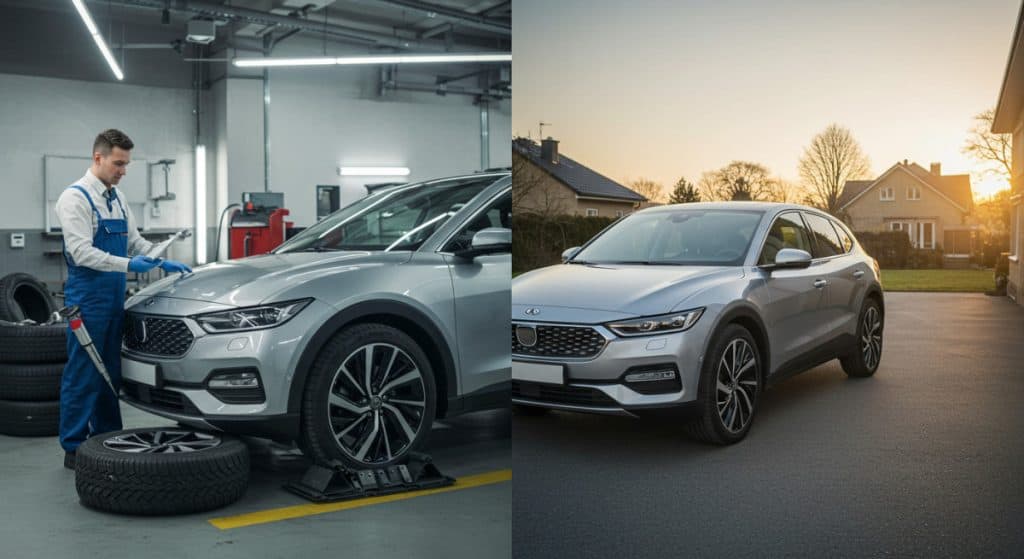
Practical budgeting: Set aside about $1,200-1,500 per year for the first few years, then expect that to drop to $600-900 after year 5. Your biggest variable will be how often you replace tires and whether you can resist using all that instant torque.
Though honestly, these numbers vary so much based on where you live and how you drive that they’re more like rough guidelines than actual predictions.
The Warranty Thing Nobody Mentions
Here’s something most people miss: EV warranties often cover way more maintenance than traditional car warranties. Battery cooling system, drivetrain, even software updates are typically covered for 8 years or 100,000 miles. Sometimes longer.
That battery coolant flush we mentioned? Might be free under warranty. Gear reduction fluid? Could be covered. Software problems? Definitely covered, though getting an appointment might take a while.
This changes the real cost equation significantly, especially in the first 5-8 years of ownership. Though you still have to deal with the hassle of scheduling service appointments and potentially being without your car for a day or two.
What This Actually Means for You
If you’re thinking about getting an EV, here’s your takeaway: budget for different ev maintenance, not necessarily more or less maintenance. Just different.
The biggest shift is that maintenance becomes more predictable and less frequent, but when it happens, it might cost more per visit. You’ll spend less time at service centers overall, but you’ll need to find technicians who actually know what they’re doing with EVs. Good luck with that in smaller towns.
The biggest surprise for most new EV owners? It’s usually the tires that require the most attention, not all the high-tech battery and software stuff. Though the software updates can be annoying when they don’t work right.
EV maintenance isn’t the maintenance-free dream some people promise, but it’s not the high-tech nightmare others warn about either. It’s just different enough that you need to think about it differently. Which may take some getting used to, but most things do.