 Skip to content

Why Your Car’s Radio Makes You Feel Like It’s 2005
You know that feeling when you get in a rental car or borrow someone’s newer ride? Everything just works. Phone connects instantly, the screen is actually readable, maps show up in full color, and your music picks up right where you left off. Then you get back to your own car and… yikes.
Tiny pixelated screen that’s impossible to read in sunlight. Bluetooth that works half the time. Those old-school knobs and buttons that take forever to do anything. Want to skip a song? Good luck navigating three different menus.
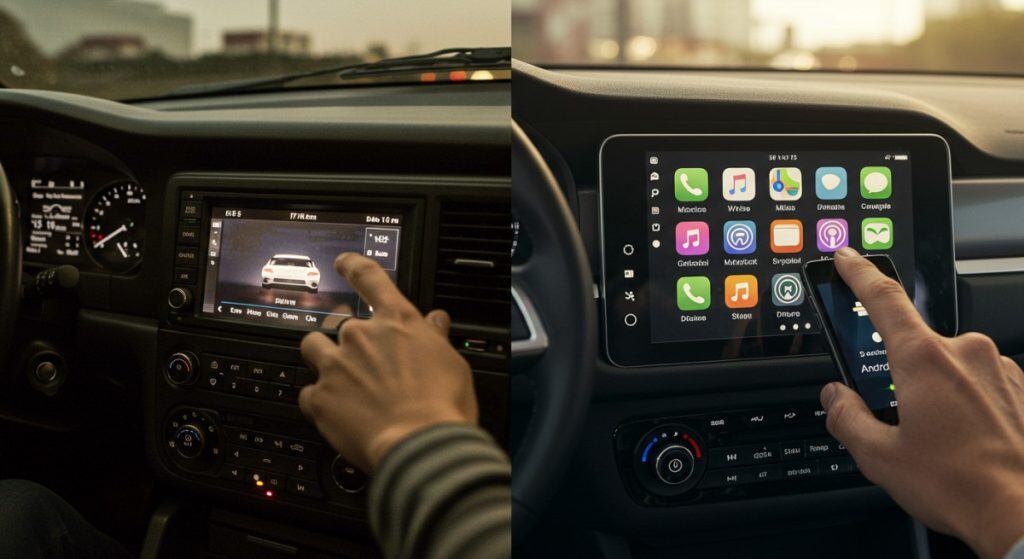
It’s not just that it looks old. It feels completely disconnected from everything else in your life. And sure, the obvious answer is “just buy a newer car,” but that’s not always realistic. The good news? You don’t have to live with a dashboard from the Stone Age.
The Real Benefits: It’s Not Just About Looking Fancy
Yeah, having a modern-looking dash is nice. But the real reasons to upgrade go way beyond just aesthetics.
Think about actually useful stuff. Hands-free calling that doesn’t sound like you’re talking through a tin can. Being able to reply to texts without taking your hands off the wheel. Apple CarPlay or Android Auto which makes your phone and car actually talk to each other properly. Real navigation instead of trying to balance your phone in a cup holder or dealing with one of those suction cup GPS things.
And backup cameras. Lots of newer head units can add one, which is huge if your car never came with one.
But honestly, the biggest thing is just how much less annoying daily driving becomes. No more fumbling with controls, getting frustrated with crappy interfaces, or being tempted to mess with your phone while driving because the car’s system is so terrible.
Picking the Right System Without Going Crazy
This part can get overwhelming fast. There are tons of options, and everyone’s trying to sell you features you probably don’t need.
First thing to figure out is what size fits your dash. Most cars take either single-DIN (the tall skinny ones) or double-DIN (wider ones that fit touchscreens). There are adapters for weird situations, but knowing your size saves a lot of headaches.
Then think about what you actually want. CarPlay and Android Auto are pretty much must-haves these days. Some do it wirelessly, others need a cable. Built-in navigation or just use your phone’s maps. How much do you care about sound quality versus just wanting something that works?
Decent touchscreen units with phone integration usually run $300 to $500. You can spend more for wireless CarPlay, bigger screens, or better audio processing, but you don’t have to.
The last piece is compatibility. There are dash kits and wiring adapters for pretty much every car made, even really old ones. That’s what makes this whole thing possible without cutting up your car.
Installation: Not as Scary as It Used to Be
Installing car stereos used to mean cutting wires and hoping for the best. Not anymore.
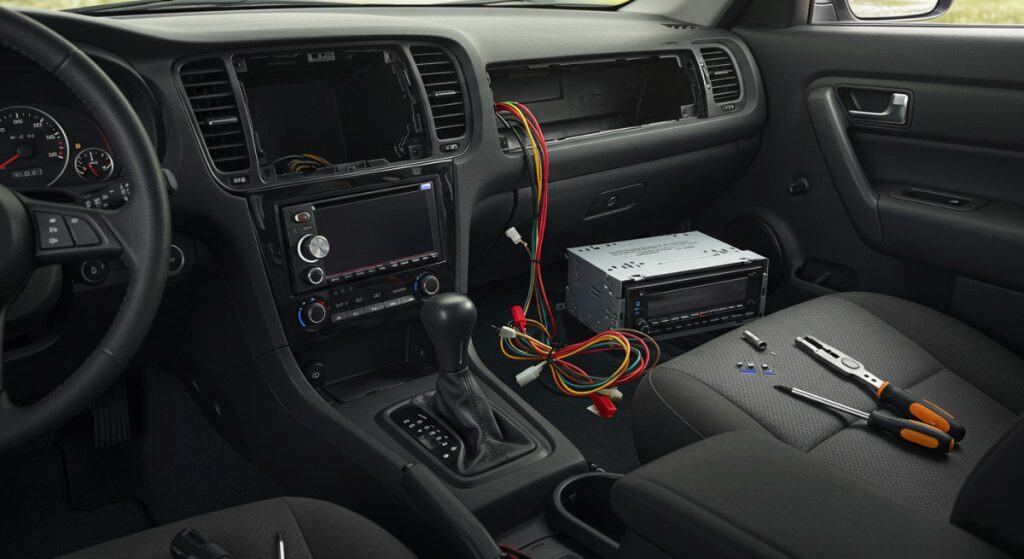
Modern wiring harnesses and dash kits mean you’re mostly just plugging things together. For basic older cars, it might take a couple of hours and some screwdrivers. There are YouTube videos for pretty much every car ever made.
Some cars are trickier though. If your climate controls are built into the radio, or you have a factory amp, or steering wheel controls, things get more complicated. Still doable, just requires more research or maybe calling someone who knows what they’re doing.
What Actually Changes After You Upgrade
This is where it gets good.
You get in, everything lights up, your phone connects automatically. No more pairing dance every time. Messages get read to you. Music starts where it left off. Voice commands actually work instead of giving you that “I don’t understand” response constantly.
Even visually, it makes a huge difference. A nice touchscreen can make even an older car feel way more modern. And it’s not just for show, it genuinely changes how the car feels to drive every day.
Some people say it helps resale value too. A modern stereo system can make an aging car feel less dated to potential buyers, especially younger ones who expect everything to connect to their phone.
The Stuff That Can Go Wrong
Not every upgrade goes smoothly. Some pitfalls aren’t immediately apparent until you encounter them.
Factory amps can be a pain. Some cars need special adapters or bypass modules to avoid losing sound quality or getting weird distortion.
Steering wheel controls often need separate adapters, and not every head unit plays nice with them.
Electrical noise sometimes shows up in older cars. Buzzing, hissing, interference. Good installers know how to fix it, but if you’re doing it yourself, it can be frustrating to track down.
Fit and finish vary a lot. Some dash kits look perfect, others leave gaps or sit slightly crooked. In certain cars, it’s just impossible to make it look completely factory. Still works fine, just might not look as clean as you hoped.
Also worth knowing—not all upgrades add value. While a good infotainment system can improve your own experience behind the wheel, it doesn’t always translate to higher resale value. In fact, in some cases, especially if it doesn’t match the vehicle cleanly or introduces tech hiccups, it can raise red flags for potential buyers.
Sites like Crutchfield are great places to start. They not only sell systems but also provide compatibility info and pre-made kits that match your vehicle. If the idea of pulling apart your dashboard sounds intimidating, there’s nothing wrong with handing it off. Local audio shops do this kind of thing every day. They know the quirks of different vehicles and can make sure everything works properly the first time.
DIY or Pay Someone?
Depends on your comfort level and how complicated your car is.
Basic swap in an older, simpler car? A couple of hours on a weekend with some YouTube tutorials. Lots of people do this successfully.
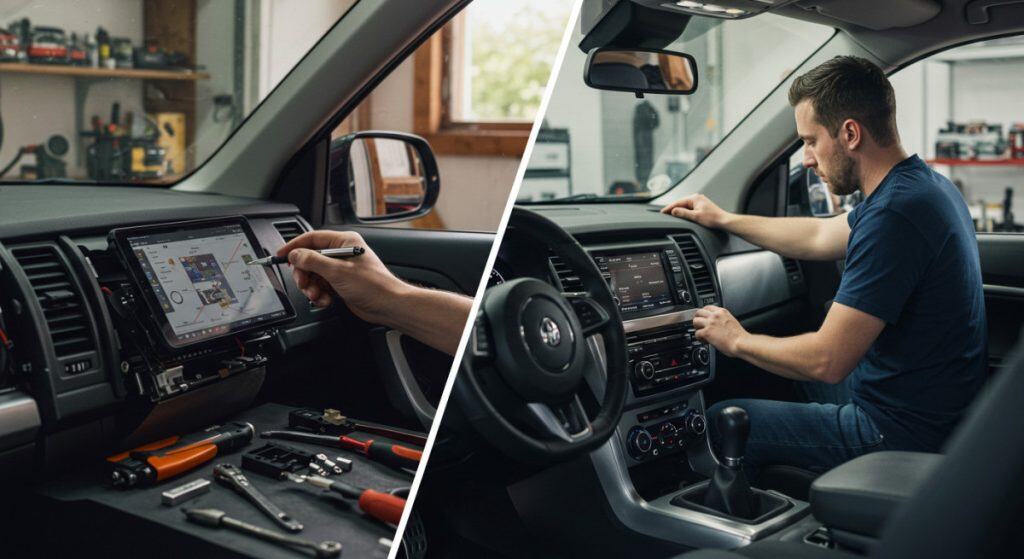
However, if your car has integrated premium audio or a multitude of electronics, hiring a professional makes sense. Most shops charge between $100 and $200 for installation, which includes handling the wiring, mounting, and ensuring everything works properly.
Sometimes it’s worth it just for the peace of mind, especially when you’re dealing with electronics in a car you depend on.
Worth It or Not?
For most people? Yeah, totally worth it. It’s not just about having newer tech, it’s about making your car feel connected to the rest of your life again. Whether it’s safety, convenience, or just not feeling like you’re driving something from a different era, the difference is pretty noticeable.
And you don’t need to buy a whole new car to get there.


