Skip to content

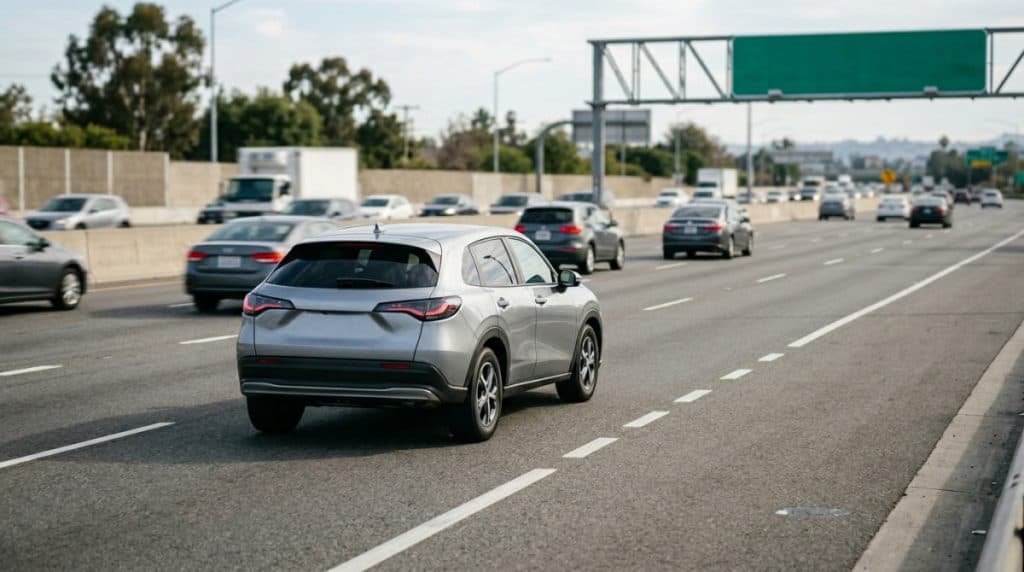
If your car says Reduced Engine Power, Engine Power Is Reduced, or something close to that, the short version is simple: the computer saw a problem it did not trust and cut power on purpose.
That warning usually means the car went into a protective mode to help prevent damage to the engine, transmission, catalytic converter, or another part of the powertrain. It is not the same thing as a final diagnosis. It is the car telling you, “I’m limiting performance until this gets checked.”
Depending on the brand, the exact wording can change. GM commonly uses ENGINE POWER IS REDUCED. Ford often uses messages like Powertrain Malfunction/Reduced Power/Electronic Throttle Control or reduced-performance warnings tied to overheating. Different wording, same general idea: the vehicle is protecting itself, not telling you exactly which part failed.
That is the most important thing to understand right away. The warning does not mean “replace the throttle body” by default. Sometimes the problem really is the throttle body or one of its sensors. Other times it is overheating, wiring, a fuel-delivery problem, airflow trouble, a software issue, or something else entirely. The smart move is to figure out whether the car is still safe to move, then work from the fault itself instead of guessing.
Quick Answer: What does Reduced Engine Power Mean?

Reduced engine power usually means the engine or powertrain control module detected something serious enough to limit output on purpose.

In plain English, the car is saying one of these things:

• I do not trust the throttle or pedal signals right now
• I am overheating or close enough that I need to protect myself
• I am seeing a fault that could damage the engine or emissions system if you keep pushing it
• I need to reduce power until the problem is diagnosed

Some cars still move well enough to get off the road or limp to a nearby shop. Others lose acceleration hard, may cap RPM, or feel like they are stuck in a low-power mode. GM’s owner information says the vehicle may still be driven while the message is on, but maximum acceleration and speed may be reduced, and under some conditions propulsion can be disabled entirely. Ford’s owner information uses similar reduced-power language for throttle or powertrain faults and separately warns that overheating can force reduced performance too.

So the cleanest way to say it is this:

The warning means the car is protecting itself. It is not telling you which part is bad.
What the warning actually means
At a basic level, reduced engine power means the vehicle is not allowing full engine output right now.

How that feels depends on the car and what triggered it. On some vehicles, you may still be able to drive slowly with reduced acceleration. On others, the car may feel severely limited, struggle to climb speed, or act like it is stuck in a limp-home strategy.
GM’s reduced-power message is a clear example, but it should be treated as exactly that: one manufacturer’s wording for a broader fail-safe behavior. Ford uses different message language, but the effect is similar. A powertrain or throttle problem can cause the vehicle to reduce output instead of risking more damage or unsafe operation.
There is also an important nuance here. A reduced-power warning can be triggered by more than one system:
- electronic throttle faults
- pedal-sensor or throttle-position disagreement
- overheating
- airflow or fuel-delivery problems
- severe misfires
- catalytic-converter restriction
- software or control-module issues
That is why the warning is best treated like a symptom bucket, not a parts diagnosis.
A good way to think about it is:
- warning message = the car has entered a protection strategy
- root cause = the actual issue that made it do that
Those are not the same thing.
Is it safe to drive with reduced engine power?
This is a yes-and-no answer.
Sometimes you can move the car a short distance to get out of traffic or reach a nearby safe place. Sometimes you should stop as soon as you safely can.
It may be safe enough to limp a short distance only if:
- the car still accelerates enough to stay out of danger
- the engine is not overheating
- there is no oil-pressure warning
- the car is not shaking violently or stalling
- traffic conditions do not make the reduced acceleration unsafe
GM’s owner guidance explicitly says the vehicle may still be driven while the reduced-power message is on, but speed and acceleration can be limited and the vehicle should be serviced as soon as possible if the warning stays on or keeps returning.

Stop and reassess if:
- the engine temperature is climbing
- an overheating message appears
- you see an oil-pressure warning
- the car can barely move
- it stalls or nearly stalls repeatedly
- traffic conditions make the reduced power dangerous
Ford’s reduced-engine-performance and overheating guidance is especially clear on this point. If the engine is overheating, the advice is to reduce speed, stop as soon as it is safe, switch the engine off, let it cool, and check coolant. That is not a “keep going and hope” situation.
A good habit when this warning comes up:
- Ease off the throttle
- Get out of fast traffic if you can
- Note every warning light or message on the dash
- If heat or oil-pressure warnings are involved, stop and shut it off
- Do not assume the problem is gone just because the message disappears after a restart
The bottom line is this: reduced-power mode exists to help the car reach a safer place, not to authorize normal driving.
The most common reasons it happens
1. Throttle body, throttle-position, or pedal-sensor issues
This is the cause many people think of first, and for good reason. On modern drive-by-wire vehicles, the computer constantly compares pedal input, throttle position, and the actual movement of the throttle body. If those signals do not agree, the car may cut power on purpose.
This is one reason the warning gets associated so strongly with bad throttle bodies. But the more useful truth is that the system is what matters. A code pointing toward throttle correlation does not automatically mean the throttle body itself is bad.
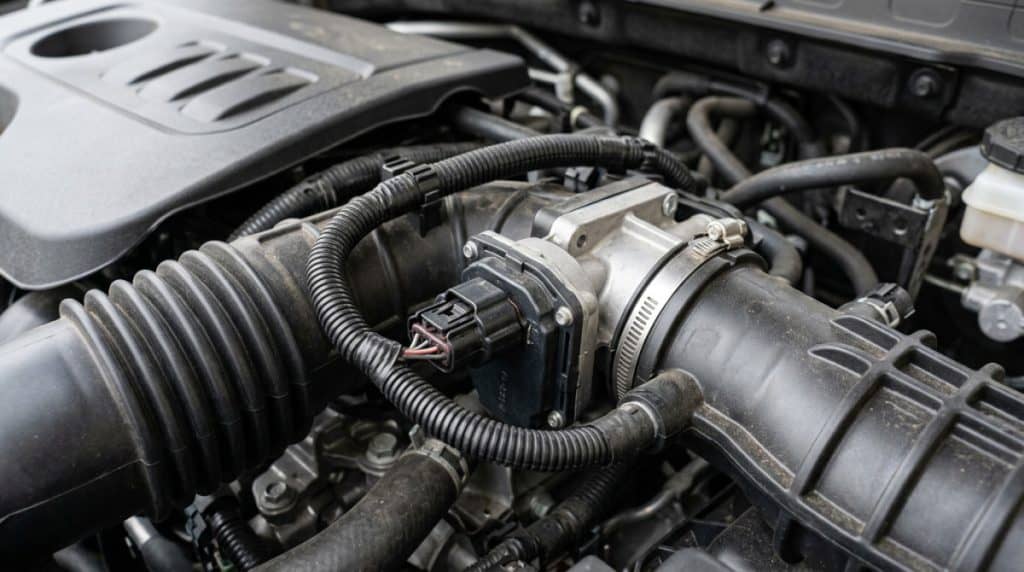
It can also be caused by:
- bad wiring
- poor grounds
- connector problems
- throttle-position-sensor issues
- accelerator-pedal-sensor issues
This is exactly why parts-cannon repairs get people in trouble here. A throttle-related code can still have a wiring or connector root cause.
2. Overheating and temperature protection
Some cars reduce power because they are trying to save themselves from heat.
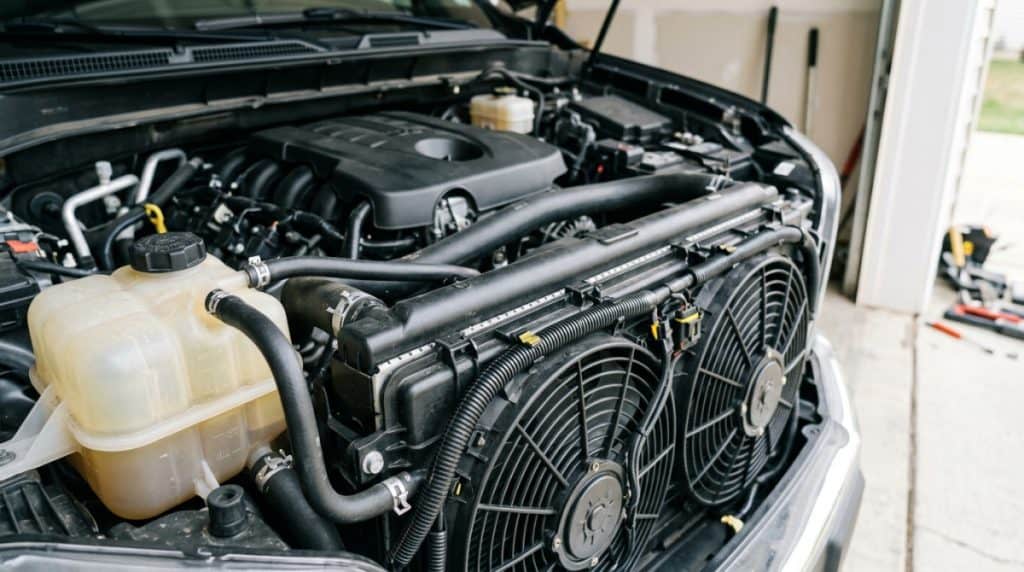
If coolant temperature gets too high, the vehicle may cut performance to reduce load and protect the engine. Ford’s overheating guidance is a clear example of this. The engine may continue running with reduced performance for a short time, then reduce output further if temperatures keep climbing.
That means reduced power can show up because of:
- low coolant
- bad cooling fans
- thermostat problems
- radiator flow issues
- faulty coolant-temperature-sensor data
If the reduced-power warning shows up together with heat, treat it as a serious warning, not just a drivability annoyance.
3. Airflow, MAF, and intake problems
The engine needs good air data to make good power. If the mass airflow sensor is dirty, failing, or reading bad information, the car can run poorly enough to trigger reduced-performance behavior.
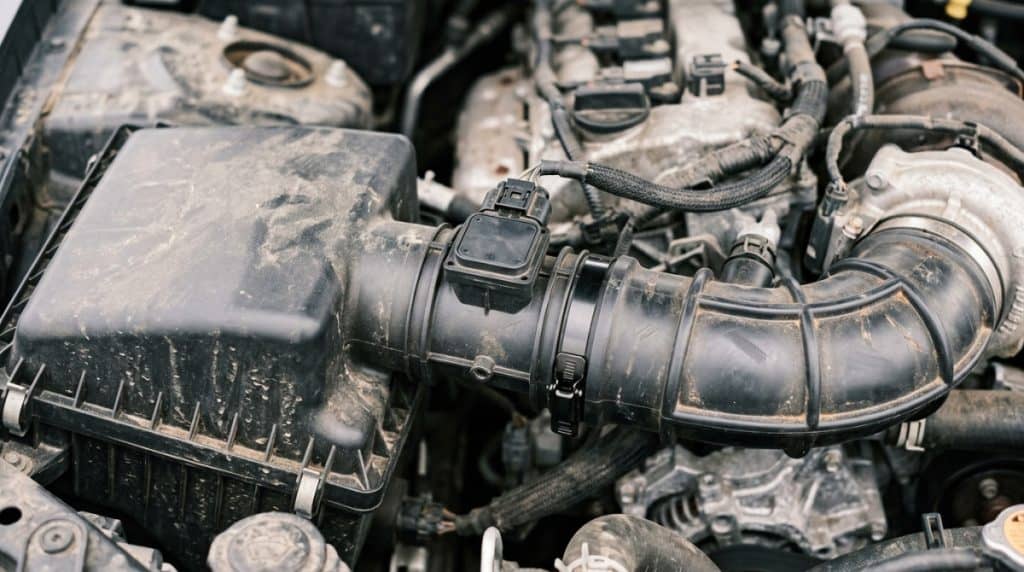
The same goes for:
- split intake hoses
- loose clamps
- a badly restricted air filter
- vacuum leaks
These problems can make the engine’s load calculations go weird fast, especially on vehicles that are sensitive to airflow data.
4. Fuel-delivery problems
If the engine is not getting the fuel pressure or volume it needs, power can drop enough that the car enters a reduced-output strategy.
A failing fuel pump, weak fuel pressure, restricted fuel delivery, or injector-related issues can all cause lack-of-power symptoms that overlap with reduced-engine-power complaints.
This is one reason the warning should not be treated like a throttle-only issue. The engine can be starved on the fuel side and still end up in the same general reduced-power bucket.
5. Severe misfires or exhaust restriction
A bad enough misfire can cause power loss and raise catalytic-converter risk. A clogged catalytic converter can also choke the engine badly enough to flatten acceleration and trigger reduced-power behavior.
This bucket matters because it can get expensive quickly if it is ignored. If the vehicle is misfiring hard or the converter is restricted, continued driving can turn a drivability problem into a larger repair bill.
6. Software or TSB-related issues
This is the part a lot of generic articles miss.
Sometimes the fix is not a new part. It is updated software, a calibration fix, or following a technical service bulletin before replacing anything.
Ford’s older NHTSA electronic-throttle investigation is still useful here, not because it represents every 2026 Ford, but because it shows how this fail-safe logic works and how software updates were part of the real-world fix. In other words, reduced-power behavior has long been tied to both hardware and calibration strategy.
That is a practical takeaway for readers today: ask whether there are TSBs or software updates for your VIN before approving expensive parts.
What you can check yourself first
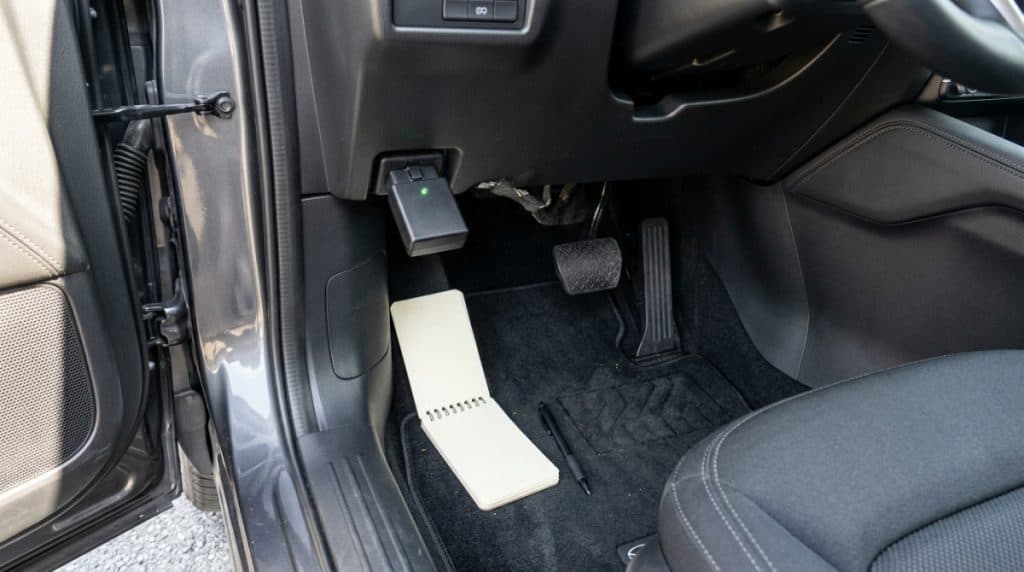
This is where normal owners can do something useful without pretending to be a master tech.
1. Scan for codes if you can
If you have access to an OBD-II scanner, start there. Write the codes down before clearing anything.
That matters because the codes and the data around them help point the diagnosis in the right direction. Clearing them too early can erase clues that would have saved time and money.
2. Check basic fluids
If overheating was involved, let the engine cool completely, then check coolant level. Also check engine oil level. Reduced power mixed with overheating or low oil is a much more serious situation than a plain throttle-related power cut.
3. Inspect the obvious intake and connector areas
Look at:
- the intake hose between the air box and throttle body
- loose clamps
- obvious splits or cracks
- easy-to-reach connectors at the throttle body and MAF
- visible corrosion or damaged wiring
- ground connections that look loose or bad
These are not glamorous checks, but they matter. A loose connector or damaged harness can absolutely make the car act like a major part failed.
4. Do not treat a restart like a fix
Sometimes the warning disappears after cycling the ignition. That does not mean the problem is solved. It just means the car reset long enough for the fault to go inactive for the moment.
What not to do
- do not replace the part named by one code without more diagnosis
- do not clear codes before recording them
- do not keep forcing the car through fast traffic if acceleration is badly reduced
- do not assume a battery disconnect fixed the issue
- do not start ordering throttle parts just because the internet says “that is usually it”
When a shop needs to get involved
A shop should move up the priority list quickly if:
- the warning keeps returning
- the car stalls or nearly stalls
- acceleration is too weak to drive safely
- overheating or oil-pressure warnings are involved
- the problem feels intermittent and electrical
- you have codes, but the cause still is not clear
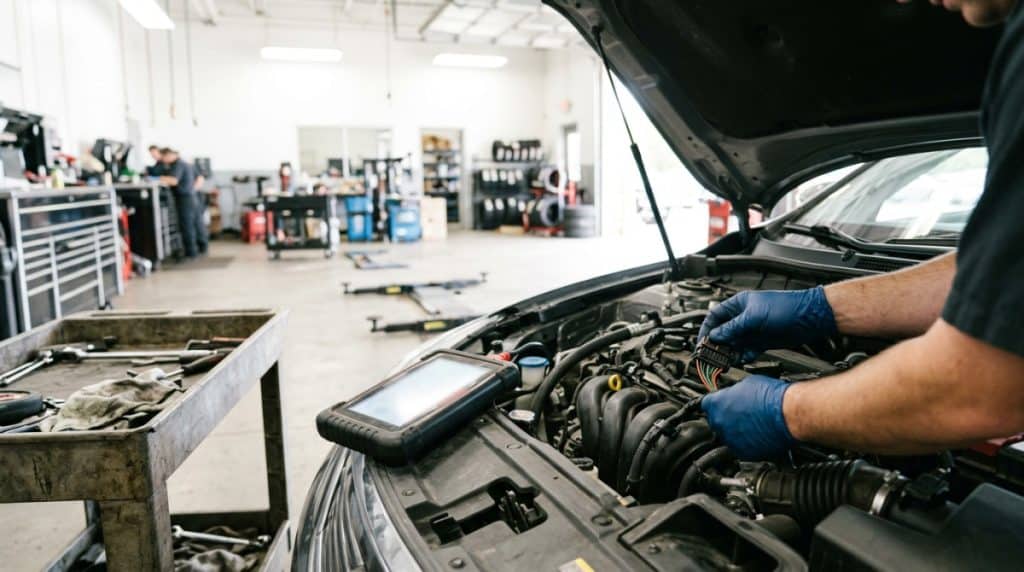
A competent diagnostic process should look like this:
- scan current, pending, and history codes
- review freeze-frame or stored data
- inspect obvious wiring, grounds, and connectors
- check for TSBs, recalls, or software updates
- test the suspected system before replacing parts
That is the big difference between diagnosis and guessing.
Rough repair-cost reality check
RepairPal public estimate ranges referenced below are as of May 2026 and can change over time by vehicle and location.
Here is the ballpark:
- Check engine light diagnosis/testing: $122 to $233
- Mass airflow sensor replacement: $263 to $408
- Throttle body replacement: $622 to $772
- Engine coolant temperature sensor replacement: $452 to $537
- Fuel pump replacement: $1,247 to $1,506
- Catalytic converter replacement: $2,164 to $2,483
These are public U.S. estimate ranges, not quotes. They do not include taxes, fees, or local labor differences. But they are useful for one thing: showing how big the spread can be between a simpler sensor or airflow problem and a much more expensive fuel or exhaust repair.
What to ask the mechanic
If you want to avoid the parts cannon, ask better questions:
- What stored, pending, and history codes did you find?
- Which code or data point actually triggered reduced-power mode?
- Did you inspect the throttle body, pedal sensor, wiring, grounds, and connectors before quoting parts?
- Are there TSBs or software updates for my VIN related to this issue?
- Did you test fuel pressure, airflow data, or exhaust restriction if those systems are suspected?
- Will the repair need a relearn or software update after the part is installed?
These questions move the conversation away from guessing and toward proof.
The practical takeaway
Reduced engine power means the car cut power on purpose, so treat it like a protection warning first and a parts diagnosis second.
FAQ
Is reduced engine power the same as limp mode?
Usually yes, or very close. It is a protective reduced-output strategy meant to keep the vehicle movable enough to get to safety while limiting damage risk.
Can I still drive with reduced engine power on?
Sometimes, for a short trip to a safe place or nearby shop. But not if the car is overheating, can barely move, or traffic conditions make the reduced acceleration unsafe.
Does reduced engine power always mean the throttle body is bad?
No. Throttle faults are common, but wiring, bad connections, overheating, airflow problems, fuel delivery issues, exhaust restriction, and software/calibration problems can also trigger it.
Can a software update fix a reduced-power warning?
Sometimes, yes. Some reduced-power issues are tied to software strategy or TSB-based fixes, which is why checking for updates or bulletins matters.
Should I clear the codes and see if it comes back?
Not before you write them down. Stored codes and the data around them help point the diagnosis in the right direction.