Skip to content

Physics Class Was Right: Heavy Things Are Harder to Move
Ever push an empty shopping cart versus one loaded with groceries? The empty one glides like it’s floating. Add some bags, and suddenly you’re actually working to move the thing.
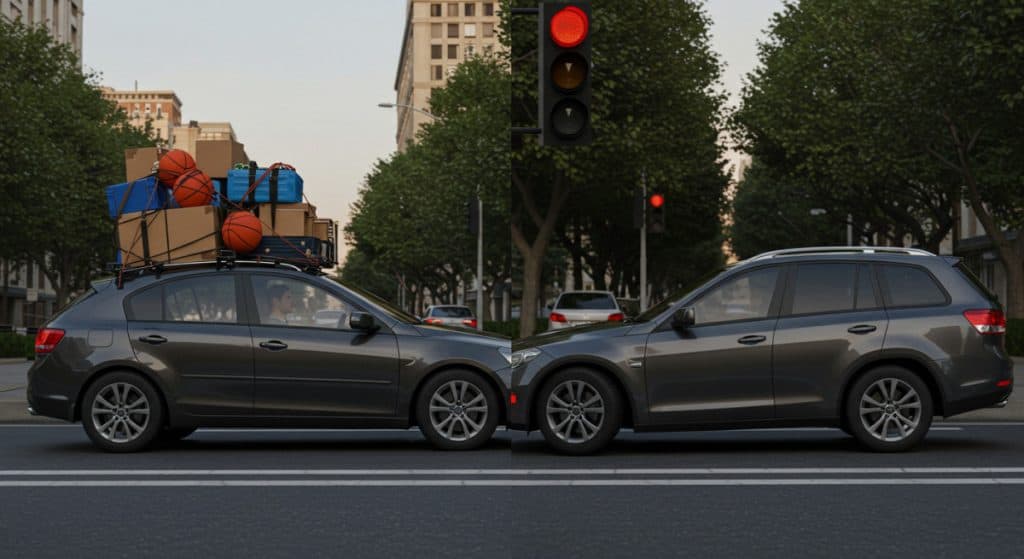
Cars work the same way, just with more horsepower involved. The heavier your car gets, the harder the engine has to work to move it around. Remember that Force equals mass times acceleration thing from high school? Turns out it wasn’t just something to memorize for a test. On the road, it means burning more gas to haul more weight.
Stop-and-go traffic is where this really shows up. Every red light, every stop sign, the car has to fight its way back up to speed. More weight means more fighting. More fighting means more fuel.
The 100-Pound Rule (And Why Your Trunk Full of Junk Is Expensive)
Here’s something that’ll make you want to clean out your car: every extra 100 pounds typically hurts fuel economy by 1 to 2 percent. Doesn’t sound like much until you realize how much random stuff most people haul around.
Think about what’s in your trunk right now. That gym bag you haven’t touched in months? The jumper cables that seemed important to keep there? Maybe some tools you were supposed to drop off somewhere? It adds up faster than you’d think.

There’s this weird statistic floating around that Americans getting heavier over the years has actually increased national fuel consumption. Sounds kind of ridiculous, but it makes the point. Every pound counts, whether it’s stuff or… well, anything else.
City vs. Highway: Where Weight Actually Hurts
Weight doesn’t hurt equally everywhere. City driving is where it really gets you. All that accelerating from stop signs and traffic lights. Every time you start from zero, the engine has to overcome all that mass again.
Highway driving? Different story. Once you’re cruising at 70, weight matters way less. At that point, wind resistance and how efficient your engine is become bigger factors. That’s why your heavy SUV might get decent mileage on road trips but feels like it’s drinking gas around town. Even lighter compact crossovers like the CR-V or RAV4 can show this split personality — efficient on the highway, but not immune to weight penalties in stop-and-go traffic.
Kind of weird how the same car can feel completely different depending on where you drive it.
It’s Not Just Total Weight: Power-to-Weight Ratio and Balance Matter Too
Here’s where things get interesting beyond just how much your car weighs. It’s also about how much power it has relative to that weight, and where that weight sits.
Power-to-weight ratio is pretty straightforward. Take a lightweight sports car with decent horsepower versus a heavy SUV with the same engine. The sports car is going to feel way more responsive and use less fuel getting up to speed. That’s why a Mazda Miata with only 180 horsepower feels quick and peppy, while a 4,000-pound sedan with the same power feels sluggish.
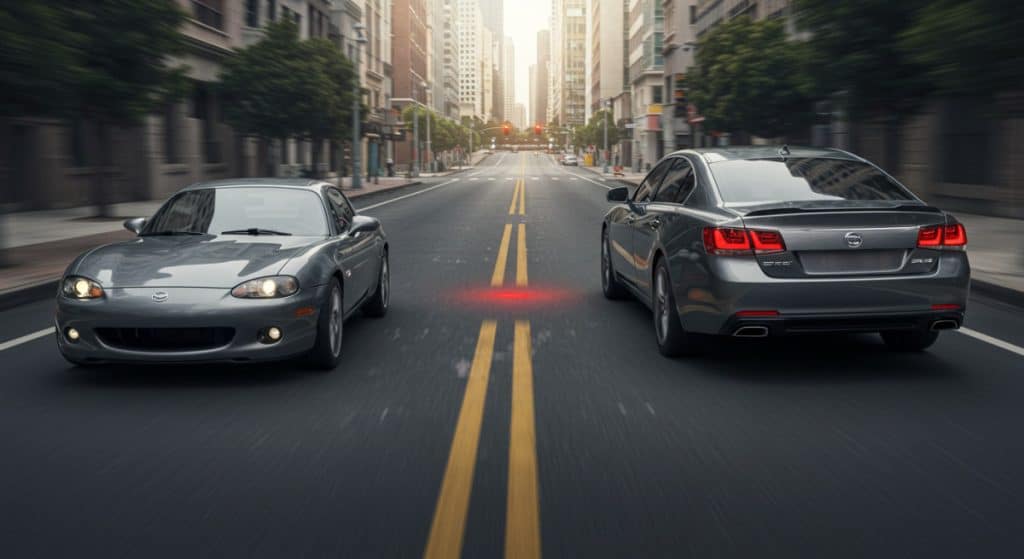
But weight distribution is the sneaky factor most people never think about. Cars handle best when the weight is split roughly 50/50 between front and rear axles, or close to it. Something like 52/48 is considered pretty ideal. When weight is balanced like that, the car feels more stable, corners better, and the engine doesn’t have to work as hard to keep everything under control.
Think about it this way: a well-balanced car is like a well-packed backpack. Everything feels easier to manage. But load all the weight in the back (like some pickup trucks) or all up front (like many front-wheel-drive cars), and suddenly the whole thing feels awkward and inefficient.
This is part of why some lighter, well-balanced cars can actually outperform heavier ones despite having less power. It’s not just about the numbers on paper. It’s about how all those numbers work together.
How Car Companies Try to Keep Cars From Getting Fat
Weight is a huge headache for car companies. Every new feature adds pounds. Heated seats, bigger sunroofs, more airbags, better sound systems. People want all this stuff, but it makes cars heavier, which makes them thirstier.
So they’re getting creative with materials. Aluminum body panels instead of steel. High-strength steel that’s thinner but just as strong. Carbon fiber if you’re buying something expensive. Even magnesium parts in some cars now.
The new Mazda Miata is actually lighter than the old one, which almost never happens anymore. Most cars just keep getting heavier with each generation. But the Miata has always been kind of obsessed with staying light. It’s part of what makes it fun to drive.
Electric Cars Have a Weight Problem Too (But It’s Weird)
Electric cars are usually way heavier than gas cars. Those battery packs weigh a ton. Sometimes literally. An electric car can easily weigh 500 or 600 pounds more than a similar gas car.

Sounds bad, right? But electric motors are incredibly efficient compared to gas engines. Plus they can capture energy when you brake, which gas cars just waste as heat. So the extra weight doesn’t hurt as much as you’d expect.
Still, heavier electric cars don’t go as far on a charge. Physics is physics. So electric car makers are trying to save weight everywhere else. Lighter seats, thinner windows, smaller motors for power accessories. Sometimes you don’t notice until something feels a bit cheap.
Some companies are working on making the battery pack part of the car’s structure, which could save weight while keeping things strong. Pretty clever if they can pull it off.
What You Can Actually Do About This Stuff
You don’t need to become obsessive about every ounce, but a few simple things help. Clean out your trunk once in a while. Take off that roof rack when you’re not using it. Buy a car that actually fits what you do most days, not just that one camping trip you take every year.
Some people really do need a big SUV for work or family stuff. Fair enough. But even then, getting the lightest version that still does what you need can make a difference. It’s not about giving up useful features. Just not carrying around extra weight for no reason.
Most people have no clue how much random junk they’re hauling around until they finally clean it out. Usually pretty eye-opening.
Will Cars Ever Stop Getting Heavier?
Maybe. Car companies are under more pressure now to make efficient cars. Fuel economy standards keep getting stricter. Competition is getting tougher. Weight reduction is finally getting the same attention that used to only go to horsepower or fancy touchscreens.
Race car technology helps too. Lightweight stuff that used to only exist on the track is starting to show up in regular cars. And regulators are starting to pay attention to the weight problem.
Self-driving cars might help eventually. Small cars designed just for short trips could weigh way less. But that’s still years away.
For now though, every pound matters. Car companies are figuring that out. Maybe drivers should too.