Skip to content

Tires Matter More Than Most People Think
Tires are one of the biggest upgrades that can change how a truck drives, handles, and even looks. They’re the only part of the vehicle actually touching the ground, making them surprisingly influential on overall performance.
Choosing between all-terrain (A/T) and mud-terrain (M/T) tires sounds simple at first, but each type brings its own strengths and compromises. The decision affects everything from fuel economy to the amount of noise in the cabin during highway drives.
Understanding where and how the truck will actually be driven makes picking the right tire a lot easier. The perfect choice comes down to an honest assessment of needs rather than just aesthetic preferences.
What Are All-Terrain Tires?
All-terrain tires are designed to handle a mix of paved roads and off-road surfaces. They represent the versatile middle ground between highway tires and aggressive off-road options.
They offer a balance between road comfort, durability, and off-road traction. This compromise approach means they perform reasonably well in most conditions without excelling in any extreme environment.
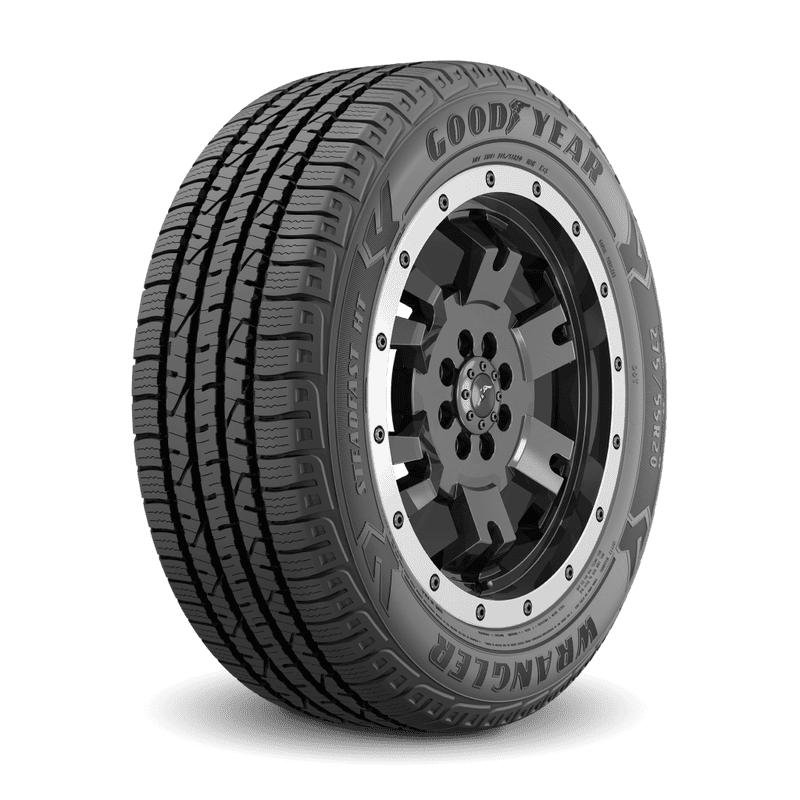
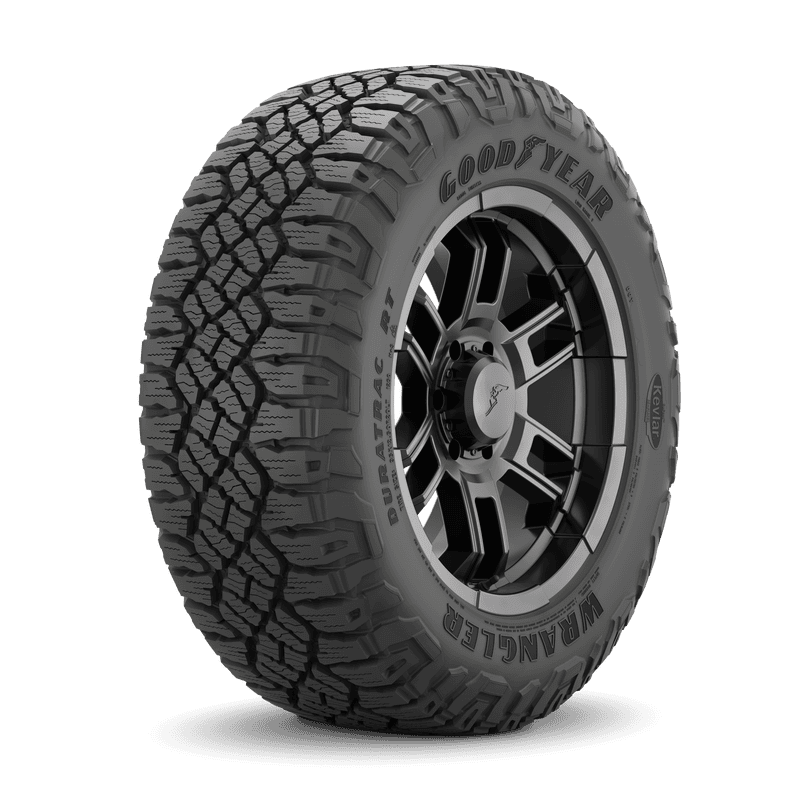
Tread patterns are more aggressive than highway tires but not as chunky or noisy as mud tires. The blocks are typically closer together with moderate-sized channels for expelling water, mud, and snow.
Many daily-driven trucks and SUVs roll on A/T tires because they perform well in a variety of conditions without major sacrifices. Someone might drive to work all week on pavement, then hit light trails on weekends without changing tires.
What Are Mud-Terrain Tires?
Mud-terrain tires focus on maximum traction in loose or soft surfaces like mud, sand, and deep snow. These are specialized tools built for specific challenging conditions.
They feature large, aggressive tread blocks with deep voids to bite into tough terrain. The wide spaces between tread blocks allow the tire to self-clean by ejecting mud and debris as the wheel turns.
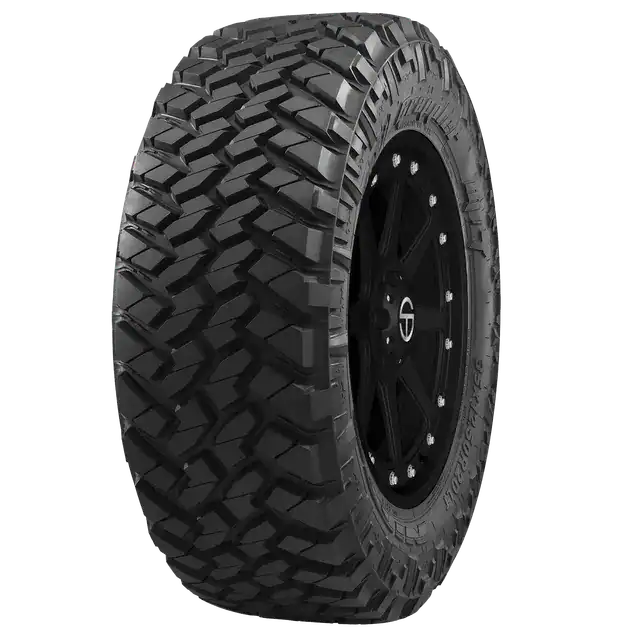
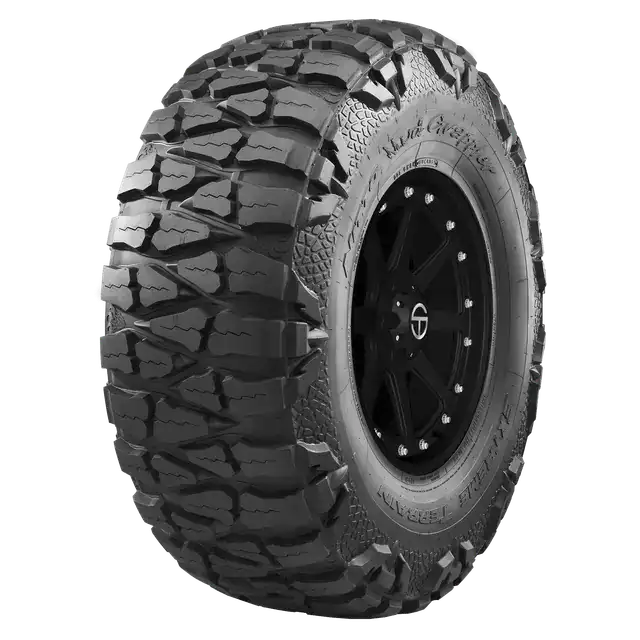
These tires are built tougher, often with reinforced sidewalls, but they tend to be louder, rougher, and wear faster on pavement. The same features that make them exceptional off-road create compromises during everyday driving.
M/T tires look impressive but come with trade-offs when used for daily commuting. Their bold appearance sometimes leads truck owners to choose them primarily for aesthetics rather than actual off-road needs.
Key Differences Between A/T and M/T Tires
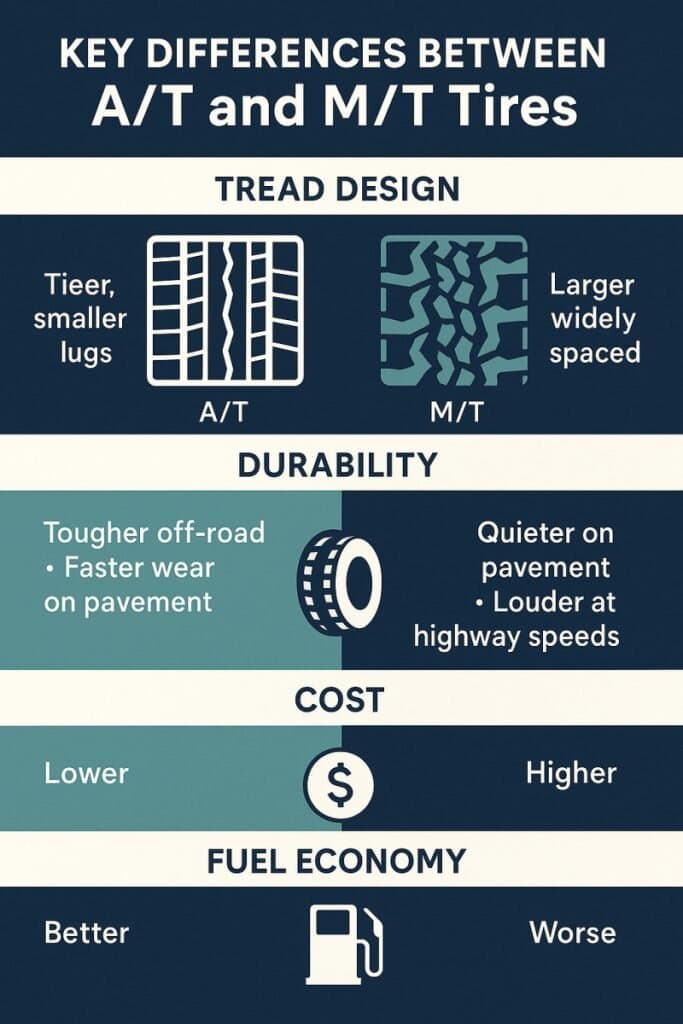
Tread Design: A/T tires have tighter, smaller lugs for a quieter ride, while M/T tires have larger, widely spaced lugs for maximum grip in soft terrain. This fundamental difference influences almost everything else about how these tires perform.
Durability: M/T tires are often tougher off-road but can wear unevenly or faster on highways. The soft rubber compounds that grip well off-road tend to wear quickly on abrasive pavement.
Noise and Comfort: A/T tires generally offer a quieter, smoother ride on pavement. The steady hum from mud tires can become tiresome on long highway drives, sometimes requiring an increase in radio volume just to compensate.
Cost: M/T tires tend to cost more, and their shorter lifespan can add to long-term ownership costs. Expect to pay anywhere from $20 to $100 more per tire for comparable mud-terrains versus all-terrains.
Fuel Economy: A/T tires are usually lighter and more aerodynamic, helping fuel economy slightly compared to heavy, aggressive M/T tires. The difference might seem small at first, but it adds up over thousands of miles.
When All-Terrain Tires Make More Sense
Daily drivers who want occasional off-road capability usually benefit most from A/T tires. These versatile options handle the morning commute comfortably while still providing confidence for weekend adventures.
Light trail use, gravel roads, construction sites, and snowy conditions are handled well by quality all-terrain models. Modern A/T designs have improved significantly, offering impressive capability without the drawbacks of full mud tires.
For trucks that spend 80% or more of their time on pavement, the comfort, noise reduction, and longer tread life of all-terrain (A/T) tires are hard to beat. The practical benefits become more apparent with every highway mile.
Families using a truck as both work vehicle and adventure machine often find that an all-terrain strikes the right balance. They handle school pickups and grocery runs without drowning out conversations, yet still perform when the pavement ends.
When Mud-Terrain Tires Are the Better Choice
Trucks that frequently tackle deep mud, loose sand, rocky climbs, or off-road parks will benefit from the extra grip of M/T tires. The performance advantage in challenging conditions can be substantial.
Vehicles used in farming, forestry, or extreme recreational off-roading often demand the toughness and self-cleaning abilities of M/T tread designs. When work or play regularly involves serious terrain, the compromises become worthwhile.
Appearance can also be a deciding factor. Some owners choose M/T tires purely for the aggressive look, knowing the ride will be harsher on the street. There’s nothing wrong with this approach as long as the drawbacks are understood beforehand.
Mud-terrains also make sense for dedicated off-road vehicles or trucks with multiple wheel sets. Some enthusiasts keep aggressive tires for weekend use and switch to highway tires for longer trips on the road.
Pitfalls to Watch Out For
Choosing M/T tires without really needing them can lead to disappointment during daily use. Increased road noise, faster wear, and worse gas mileage can add up quickly. The cool factor sometimes fades after a few hundred noisy highway miles.
Some A/T tires are marketed as “rugged” but may still struggle in bottomless mud or extreme off-road situations. Marketing doesn’t always match performance, and reading independent reviews helps separate fact from advertising.
Not all tires within a category are created equal. Some all-terrains are almost as aggressive as mild mud-terrains, while others lean closer to highway tires. The spectrum within each category means research beyond just the A/T or M/T label becomes important.
Sidewall strength matters too. Many off-road enthusiasts focus only on tread pattern but overlook sidewall construction, which affects both protection from punctures and handling when air pressure is lowered for off-road traction.
Other Factors to Consider Before Choosing
Driving Split: How much time will actually be spent off-road versus on-road? Be honest about real usage patterns rather than aspirational ones.
Weather: Heavy rain, ice, or snow conditions can favor certain A/T designs over pure mud tires. Counter-intuitively, some mud tires perform poorly in snow despite their aggressive appearance.
Budget: Buying the wrong tire often means spending more to fix the mistake later. Consider both upfront cost and long-term wear expectations.
Noise Tolerance: Some drivers do not mind a louder ride, but others regret it quickly after daily commuting begins. Personal sensitivity to road noise varies greatly.
Load Rating: Trucks used for towing or hauling heavy loads require tires with appropriate load ratings, which can limit options within these categories.
Match the Tire to the Mission
Tire shape everything from comfort to capability, so choosing carefully matters. The right tires transform how a truck performs in the conditions where it spends most of its time.
For most trucks that see a mix of highway and trail use, a well-made all-terrain tire provides the best of both worlds. The versatility and reasonable compromises make all-terrain (A/T) tires the sensible choice for most truck owners.
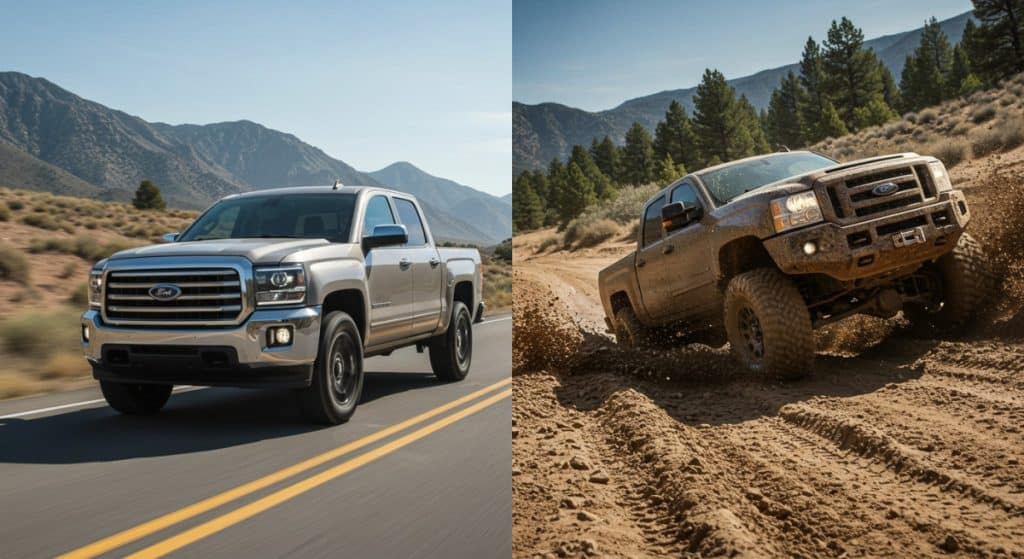
For serious off-roaders, farmers, or anyone regularly facing extreme conditions, the compromises of mud-terrain tires are often worth it. When performance in challenging terrain matters most, accepting the drawbacks makes sense.
Choosing based on real driving needs, not just appearances, saves money, improves performance, and avoids daily frustration. The most honest assessment often leads to the most satisfying result.