Skip to content

CVT transmissions spark a lot of debate in the car world. Some drivers swear by their smooth ride and efficiency, while others can’t stand how they feel behind the wheel. Whether you’re buying your first car or just curious about the tech under your hood, understanding how CVTs work can help you figure out whether one is right for you.
Let’s dive into the world of CVTs and see what the hype is about, and why some people aren’t impressed.
Understanding the Basics of CVT Transmissions
CVT stands for Continuously Variable Transmission. Unlike traditional automatics or manuals that use a fixed set of gears, a CVT uses a system of variable-diameter pulleys and a belt to create an infinite range of gear ratios. A CVT typically consists of two pulleys: one connected to the engine (drive pulley) and the other to the wheels (driven pulley), linked by a high-tension steel or composite belt. As the diameters of these pulleys adjust, they allow the engine to operate at its most efficient RPM for any given speed, providing seamless power delivery.
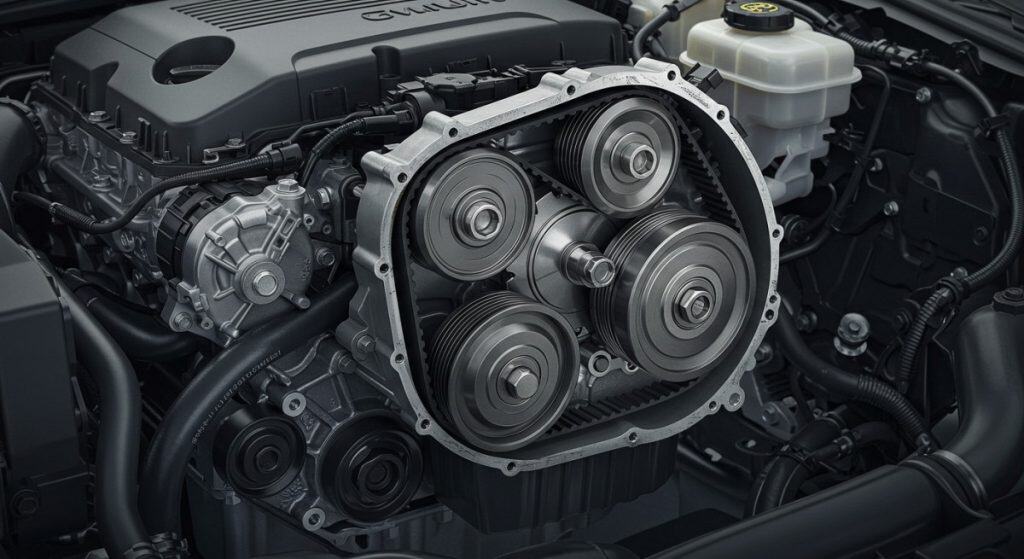
Instead of shifting from first to second to third like a traditional gearbox, a CVT continuously adjusts to find the optimal engine speed for any driving condition. It’s a bit like riding a bike with an automatic shifter that always picks the most efficient gear for you-no clunks or pauses, just a smooth glide.
There are a few types of CVTs:
- Pulley-based CVTs: The most common type, found in most passenger vehicles.
- Toroidal CVTs: These use discs and rollers instead of belts, which are less common but found in some high-end or experimental models.
- Hydrostatic CVTs: Often used in tractors and heavy equipment, these use fluid pressure to transfer power.
The Advantages of CVT Technology
One of the biggest benefits of CVTs is smooth acceleration. Since there are no gear steps, you don’t feel the jolt or delay of a shift. This makes for a more relaxed drive, especially in stop-and-go traffic.
CVTs also tend to be more fuel-efficient than traditional transmissions, particularly in city driving. By keeping the engine running in its optimal power band, they can conserve fuel more effectively. However, while they often have fewer gearsets than automatics, they rely on precision components, such as high-tension steel belts, hydraulic actuators, and complex control modules, which can be expensive to repair if issues arise. By keeping the engine at its most efficient RPM, CVTs squeeze out extra mileage from every gallon.
Mechanically, they’re simpler in some ways. Fewer moving parts mean there’s less to wear out, at least in theory. This simplicity is part of why many hybrid systems use CVTs to keep things lightweight and efficient.
For small-displacement engines, CVTs are often a perfect match. They help these engines perform more smoothly and feel peppier without burning through fuel.
Why Some Drivers Appreciate CVTs
Beyond the technical perks, there are real-world benefits to living with a CVT.
For starters, there’s no gear shift shock. That means smoother commutes, especially in urban environments where traffic is heavy and frequent starts and stops are the norm.
Because the engine stays in its sweet spot, CVTs shine in city driving. You’ll notice better fuel economy and a quieter ride at low speeds.

They’re also common in affordable, budget-friendly vehicles. If you’re looking for an economical ride that’s easy to drive, chances are you’ll run into a CVT.
New drivers often find CVTs easier to get used to since they don’t have to adapt to shifting patterns. Everything just… works.
The Common Criticisms of CVTs
Of course, CVTs aren’t universally loved.
The biggest complaint? The lack of shifting. This often leads to what drivers describe as the “rubber band effect.” This lag in acceleration occurs because the CVT initially increases engine speed, then adjusts the pulleys to match torque demand, resulting in a mismatch between engine sound and vehicle response that feels disconnected from how the car accelerates. To some drivers, it feels unnatural. There’s no sensation of changing gears, which can make driving feel less engaging.
Then there’s the so-called rubber band effect-where the engine revs up quickly but the car doesn’t accelerate at the same pace. This delay can be unsettling if you’re expecting a direct response.
CVTs also tend to make the engine drone during heavy acceleration. You’ll hear a steady, high-pitched rev instead of the familiar rise and fall of engine notes.
And while modern CVTs are more reliable than earlier models, they still carry a reputation for questionable durability, especially in certain vehicles. Replacing a CVT isn’t cheap either.
Reliability and Maintenance Concerns
When it comes to reliability, CVTs have a mixed reputation-and it really depends on the brand and model.
Some manufacturers, like Toyota and Honda, have built very dependable CVTs that last well beyond 150,000 miles with proper maintenance. Others, particularly earlier CVTs from Nissan, have developed a less flattering track record.
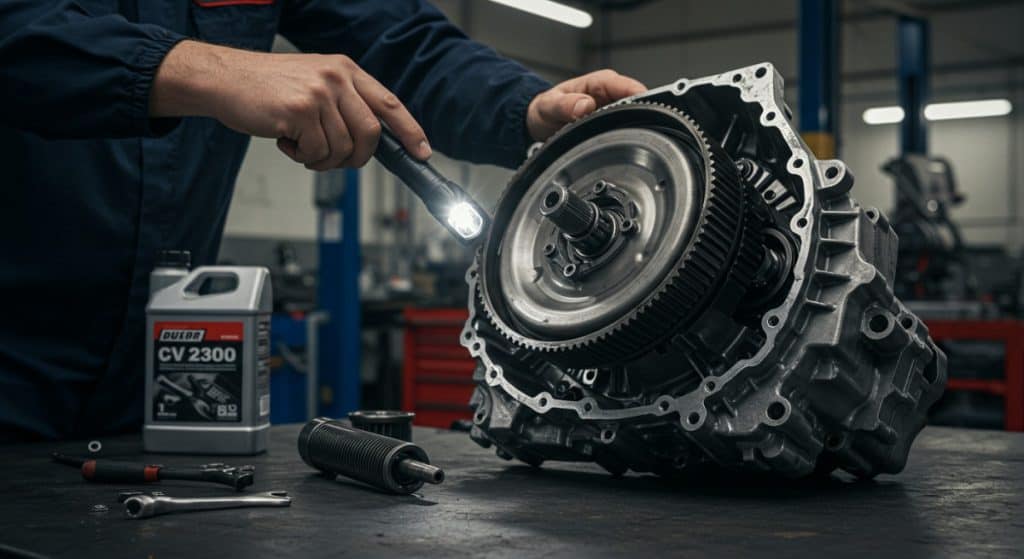
The key to a long-lasting CVT? Regular fluid changes. CVT fluid isn’t the same as standard transmission fluid and can degrade faster under heat and load. Following your vehicle’s recommended service intervals is critical.
Common signs of CVT trouble include slipping, delayed acceleration, shuddering, or strange noises under load. In pulley-based CVTs, wear can occur on the belt or cone surfaces, especially in steel-belt designs like those found in many Nissan models. Overheating is another risk; many CVTs lack a traditional torque converter or use smaller fluid sumps, which can lead to poor thermal management if not properly maintained. Most CVTs are also limited to torque loads of around 250 to 300 Nm, which makes them less suitable for towing or performance driving.. Repairs can run from $2,000 to $5,000 depending on the model, so early detection matters.
Many of the horror stories about CVTs stem from earlier generations that lacked proper cooling or used poor-quality components. Thankfully, things have improved-but it pays to research the specific vehicle you’re looking at.
Automakers That Embrace or Avoid CVTs
Several automakers have leaned hard into CVT development:
- Nissan: Was one of the earliest adopters, but has also faced significant criticism due to reliability issues in some models.
- Toyota and Honda: Use CVTs extensively in hybrids and compact cars. Their units tend to be more durable.
- Subaru: Most of their lineup now features CVTs, and they’ve improved over the years.

On the flip side, some brands avoid CVTs in favor of traditional automatics or dual-clutch systems:
- Mazda: Prefers traditional automatics for a more engaging drive.
- BMW, Mercedes, and most luxury brands: Stick to advanced automatics or dual-clutch systems to deliver performance and refinement.
There are also notable success stories, like the Toyota Prius, which has used an electronically controlled planetary CVT for years with excellent reliability. For example, the 2019+ Toyota Corolla introduced a launch gear system in its CVT, adding improved durability and responsiveness. On the other hand, models like the 2013–2016 Nissan Altima experienced a high rate of CVT failures, typically occurring between 70,000 and 100,000 miles, largely due to insufficient fluid cooling. Another standout is the Honda Accord Hybrid, which uses an e-CVT design with no belts at all. This simplified and electronically managed transmission has proven to be extremely reliable, which has used a variation of a CVT to great effect for years.
Is a CVT Right for You?
So, should you consider a CVT? It depends on what kind of driver you are.
CVTs are a great fit for:
- Daily commuters who value smooth rides and efficiency
- Hybrid shoppers looking for seamless electric/gas transitions
- Budget-conscious drivers who want an easy-to-drive, low-maintenance car
You might want to steer clear if you:
- Love spirited driving and want to feel every shift
- Frequently tow or haul heavy loads
- Plan to keep the vehicle long-term and don’t want to worry about costly transmission repairs
When shopping for a CVT-equipped car, ask about:
- Maintenance history and fluid changes
- Extended warranty options
- Online owner reviews for that specific model and year
What the Future Holds for CVT Transmissions
CVTs aren’t going anywhere just yet.
Automakers continue to refine the tuning and software that control CVT behavior. Many newer models now simulate gear shifts to make them feel more natural, blending the best of both worlds.
CVTs also pair well with electric motors and hybrid systems, thanks to their seamless power delivery. As more brands move toward electrification, expect CVT-based setups to continue evolving.
At the same time, dual-clutch and traditional automatic transmissions are also improving, which means the competition is becoming increasingly stiff. Some buyers may still prefer those options for driving feel and reliability.
However, for everyday driving, especially when fuel efficiency and comfort are top priorities, CVTs offer significant benefits.
Stay tuned as we continue to follow how this technology shapes the future of driving.
CVT vs. Traditional Automatic: Quick Comparison
| Feature | CVT Transmission | Traditional Automatic/DCT |
| Driving Feel | Smooth, shiftless | Engaging, step-wise shifting |
| Fuel Efficiency | Generally better in city driving | Competitive on highway |
| Maintenance Cost | Moderate to high if issues arise | Varies widely by design |
| Towing Capability | Often limited | Usually better |
| Long-Term Durability | Brand-dependent | Often longer with proper care |