Skip to content

It’s unsettling when your car jerks or lurches as you speed up or slow down. These sudden jolts aren’t just annoying – they can hint at mechanical issues that might affect your safety if ignored. The good news is that by pinpointing when the jerk happens (during acceleration, deceleration, or both), you can narrow down the culprit quickly. In this guide, we’ll walk through a quick triage to diagnose the problem and nine common causes of car jerking – each with symptoms, quick checks, DIY fixes, and advice on when to call a pro.
Key Takeaways
- Jerks on acceleration usually come from spark, fuel, air, transmission slip, or drivetrain joints.
- Jerks on slowing/braking often trace back to brake rotors, calipers, or rough transmission downshifts.
- Some issues—like bad mounts or clogged cats—can cause jerks in both directions.
- Scanning for codes is vital. It helps you separate engine vs. transmission problems quickly.
- Stop driving if the jerking comes with a flashing check-engine light, strong burning smells, or severe shuddering.
Safety & Tools:
Tools: OBD-II scanner, basic socket set, torque wrench, multimeter, MAF/throttle body cleaner, jack and stands (for under-car work), vacuum leak tester or smoke machine (optional).
Safety: Work on a flat surface, chock the wheels, and support the car on jack stands if lifting it. Let the exhaust and engine cool before working nearby. Disconnect the battery whenever working on electrical parts or near ignition components to prevent shocks or shorts.
Quick Triage: When Does It Jerk?
A quick way to narrow things down is to pay attention to when the jerk happens:
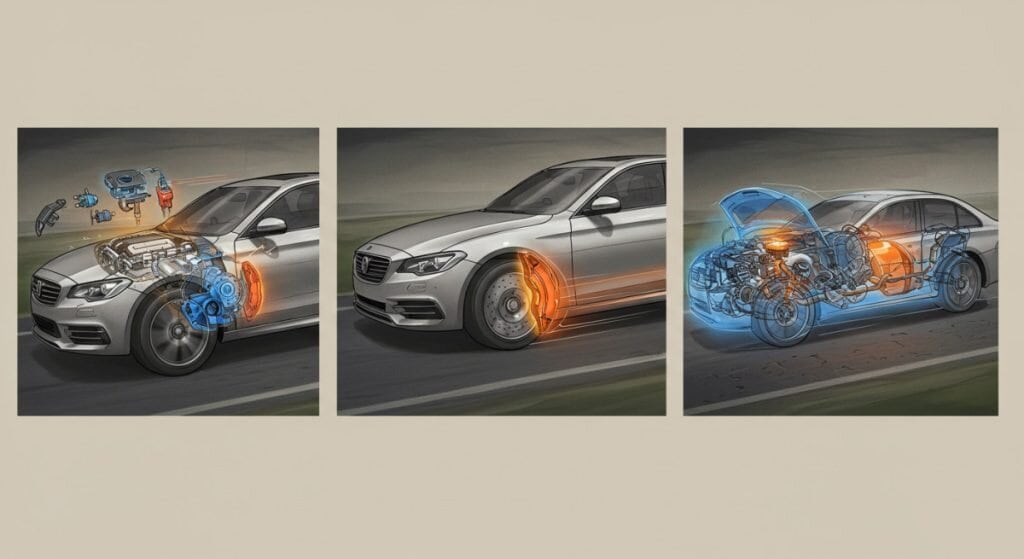
- Only when accelerating: Think ignition misfires, weak fuel delivery, vacuum/airflow issues, transmission slip, or CV/U-joint problems.
- Only when slowing down or braking: Usually points to warped rotors, sticky calipers, or a transmission downshift issue.
- Both acceleration and deceleration: Could be worn mounts, torque converter shudder, clogged catalytic converter, or a major intake leak.
With that in mind, let’s go deeper into the nine most common culprits.
The 9 Causes and Fixes
1) Ignition Misfire Under Load (Plugs or Coils)
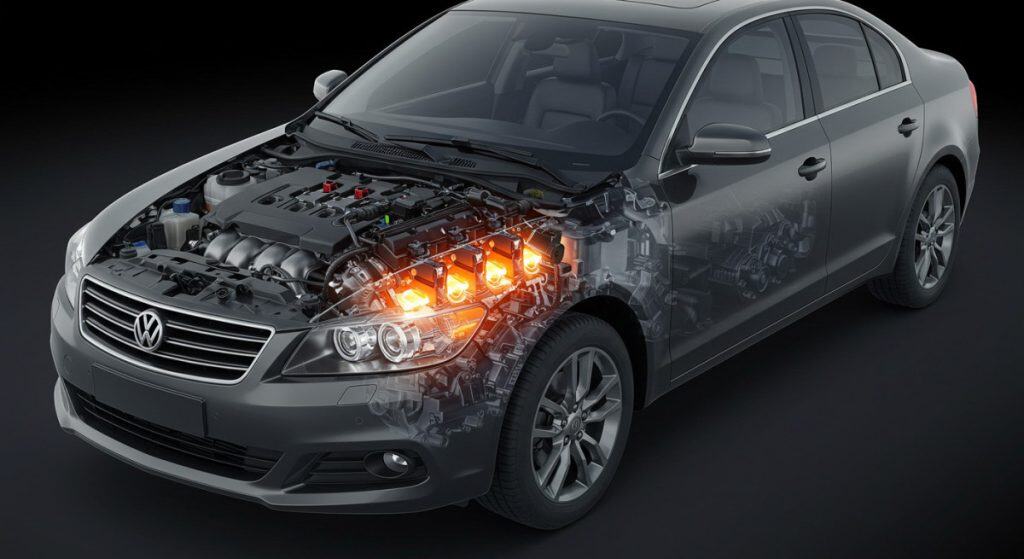
If your car stumbles or bucks every time you hit the gas—and especially if the check engine light flashes—you might be dealing with an ignition misfire. What’s happening is simple: the spark in one or more cylinders is cutting out under load. That cylinder goes dead for a split second, then fires again, and you feel it as a jolt.
How to check it:
- Plug in a scanner and look for codes like P0301, P0302, etc. The last digit tells you which cylinder is missing.
- Pull a couple of spark plugs. If they’re worn, fouled with oil, or covered in deposits, they’re suspects.
- If you’re not sure, you can swap ignition coils between cylinders. If the misfire code “follows” the coil, you’ve found the problem.
The fix: Replace the worn plugs, coil boots, or coils. Make sure plugs are gapped to factory spec, and clear the codes afterward.
Time/Cost: 1–2 hrs • $40–$300 • Easy–Moderate.
2) Fuel Delivery Problems (Filter, Pump, Injectors)
Another common cause of jerking under acceleration is fuel starvation. If the engine isn’t getting enough fuel, it’ll run lean and stumble when you ask for power. This often shows up as hesitation on the highway or surging when the tank is low.
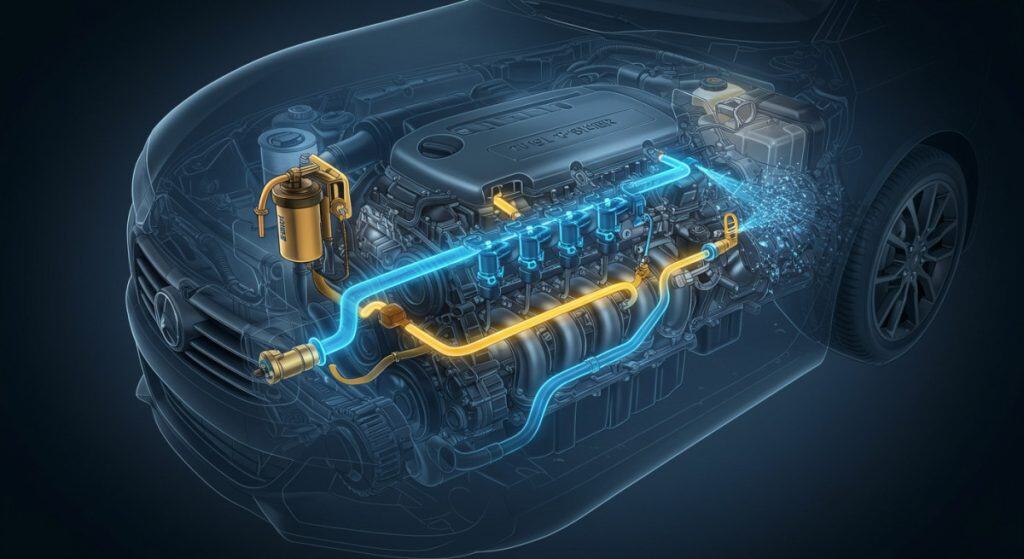
How to check it:
- Turn the key to “on” and listen for the fuel pump humming for a second or two. No sound can mean a bad pump.
- If you have a gauge, check fuel pressure at the rail. Low pressure = weak pump or clogged filter.
- Long-term fuel trims above +10% are another clue that the system is running lean.
The fix: Replace a clogged filter (if yours is serviceable), run a quality injector cleaner, or have injectors cleaned professionally. A bad pump is more expensive but unavoidable if pressure is low.
Time/Cost: 0.5–3 hrs • $15–$600 • Easy–Moderate.
3) Air Intake Faults (MAF, Vacuum Leaks, PCV)
Air problems can mimic fuel or spark issues, and they’re sneaky. A cracked intake hose or dirty MAF sensor can send the wrong airflow signal, which skews fuel mixture and makes the car jerk.
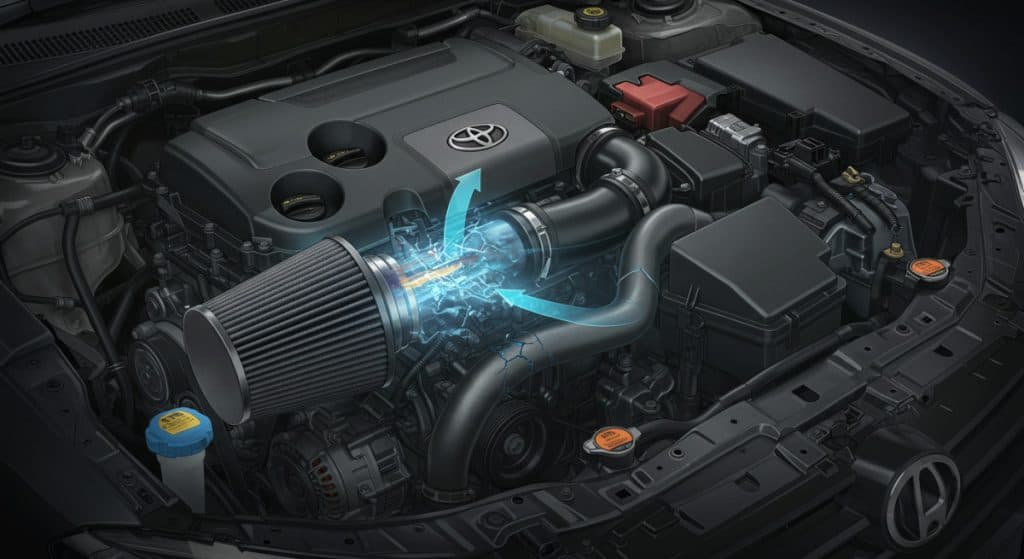
How to check it:
- Inspect all intake hoses and PCV lines for cracks, splits, or loose clamps.
- Spray carb cleaner around suspect areas at idle—if RPMs change, you’ve found a leak.
- If you have a scanner, compare live MAF readings to spec.
The fix: Replace cracked hoses, clamps, or PCV valves. Clean the MAF with MAF-safe cleaner.
Time/Cost: 0.5–2 hrs • $10–$250 • Easy.
4) Throttle Body Carbon or Sticky Idle Valve
Sometimes the issue is simply a dirty throttle body or sticky idle air control valve. A carbon-coated throttle plate can’t open and close smoothly, which makes the car lurch when you take off or stop.
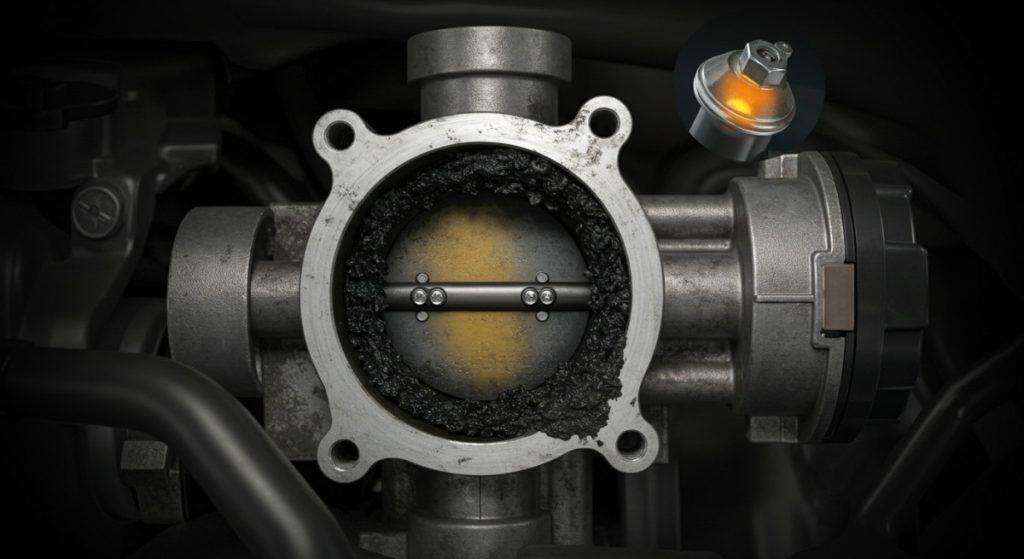
How to check it:
- Look inside the throttle body—if it’s caked in black soot, that’s your problem.
- With a scanner, you can watch throttle command vs. actual position. If they don’t match, it’s sticking.
The fix: Remove the intake tube and clean the throttle body with cleaner and a rag. If you have an IAC valve, clean or replace it. Some cars need a throttle relearn procedure afterward.
Time/Cost: 0.5–1 hr • $8–$200 • Easy.
5) Transmission Issues (Fluid, Clutch, Torque Converter)
Jerks that feel more like a shudder, flare, or harsh gear change often trace back to the transmission. Low or old fluid can cause torque converter shudder around 40–60 mph, or a rough downshift when slowing.
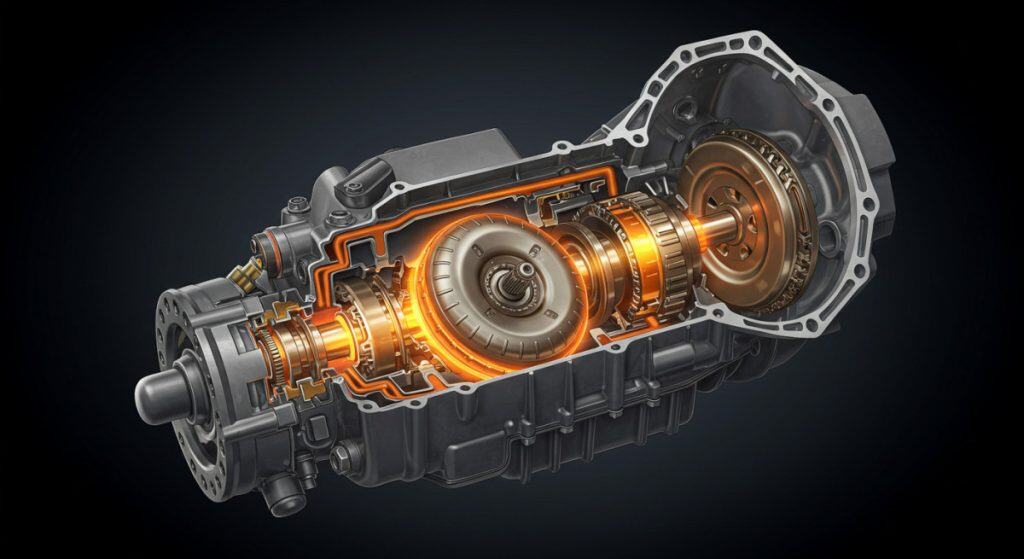
How to check it:
- Check fluid level and condition. Burnt smell or dark color means it’s overdue.
- Take it on the highway and feel for a shudder at steady speeds—classic torque converter clutch slip.
- Scan for transmission control module (TCM) codes.
The fix: Start simple with a fluid and filter change using OEM-spec ATF. Reset adaptives with a scan tool if possible. For manuals, inspect clutch and flywheel for chatter. Internal repairs are shop jobs.
Time/Cost: 1–4 hrs • $60–$400 (service) • Moderate–High if internal.
6) Worn Engine or Transmission Mounts
If the whole car thumps when you hit or release the gas, bad mounts could be the culprit. Mounts are supposed to hold the drivetrain in place. When they crack or leak, the engine rocks excessively, turning torque reversals into jolts.
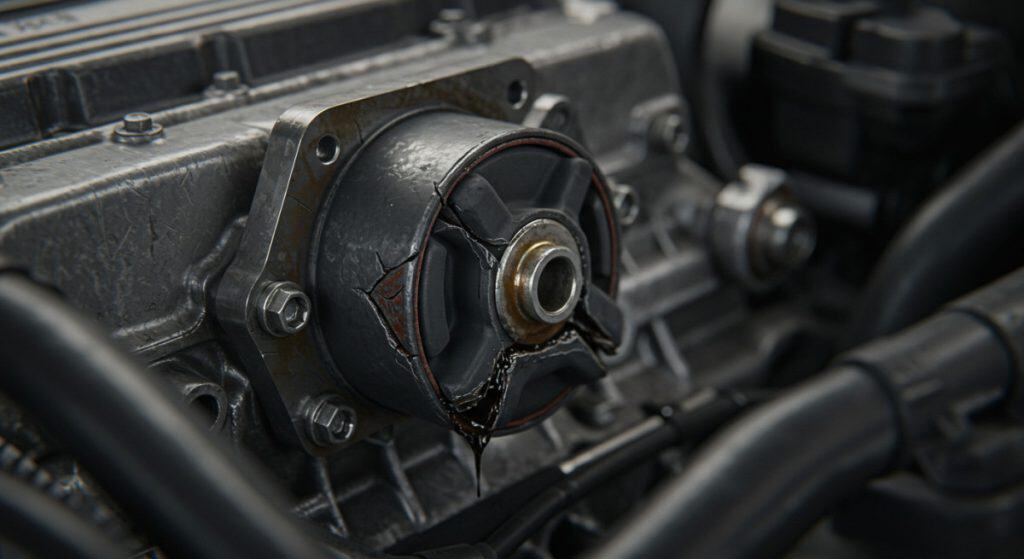
How to check it:
- Perform a “power-brake test”—hold the brake, shift into gear, and gently press the gas. Watch how much the engine moves.
- Inspect mounts visually for cracks or leaking fluid (in hydraulic mounts).
The fix: Replace the bad mounts and torque the bolts to spec.
Time/Cost: 1–3 hrs • $80–$500 • Moderate.
7) CV Joints, Axles, or U-Joints
If the jerk feels more like a vibration or rhythmic thump that changes with speed, you might be looking at worn joints in the drivetrain. Front-wheel-drive cars usually show this as clicking CV joints; rear-wheel drives often clunk due to U-joints.
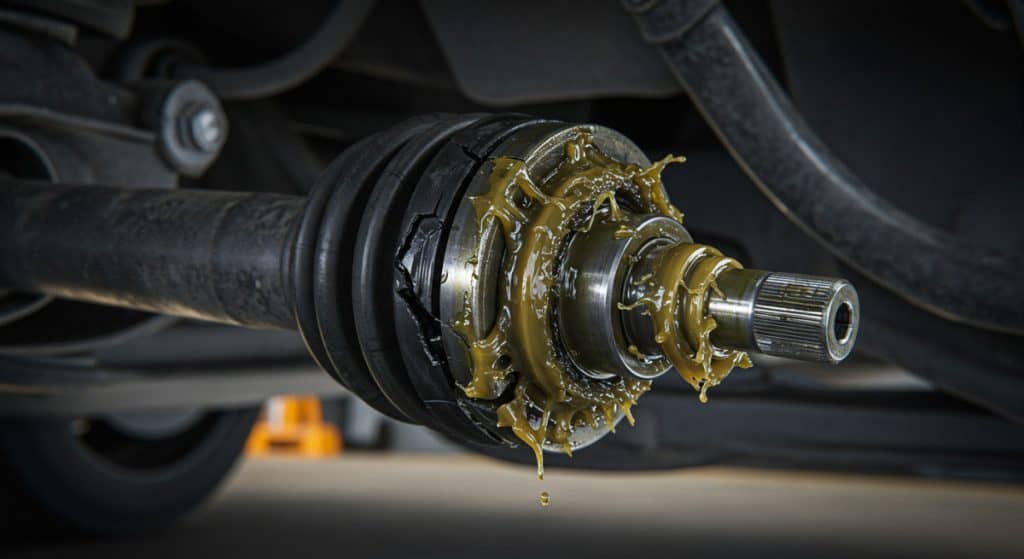
How to check it:
- Look at CV boots—if they’re torn and flinging grease, that joint is toast.
- For U-joints, look for rust dust or play in the shaft when twisting it by hand.
- You might also feel excess lash when shifting from Reverse to Drive.
The fix: Replace the bad axle or U-joint assembly. Also check diff or transfer case fluid levels.
Time/Cost: 1–3 hrs • $60–$450 • Moderate.
8) Brake System Faults (Rotors, Calipers, ABS)
Jerking that only shows up when braking usually comes down to uneven braking surfaces. Warped rotors, sticky calipers, or bad ABS sensors can make stopping feel like a jerky ride.
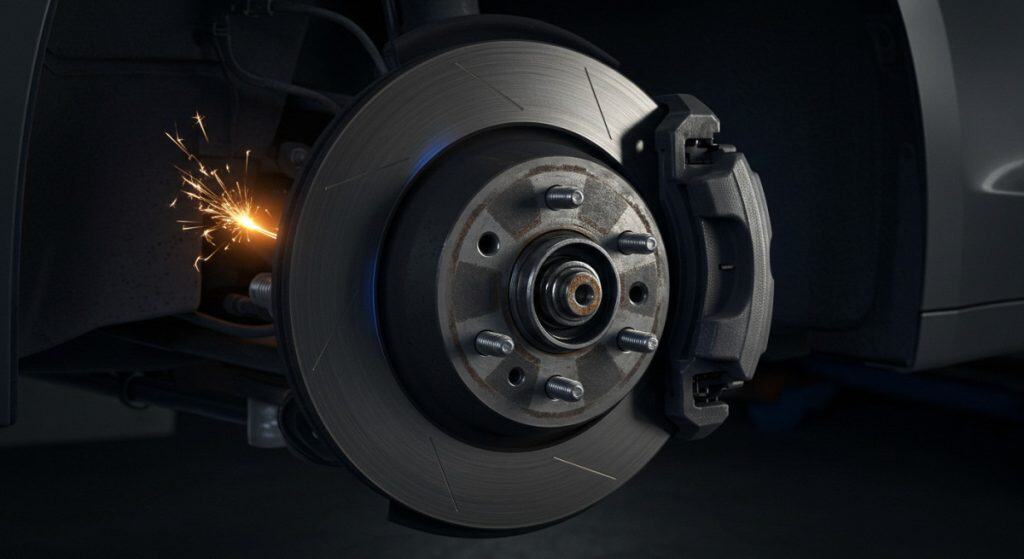
How to check it:
- Feel for a pulsing brake pedal—classic rotor thickness variation.
- Spin each wheel by hand with the car lifted. If one drags, that caliper is sticking.
- Scan the ABS module for wheel speed sensor dropouts.
The fix: Replace or resurface rotors and pads together, clean or replace caliper slider pins, and swap out bad ABS sensors.
Time/Cost: 1–3 hrs • $80–$500 • Moderate.
9) Exhaust Restriction or Stuck EGR
A clogged catalytic converter or stuck EGR valve can also cause jerking. The engine either can’t exhale properly or gets hit with the wrong amount of exhaust gas at the wrong time.
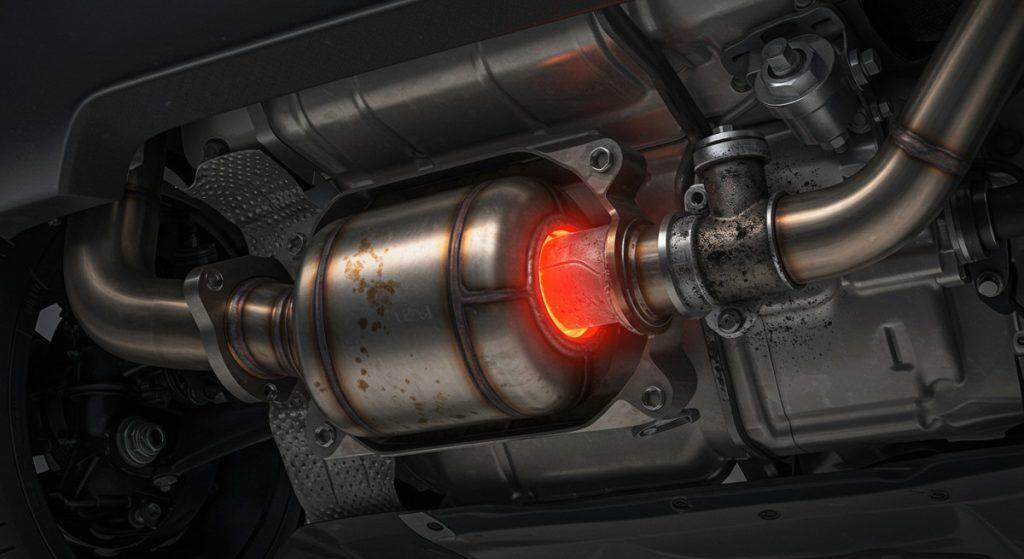
How to check it:
- A backpressure test can reveal a clogged cat.
- Compare temps before and after the cat; big differences point to restriction.
- Codes like P0420, P0401, or P0402 often tie in.
The fix: Clean or replace the EGR valve. Replace the catalytic converter only after fixing the root cause (often misfire or rich running).
Time/Cost: 1–3 hrs • $30–$1,200 • Moderate–High.
Diagnostic Flow: Step by Step
- Scan for codes and check live data—misfires, trims, TPS/MAF readings, TCC status, wheel speeds.
- Check basics: fluid levels, vacuum hoses, mounts, CV joints, and brake condition.
- Road test to reproduce the jerk. Note speed, gear, RPM, and load.
- Match your symptom pattern with the cause list above.
- Fix the issue, clear codes, and retest.
When to Stop Driving
Not all jerks are equal. Park it and call a pro if you notice:
- A flashing check engine light (active misfire).
- Severe shudder above 40 mph.
- Burning smells from brakes or clutch.
- Strong pull to one side under braking.
- Sudden loss of power.
If your car becomes stuck in park or refuses to shift into Drive, it could be a sign of an interlock, brake switch, or low-voltage issue that needs immediate attention.
Preventive Tips
- Replace plugs, coils, and fluids at the recommended intervals.
- Inspect intake hoses often—catch cracks early.
- Stick to quality fuel and filters.
- Always replace pads and rotors as a set.
- Don’t ignore small jerks; they rarely fix themselves.
FAQs
Is it safe to drive if the jerk is minor?
Not really. Even small misfires or transmission slips can turn into big repairs. Best to diagnose early.
Can bad gas cause jerking?
Yes. Contaminated or poor-quality fuel can make an engine stumble. If it started right after filling up, that’s a clue.
Why does it only happen uphill or with A/C on?
Both put extra strain on the engine. Weak spark, fuel delivery, or transmission slip tends to show up under load.
Related Resources
- https://www.nhtsa.gov/vehicle/maintenance
- https://www.yourmechanic.com/article
- https://www.aa1car.com/library/misfire.htm
- https://www.autozone.com/diy/symptoms/bad-fuel-pump-symptoms
- https://repairpal.com/question/gmc/acadia/2016/transmission-shudder
- https://www.familyhandyman.com/article/how-car-brakes-work/