 Skip to content

The Scary Truth About That Little Red Battery Light
You’re cruising at night, radio humming, headlights on, when suddenly the little red battery icon flicks on. Most drivers assume, “Oh, my battery must be low.” In reality? The problem is usually not the battery at all.
That light is your car’s way of saying: “Hey, I’m running on stored power only. My charging system isn’t keeping up.”
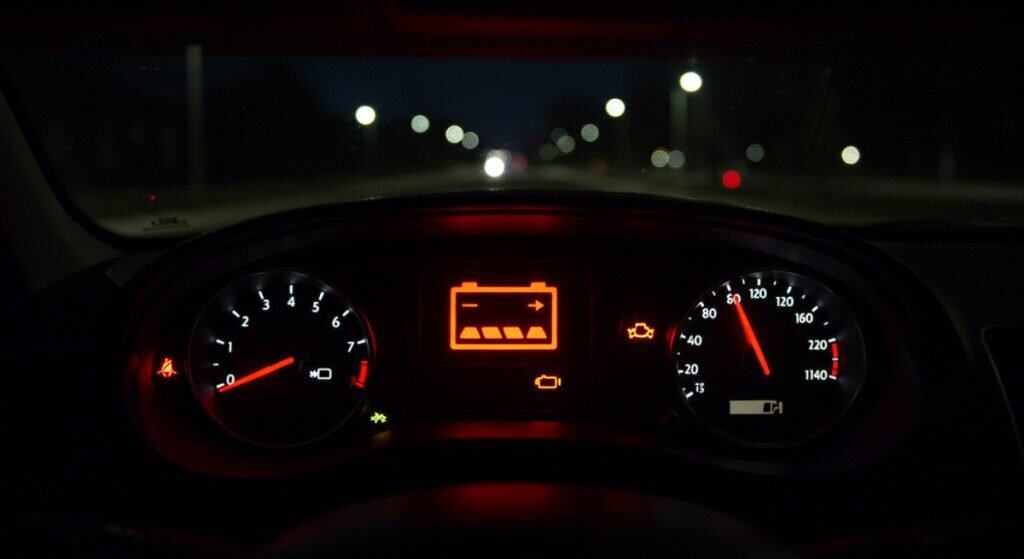
Translation: once that light is on solid, the clock starts ticking. You may have 15 minutes—or an hour at best—before the car completely dies on you.
The good news: with a few quick checks, you can tell if it’s something simple (like dirty terminals) or serious (like a dying alternator).
What the Battery Light Really Monitors
Think of your battery as a water tank. The alternator is the pump that keeps it full while you drive. The light isn’t watching the “tank”—it’s watching the “pump and plumbing.”
- Normal system voltage: 13.8–14.7 volts while driving.
- Low voltage: alternator/regulator/belt/wiring problem.
- High voltage: regulator fault (can cook electronics).
When the voltage deviates too far in either direction, the dash light comes on.
Immediate Reality Check: Can You Keep Driving?
- Solid light, car runs fine: You’re on borrowed time, driving off battery reserves. Shut off non-essentials (A/C, heated seats) and head straight to a safe place or shop.
- Light + dimming headlights, fading power steering, or burning rubber smell: Stop immediately. That’s usually a snapped belt or failing alternator bearing—you risk being stranded or overheating.
- Light that flickers with RPM or electrical load: You might limp it home, but it’s an early sign your belt, pulley, or alternator is on its way out.
Quick Tests You Can Do in Your Driveway
Instead of diving straight into “replace this or that,” here’s a simple path to follow:
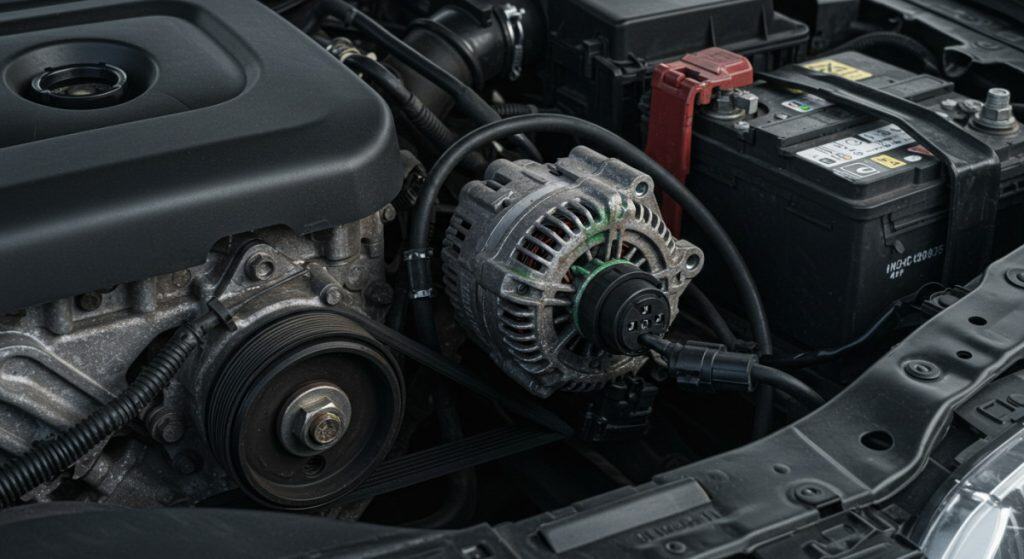
1. Pop the hood, engine off.
- Look at the serpentine belt—does it look cracked, glossy, or frayed?
- Tug gently on the alternator plug and charging cable—are they snug?
- Check the battery posts for green corrosion or loose clamps.
2. Grab your multimeter.
- Engine off, after sitting: A healthy battery should read ~12.6V. Anything under 12.2V is weak.
- Engine idling: Should jump to 13.8–14.7V.
- Turn on headlights, blower, defogger: Voltage should stay above 13.5V.
- <13.0V = not charging.
- 15.0V = overcharging (bad regulator).
3. If it still doesn’t add up…
Scan for codes like P0562 (low system voltage) or P0620 (alternator control). On newer cars, look for BMS/IBS (battery monitoring) codes.
10 Common Causes and Fixes
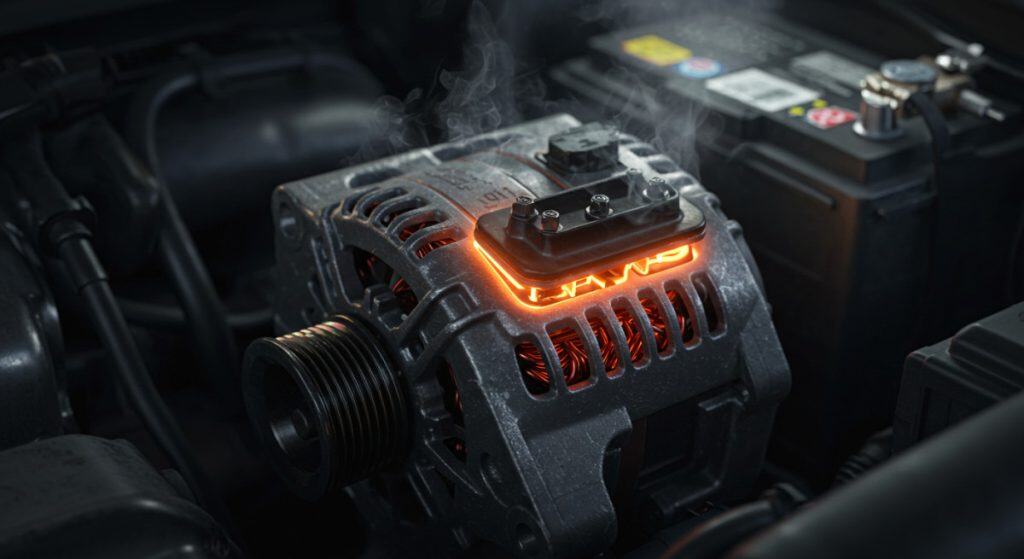
1) Failing Alternator
When the alternator dies, the car simply runs off the battery until it can’t anymore. Signs include dim headlights, whining noises, and voltage below 13.5V.
Fix: Replace or rebuild the alternator, then re-test charging.
2) Bad Voltage Regulator
Some cars have external regulators, others hide them inside the alternator. If it fails, voltage may swing high or low, cooking batteries or starving them.
Fix: Replace regulator (if external) or alternator (if internal).
3) Serpentine Belt or Tensioner
The alternator can’t charge if the belt isn’t spinning it. A squealing startup or burning rubber smell often gives it away.
Fix: Replace the belt and tensioner; inspect idlers.
4) Overrunning Alternator Pulley (OAD)
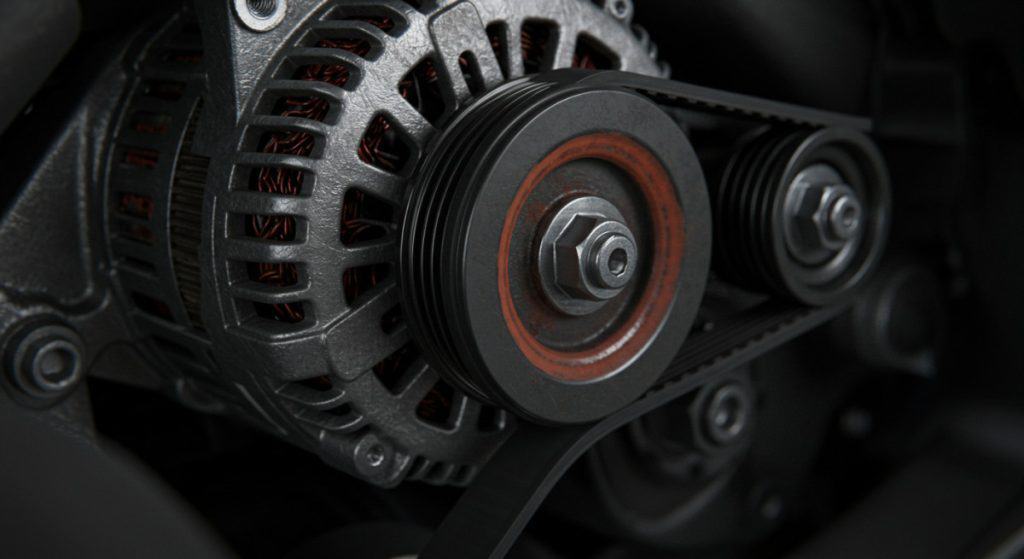
Modern alternators use a special pulley that “decouples” to smooth out belt motion. When it fails, you’ll see belt flutter and the light may come on only at idle.
Fix: Replace the pulley with the proper tool.
5) Loose or Corroded Battery Terminals / Ground
This one’s easy to miss. Corroded terminals or a broken ground strap can mimic major charging failures.
Fix: Clean with a wire brush, apply dielectric grease, tighten connections. Replace ground if necessary.
6) Blown Main Fuse or Fusible Link
If your alternator tests fine but no power reaches the battery, the charge circuit fuse may be blown—often from jump-start mistakes.
Fix: Replace the fuse or fusible link after correcting the root cause.
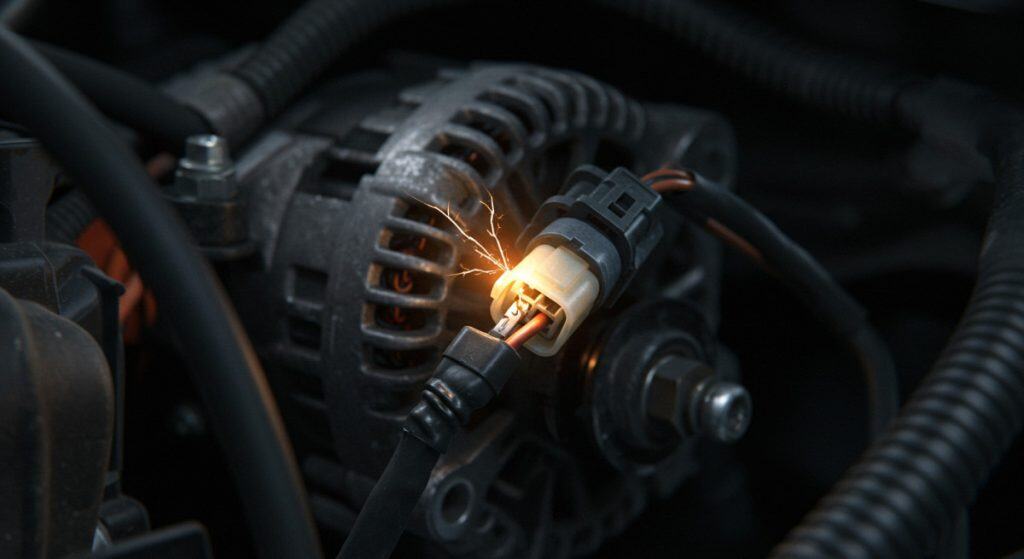
7) Wiring or Sense Circuit Fault
On some cars, a broken sense wire or connector can trigger the light even if the alternator works. Wiggle the harness—if symptoms change, wiring’s your culprit.
Fix: Repair or replace the wiring/connector; confirm voltage at the sense pin.
8) Weak or Failing Battery
A battery with high internal resistance can’t accept charge, confusing the system into lighting the warning.
Fix: Replace with the correct battery, and register it if your car requires it.
9) Battery Monitoring Sensor (IBS/BMS)
Many modern cars use a sensor on the battery cable to track charge. If it fails—or isn’t reset after a battery swap—the light can appear even if charging is fine.
Fix: Replace or reset the IBS/BMS sensor with a scan tool.
10) Cluster or Lamp Circuit Issues (Older Cars)
On some older cars, the battery lamp itself is part of the charging circuit. A burned-out bulb can actually stop the alternator from charging.
Fix: Replace the bulb or repair the cluster wiring.
Preventive Habits That Save You Headaches
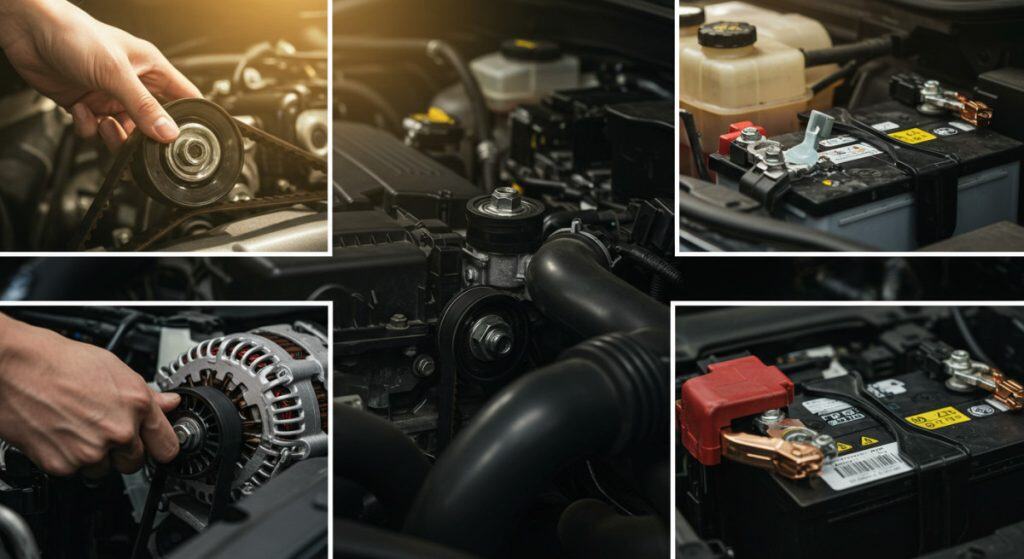
- Replace the belt and tensioner when you replace the alternator—cheap insurance.
- Keep battery posts clean and coated with dielectric grease.
- Always use the correct size/CCA battery. Many newer cars need it “registered” in software.
- Avoid “old school” tricks like disconnecting the battery while running—you’ll risk frying your ECU.
FAQs
Does a battery light always mean the alternator is bad?
No. Belts, wiring, fuses, and even sensors can be the culprit.
Why did the light come on after I replaced the battery?
Usually a loose clamp, blown fuse during the swap, or a sensor that wasn’t reset.
How long can I drive with the light on?
Anywhere from 10 minutes to an hour, depending on the battery’s health and what you have switched on.
Why does it flicker at idle with the A/C on?
That points to belt slip, weak alternator output at low RPM, or a failing alternator pulley.


