Skip to content

There is a weird moment that happens once you start looking into connected cars.
At first, it all sounds normal. Your car can remote start from an app. It can send you a maintenance alert. It can help you find where you parked. It can call for help after a crash. Fair enough. Most people hear that and think, yeah, that makes sense.
Then you keep reading.
And that is when it gets a little uncomfortable.
Because the same car that helps you warm it up on a cold morning may also know where you drive, how hard you brake, what phone you paired, and which connected services are quietly tied to your account. Not every car does all of this in the same way, and not every brand handles it the same way either. But by 2026, it is hard to pretend this is some niche concern only privacy obsessives care about.
The bigger issue is not that cars collect data at all. Some of that data is the reason the features exist in the first place. The issue is how easy it is for the average driver to lose track of what is being collected, who sees it, and how much control they actually have once all of it starts flowing through apps, platforms, and connected services.
So let’s talk about it without making it sound like a law-school lecture.
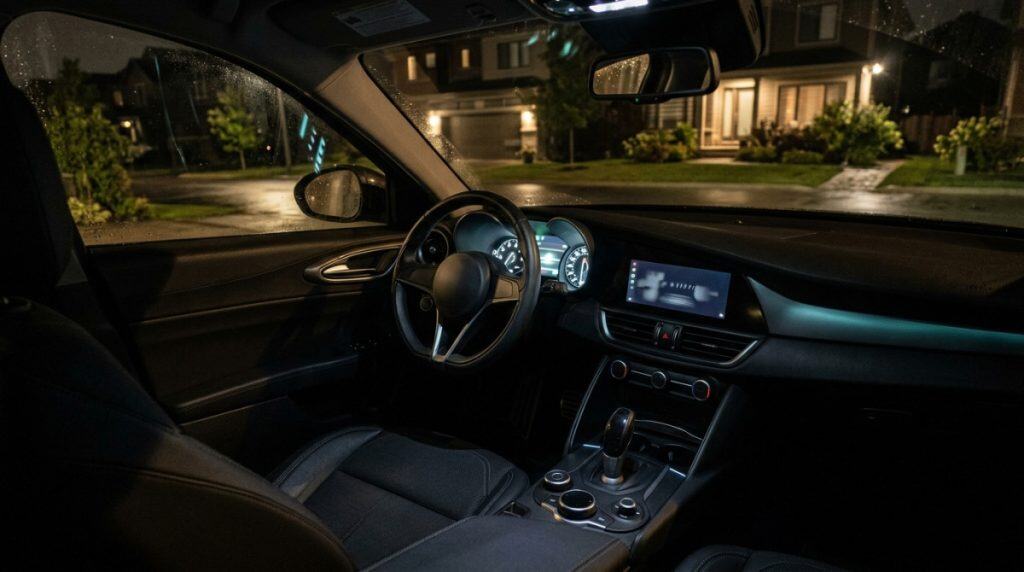
This guide walks through what your car may be collecting, who may have access to it, how brands differ, and what you can do if you want to share less without giving up every modern convenience your car has.
What Data Is Your Car Collecting?
Probably more than you would guess if you never looked at the privacy terms.
Some of it is the kind of thing people expect. Connected cars can collect driving behavior data like speed, braking, acceleration, seatbelt use, and other trip-related information. That can sound boring until you realize how much that starts to say about the way you drive. Even if it begins as a safety or service feature, it is still data about you behind the wheel.
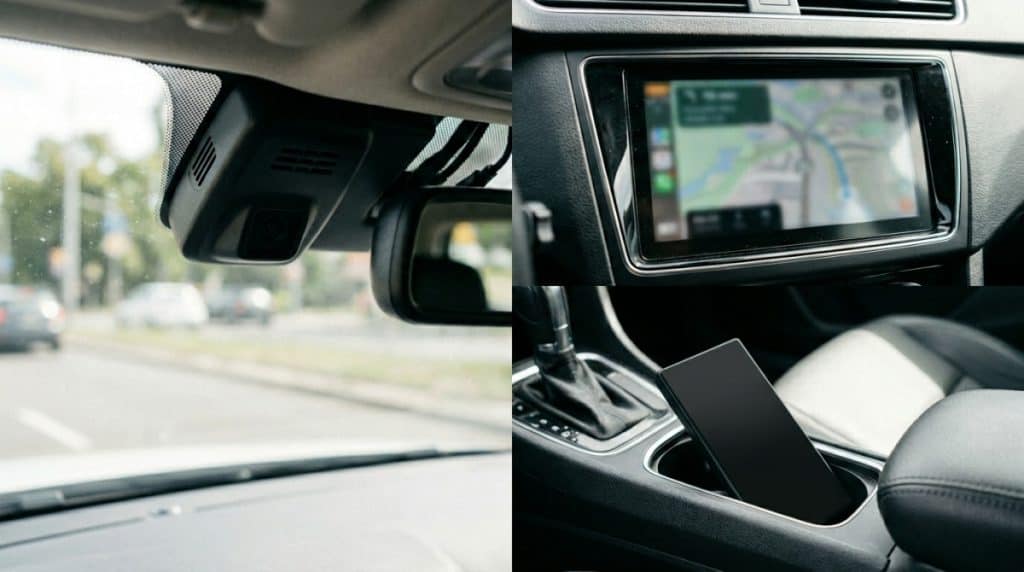
Then there is GPS and location data, which is where a lot of people suddenly stop scrolling and pay attention. Your car may know where it is parked, where it goes often, how routes are used, and in some setups, where the vehicle is in real time. On one hand, that powers features people genuinely like. On the other hand, it is not hard to see how location data can become a sensitive map of your routine.
There is also vehicle health and diagnostic data, which is probably the least surprising category. Odometer readings, battery status, oil life, warning lights, trouble codes, and service-related information all live here. This is the kind of data a lot of people are actually glad the car can track because it can help with maintenance, recalls, warranty support, and health reports.
But modern cars do not stop there.
A lot of them also pull in infotainment and phone data. If you sync your phone, the car may gain access to contacts, call logs, messages, media use, Bluetooth pairings, and other imported information depending on what you approve. Some vehicles may also rely on microphones or cameras for voice controls, cabin monitoring, safety features, or driver-assistance systems.
That is really the shift people are dealing with now. Your car is not just collecting mechanical data anymore. In some cases, it is collecting pieces of your habits, your preferences, and your digital life too.
Who Has Access to That Data?
The first answer is usually the automaker or the connected platform tied to the vehicle.
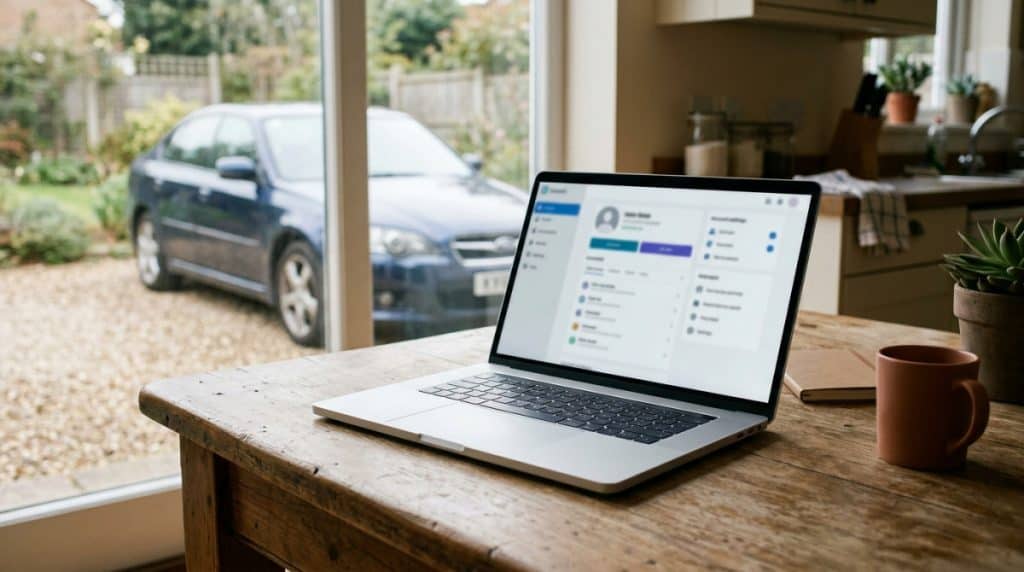
That means services like Toyota Connected Services, FordPass, Tesla-linked account services, Hyundai Bluelink, Kia Connect, NissanConnect, OnStar, Uconnect, and similar systems. These are the platforms behind the features people use every day without thinking too hard about the plumbing underneath. Remote start, app controls, emergency support, software updates, health reports, stolen-vehicle tools, all of that usually flows through a connected platform.
After that, things can branch out.
Depending on the brand, the service, and what you signed up for, the data may also be shared with navigation providers, roadside-assistance services, cloud vendors, analytics partners, emergency-response systems, insurers tied to driving programs, and other companies helping keep that connected ecosystem running.
If the vehicle belongs to a fleet or rental company, the picture can get even more intense. In that kind of setup, trip history, driver behavior, vehicle location, and usage monitoring may not be side effects at all. They may be part of the whole point.
And yes, law enforcement access is part of this conversation too. The exact path depends on the company and the request, but the concern is not imaginary.
Brand-by-Brand Differences in Data Practices
This is where the story gets a lot less neat.
People like to lump all connected cars together, but that misses a big part of the reality. Some brands give drivers more visibility. Some make controls easier to find. Some write their policies more plainly. Some make everything feel like a scavenger hunt.
GM became one of the most high-profile examples of how ugly this can get after regulators stepped in over the collection and sharing of precise location and driving-behavior data. That story mattered because it made connected-car privacy feel real in a way it had not for a lot of everyday drivers before.
Ford is a good reminder that deleting the app is not always enough. A lot of people assume that once the app is gone, the connection is gone too. Not necessarily. In some cases, the vehicle itself still needs to be reset properly or disconnected from the account the right way.
Toyota feels more mixed. It gives drivers more visibility than some brands through privacy tools and app settings, which is genuinely useful. At the same time, Toyota is also clear that connected services can involve location, driving, and vehicle-health data. So it is not really a clean “good brand, bad brand” story.
Tesla gets talked about like it is a rolling surveillance machine, but the reality is a little more layered than the internet version of it. Tesla is still one of the most software-heavy brands on the road, but some camera-related analytics settings are opt-in rather than permanently on by default. That does not make privacy a non-issue. It just means the details matter.
Nissan, Hyundai, and Kia are good examples of why you should not guess based on reputation alone. Their connected-service and privacy language makes it clear that vehicle, account, service, and app data can all be part of the package.
That is really the takeaway here. If privacy matters to you, brand differences matter too. A lot.
Connected Car Platforms and How They Share Data
A lot of the sharing happens quietly through the connected platform itself, not just through whatever you tap on the dashboard.
OnStar, FordPass, Uconnect, Blue Link, Kia Connect, Toyota Connected Services, NissanConnect, and similar systems are designed to stay connected in the background. That is the whole reason the convenience layer works. You open the app, tap a button, and the car responds. Pretty smooth. But that smoothness exists because there is an active system behind it.
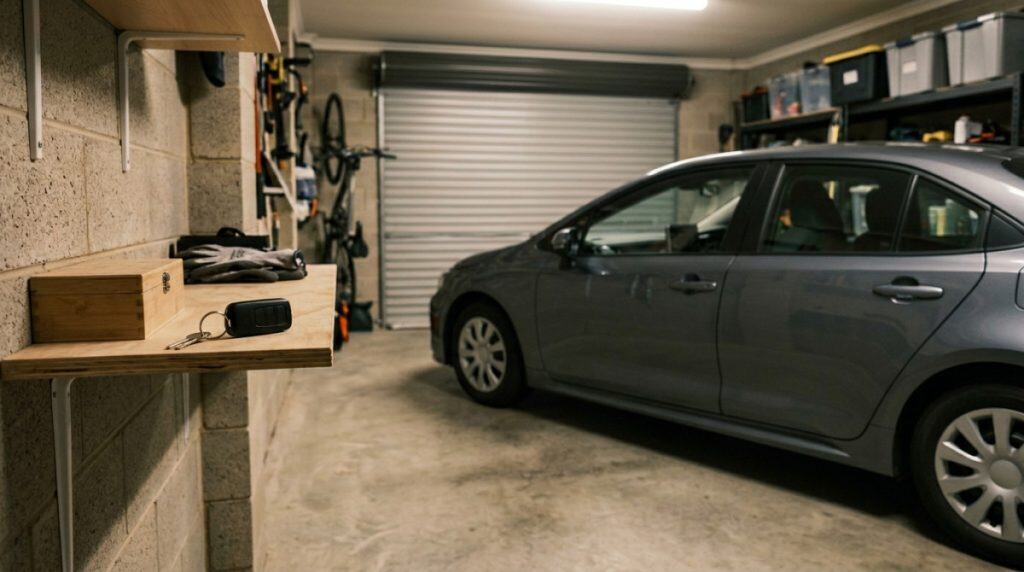
Some of the data can move in real time. Some of it may upload later in batches. Some features only work when you actively enroll and agree to the terms. Others may still involve limited background transmission tied to the vehicle itself, even if you are not using every paid feature or premium tool.
That is why subscription status can fool people.
It is easy to think, I stopped paying for the connected package, so I am done. But the car may still have hardware, background systems, or limited connectivity in play. The flashy subscription may be gone while parts of the connected backbone are still very much there.
Who Else Could Be Seeing Your Driving Data?
This is the section that usually makes the whole topic hit harder.
One possible destination is insurers or insurance-linked driving programs. Usage-based insurance can use things like miles driven, time of day, hard braking, rapid acceleration, and similar signals to model risk. That does not mean every connected car is secretly changing your premium behind your back. But it does mean your driving behavior is valuable in ways that go beyond helping you find the nearest gas station.
Another possible destination is data brokers and analytics companies. Once driving data becomes commercially useful, it can feed scoring systems, profiles, and risk models that the average driver never pictured when they first connected their phone to the car.
Then there are third-party apps and devices, including fleet systems, aftermarket trackers, and OBD tools. Some are simple and mostly local. Others send information through their own cloud systems. So if you add extra hardware or another app to the car, you are not just adding a feature. You may be adding another privacy layer too.
And then, of course, there is law enforcement access. The exact rules vary, but the fact that this is even part of the conversation tells you how much connected cars have changed the privacy picture.
Can You Opt Out in 2026?
Sometimes. Fully? Usually not.
That is because “opt out” sounds way cleaner than the real-world version of it.
Sometimes it means opting out of certain kinds of sale or sharing. Sometimes it means turning off a feature. Sometimes it means removing the vehicle from an app account. Sometimes it means giving up a feature you actually use all the time and kind of love.
Some automakers now offer privacy portals, account controls, consent screens, or app settings that let you review what the vehicle is transmitting. That is a real improvement. It is better than the old days of digging through a wall of policy text and hoping for the best.
Still, it is not the same thing as cutting the cord completely.
Your rights also depend partly on where you live. In some places, privacy laws give you stronger rights to access, delete, or limit certain kinds of data sharing. In other places, your best options may depend more on the automaker’s built-in tools than on some broad legal protection.
So yes, in a lot of cases you can reduce the flow.
But with a deeply connected car, this is still not a one-time settings job you do on a Sunday and forget forever.
What the Law Says and What It Still Doesn’t
This part is still messy, and that is putting it politely.

In the United States, there is no single federal privacy law that neatly and specifically covers connected vehicles the way a lot of people assume. Instead, what exists is a mix of state privacy laws, company policies, regulatory action, and enforcement after the fact.
States like California and Colorado give residents stronger rights around access, deletion, correction, and opting out of certain kinds of sale, sharing, and profiling. That matters because connected-car data does not live in a separate universe. It overlaps with the same broader privacy issues people already deal with on apps, websites, devices, and online accounts.
In Europe, GDPR still pushes companies toward clearer consent, stronger limits on reuse, and better rights around access and deletion. It does not magically fix everything, but it does help explain why some European-facing privacy tools and disclosures can look more serious.
In Canada, PIPEDA still matters, and organizations generally need meaningful consent for collecting, using, and disclosing personal information. Reform has been talked about for a long time, but the legal picture is still not as transformed as a lot of headlines made it sound.
The frustrating truth is that the law usually shows up after the technology is already sitting in your garage.
So yes, some of what your car does may be legal enough to exist and still feel more invasive than you expected.
Tips to Minimize Data Sharing
You do not have to go full conspiracy mode to take this seriously.
A few practical habits can go a long way.
Start with your connected-services account, not just the screen inside the car. Check what is active, what permissions are turned on, and whether the brand has a privacy portal tied to your vehicle.
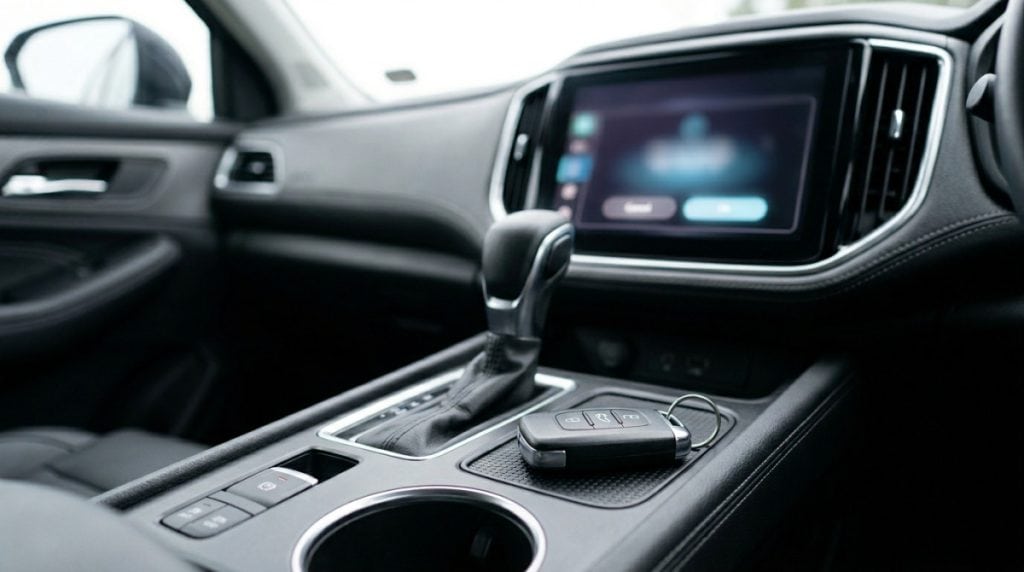
Be selective with phone syncing. Most people do not need their contacts, messages, and every possible permission sitting inside the car just to stream music or handle a call.
Use CarPlay or Android Auto thoughtfully. That is not some magic privacy shield, but it can reduce how much you rely on the automaker’s own native apps. Just remember your phone has its own privacy tradeoffs too.
Be cautious with usage-based insurance unless you really understand what is being collected and what you are getting back in exchange. Sometimes the discount may make sense. Sometimes it may not be worth the extra visibility into your driving.
And before you sell, trade in, or return a lease, do a full factory reset and remove the vehicle from your connected account. Seriously, do not skip that. You do not want to leave your profile, contacts, saved addresses, garage-door settings, routes, or remote access behind for the next owner like a digital leftovers box.
What This Means for Drivers in 2026
By this point, the bigger picture is pretty clear.
Your car is collecting more data than a lot of people realize, and by 2026 that is not some paranoid guess. It is spelled out in privacy notices, connected-service terms, and real enforcement actions.
The good news is that this stuff is finally becoming easier to see. Regulators are paying closer attention. Privacy controls are easier to find than they used to be. Some automakers are giving drivers more visibility than before.
So no, the move here is not panic.
It is awareness.
Check your app. Check your settings. Turn off what you do not use. Reset the system before the car leaves your hands.
You do not have to reject every connected feature to care about privacy. But in 2026, it is worth knowing what the tradeoff is before your car starts sharing a little more of your life than you ever meant to hand over.
Related Resources
- FTC final order involving GM and OnStar
- FTC background on unlawful collection and use of connected car data
- Ford privacy notice and connected vehicle guidance
- Toyota vehicle transmission data privacy portal
- Toyota Connected Services overview
- Tesla privacy notice
- NissanConnect terms and conditions
- Hyundai vehicle technologies and services privacy page
- Kia Connect privacy portal
- Colorado Privacy Act overview
- Office of the Privacy Commissioner of Canada on PIPEDA
- Sen. Wyden investigation on automaker data sharing with brokers
- Sen. Wyden and Sen. Markey on law enforcement access to automaker location data