Skip to content

That distinctive high-pitched whine coming from race cars isn’t just for drama. It’s the sound of straight cut gears transferring power in the most direct way possible. But before you start thinking about making your Civic sound like a Le Mans prototype, we should probably talk about what these things actually do and whether they’re worth the headache.
What Makes These Gears Different
Your daily driver uses helical gears in the transmission. These have teeth cut at an angle, maybe 15-30 degrees or so, that mesh gradually as they spin. It’s kind of like a spiral staircase – the contact point slides along the tooth as everything turns.
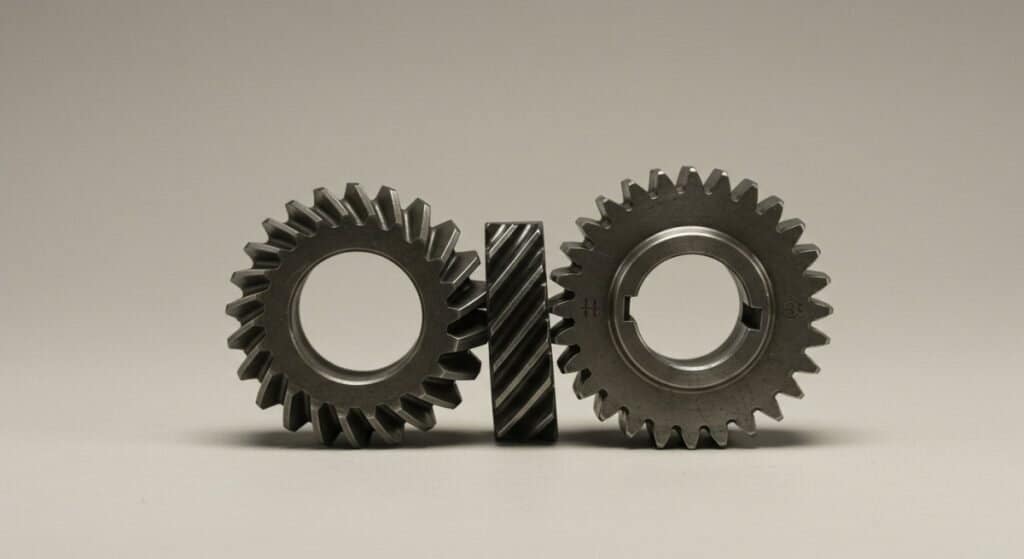
Straight cut gears are, well, straight. The teeth are cut perpendicular to the gear’s rotation. When they mesh, the entire tooth width hits at once instead of gradually.
Here’s something that blew my mind when I first learned it: your car already has straight cut gears. They’re in reverse gear. That’s why backing up sounds different and louder than going forward. Ever notice that? Yeah, that’s straight cut gears doing their thing.
Why They Sound Like That
The noise is pure physics. When helical gears mesh, those angled teeth create sliding contact that spreads the load and dampens vibrations. It’s smooth, like slowly pressing two pieces of corrugated cardboard together at an angle.
Straight cut gears just smack together with their full tooth width instantly. Think about slapping those same pieces of cardboard together flat. The vibrations travel through the transmission case and become that whine we all recognize.
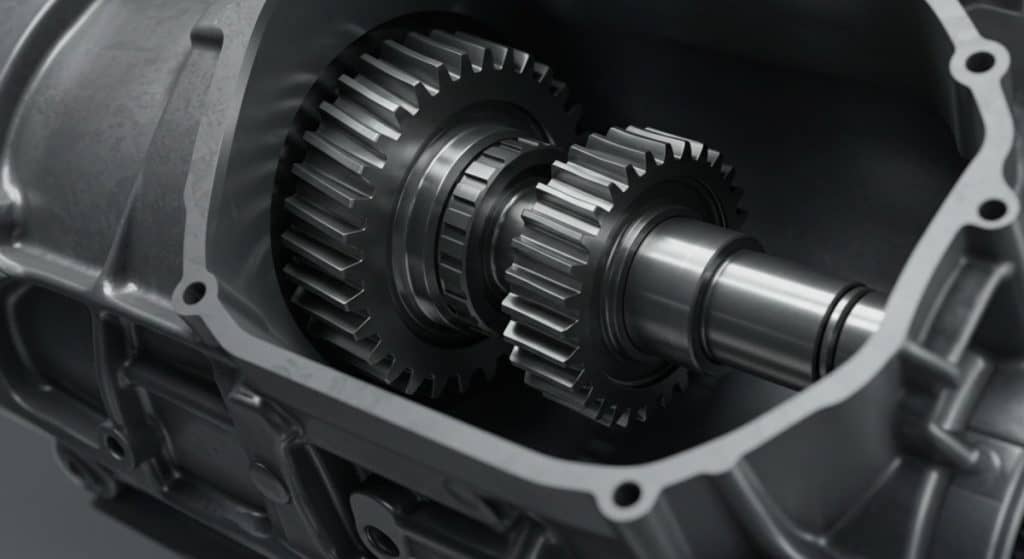
The sound changes with RPM, which is why the pitch goes up and down with engine speed. It’s not broken, it’s just physics being loud about it.
Why Anyone Would Want This
They’re more efficient. Helical gears create this sideways force called axial thrust that pushes gears along their shafts. You need thrust bearings to deal with that, which creates friction. Straight cut gears don’t have this problem. We’re talking maybe 2-3% efficiency improvement, which doesn’t sound like much until you’re pushing 500+ horsepower and every little bit counts.
They handle more torque. The whole tooth width engaging at once distributes the load better. Helical gears concentrate stress at one contact point that moves around. For high-torque stuff, straight cut gears just take more abuse before they give up.
They’re simpler. Fewer parts to deal with that axial thrust thing means fewer things that can break. This is why old transmissions and racing gearboxes often use them.
They’re actually cheaper to make. The cutting process is simpler – no fancy angled cuts needed. Though by the time you buy them as aftermarket parts, that advantage disappears pretty quickly.
Where You Actually See Them
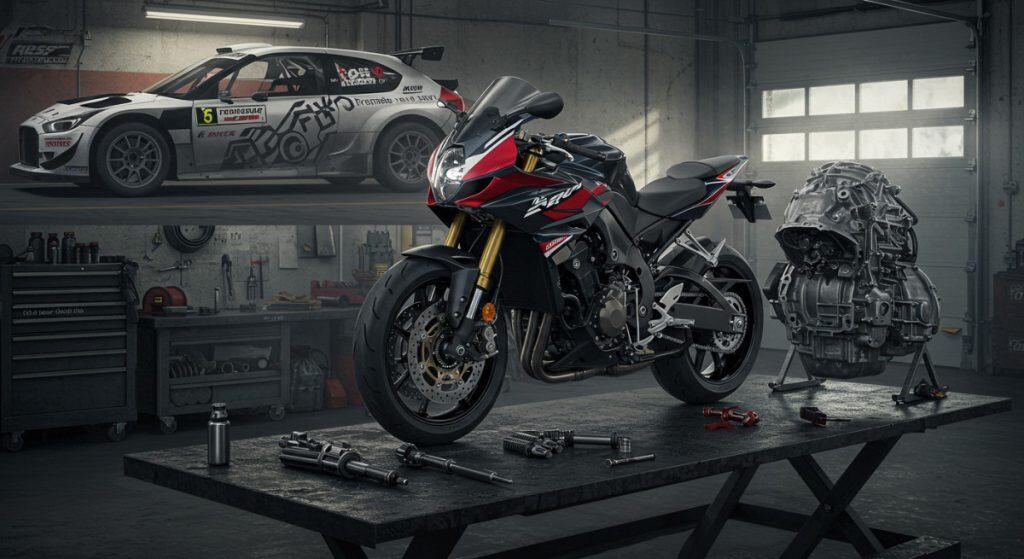
Racing transmissions use them all the time. Sequential gearboxes especially. When you’re shifting multiple times per lap and reliability matters way more than comfort, who cares about noise?
Dog box transmissions let you shift without the clutch and usually use straight cut gears. Popular in rally cars and time attack builds where quick shifts matter more than your passenger’s sanity.
Some truck transmissions use them in the lower gears where torque loads are ridiculous.
Motorcycles often have them in the primary drive, which is part of why sportbikes sound so mechanical.
Can You Actually Run Them on the Street?
There’s no law that says “thou shalt not use straight cut gears.” The federal government doesn’t care, and most state vehicle codes don’t mention transmission gear types.
But here’s where it gets complicated:
Noise ordinances in some cities have decibel limits, especially at certain hours. Your straight cut transmission could theoretically get you in trouble, though honestly, cops have bigger things to worry about unless you’re being a complete jackass about it.
Safety inspections in some states might flag unusual noises as mechanical problems. Even though straight cut gear noise is totally normal, the inspector might not know that.
Insurance weirdness is possible too. If you’re in an accident and some lawyer wants to claim your “modified racing transmission” contributed to it, you might have a headache on your hands.
Should You Actually Do This?
Maybe consider it if:
- You’re building a track-only car
- You’re doing a period-correct build of some old muscle car
- You’re building a serious drag car where every bit of efficiency actually matters
- You genuinely love the sound and understand what you’re signing up for
Definitely skip it if:
- You drive the car every day
- You care about passenger comfort (or keeping passengers at all)
- You live somewhere with noise restrictions
- You’re not already pushing serious power where the efficiency gains matter
The Money Reality
A straight cut gear set for most transmissions runs anywhere from $2,000 to over $5,000 just for the parts. Then you need someone to install them, which means tearing apart the transmission. Unless you’re doing it yourself, you’re looking at $3,000-8,000 total for most applications.
For that kind of money, you could probably get way more noticeable performance from turbocharging or a really good suspension setup.
Modern Compromises
Some companies make gear sets that split the difference – they reduce the helical angle without going fully straight. You get some of the strength benefits while keeping the noise somewhat manageable.
There are also sequential transmissions now that use modern manufacturing to be more refined than the old-school stuff while still giving you the durability benefits.
The Reality Check
Look, straight cut gears aren’t just about making cool noises. They’re a legitimate performance modification with real benefits in the right situations. But that “right situations” part is key.
For almost every street car, the downsides are bigger than the benefits. The efficiency gains are pretty minimal unless you’re making crazy power, and trust me, the noise gets really old when you’re stuck in traffic trying to have a phone conversation.

If you’re building something specifically for the track, or you’re already deep into performance mods and chasing every little advantage, then yeah, straight cut gears make sense. Otherwise, just enjoy the sound when you hear it at the track and appreciate how nice and quiet your regular transmission is.
I drove a friend’s rally car with a dog box once. The sound was absolutely addictive for about twenty minutes. Then we hit traffic on the way home and I understood why it wasn’t his daily driver.