 Skip to content

If you’ve been browsing for a new SUV or crossover lately, you’ve probably noticed something interesting. More and more models, even ones with gas engines, are skipping the old-school all-wheel drive setups. Instead, they’re using electric motors to drive the rear wheels. It’s not just EVs doing this—hybrids like the Toyota RAV4 and Ford Escape are in on it too.
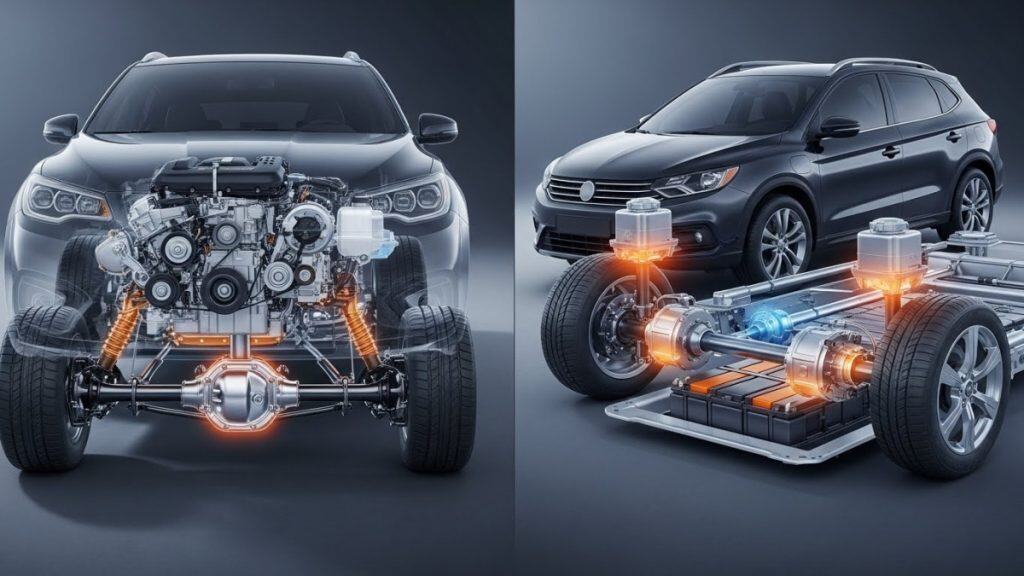
This isn’t just a gas vs. electric debate. What we’re looking at here is a whole new approach to how your vehicle gets power to all four wheels.
Traditional AWD relies on mechanical parts like driveshafts, differentials, and transfer cases to push power from front to rear. Electric AWD (or E-AWD) takes a different route: it simply drops a separate electric motor at the back. Less hardware, less complexity—at least on paper.
But which is better? That depends on how you drive, where you live, and what you expect from your car. So let’s break it down: how both systems work, how they compare in real-world conditions, and which one makes more sense for you.
How They Work (Without the Engineering Jargon)
At the heart of this comparison is one question: how does power reach the rear wheels?
Mechanical AWD: The Classic Setup
This is the system most people grew up with. The engine, usually in the front, sends power to the rear through a long driveshaft underneath the car. A central differential splits power between the front and rear axles.
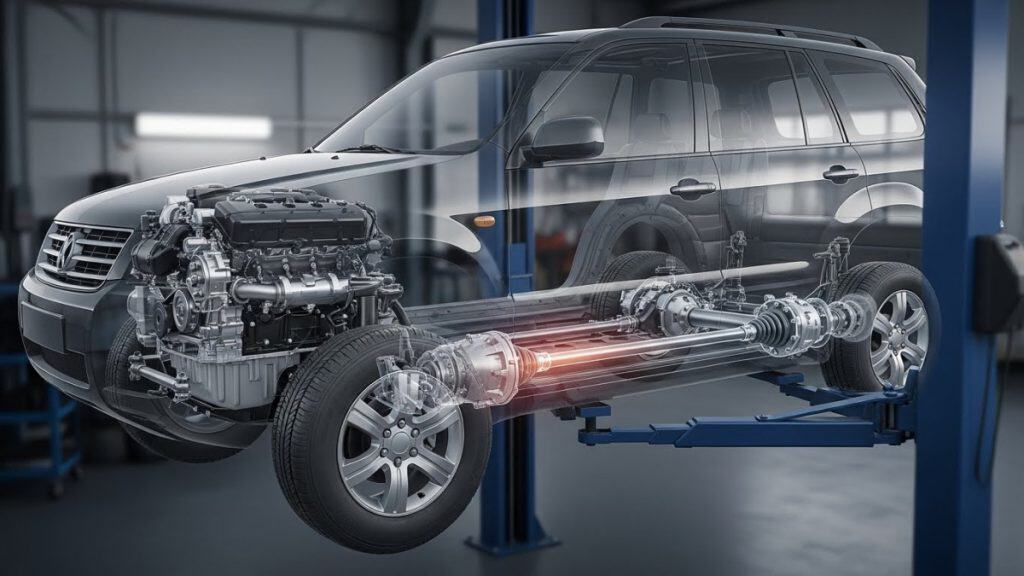
Some vehicles—like Subarus and Audi Quattros—use full-time AWD, where all four wheels are always driven. It’s simple, effective, and instant. But it’s also heavy, and all those spinning parts mean more drag and lower fuel efficiency.
Others, like older RAV4s or CR-Vs, use on-demand systems. They start in front-wheel drive and only send power to the rear when the front wheels slip. It saves fuel but introduces a slight delay—typically 100 to 200 milliseconds—before the rear wheels engage.
E-AWD: A Smarter, Quicker System
E-AWD skips the mechanical link entirely. Instead, there’s a motor up front and another motor at the back. Each axle operates independently but can work together when needed.
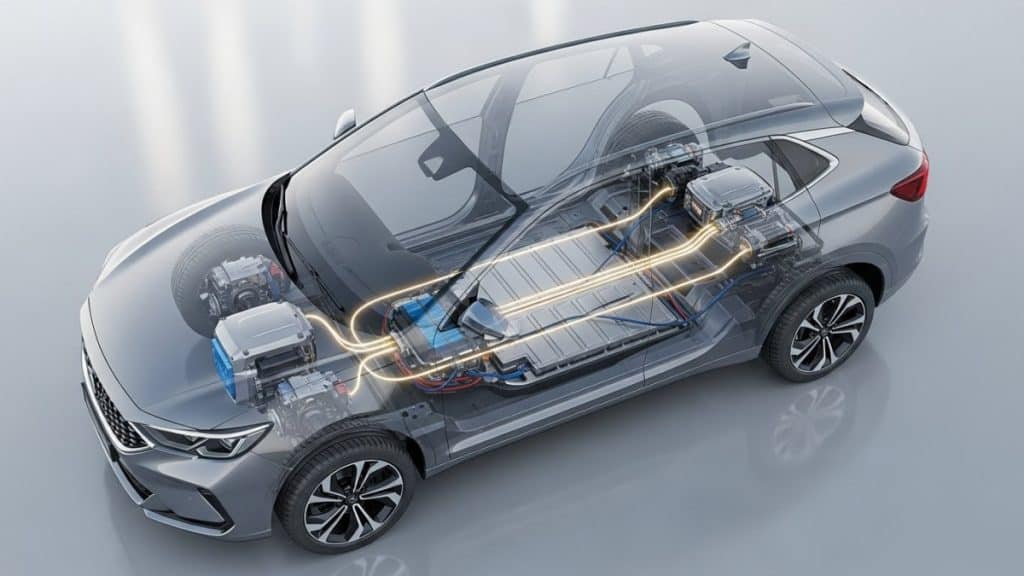
In hybrids, the gas engine powers the front wheels, while a small electric motor handles the rear. In EVs like the Tesla Model Y or Hyundai Ioniq 5, you get dual motors—one for each axle—fed by a central battery.
These systems can react in 10–20 milliseconds, much faster than mechanical setups. And since there’s no driveshaft, you get a flatter floor inside and better packaging overall.
Real-World Performance: Traction, Handling, and Safety
Now, let’s talk about what happens when the road gets slippery or you need to make a quick maneuver.
Reaction Time Matters
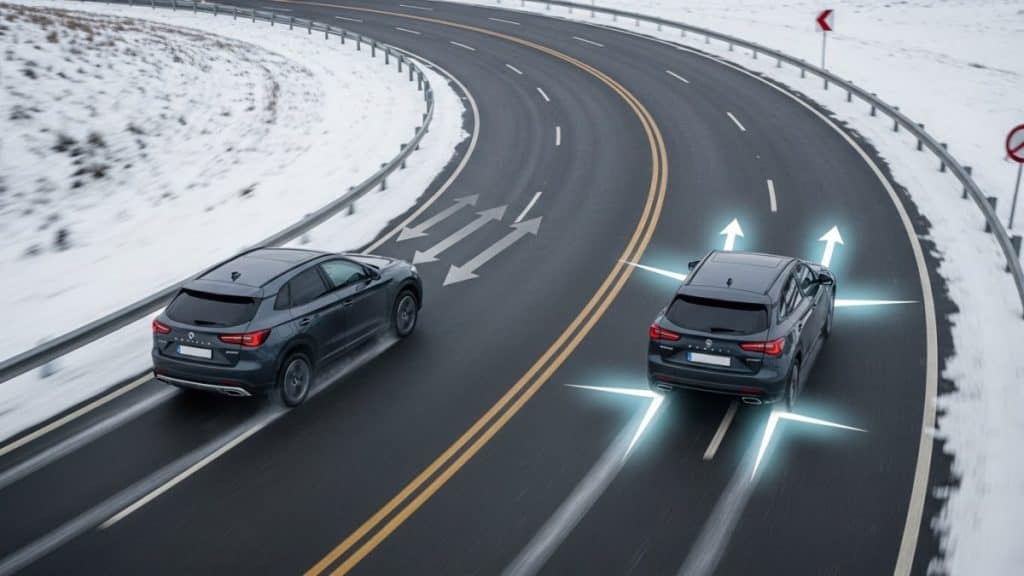
Mechanical on-demand AWD needs time to respond. Slip happens, sensors detect it, a clutch engages, and power moves rearward. It works, but it takes precious milliseconds.
E-AWD reacts almost instantly. Because there’s no need to build hydraulic pressure or engage a clutch, the rear motor can jump in immediately. That can be the difference between recovering from a skid or spinning out.
Torque Vectoring Done Right
Torque vectoring—sending more power to one wheel to improve cornering—is another area where E-AWD shines.
Mechanical systems often fake it by using the brakes on one wheel. E-AWD can just dial back power on one motor and increase it on another. It’s cleaner, faster, and doesn’t waste energy.
This is how a heavy EV can feel nimble in corners, and why vehicles like the Tesla Model Y perform so well in emergency maneuvers like the Moose Test.
Fuel Economy and Efficiency
Here’s where E-AWD really pulls ahead: it’s just more efficient.
Mechanical systems waste energy through friction and rotating mass. Even when they try to disconnect the rear axle, parts are still spinning. That drag adds up.
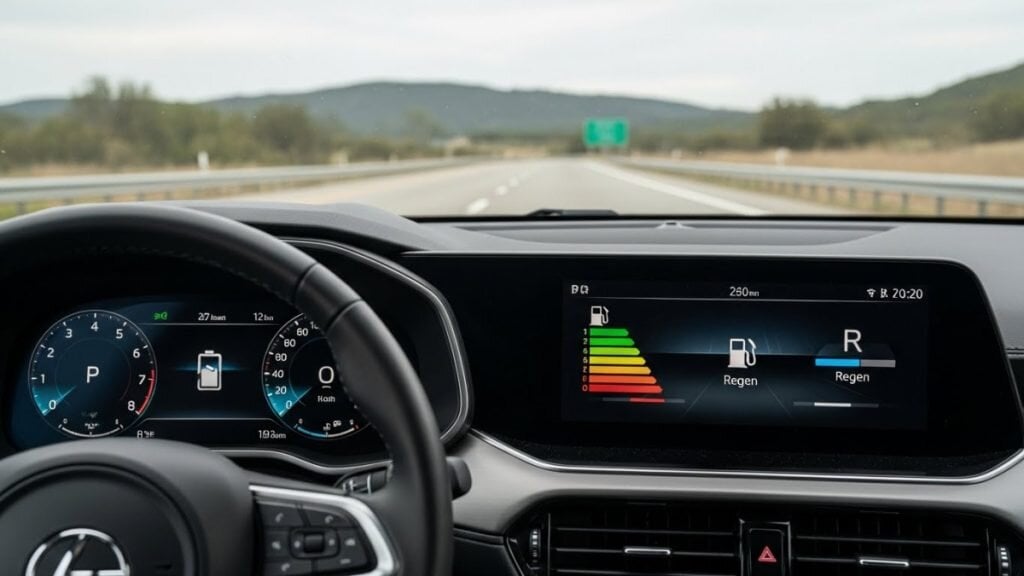
E-AWD systems only use the rear motor when needed. When cruising, it simply shuts off. Less drag, less fuel burned (or battery drained). Regenerative braking adds even more efficiency by capturing energy that would’ve been lost as heat.
For example, the Toyota RAV4 Hybrid with E-AWD gets over 40 mpg combined. Its gas-only counterpart with mechanical AWD? Around 28 mpg.
When Mechanical AWD Still Wins
Despite all the advantages of E-AWD, there are still situations where the old-school setup is better.
If you’re heading deep off-road, crawling over rocks, or pulling serious weight through tough terrain, mechanical AWD is more robust. It handles heat better, offers low-range gearing, and supports physical locking differentials. These are things electric motors struggle with—especially when traction is low and wheel spin is high.
Subaru’s full-time AWD, Jeep’s low-range systems, and vehicles like the Ford Bronco are built for these extremes.
Winter Driving: A Closer Call
For icy commutes and snowy roads, both systems perform well—but in different ways.
Subaru’s always-on AWD gives you constant traction and a predictable feel. It’s trusted in the snow belt for good reason.
E-AWD, on the other hand, reacts faster and can correct a slide before you even notice it. But it may lack the raw traction of a true mechanical system in deep, unplowed snow—especially if it’s paired with low-rolling-resistance tires made more for efficiency than grip.
A lot of E-AWD vehicles have snow modes that reduce regenerative braking to avoid traction issues. But you need to remember to activate them.
Maintenance and Long-Term Costs
This is where things flip again.
Mechanical AWD has more fluids to change, more moving parts to wear out, and stricter tire-matching requirements. Over 150,000 miles, fluid changes and drivetrain wear can easily cost you $2,000–$3,000. A single tire replacement might mean buying four new ones if they’re too unevenly worn.
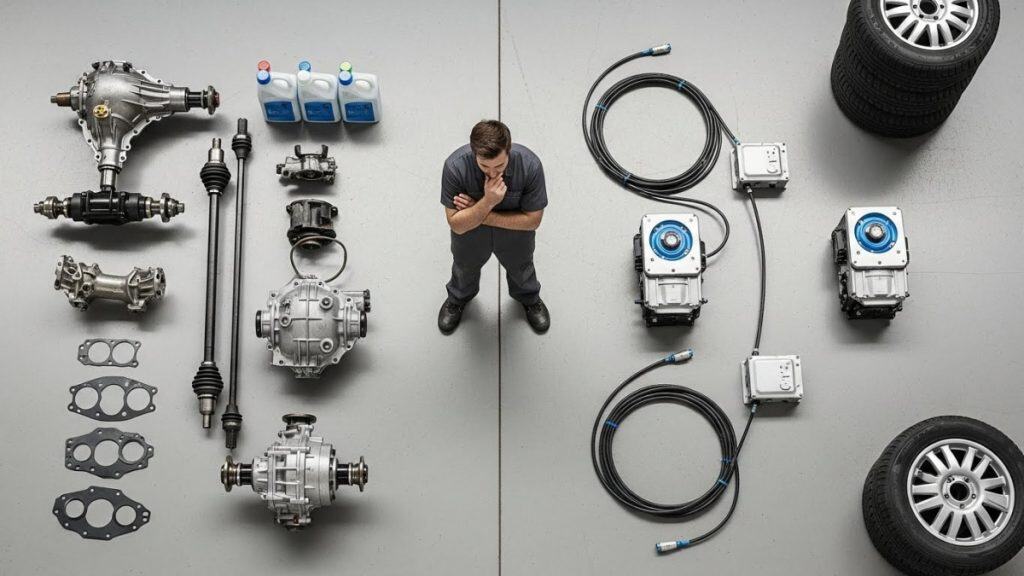
E-AWD skips most of that. There’s no driveshaft, no transfer case, and far fewer scheduled services. But tire wear is higher due to vehicle weight and torque delivery—expect to change them more often. And when something breaks? Repairs are often more expensive and harder to do outside of a dealership.
A Real Comparison: RAV4 Hybrid vs Subaru Outback
These two vehicles show the trade-offs perfectly.
The RAV4 Hybrid uses E-AWD, gets stellar fuel economy (40+ mpg), and handles most road conditions with ease. It’s a fantastic daily driver, especially for city and suburban use.
The Subaru Outback, with its mechanical AWD, is better suited for rough winters, off-grid adventures, or rural areas. It’s more predictable in deep snow and offers that mechanical confidence when things get really slippery.
So, Which Should You Choose?
Here’s a simple way to think about it:
Go with Mechanical AWD if you:
- Live in an area with heavy snow or poor road maintenance
- Plan to go off-road or tow frequently
- Prefer long-term durability and DIY-friendlier systems
Go with E-AWD if you:
- Drive mostly on pavement with the occasional snowy day
- Want better fuel economy or EV-level efficiency
- Appreciate more space inside and smoother everyday performance
Most people never push their AWD system to the limit. So unless you’re regularly facing extreme conditions, E-AWD will likely serve you better—and cost you less over time.
The Future is Electric (Mostly)
The shift toward E-AWD isn’t slowing down. Automakers are building new platforms around electric motors and battery packs. That means fewer mechanical parts, more packaging freedom, and better efficiency.
Mechanical AWD isn’t going extinct, but it’s becoming a niche—reserved for hardcore trucks, off-roaders, and specialty vehicles.
For everyone else? E-AWD is becoming the new normal.





What is the main difference between E-AWD and mechanical AWD systems?
Mechanical AWD sends power to the rear wheels using a driveshaft and differentials. E-AWD has no driveshaft, it uses a separate electric motor to drive the rear wheels.