Skip to content

Before we dive into decades of surface chemistry and evolution, let’s break it down to basics. What exactly are we comparing here?
What Is a Ceramic Coating?
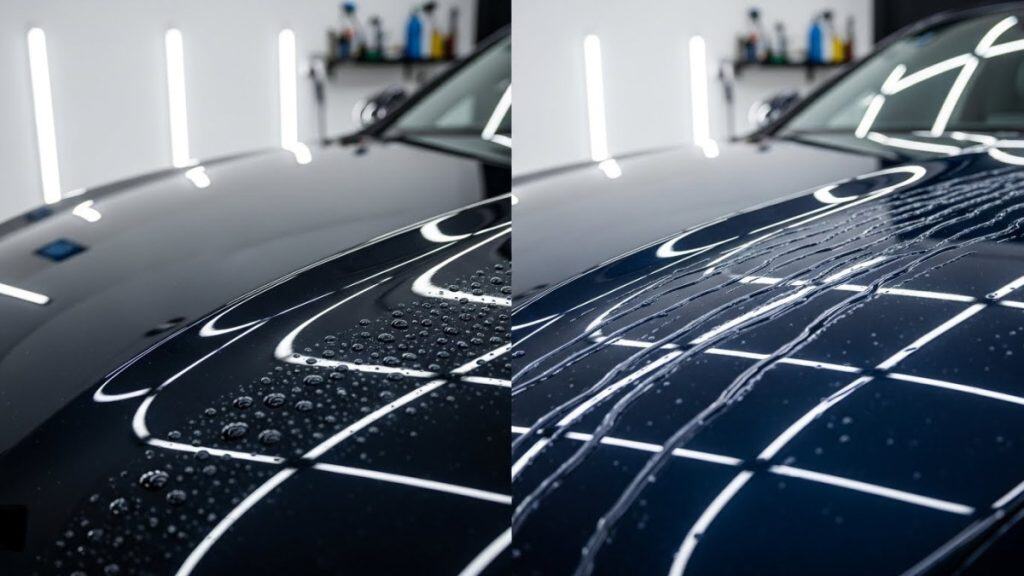
Ceramic coatings are liquid polymers that chemically bond with your car’s clear coat. Their backbone is silicon dioxide (SiO₂), essentially the same compound as quartz or glass. When applied properly, it hardens into a crystalline shell that protects the paint underneath.
Think of it as:
A glass-like shield that gives your car high gloss, repels water, and protects against UV rays, bird droppings, and minor chemical damage.
Common example:
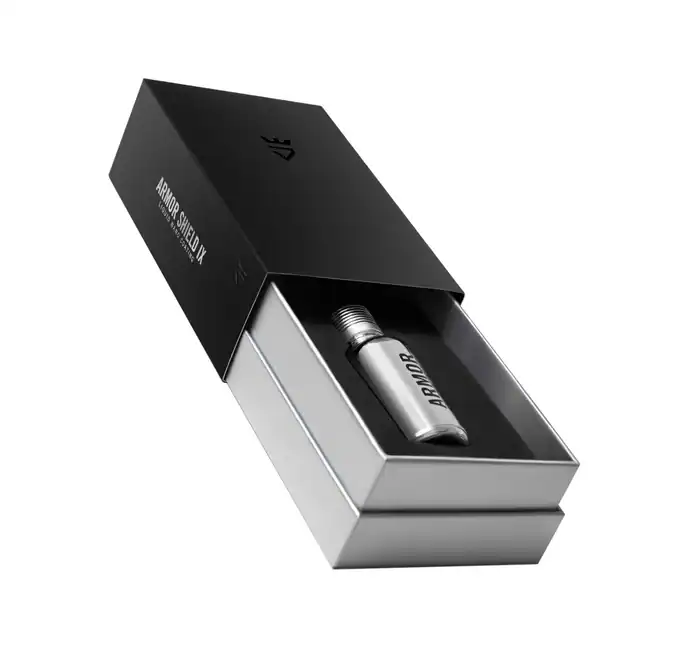
The popular Armor Shield IX by AvalonKing, a trusted SiO₂-based ceramic coating that lasts 2 to 5 years.
What Is a Graphene Coating?
Graphene coatings are an advanced evolution of ceramic coatings. They’re not a totally different category. They are ceramic coatings infused with reduced graphene oxide (rGO). This nanoscale carbon material provides flexibility, anti-static properties, and improved water-spot resistance.

Think of it as:
A reinforced ceramic that keeps dust off better, sheds water more efficiently, and is more durable in tough environments.
Common example:
Adam’s Graphene Ceramic Coating Advanced, a leading product that uses graphene to reduce static cling and increase longevity.
Historical Context and Technological Evolution
To understand the comparative merits of graphene and ceramic coatings, it helps to see how we got here. The trajectory of this industry has been defined by a constant pursuit of three variables: durability, hydrophobicity, and gloss.
The Era of Waxes and Sealants
For most of the 20th century, automotive protection meant carnauba wax. Sourced from palm leaves, it delivered a deep, warm glow that enthusiasts still love today. But it didn’t last. Carnauba starts breaking down around 85°F (29°C) and typically wears off in 6 to 8 weeks on a daily driver.
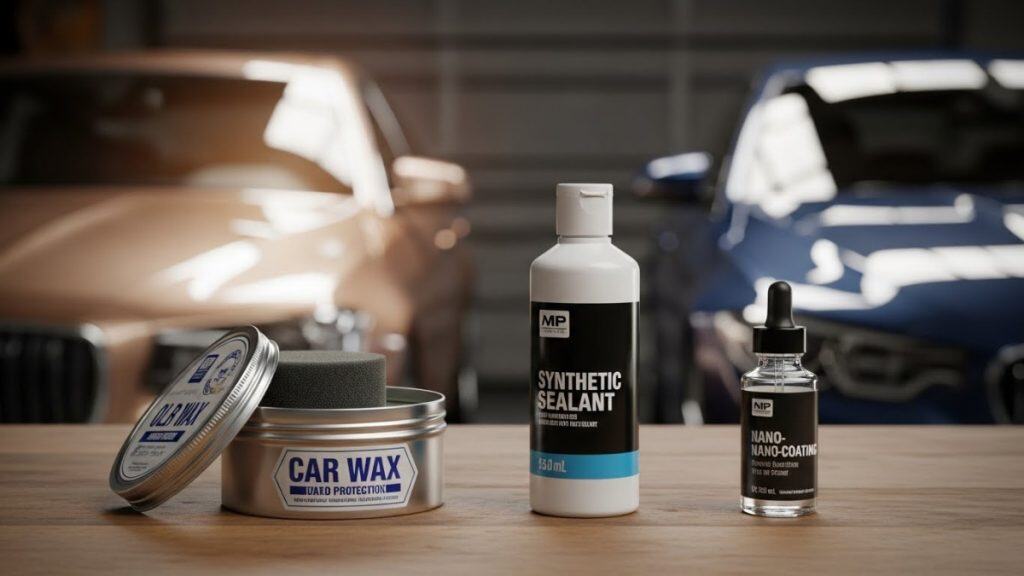
The 1970s and 1980s brought in synthetic sealants, polymer-based formulas that bonded better and lasted longer (4 to 6 months). But even these were still temporary, sacrificial layers that detergents and abrasion could easily strip.
The Nanotechnology Revolution: Silicon Dioxide (SiO₂)
By the early 2010s, ceramic coatings changed the game. These products relied on sol-gel chemistry, liquid silanes or siloxanes that react with moisture in the air and the hydroxyl groups on your paint’s surface to form a permanent bond.
When cured, they crystallize into a nano-thin layer of hardened quartz (SiO₂). This coating becomes a transparent shell over your paint that lasts years instead of months.
The big leap:
- Longevity: 2 to 5 years of durable protection
- Hydrophobicity: Water beads and rolls off easily
- Chemical resistance: Protects against acids, salts, and bird droppings
But there’s a catch:
Silica is rigid and a thermal insulator. That beautiful water beading can actually magnify the sun’s heat through droplets, accelerating water spotting. It’s also prone to cracking under stress and doesn’t flex with panel movement.
The Introduction of Graphene (2019 to 2026)
Graphene is a single layer of carbon atoms arranged in a honeycomb lattice, stronger than steel by weight and highly conductive. Isolated in 2004, it first entered the detailing world around 2019 amid wild marketing claims and confusion.
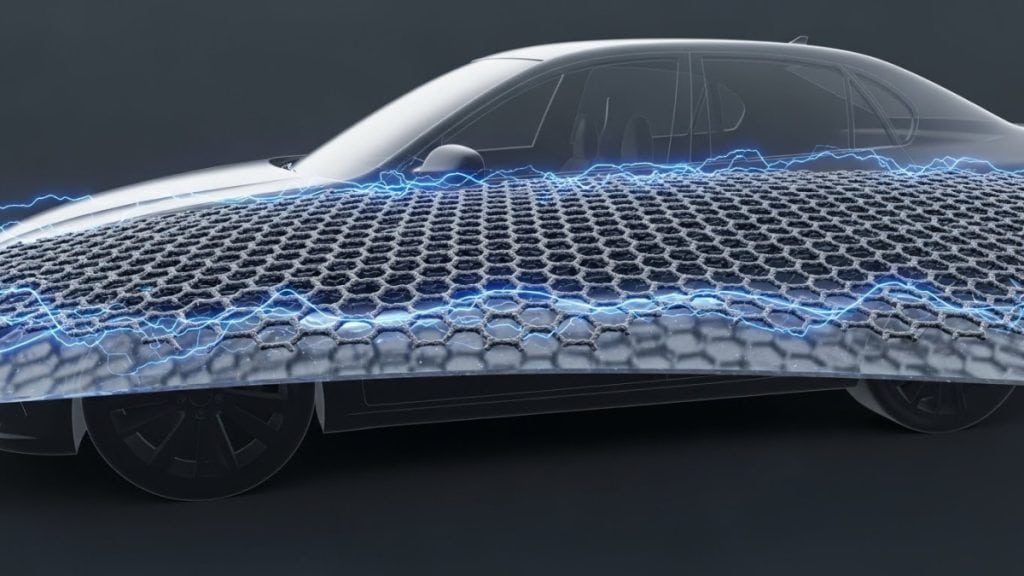
Early “graphene” coatings often used graphene oxide (GO), which is water-soluble but hydrophilic and non-conductive. The more functional version is reduced graphene oxide (rGO), stripped of oxygen groups, making it hydrophobic and electrically conductive.
By 2026, top-tier coatings use rGO as a reinforcing agent in ceramic formulas. It acts like rebar in concrete, adding flexibility and resilience to the otherwise brittle ceramic shell.
Chemical Architecture and Material Science
Understanding what makes graphene and ceramic coatings different requires looking at how they’re built, down to the molecular level.
Ceramic Coatings: Crystalline but Brittle
Traditional ceramic coatings form a 3D crystalline lattice of silicon dioxide (SiO₂). They bond chemically with your paint’s clear coat using the pores in the surface as anchor points.
How they work:
- Carried by solvents that flash off after application
- Cross-linking creates a dense, glass-like shell
- Rated up to 9H on the pencil hardness scale
Downside:
That rigidity is a double-edged sword. It doesn’t flex well with panel expansion or vibrations. And water beads, while pretty, can sit too long and “bake” minerals into the surface, causing water spots.
Graphene Coatings: Flexible Composite Shield
Graphene coatings aren’t pure graphene layers. They’re graphene-infused ceramic coatings, combining a ceramic resin base with dispersed rGO particles.
Why this matters:
- Graphene oxide (GO) is reduced into rGO, restoring its water-repelling and conductive properties.
- These rGO particles form a 2D honeycomb barrier within the 3D ceramic matrix, creating a path that contaminants must weave through to reach the paint.
The result? Better chemical resistance and flexibility.
Bonus: Graphene’s carbon lattice allows the coating to expand and contract with temperature changes without cracking, making it more durable in the long run.
Side-by-Side Comparison
| Property | Traditional Ceramic (SiO₂) | Graphene Coating (rGO + Ceramic) |
|---|---|---|
| Base Material | Silicon Dioxide | Ceramic Resin + rGO |
| Structure | 3D Crystal Lattice | 2D Graphene dispersed in 3D Matrix |
| Flexibility | Rigid | High Tensile Strength |
| Static Buildup | Attracts Dust | Anti-Static (Conductive) |
| Thermal Property | Retains Heat | Dissipates Surface Heat Micro-Locally |
| Water Sliding Angle | High (leaves beads) | Low (water rolls off faster) |
Real-World Performance: What Actually Changes for Car Owners
By 2026, both ceramic and graphene coatings offer strong protection. Where they differ is how they behave in real life. Let’s break it down.
Water Behavior: Contact vs. Sliding Angle
We’ve all seen those dramatic water beads on freshly coated paint. But the real performance difference isn’t how tall the bead is. It’s how fast it slides off.
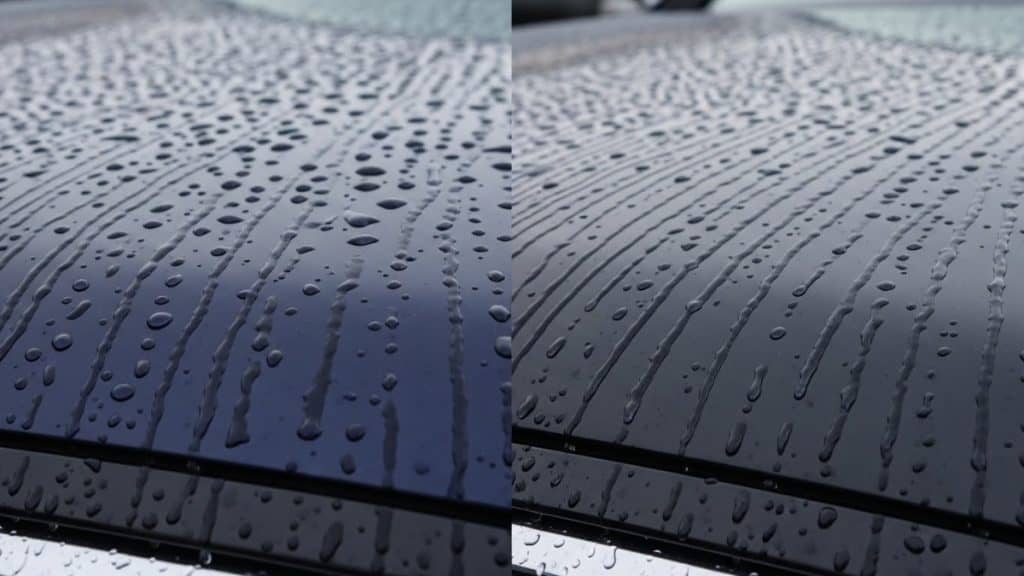
Ceramic coatings typically boast high contact angles (110°+), which creates those rounded water beads. But the sliding angle, how steep a surface needs to be before water rolls off, is relatively high. That means beads can stay put and evaporate, causing spots.
Graphene coatings also have high contact angles, but the sliding angle is much lower (10° to 15°). Water evacuates faster, meaning fewer chances for mineral deposits to dry and etch into the paint.
Why it matters:
Lower sliding angle = less water contact time = fewer water spots.
Heat Dissipation: The Truth Behind the Buzz
Marketing loves to say graphene “reduces surface temperature.” But what’s real?
Reality: Yes, graphene has exceptional thermal conductivity. But in coatings just 1 to 2 microns thick, that doesn’t cool down your hood in the summer sun.
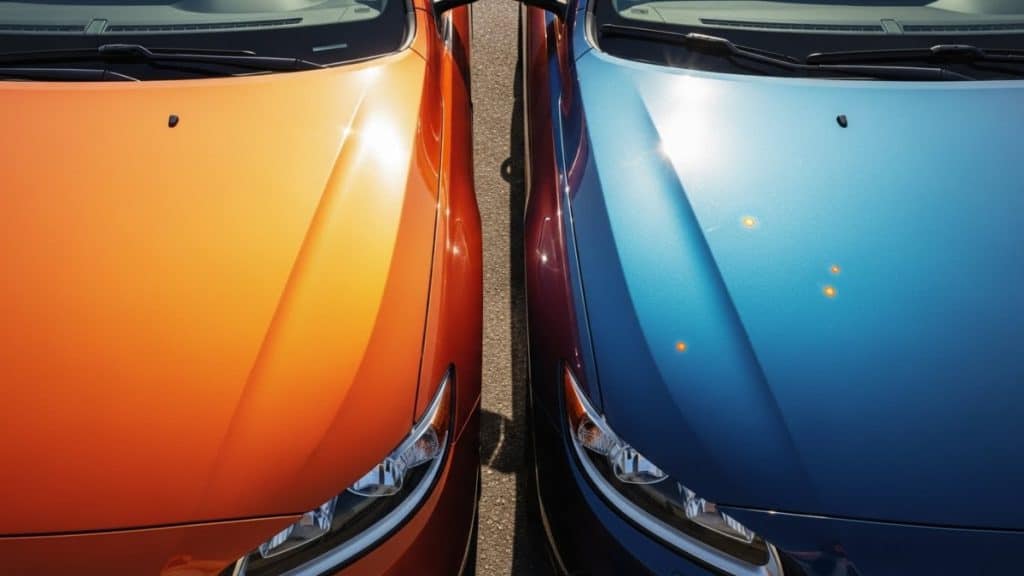
What it does: Graphene helps distribute localized heat at a micro level. That protects the coating itself from hot spots that could accelerate breakdown, but it won’t make your car’s surface noticeably cooler to the touch.
Dust Repelling: The Anti-Static Edge
If you’ve noticed your ceramic-coated car collecting dust like a magnet, you’re not imagining it.
Ceramic coatings are electrical insulators. As your car drives through air, static builds up, and it attracts dust.
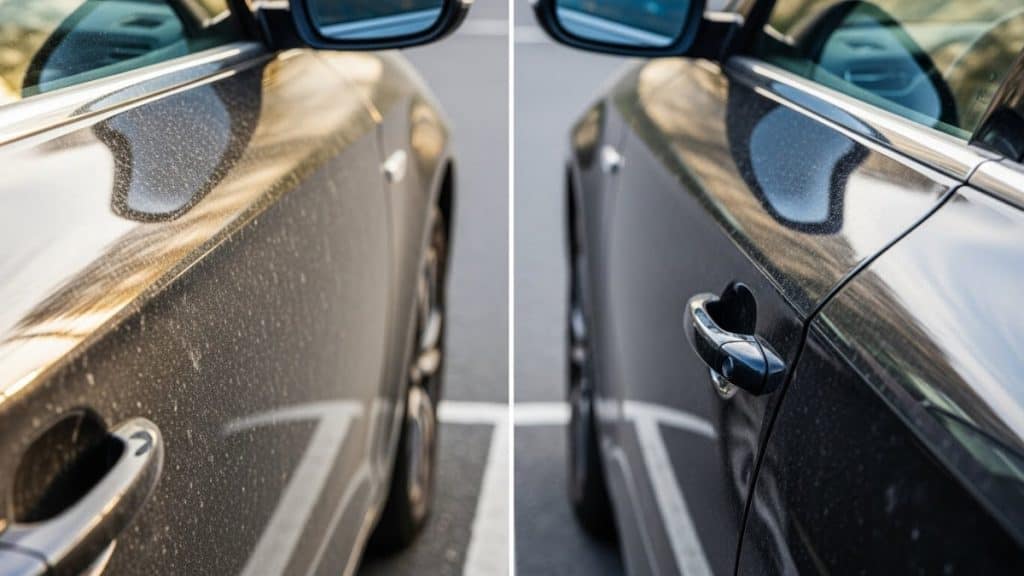
Graphene coatings conduct electricity, even in thin layers. That means static discharges harmlessly, and dust doesn’t cling as easily.
Real-world takeaway:
Graphene-coated cars, especially dark ones, tend to look cleaner for longer between washes.
Durability and Lifespan
How long do these coatings actually last?
- Ceramic coatings: 2 to 5 years for consumer and pro-grade products.
- Graphene coatings: Real-world data (now that it’s 2026) supports 5 to 9+ years, especially when using rGO-based formulas.
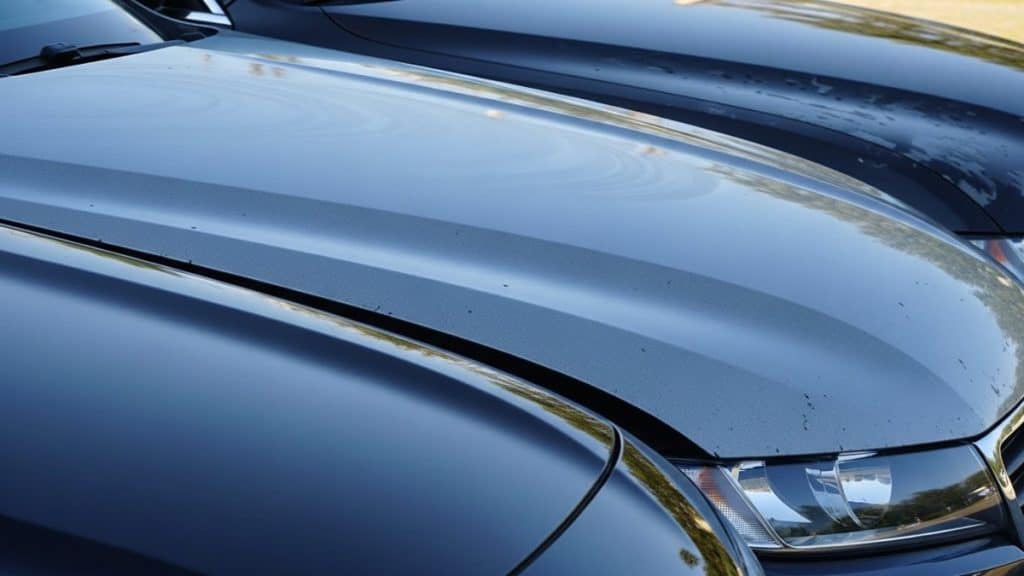
Graphene’s flexibility helps it resist micro-cracking from thermal cycles or light abrasions better than traditional ceramic. Plus, it’s more chemically resistant, handling both acidic and alkaline exposures (think bird droppings, road salts, harsh soaps).
Application Experience: DIY and Pro-Level
Whether you’re a weekend warrior or a detailing professional, the way a coating behaves during application matters.
Ceramic coatings flash quickly (30 to 90 seconds). The tell-tale “rainbow” effect shows it’s time to level (wipe). Miss that window, and you’re polishing off hardened high spots.
Graphene coatings generally offer a longer working time (1 to 3 minutes). Instead of a rainbow, many now use a “sweating” effect. Beads form as the solvent separates. This is easier to spot, especially under poor lighting, and makes application more forgiving.
Bonus for DIYers: Some graphene products include UV tracers. You shine a UV light to check coverage. No more guessing if you missed a spot on that white paint.
Cost Breakdown: Is the “Graphene Tax” Worth It?
Graphene coatings used to cost 50% to 100% more. By 2026, the market has matured:
| Product Type | Approx. Cost | Longevity | Cost/Year |
|---|---|---|---|
| Ceramic (Consumer) | $60 to $90 | 2 to 3 years | ~$25/year |
| Graphene (Consumer) | $80 to $110 | 5 to 7 years | ~$14/year |
| Ceramic (Pro Installed) | $1,000+ | ~5 years | N/A |
| Graphene (Pro Installed) | $1,200+ | 7 to 9 years | N/A |
Graphene’s upfront cost is slightly higher, but it lasts longer and saves you labor time if you’re applying it yourself.
Who Should Choose What?
Go Graphene If:
- Your car sits outside a lot.
- You hate dust and water spots.
- You want the longest-lasting protection with minimal maintenance.
Stick With Ceramic If:
- Your car lives in a garage.
- You love a crisp, glass-like look under showroom lighting.
- You’re detailing a show car or a weekend toy.
Final Verdict
Graphene coatings have gone from overhyped buzzwords to proven contenders. They’re not magic, but they solve real problems that ceramic coatings introduced, particularly around water spotting and static dust buildup.
If you’re using your vehicle in the real world, commuting, parking outdoors, and dealing with unpredictable weather, graphene is the smarter, more durable, and more forgiving option.
But ceramic coatings aren’t obsolete. They’re still a fantastic solution for high-gloss aesthetics and trusted performance, especially for garage queens or budget-focused DIYers.
Bottom line? Know how you use your car, and choose the tech that fits your needs. Both have their place. But in 2026, the edge, practically speaking, goes to graphene.
Check out my blog for more car care tips to make your life easier. I also have some products that I highly recommend.