 Skip to content

(Updated June 2026: Refreshed BBS ownership context, clarified OEM vs aftermarket wheel safety, added fitment checks, and expanded the Enkei vs BBS buying verdict.)

Buying a new set of wheels can be daunting. If you’re upgrading to aftermarket wheels, then there’s a lot to consider. For people who are shopping for high-quality, performance-grade wheels, there’s a good chance you’ve come across Enkei and BBS wheels.
Both BBS and Enkei specialize in performance OEM and aftermarket wheels. They offer lightweight, high-strength, aesthetically pleasing wheels in the performance wheel sector. They’re a lot more expensive than standard consumer-grade wheels. Both companies have been operating for decades, and they have a lot of respect in the wheel industry.
Quick Answer: Is Enkei or BBS Better?
Neither brand is automatically better for every driver. Enkei is usually the better value if you want lightweight, proven performance wheels without paying top-tier forged-wheel prices. BBS is usually the more premium choice if you want motorsport heritage, high-end styling, and forged or premium multi-piece options.
For most street cars, track-day builds, and budget-conscious enthusiasts, Enkei makes a lot of sense. For show builds, high-end European cars, collectors, and buyers who specifically want the BBS look or forged construction, BBS is hard to beat.
The better choice depends less on the brand name and more on the exact wheel model, construction method, size, offset, load rating, brake clearance, tire choice, and how you drive the car.
In this guide, I’m going to talk about both brands. They’ve done a lot for the car world. In this guide, I’ll explain who they are, what they do, some tips for buying wheels, and all about these massive players in the wheel market.
Enkei Wheels
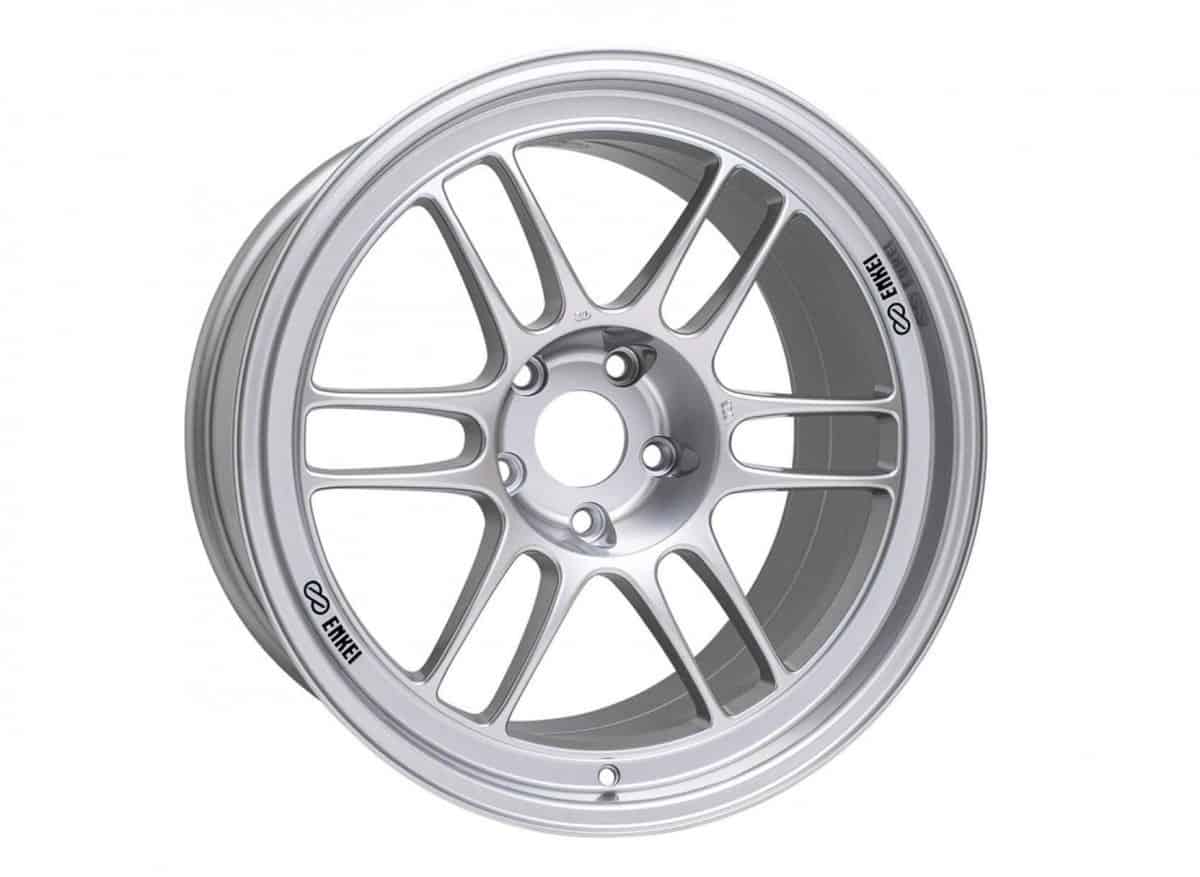
Pronounced as “N K” in English, Enkei is a Japanese titan in the wheel business. They opened their doors in 1950, and they’ve always focused on making high-quality, lightweight, performance-grade wheels.
On their site, Enkei claims to be the number-one aluminum wheel company in the world, and that’s easy to believe. They have a huge catalog, and they make nearly 70,000 wheels every day.

BBS Wheels
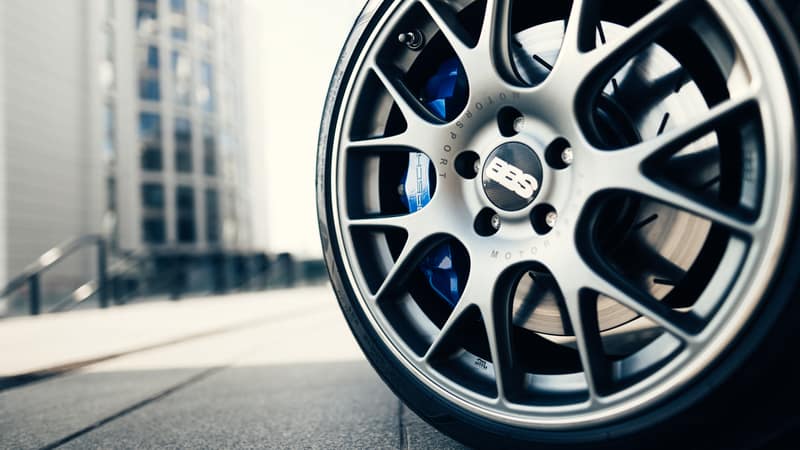
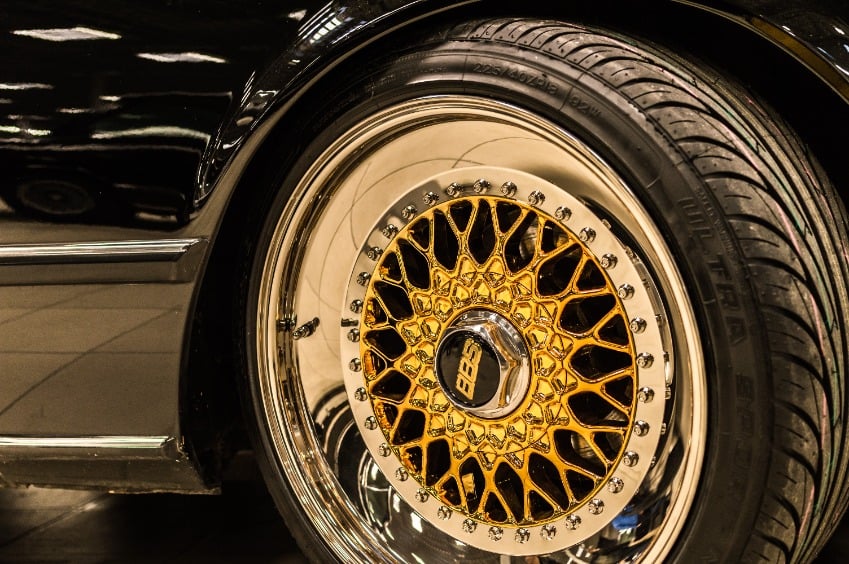
BBS is a high-performance wheel company that started in Schiltach, Germany in 1970. It was started by two guys named Heinrich Baumgartner and Klaus Brand, and they named the company after their last names and the city they started in (Baumgartner, Brand, Schiltach). Thus, BBS was born.
They went public in 1987 and filed for bankruptcy in 2007. After bankruptcy, BBS went through several ownership and restructuring changes. The company’s recent history can be confusing because the BBS name, BBS Motorsport, BBS Japan, and regional distribution are not always the same thing. For buyers, the important point is that BBS remains one of the most recognized wheel names in motorsport, OEM applications, and aftermarket car culture.
OEM vs Aftermarket
With your car’s wheels, you can choose between OEM and aftermarket parts. Most people will stick with OEM options because it’s easier and it’s a guaranteed fit. I want to talk through these two terms because they’ll come up a lot.
OEM stands for “original equipment manufacturer”. For a company to offer OEM parts, it means that they have to build all of their parts to tight specs. Honda itself doesn’t need to make the OEM wheels for your car, but the manufacturer needs to go through Honda’s inspection and engineering requirements to label them as such.
When you buy OEM wheels, you’re getting a guarantee that they fit your specific car, since the dimensions will be identical to the wheels that were on your new car when you bought it.
Aftermarket wheels are not automatically a bad thing. Some aftermarket wheels are stronger, lighter, and better-looking than factory wheels. The problem is that aftermarket quality varies a lot. A reputable brand will publish specifications like size, offset, bolt pattern, center bore, load rating, construction type, and sometimes safety certifications or testing standards. A no-name wheel with vague specs is where things get sketchy.
Looking at wheels specifically, the aftermarket options can be hit or miss. Some companies take a lot of pride in their wheels, and they go the extra mile to make the best possible product. Others will opt for inexpensive materials, bad business practices, and make wheels that are untrustworthy.
As a result, most people will shop for wheels based on the manufacturer. If a brand has good credibility and a good track record, then its wheels are probably good.
I can say with confidence that Enkei and BBS both have a very impressive pedigree. They’re reputable brands, and people trust their wheels.
With OEM options, you don’t need to think about your decision. There’s only one choice.
What to Check Before Buying Enkei or BBS Wheels
Before choosing either brand, make sure the wheel actually fits your car. Check:
- Diameter and width: The wheel size needs to match the tire setup and vehicle clearance.
- Bolt pattern: The lug pattern must match your hubs.
- Offset: Too much or too little offset can cause rubbing, poor fitment, or odd handling.
- Center bore: Hub-centric fitment is usually preferred over relying only on lug nuts.
- Load rating: The wheel must be rated for the weight of your vehicle.
- Brake clearance: Big brakes may need specific spoke shapes or barrel clearance.
- Tire size: The wrong tire can ruin the fitment even if the wheel technically bolts on.
- Use case: Street, track, show, winter, and daily driving setups do not always need the same wheel.
Rims vs Wheels vs Hubcaps
Just so we’re on the same page, I want to quickly define rims, wheels, and hubcaps.
A wheel is the full metal part. It includes the lug nuts, spokes, cylinder, and lip.
A rim is just the u-shaped edge that keeps the rubber tire in place, once installed. The rim is not the face that you see when you look at the side of a car, those are the spokes (which are part of the wheels). People commonly mistake these two terms.
Hubcaps are just aesthetic discs that pop into the hub of a wheel and add some style. They’re typically made of plastic and they’re designed to emulate alloy spokes, and they’re used when a manufacturer uses inexpensive and bland-looking wheels.
Why Your Wheels Matter
Have you ever thought about how important your wheels are? For reference, the wheels are the metal part that contacts your rubber tires.
The rubber tire gets sealed against the metal wheel, and then they’re installed on your car.
Aesthetics
Wheels can make or break the final look of your car. Inexpensive wheels can make the rest of your car look inexpensive when you view the car from the side.
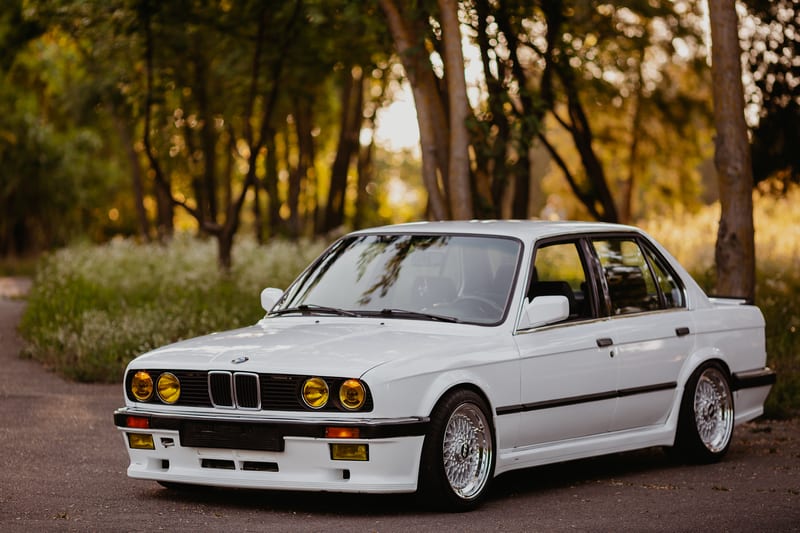
There’s something undeniably great about a nice pair of wheels on a car. Even a decent car like a Camry can come to life when you upgrade the wheels. Suddenly it looks like a 5-series BMW.
It can also shift the aesthetic of your car to something sportier, flashier, more luxurious, or something lower profile.
From the side of your car, there are only so many features that have an impact on how the vehicle looks. Your wheels can really sway your car’s aesthetics.
Reliability
I hinted at this earlier, but low-quality wheels can hurt your car’s reliability. Low-quality wheels can lead to the separation of your tires, or catastrophic failure when you drive fast enough.
On a smaller scale, low-quality wheels can lead to uneven wear across your tires. This will force you to prematurely replace your tires and spend hundreds of dollars that you don’t need to.
It can also lead to wobbling at high speeds, loss of control, and annoying humming noises.
Gas Mileage
Gas mileage is dependent on the weight of your car. If you strip away weight, you can drive further before you need to fuel up.
This is where making your vehicle lightweight comes in. Lighter wheels can reduce unsprung and rotational weight, which may improve steering response and acceleration feel. Any fuel-economy gain is usually small and depends on the tire, wheel size, driving style, and vehicle.
Performance
Your wheels and tires are arguably the most important parts of your car when it comes to performance. Every mod shop I’ve talked to also says that upgrading your tires is the best way to maximize the performance gained while minimizing the money spent. Tires have the best performance-to-cost ratio.
Why? Your tires are the only part of your car that comes in contact with the road. It doesn’t matter if you have a 1,000-horsepower monster of an engine — if your tires are slipping, then you’ll have no traction, and the thousand horsepower will just disappear into the air around you.
High-performance tires unlock a ton of grip between your car and the road. This means that you can accelerate quicker, go faster, take sharper corners, and come to a stop in less distance.
At the heart of all of that is your wheels. If your wheels aren’t perfectly engineered or create a perfect fit, then your tires will suffer. Using bad wheels will cause huge issues as you go fast.
High-quality wheels will let you go faster without running into issues.
Also, the weight of your wheels can change your car’s performance. By reducing the weight of your car, every horsepower has a bigger impact. Swapping four wheels for light options could save you more than 40 pounds across your car.

More About Enkei
Now that you know more about wheels and how important they are, I can talk more about Enkei and BBS. I want to start with Enkei.
Cast, Flow-Formed, and Forged Wheels
Not all Enkei or BBS wheels are built the same way.
Cast wheels are made by pouring molten aluminum into a mold. They are usually more affordable and common on street cars.
Flow-formed wheels start as cast wheels, then the barrel is formed under pressure. This can reduce weight and improve strength compared with a basic cast wheel.
Forged wheels are made from aluminum that is compressed under high pressure, then machined into shape. They are usually the lightest, strongest, and most expensive option.
This is why comparing Enkei vs BBS only by brand can be misleading. A premium Enkei model may be a better choice than an entry-level wheel from another brand, and a forged BBS wheel is in a very different price category from a basic cast wheel.
What They Focus On
Beyond focusing on manufacturing and optimizing their warehouses, Enkei put a lot of focus on the quality and performance of their wheels. That’s the reason why they can charge so much for a set of wheels in the first place — what’s more impressive is the fact that people will happily pay them for it.
There’s no denying that their wheels are great. Their best-known wheels are lightweight, well-regarded, and available in many common fitments, but you still need to choose the correct size, offset, bolt pattern, and load rating for your car.
Their Impression on the Wheel Market
When you say the name Enkei to a car guy, they’ll probably nod their head affirmatively. Enkei has a great track record in the industry, and people really respect their wheels.
They can be found anywhere from entry-level Hondas to Formula 1 cars.
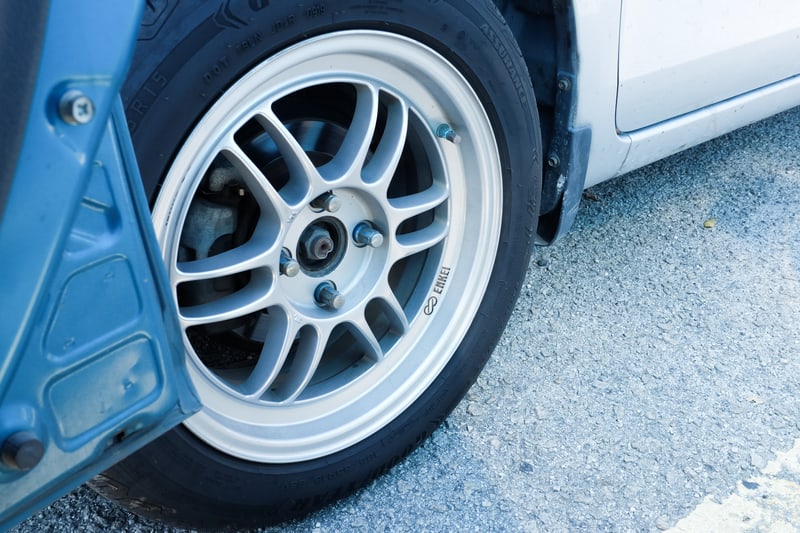
Since they’re more than 70 years old, a lot of people have personal experience with Enkei wheels (myself included).
Enkei is especially attractive because it covers a wide range of buyers. You can find affordable, lightweight street wheels, popular track-day wheels like the RPF1, and OEM-supplier experience behind the brand. That makes Enkei a strong pick for people who care about performance but still want reasonable pricing.
Typical Pricing
Their wheels are on the mid to high level of pricing. Since they’re considered performance-grade wheels, this shouldn’t come as a surprise.
Looking through their catalog, you’ll find a wide range of prices depending on the model, size, construction method, and finish. Enkei is usually more affordable than BBS, but it still sits above most basic consumer-grade wheels.
Their Most-Advanced Production Process
Being a Japanese brand, Enkei put a lot of attention into the manufacturing processes that they used. They follow a lot of Kaizen (or Six Sigma) practices and even came up with their own.
One of their processes is called the MAP, or the “most advanced production” process. Maybe the biggest humblebrag in the wheel manufacturing world, Enkei put together a way to rapidly cool their aluminum alloy once it’s put into a mold.
Doing this will optimize the heat treatment of the metal. This results in more durable, more flexible, stronger wheels.
The MAP process is just one of many techniques and advancements that Enkei put together. They focused on having the best manufacturing process, that way their wheels would consistently outperform their rivals.
OEM or Aftermarket?
Enkei has a healthy mixture of aftermarket and OEM options. From my understanding, most of their wheels are used in OEM contexts and the aftermarket options focus on performance and strength.
You can find at least one car in every major car manufacturer’s catalog that uses Enkei as their OEM wheels.
Notable Use of Enkei Wheels
I mentioned that Enkei is the OEM option for a lot of cars, but it doesn’t stop there. You’ll also find Enkei wheels on the F1 Vodafone McLaren Mercedes car.
Enkei provides a lot of aftermarket options, but most of their inventory is built for OEM purposes.

More About BBS
As unfortunate as BBS’ history is, it’s just as impressive. Let me talk more about this wheel brand, so hopefully, you can be as impressed as I am.
What They Focus On
Currently, BBS focuses on very high-quality, performance-grade aftermarket wheels. Their inventory looks to minimize weight, maximize performance and offer some of the best-looking spoke configurations around.
Typical Pricing
The catalog from BBS is more than impressive. They’re typically the top performer in each segment, and among the most desirable on the market.
As a result, their prices are much higher. BBS wheels are usually more expensive than Enkei wheels, especially when you get into forged, multi-piece, or limited-production models. Pricing depends heavily on the exact model, size, construction method, and availability. For reference, new wheels on a Civic cost less than $100 each.
OEM or Aftermarket?
BBS used to primarily focus on OEM parts, but now they’ve shifted their focus. They want to focus on aftermarket wheels moving forward.
Still, they have a healthy combination of OEM and aftermarket wheels in their catalog.
Who Owns BBS Now (and Why It Matters to Buyers)
BBS has one of the messiest corporate histories in the wheel world, with multiple bankruptcies stretching back to 2007 and ownership passing through Belgian, South Korean, and briefly Turkish hands. The most recent chapter: BBS’s German factory filed for insolvency again in 2024 and stopped building wheels. In 2025, the German suspension maker KW Automotive acquired the plant assets and began restarting production in Schiltach.
Two things matter if you are buying today. First, the brand is alive and producing again, but the repeated German-side insolvencies mean you should confirm parts availability and warranty support before buying cast or OE-replacement BBS wheels. Second, and more reassuring, BBS’s iconic forged wheels are produced through BBS Japan, which has stayed far more stable than the German cast-wheel operation. So the premium forged models most enthusiasts want are the least affected by the drama. Whatever you buy, verify authenticity and the exact model, since popular BBS designs are heavily counterfeited.
Notable Use of BBS Wheels
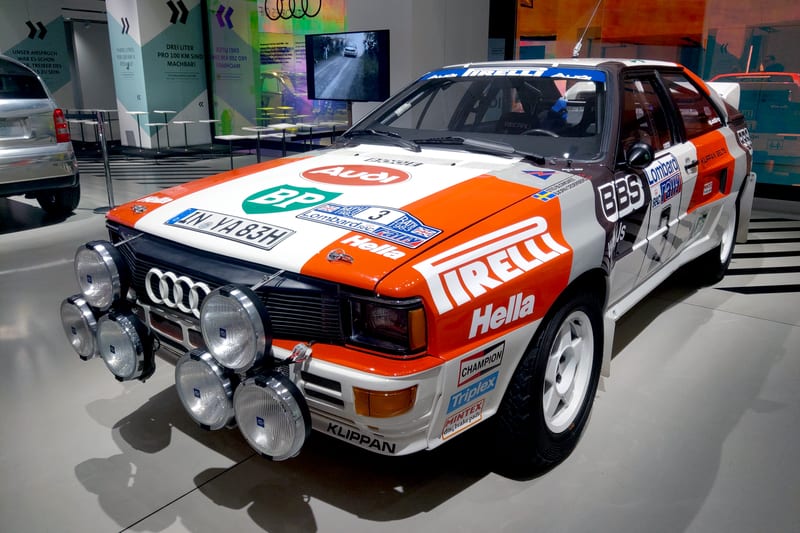
BBS wheels were used as OEM options for Bentley, Porsche, Ferrari, BMW, Audi, Mercedes, Ford, VW, Crysler, Subaru, Mitsubishi, and many more. They’re also used in NASCAR, Formula 1, WRC, and LeMans.
Really, BBS is deeply ingrained in car culture. That might be why so many companies are willing to buy them out after bankruptcies — it’s hard to imagine the car world without BBS.
Watch Out for Fake or Damaged Wheels
Popular wheels from brands like Enkei and BBS are often copied, refinished, repaired, or misrepresented online. Be careful when buying used wheels.
Check the casting or forging marks, model number, size, offset, bolt pattern, center bore, load rating, and seller history. Look for cracks, bends, weld repairs, curb damage, corrosion, and uneven refinishing.
A cheap used wheel is not a good deal if it is bent, cracked, incorrectly repaired, or the wrong fitment for your car.
| Category | Enkei | BBS |
|---|---|---|
| General reputation | Value, lightweight performance, OEM and aftermarket strength | Premium heritage, motorsport image, iconic designs |
| Typical buyer | Daily drivers, track-day users, budget-conscious enthusiasts | High-end builds, collectors, Euro/JDM enthusiasts, show and performance buyers |
| Price range | Usually more accessible | Usually more expensive |
| Main strength | Great performance per dollar | Premium construction, brand recognition, classic designs |
| Watch out for | Model-specific specs and fitment | Price, availability, replacement parts, authenticity |
| Best choice if | You want proven performance without overspending | You want the premium look, heritage, or forged/high-end options |
FAQs About Enkei vs BBS Wheels
Is Enkei better than BBS?
Enkei is often the better value choice, especially for lightweight street and track wheels. BBS is usually the more premium choice, especially if you want forged wheels, iconic styling, or motorsport heritage.
Are BBS wheels worth the money?
BBS wheels can be worth it if you care about premium construction, brand heritage, design, and resale value. For a budget build, Enkei may deliver more performance per dollar.
Are Enkei wheels good for daily driving?
Yes, many Enkei wheels are popular for daily drivers, street cars, and track-day builds. You still need to choose the correct size, offset, bolt pattern, and load rating for your vehicle.
Why are BBS wheels so expensive?
BBS wheels often cost more because of the brand’s motorsport history, premium designs, manufacturing methods, materials, and demand among enthusiasts.
Are Enkei RPF1 wheels good?
The Enkei RPF1 is one of the brand’s best-known lightweight performance wheels. It is popular because it is relatively affordable, light, simple, and widely available in enthusiast-friendly fitments.
Should I buy used Enkei or BBS wheels?
Used wheels can be a good deal, but inspect them carefully for bends, cracks, weld repairs, corrosion, wrong fitment, and authenticity issues before buying.
Choose the Wheel That Fits Your Build
Enkei and BBS are both respected wheel brands, but they do not always serve the same buyer.
Enkei is usually the easier recommendation for people who want lightweight performance, strong aftermarket support, and good value. BBS is usually the premium pick for people who want iconic styling, motorsport heritage, and a higher-end wheel for a serious build.
The best choice depends on your car, budget, tire setup, and how you drive. Before buying either brand, compare the exact wheel model, construction method, size, offset, bolt pattern, center bore, brake clearance, and load rating.
Pick the wheel that fits your build, not just the logo you like more.


