Skip to content

The electric vehicle world has been Tesla’s playground for years. We’ve watched Elon Musk’s company transform from scrappy startup to industry giant, defining what an EV company could be. But there’s a new challenger that’s got industry watchers talking.
BYD (which stands for “Build Your Dreams”) has quietly become a force to reckon with. I’ve been tracking their rise for a while now, and honestly, it’s impressive how they’ve managed to scale up without making the same kind of headlines Tesla regularly generates.
So the question on everyone’s mind: Can this Chinese automaker actually make a dent in Tesla’s home market? Let’s take a look at what’s happening.
BYD’s Global Ascendancy
The numbers don’t lie. BYD delivered an astonishing 4.27 million vehicles in 2024, more than doubling Tesla’s 1.79 million. That’s not just growth – that’s domination.
Most Americans haven’t even heard of BYD, yet they’re already the largest EV manufacturer globally. Their success stems from a pretty straightforward approach: build reliable electric cars that regular people can actually afford. What a concept, right?
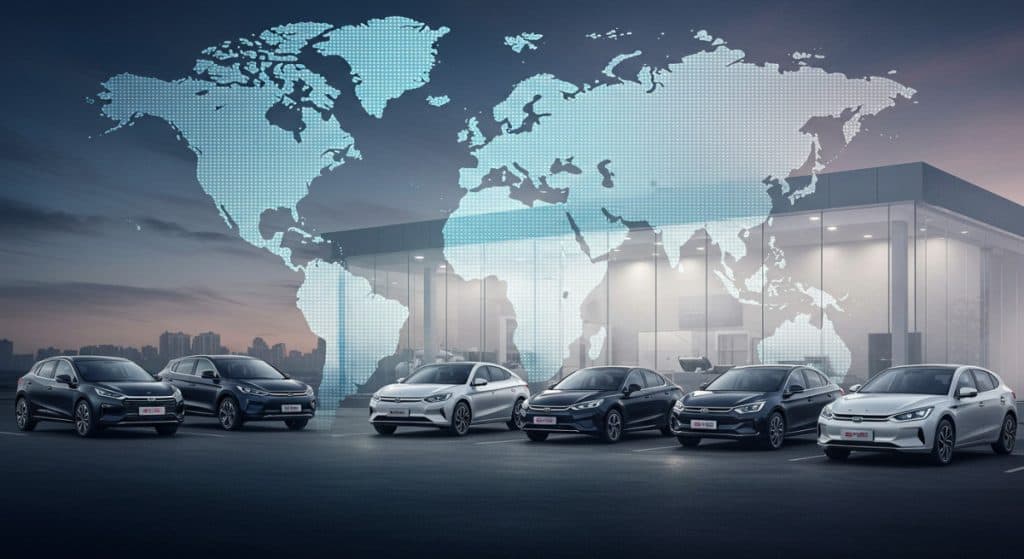
In markets like China, Southeast Asia, Latin America, and increasingly Europe, BYD has found its groove. Their Dolphin hatchback starts around $15,000 in China. Even with import duties elsewhere, it remains significantly cheaper than comparable models. They’ve managed to crack the code of making EVs accessible without the premium price tag that’s defined the category for so long.
Something is refreshing about how pragmatic their approach seems. While Tesla was busy promising self-driving technology and cyberpunk aesthetics, BYD focused on the unsexy part: manufacturing efficiency and battery technology that brings costs down.
Tesla’s Current Challenges
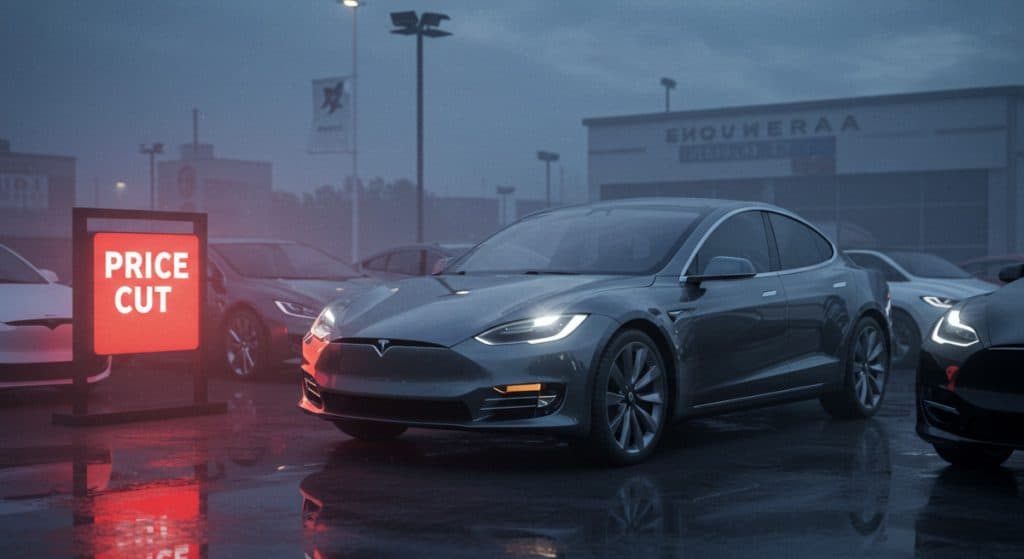
Tesla isn’t quite the unstoppable force it once appeared to be. Their Q1 2025 results were concerning, with net income plummeting 71% year-over-year. Vehicle deliveries have plateaued, and profit margins are being compressed as they have been forced to cut prices repeatedly to maintain sales volume.
And then there’s the Elon factor. Tesla’s biggest asset may also become its biggest liability. Musk’s increasing political activism and controversial social media presence have alienated a portion of Tesla’s traditionally left-leaning customer base. For a premium brand, perception matters, and the data suggests it’s taking a toll.
Meanwhile, competition is intensifying from all sides. Legacy automakers like Volkswagen, General Motors (GM), and Hyundai are finally getting serious about electric vehicles (EVs). Startups like Rivian are finding their niche. Tesla no longer has the luxury of being the only viable electric option in most segments.
BYD’s Approach to the U.S. Market
Here’s where things get interesting. Despite their global ambitions, BYD currently has no announced plans to sell passenger vehicles in the United States. Chairman Wang Chuanfu has been pretty clear that the political climate makes direct entry too risky right now.
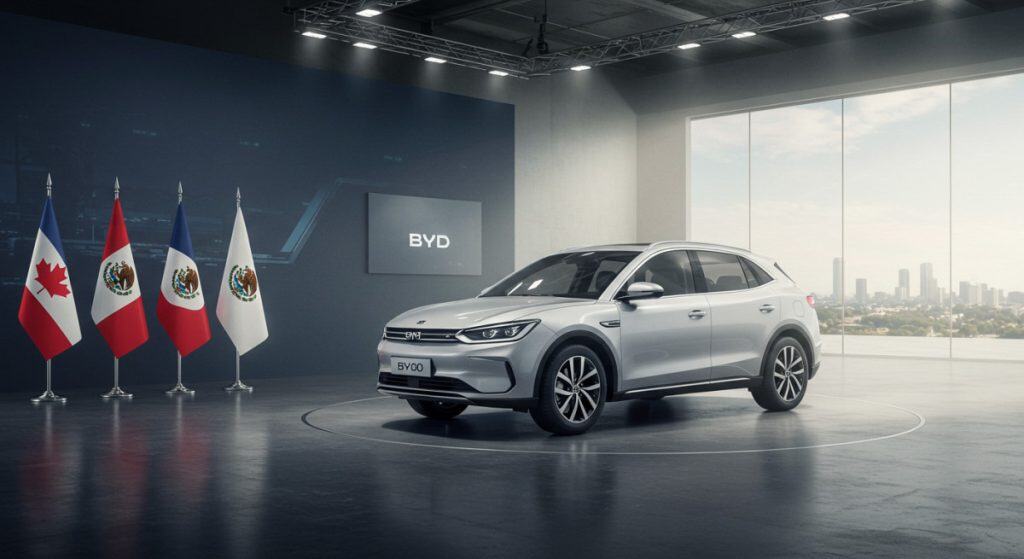
Instead, they’re focusing on neighboring North American markets. BYD has already launched in Mexico with three models and has begun selling vehicles in Canada as well. This gives them a presence in the region without directly challenging the trade and political tensions that would come with a U.S. launch.
It’s probably a smart move. Building brand recognition in culturally similar markets provides valuable experience before potentially attempting the much more competitive U.S. landscape. BYD is also using these markets as testing grounds to refine their vehicles for North American consumer preferences and regulatory requirements.
Some industry analysts speculate this could be a stepping stone strategy, building distribution networks and service infrastructure that could eventually support U.S. operations. But BYD officials have consistently downplayed such speculation. Maybe they’re being cautious, or maybe they’ve calculated that the U.S. simply isn’t worth the headache right now.
Regulatory and Political Hurdles
The elephant in the room is the 100% tariff on Chinese electric vehicles entering the U.S. market. Announced in May 2024 and reinforced in early 2025, this effectively doubles the price of any Chinese EVs imported into the country, making them completely uncompetitive.
These tariffs reflect broader tensions between the U.S. and China that go well beyond automobiles. Concerns about intellectual property, national security, and manufacturing job protection have created a political environment where Chinese companies face intense scrutiny.
Both major political parties in the U.S. have embraced tougher stances on China, making it unlikely these barriers will disappear anytime soon. Even with a manufacturing presence in Mexico that could theoretically help navigate some tariff issues, the regulatory landscape remains treacherous for Chinese automakers.
This political dimension creates uncertainty that most businesses hate. Why invest billions in market entry when policy could shift again with the next administration or congressional session? BYD’s caution makes more sense in this context.
Consumer Preferences and Market Dynamics
Let’s be honest – American consumers have historically been skeptical of Chinese-made vehicles. Quality perceptions, warranted or not, could present a significant hurdle for BYD. Tesla, for all its recent troubles, still enjoys strong brand loyalty and recognition that took years to build.
Suppose we compare what these companies offer, though, things get interesting. BYD’s Seal sedan, which competes directly with Tesla’s Model 3, offers comparable range and performance at what would be a significantly lower price point without tariffs. Their Tang SUV similarly matches up well against the Model Y on paper.
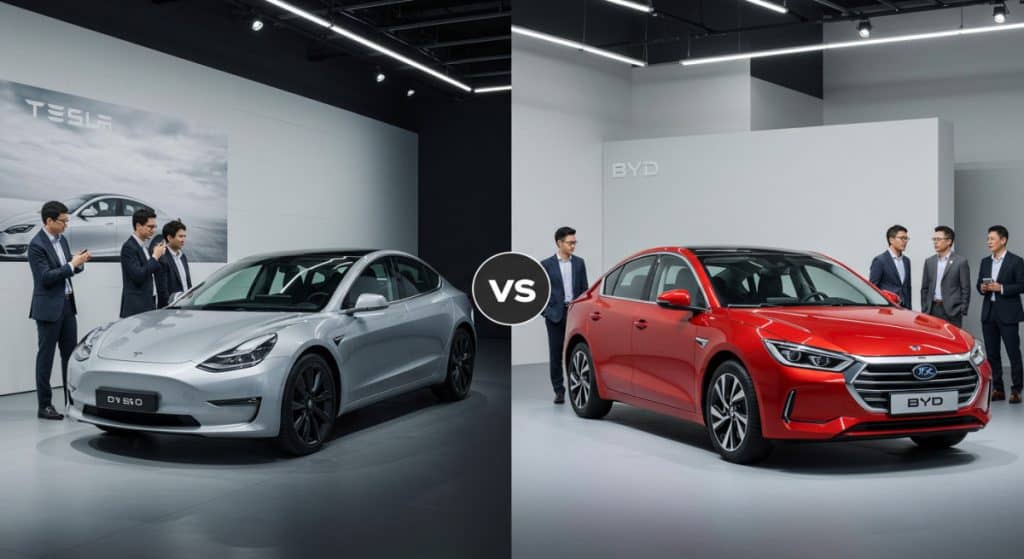
But cars aren’t just technical specifications. Brand identity, service networks, and charging infrastructure all play crucial roles in purchase decisions. Tesla’s Supercharger network remains a major competitive advantage in the U.S., though its recent opening to other manufacturers might diminish this edge over time.
I think BYD would need to overcome not just price barriers but also deeply ingrained consumer biases. American car buyers tend to be conservative in their choices, often sticking with familiar brands rather than taking chances on newcomers.
Potential Strategies for BYD
If BYD really wanted to crack the U.S. market, what options might they have? There are several potential approaches, each with its challenges.
Local manufacturing seems like the most viable long-term strategy. By establishing production facilities within the U.S., BYD could avoid import tariffs while creating American jobs, potentially defusing some political opposition. However, this requires massive capital investment and a multi-year timeline, with no guarantee that regulatory attitudes would remain stable.
Strategic partnerships offer another possibility. BYD could collaborate with an established American automotive brand or retailer to leverage existing distribution networks and brand recognition. Their battery technology alone might make them an attractive partner for companies looking to accelerate their EV transitions.
Perhaps the most interesting possibility would be a patient, gradual approach that focuses first on commercial vehicles – buses, trucks, and fleet sales, where purchase decisions are based more on economics than emotion. BYD already sells electric buses in the U.S., which could serve as a foundation for a broader market presence.
The timeline for any serious U.S. market entry seems difficult to predict. With current tariffs and tensions, we’re likely looking at a minimum 3-5 year horizon before any significant BYD presence in the American passenger car market becomes realistic.
A Complex Road Ahead
The possibility of BYD challenging Tesla on its home turf makes for an interesting storyline, but the reality is more complicated than a simple head-to-head competition. BYD faces significant barriers to U.S. market entry that have little to do with the quality of their vehicles or their manufacturing capabilities.
What seems most likely is a continued reshaping of the global EV landscape, with different companies dominating different regions. Tesla may maintain its premium position in the U.S. while facing increased competition from domestic and European manufacturers. BYD might consolidate its strength in Asia, Latin America, and parts of Europe while waiting to enter the American market.
For American consumers, this fragmentation may mean missing out on some innovative and affordable electric options in the near term. But the automotive industry has always been cyclical and subject to consolidation over time.
The open question isn’t really whether BYD can compete with Tesla in America today – current conditions make that virtually impossible. The real question is whether the fundamental economics of BYD’s approach to affordable EVs will eventually force a reconsideration of the barriers that currently keep them out. After all, markets have a way of finding efficiency over time, even when politics temporarily get in the way.