Skip to content

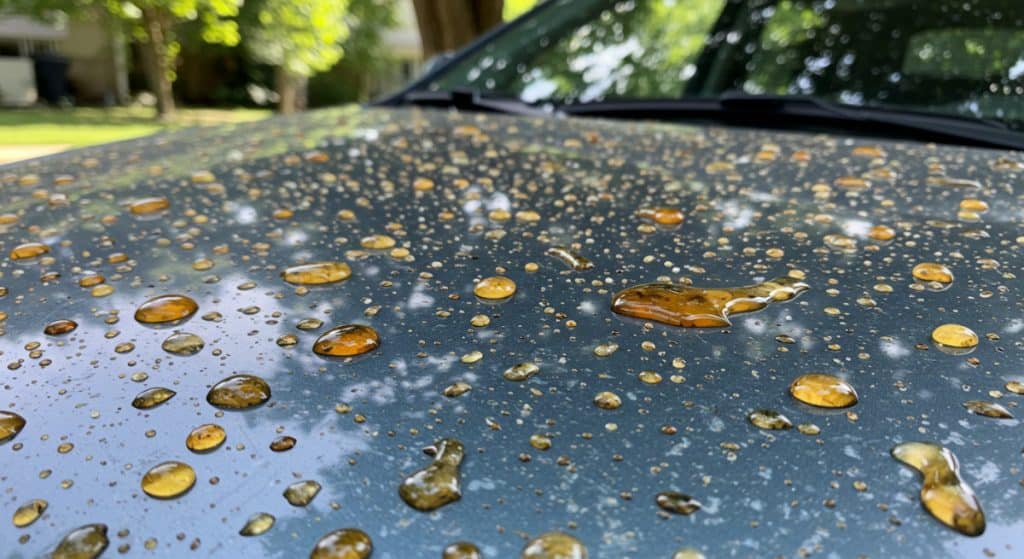
So you parked under a nice shady tree and came back to find your car looking like it got attacked by a giant honey monster. Tree sap is one of those things that seems innocent until it’s stuck to your paint like cement.
Here’s the thing about sap – it’s not just annoying, it can actually damage your paint if you leave it there long enough. The good news? You can usually get it off without too much drama if you know what you’re doing.
Why Tree Sap Is Such a Pain
Tree sap starts out sticky and gooey, but it hardens pretty quickly once it hits air and sunlight. Different trees produce different kinds of sap too – pine sap is thick and amber-colored, maple sap is thinner and clear, and some trees produce this weird resinous stuff that’s almost like glue.
Once sap hardens, it bonds with your clear coat. Leave it there long enough and it can actually etch into the paint, especially if you’re dealing with hot weather that basically bakes it on.
The worst part? Sap loves to collect dirt and debris, so what starts as a small spot can turn into this crusty mess that’s even harder to deal with.
What NOT to Do (Seriously, Don’t)
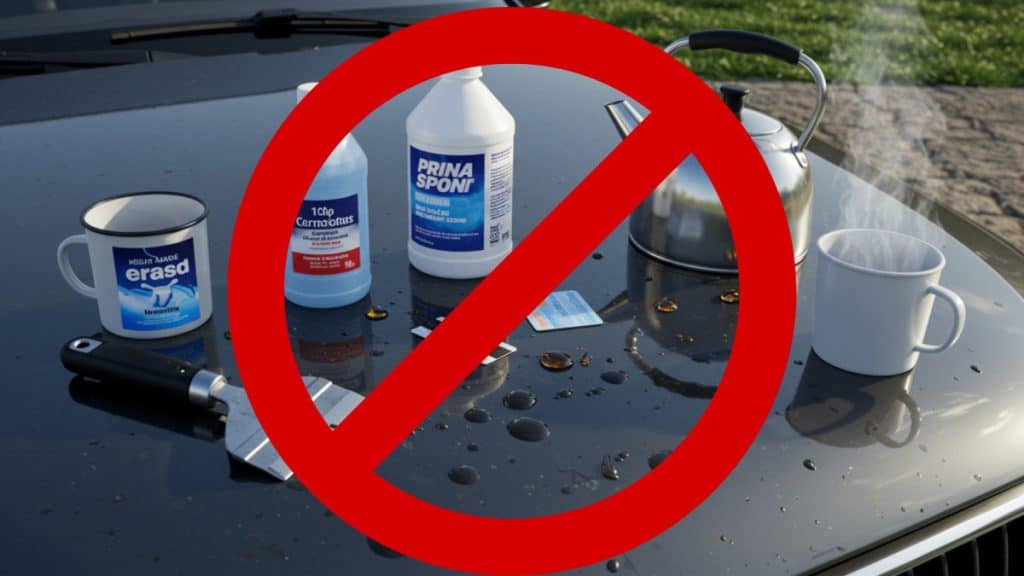
Don’t try to scrape it off with your fingernails, credit cards, or anything sharp. Fresh tree sap might come off this way, but you’ll probably scratch your paint in the process.
Skip the household cleaners. Nail polish remover, acetone, bleach – these will definitely remove tree sap, but they’ll also strip your clear coat and possibly discolor your paint. Not worth the risk.
Don’t use hot water to try melting it off. This can actually make some types of sap spread and penetrate deeper into your clear coat.
Removing Fresh Sap (Less Than a Day Old)
If you catch tree sap while it’s still soft and gooey, you’re in luck. Here’s what actually works:
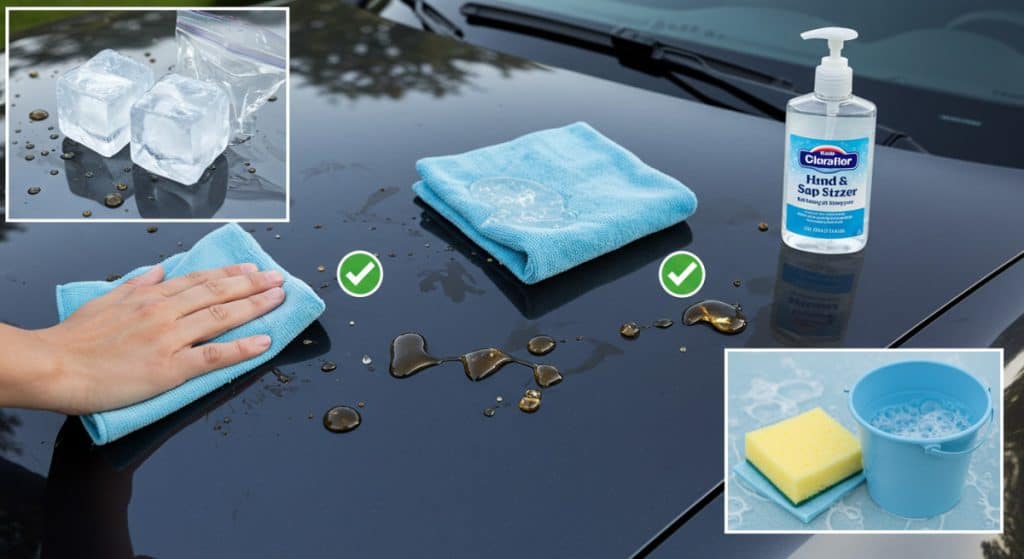
Ice cube method: Wrap an ice cube in a plastic bag and hold it on the sap for about 30 seconds. This hardens the sap so it might pop right off. Be gentle and don’t press too hard.
Warm soapy water: Sometimes fresh sap will come off with just car wash soap and warm water. Worth trying before you move to stronger methods.
Hand sanitizer: The alcohol in hand sanitizer can soften fresh sap. Dab some on, let it sit for a minute, then wipe gently with a microfiber cloth.
Removing Hardened Sap (The Stubborn Stuff)
Once sap has been sitting for more than a day or two, you need stronger methods:
Rubbing alcohol method:
- Use 70% isopropyl alcohol on a microfiber cloth
- Hold it on the tree sap for 30 seconds to soften it
- Gently rub in circular motions – don’t scrub hard
- Rinse immediately with water and dry
- Warning: Test this on a hidden area first – alcohol can damage some paint finishes
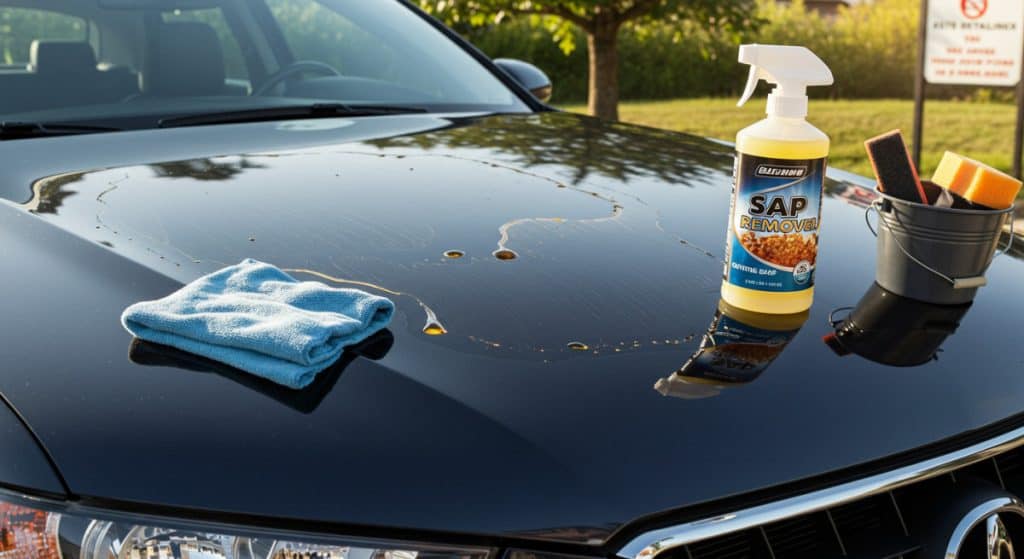
Commercial bug and tar remover: This stuff is made for exactly this problem. Spray it on, let it sit for the time recommended on the bottle (usually 1-2 minutes), then wipe clean. Always rinse thoroughly afterward.
Clay bar method: If you’re into detailing, a clay bar can pull sap right off without chemicals. You’ll need clay bar lubricant though – never use a clay bar on dry paint or you’ll scratch it up badly.
WD-40 (with major caution): Spray a little on the sap, let it sit for about a minute, then wipe clean. You absolutely must wash the area with car soap afterward because WD-40 will attract dirt like crazy if you leave it on.
When You Need Professional Help
Stop DIY attempts if:
- The sap has been there for weeks or months
- You can see discoloration or etching under the sap
- The sap covers a large area
- You’ve tried multiple methods and it’s not budging
- You’re dealing with expensive paint (like pearl or metallic finishes)
Professional detailers have steam guns, specialized solvents, and polishing compounds that can fix damage you might cause trying to DIY it.
Actually Useful Prevention Tips
Park strategically when you can. Pine trees, maple trees, and sweetgum trees are the worst offenders. But let’s be real – sometimes you don’t have a choice.
Check your car regularly. A quick walk-around every few days lets you catch sap while it’s still fresh and easy to remove.
Car covers work if you’re parking in the same spot regularly. Even a cheap one is better than nothing.
Wax or ceramic coating makes tree sap less likely to bond permanently with your paint. It still sticks, but it comes off easier.
If you live somewhere with lots of trees, keep some isopropyl alcohol and microfiber cloths in your car. Catching sap early saves you a lot of hassle later.
Different Tree Sap Types Need Different Approaches
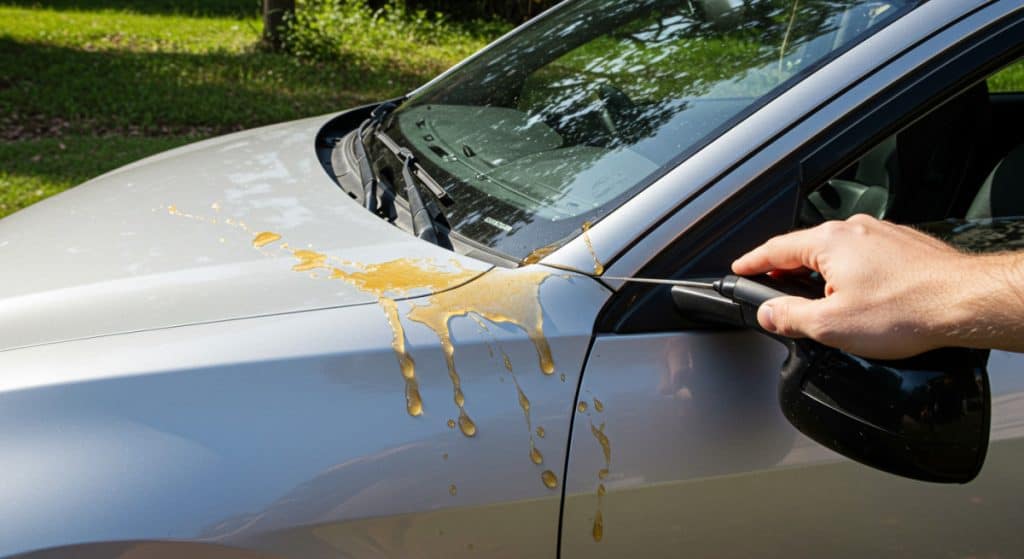
Pine sap is thick and amber-colored. It responds well to rubbing alcohol or commercial removers.
Maple sap is usually clear and thin. Often comes off with just soap and water if you catch it early.
Oak and other deciduous trees produce this sticky, almost honey-like sap that’s particularly stubborn. Usually needs commercial remover or clay bar treatment.
Eucalyptus sap is oily and spreads easily. WD-40 actually works well for this type, just make sure you clean it thoroughly afterward.
What to Do After Tree Sap Removal
Once you get the sap off, the area might look dull or slightly different from the surrounding paint. This is normal – you’ve essentially stripped some of the protective coating.
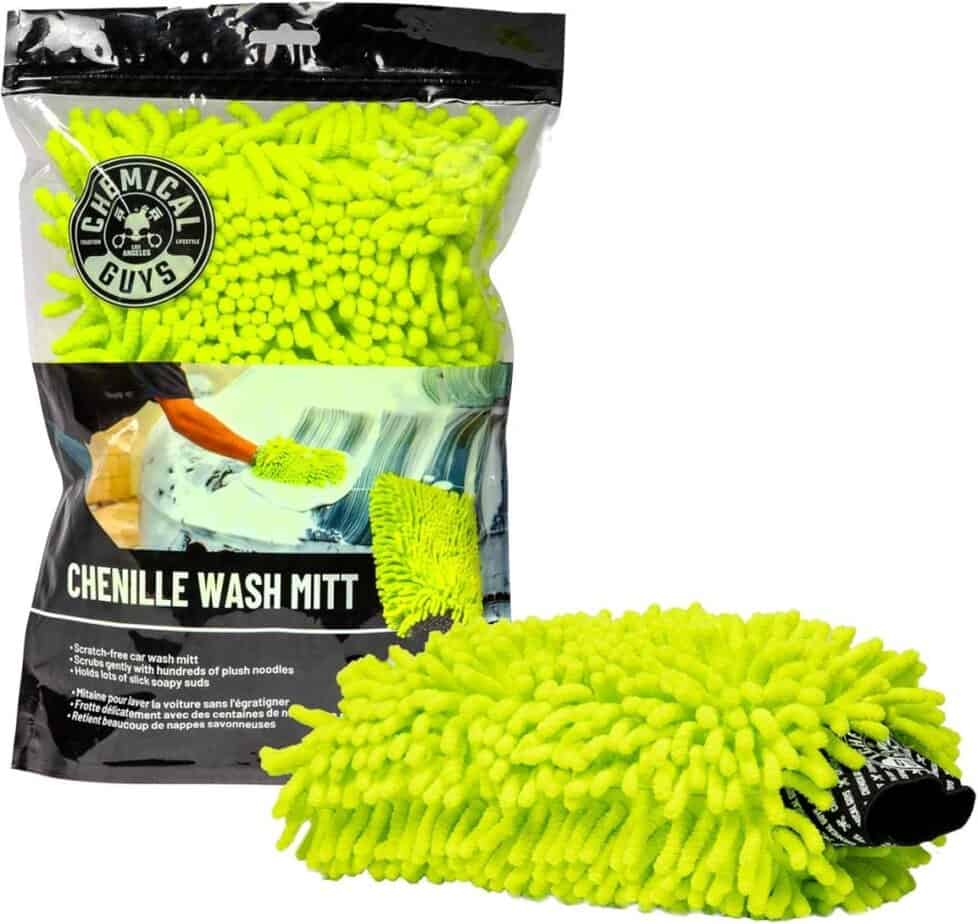
Wash the area thoroughly with car soap and a scratch-free microfiber wash mitt (something like the Chemical Guys MIC493 Chenille Premium works well) to remove any residue from whatever method you used.
Apply some wax or polish to restore protection and shine. Even if the rest of your car doesn’t need it, treat the spot where the sap was.
Check for damage. If you can see scratches or etching, you might need professional polishing to fix it properly.
The Bottom Line
Tree sap is annoying but it’s not the end of the world. The key is acting fast and using the right method for how long the sap has been sitting there. Fresh sap is usually no big deal, hardened sap requires more patience and the right products.
And yeah, sometimes you’ll mess up and need professional help anyway. That’s not a failure – some sap situations are just beyond DIY methods.
Got your own sap horror stories or methods that worked? Let’s hear them. Misery loves company, especially when it involves sticky car problems.