 Skip to content

Struggling to get to work, school, or appointments—and wondering if someone out there is actually giving cars away? Maybe you’ve heard stories about people getting free vehicles from charities and thought it sounded too good to be true.
Here’s the thing: it’s not too good to be true, but it’s also not as simple as most people think. Free cars from charities are real, but there’s a process, and the demand far outweighs the supply. Think thousands of applications for maybe twenty cars.
Still, for the right person in the right situation, these programs can be life-changing. Let’s break down how it actually works and what you need to know if you’re considering applying.
Yes, Free Car Is a Real Thing
Legitimate nonprofits across the country do give away vehicles to people in need. These aren’t sketchy operations or too-good-to-be-true offers – they’re established 501(c)(3) organizations with documented track records.
The cars come from donations. People give their old vehicles to these charities instead of trading them in or selling them privately. The nonprofits then either refurbish the cars or, in some cases, provide them as-is to qualified recipients.
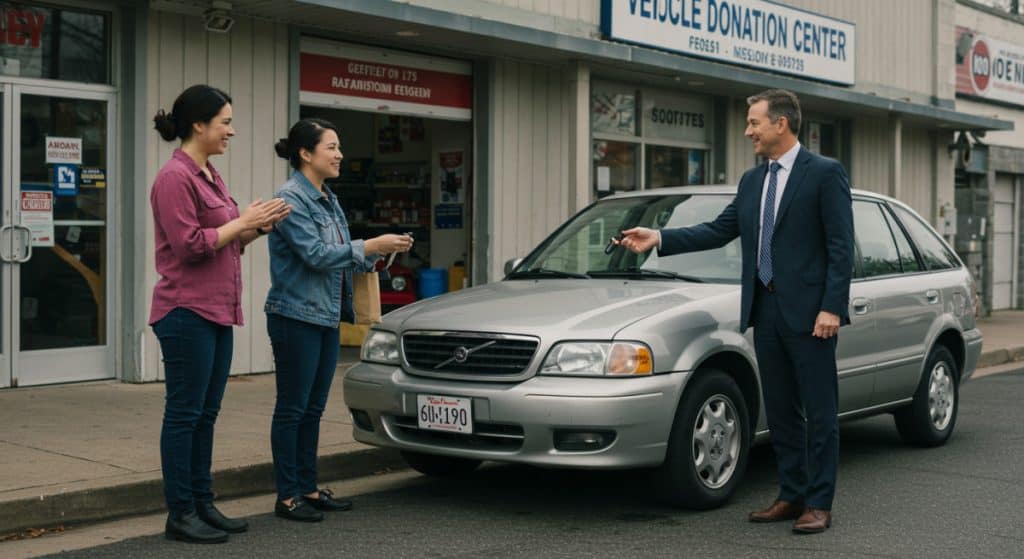
But here’s the reality check: most of these organizations receive thousands of applications for every few dozen cars they give away. 1-800-Charity Cars, for example, gets over 20,000 applications annually and gives away around 20 vehicles. Those aren’t great odds.
The programs exist to help people transition to self-sufficiency, not just to provide free transportation. So they tend to prioritize applicants who can demonstrate that a car will genuinely change their circumstances – like landing a job, escaping domestic violence, or caring for a family member with medical needs.
Who’s Giving Away a Free Car?
National Charities:
1-800-Charity Cars/Free Charity Cars has been around since 1996 and operates nationwide. They claim to have given away over 9,000 vehicles worth $80+ million. The application process happens through FreeCharityCars.org, though they’ve been temporarily overwhelmed with applications and periodically close new submissions.
Good News Garage serves New England (Vermont, New Hampshire, and Massachusetts) and has distributed nearly 6,000 vehicles since 1996. They partner with social service agencies and require referrals, so you can’t apply directly.
Vehicles for Change operates in Maryland, Virginia, Washington D.C., and Michigan. They’re somewhat different in that they sell refurbished donated cars to qualified families for around $950 with guaranteed financing, rather than giving them away completely free.
Regional and Local Organizations:
Cars 4 Heroes focuses on veterans, firefighters, and police officers in the Kansas City area. They give away over 300 cars per year just in that metro area, which actually makes your odds better than with national programs.
Second Chance Cars in Massachusetts specifically helps veterans, returning citizens, and single parents. They work with vocational schools to refurbish vehicles professionally.
Cars for Moms operates nationwide but works through nominations – either you nominate yourself or someone nominates you. They focus specifically on single mothers who need reliable transportation.
Wheels from the Heart serves single mothers in specific parts of Florida and works with local charities to identify recipients.
Car Ministry Program in Northern Virginia requires a referral from a pastor or social worker and serves people in full-time ministry or Christian work.
The key difference between national and local programs is often the odds. Local programs typically have fewer applicants competing for each car, but they also have stricter geographic requirements.
Who Qualifies for a Free Car?
Most programs have similar basic requirements, though the specifics vary by organization.

Financial hardship is universal. You typically need to be at or below 200% of the Federal Poverty Level and demonstrate genuine need. This means showing that you lack sustainable transportation and that a car would meaningfully change your situation.
Employment or job offers are usually required. Most organizations want to see that you’re working at least 30 hours per week or have a verifiable job offer. The goal is helping people who are already working toward self-sufficiency but are held back by transportation issues.
You need a valid driver’s license in the state where you live. This seems obvious, but it’s worth noting that some programs also require a clean driving record.
Stable housing matters. Many programs want to see that you have a stable address and aren’t currently homeless, though there are exceptions for people in transitional housing.
Ability to maintain the car is crucial. You need to demonstrate that you can afford insurance, registration, basic maintenance, and gas. Getting a free car doesn’t help if you can’t keep it legal and running.
Background checks are common, especially for programs serving domestic violence survivors or working with vulnerable populations.
Some programs have specific focus areas. Veterans get priority with Cars 4 Heroes. Domestic violence survivors have dedicated pathways through several organizations. Single mothers have multiple programs specifically designed for them.
How the Process Actually Works
Step 1: Find and apply through official channels. This usually means filling out detailed online applications through the organization’s official website. Be prepared to provide extensive documentation about your financial situation, employment, housing, and why you need a car.
Step 2: Submit required documents. Most programs want proof of income (or lack thereof), employment verification, driver’s license, proof of insurance ability, and sometimes references from social workers, pastors, or employers.
Step 3: Wait. And wait some more. The process typically takes weeks to months, assuming you’re selected at all. Many programs maintain waiting lists and contact people when vehicles become available.
Step 4: If selected, expect more paperwork. You’ll likely need to verify that your situation hasn’t changed, provide additional documentation, and sometimes complete interviews or home visits.
Step 5: Vehicle matching and pickup. The organization will try to match you with an appropriate donated vehicle. You’ll need to arrange pickup, often at their location, and handle title transfer, registration, and insurance immediately.
The timeline varies dramatically. Some people hear back within weeks, others wait months, and many never hear back at all. Local programs tend to move faster than national ones.
The Fine Print (What They Don’t Advertise)
Most cars are older models with higher mileage. Don’t expect a late-model vehicle in pristine condition. These are typically 10-15 year old cars with 100,000+ miles that still have life left in them but wouldn’t command much in the private market.
You’re usually responsible for title transfer fees, registration, taxes, and immediate insurance. While the car itself is free, getting it legal and on the road might cost several hundred dollars upfront.
Some programs have waiting periods before you can sell or transfer the vehicle. This prevents people from immediately flipping free cars for cash.
Maintenance is entirely your responsibility. Most programs provide vehicles as-is with no warranty, though some (like Good News Garage) offer limited warranties on their refurbished cars.
You may need to pick up the vehicle yourself, which can be challenging if you don’t currently have transportation. Some programs help with this, but many don’t.
Geographic restrictions are strict. If you move out of the service area, you might not be eligible, and some programs require you to continue living in the area for a certain period.
Red Flags and Scams to Avoid when getting a Free Car
Unfortunately, the legitimate need for free cars has created opportunities for scammers. Here’s what to watch out for:
Never pay money upfront. Legitimate free car programs never require payment, processing fees, or deposits. If someone asks for money to “hold” a car or “process” your application, it’s a scam.
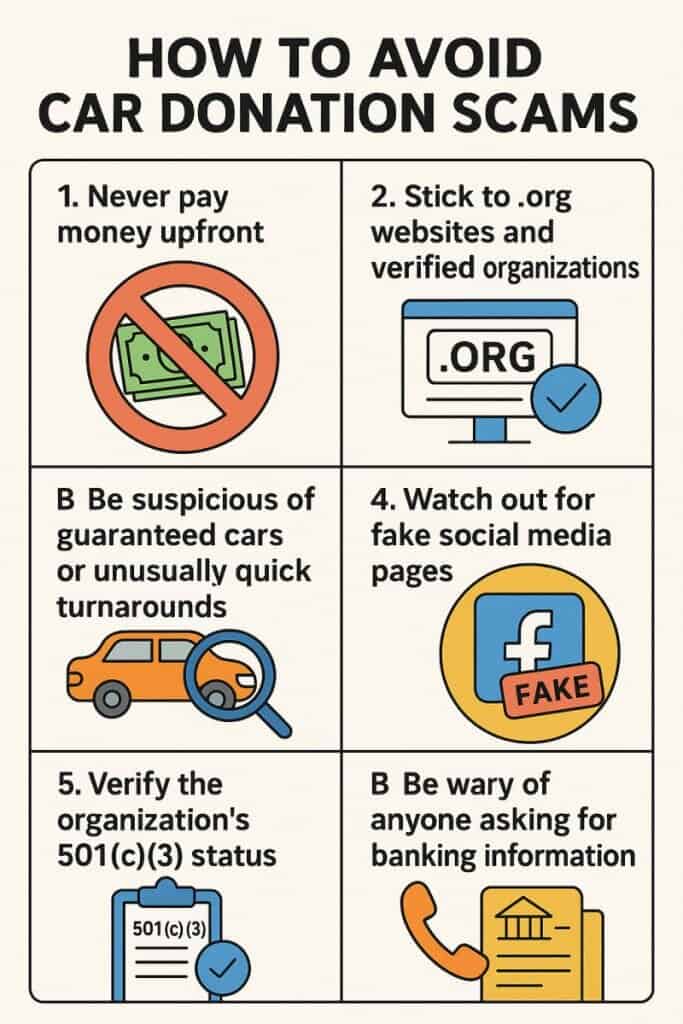
Stick to .org websites and verified organizations. Scammers often create websites that mimic legitimate charities but use .com domains or slightly different names. Always double-check that you’re applying through the real organization.
Be suspicious of guaranteed cars or unusually quick turnarounds. Legitimate programs have waiting lists and competitive application processes. Anyone promising immediate approval or guaranteed vehicles is likely running a scam.
Watch out for fake social media pages claiming to give away cars. These often ask for personal information or payment for “shipping” or “processing.”
Verify the organization’s 501(c)(3) status through Charity Navigator, the IRS website, or your state’s attorney general’s office. Legitimate charities are transparent about their nonprofit status and financial information.
Be wary of anyone asking for banking information or suggesting unusual payment methods. Even legitimate charities shouldn’t need your bank account details during the application process.
If something feels off, trust your instincts. Legitimate charities understand that people are cautious and won’t pressure you to make quick decisions or provide sensitive information.
Alternatives If Charity Cars Don’t Work Out
If you don’t qualify for free car programs or the waiting lists are too long, there are other options worth exploring.
Local churches often have benevolence funds that might help with car purchases or major repairs. This works best if you have an existing relationship with the congregation, but some churches help anyone in genuine need.
Social service agencies sometimes know about local car donation programs that aren’t widely advertised. Your caseworker, if you have one, might have contacts you don’t.
Community organizations and nonprofits beyond the major national charities sometimes get vehicle donations. Habitat for Humanity, Goodwill, and Salvation Army occasionally receive cars they need to move quickly.
Government programs don’t provide free cars directly, but they might help with transportation vouchers, public transit assistance, or job training programs that include transportation support.
Employer assistance programs sometimes help with transportation, especially if reliable transportation is preventing you from maintaining employment. Some employers loan money for car purchases or help with down payments.
Credit unions and community banks often have special loan programs for low-income borrowers, including people with poor credit who need reliable transportation for work.
Making Your Application Stand Out
If you decide to apply for charity car programs, here’s how to improve your chances:
Be completely honest about your situation. Organizations can verify most of what you tell them, and lying will disqualify you immediately.
Focus on how a car will change your life specifically. Don’t just say you need transportation – explain how it will help you keep a job, care for family members, attend school, or escape a difficult situation.
Provide strong references from employers, social workers, pastors, or community leaders who can vouch for your character and need.
Have all your documentation ready before you apply. Missing paperwork slows down the process and might result in your application being passed over.
Follow up appropriately but don’t be pushy. It’s okay to check on your application status after a reasonable period, but bombarding them with calls or emails won’t help.
Apply to multiple programs if you’re eligible. Different organizations have different criteria and timelines, so casting a wider net increases your chances.
Consider less popular programs that might have shorter waiting lists. Local religious organizations or small community groups might not be as well-known but could move faster.
Hope, Patience, and Realistic Expectations
Getting a free car from a charity is possible, but it’s competitive and requires patience. The organizations running these programs are legitimate and want to help, but they’re dealing with overwhelming demand and limited resources.
Your best bet is to apply to multiple programs, be completely honest about your situation, and have realistic expectations about the timeline and condition of any vehicle you might receive.
While you’re waiting, it’s worth exploring other transportation options and assistance programs. The goal is getting reliable transportation that allows you to work and care for your family – whether that comes from a charity, a community organization, or another source entirely.
If you do receive a charity car, treat it as the gift it is. Maintain it properly, use it responsibly, and perhaps consider donating back to similar programs when your situation improves. These organizations depend on the community supporting each other, and your success story might help convince others to donate vehicles in the future.
Ever applied for or received a free car? Know about a program in your area that’s helping people? The best way to learn about these opportunities is often through word of mouth, so sharing information helps everyone.
Related Resources
- https://800charitycars.org/about-us/
- https://freecharitycars.org/
- https://goodnewsgarage.org/
- https://www.vehiclesforchange.org/eligibility/
- https://dollarsprout.com/free-car/
- https://www.lovetoknow.com/life/lifestyle/free-cars-low-income-families
- https://www.wealthysinglemommy.com/rides/free-car/
- https://freefinancialhelp.net/free-cars/
- https://helpingamericansfindhelp.org/free-charity-cars/
- https://freecharitycars.org/vehicle-request-form/
- https://peerta.acf.hhs.gov/content/vehicles-change
- https://www.happyproductions.me/resources-blog/how-to-spot-charity-scams
- https://www.wheelsforwishes.org/wheels-for-wishes-car-donation-scam/
- https://chariots4hope.org/car-donation-scams/
- https://www.cardonationwizard.com/blog/car-donation-scams-exposed/
- https://www.aarp.org/money/scams-fraud/info-2024/car-buying.html
- https://www.onpointcu.com/blog/how-to-spot-red-flags-when-buying-and-selling-vehicles-online-or-in-person/


