 Skip to content

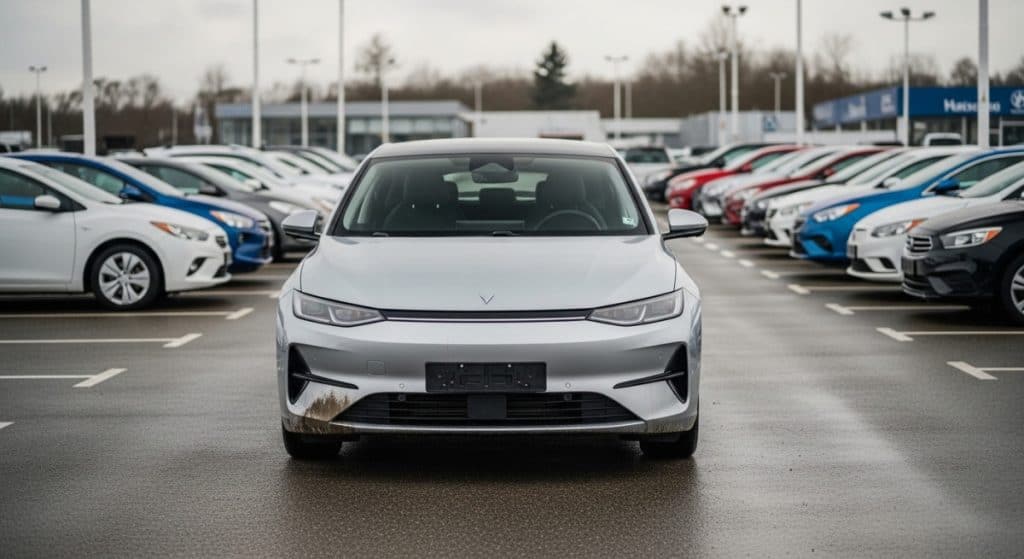
Used EV prices have come back down to earth. Inventory is up. Deals are real again.
But here’s the part that surprises people: the cheap listing is not the same thing as cheap ownership. In 2026, the two biggest “gotchas” are charging reality (home vs public) and insurance (it can swing wildly by model and even by VIN).
So let’s drop the rule early, because it saves the most money:

Before you negotiate anything, get an insurance quote for the actual VIN you’re considering. EV insurance can be dramatically higher than a similar gas car, and you do not want to find that out after you buy.
This guide breaks down what changed in 2026, what actually matters, and finishes with a checklist you can follow in the right order.
The 30-second answer: when a used EV makes sense in 2026
A used EV is usually a smart buy in 2026 if:
- You can charge at home or work most of the time
- Insurance is reasonable for your VIN
- Battery health and warranty coverage check out
- You are fine with a little “charging setup” (apps, adapters, planning)
A used EV is usually a headache if:
- You rely on public charging for most miles and your local rates are high
- You road trip often and hate planning stops
- Insurance wipes out the savings, even with cheap electricity
If you’re a home-charging commuter, a high-mileage driver with cheap charging, or a second-car household that can plan charging, used EVs can be a seriously good value this year.
What changed in 2026: the used EV market reset
Two big things happened going into 2026:
1) The federal used EV credit stopped shaping prices
A lot of used EV pricing used to be “built around” federal credit rules. When those rules changed, pricing got less weird and more market-driven.
Per IRS guidance tied to the 2025 law changes, the previously-owned clean vehicle credit (Section 25E) no longer applies to vehicles acquired after September 30, 2025. That means 2026 buyers are shopping in a market that is not propped up the same way.
2) The home charger credit is still a thing, but the clock matters
While the used-vehicle credit is gone, the home charging equipment credit (Section 30C) is still available, and the current IRS guidance reflects that it runs through June 30, 2026 under the updated rules.
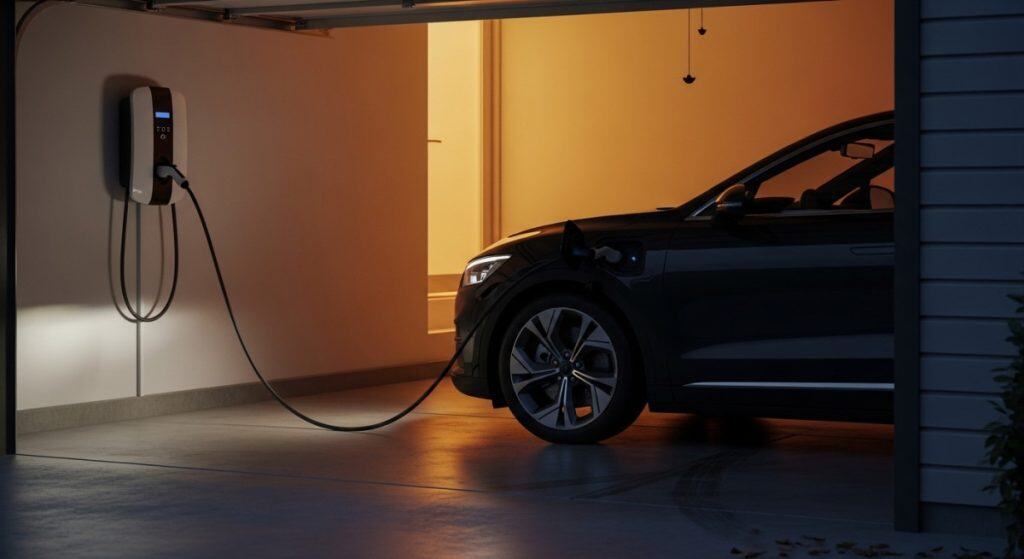
That matters because home charging is the cheat code for making a used EV feel easy and actually stay cheap month to month.
Incentives still exist, but they’re local now
In 2026, the “best deal” often depends on where you live. Some states and utilities are still pushing meaningful pre-owned EV rebates, but they can be income-based, location-based, and funding can run out.
A few real examples (just to show this is not hypothetical):
- Colorado (Vehicle Exchange Colorado / VXC): Colorado’s program materials show used EV rebate amounts that can reach $6,000 in qualifying situations.
- Massachusetts (MOR-EV Used): Massachusetts lists a used EV rebate, commonly shown at $3,500 for eligible vehicles and buyers.
- California utilities: Utility pre-owned rebates exist in multiple service areas, often with higher tiers for income-qualified applicants (check your utility’s current rules).
The practical takeaway: treat incentives like a bonus, not the foundation of your budget. Verify eligibility and funding before you fall in love with a listing.
Home charging is the cheat code (and 2026 timing matters)
If you can charge at home or work, a used EV is much more likely to feel like a win.
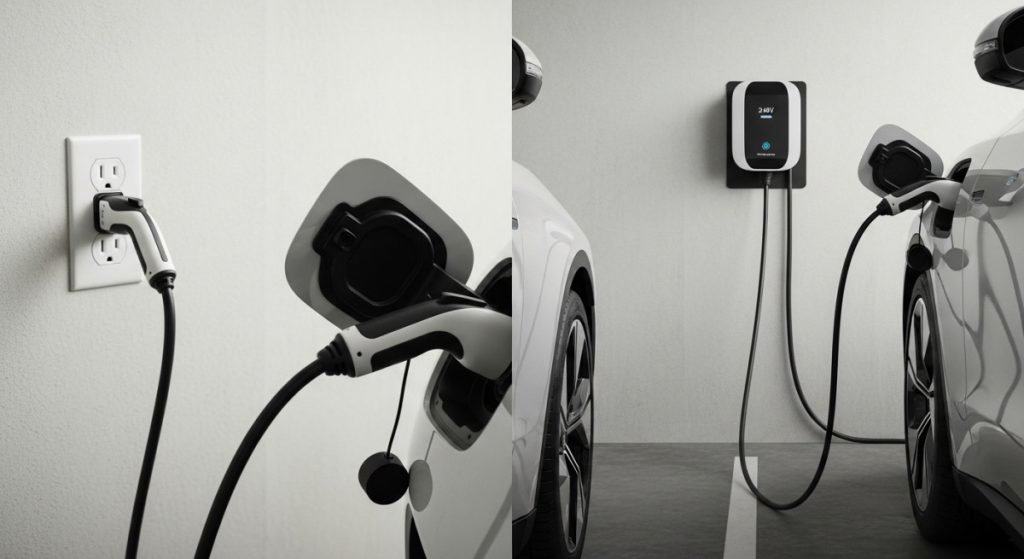
Level 1 vs Level 2, in real life:
- Level 1 (regular outlet) feels like “slow and steady.” It can work if you drive less, have time, and can plug in every night.
- Level 2 (240V) is where EV ownership gets easy. It turns charging into a routine instead of a weekly project.
And again, 2026 has a timing angle: the federal credit for installing charging equipment (30C) is currently set to end after June 30, 2026 under the updated rules.
Quick driveway reality check before you shop hard:
- Do you have a consistent parking spot?
- Do you have panel capacity or an electrician who can verify it?
- If you rent, can you actually get permission?
If the answer is “no” to most of that, skip ahead to the total cost section before you get pulled in by a low sticker price.
CCS vs NACS in 2026: adapters, Superchargers, and “dongle life”
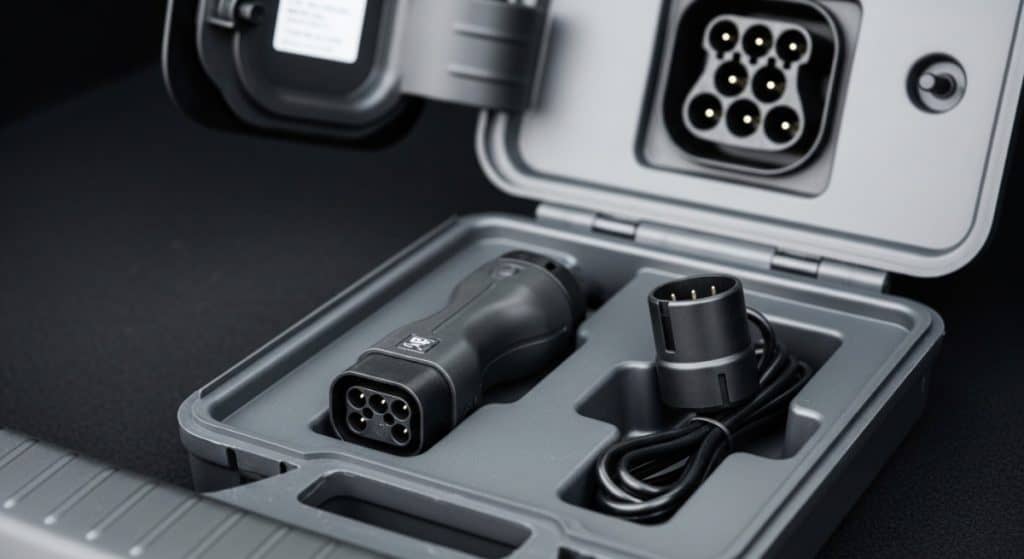
A lot of used EVs on the market are still CCS. That’s not automatically bad, it just means you need to be honest about what your charging life will look like.
What to verify before buying:
- What port does it have (CCS, NACS, CHAdeMO)?
- If it is CCS and you want Supercharger access, does it include the correct OEM-approved adapter (or will you need to buy one)?
- Do the apps and route planning actually work for your area?
Negotiation tip that actually works:
Missing adapter, missing mobile charger, missing basic charging accessories, those are real costs. Treat them like missing floor mats or bald tires. Use them as money-off leverage.
Road trip reality: “fast on paper” vs “fast in your life”
This is where people feel ripped off, even when nothing is wrong.
Some EVs can charge extremely fast on the right stations, but may charge slower on others due to architecture and station capability. You do not need the deep tech to make good decisions. You just need to know this:
- If you road trip a lot, charging speed depends on your car and the chargers on your route, not just the spec sheet.
If you mostly charge at home and do normal commutes, you can care a lot less.
Hidden ownership costs: software, connectivity, subscriptions
Be mindful of possible hidden fees. Used EVs can come with “it depends” features:
- App features
- Connectivity plans
- Remote climate
- Navigation services
- Driver-assist subscriptions (depending on brand and trim)
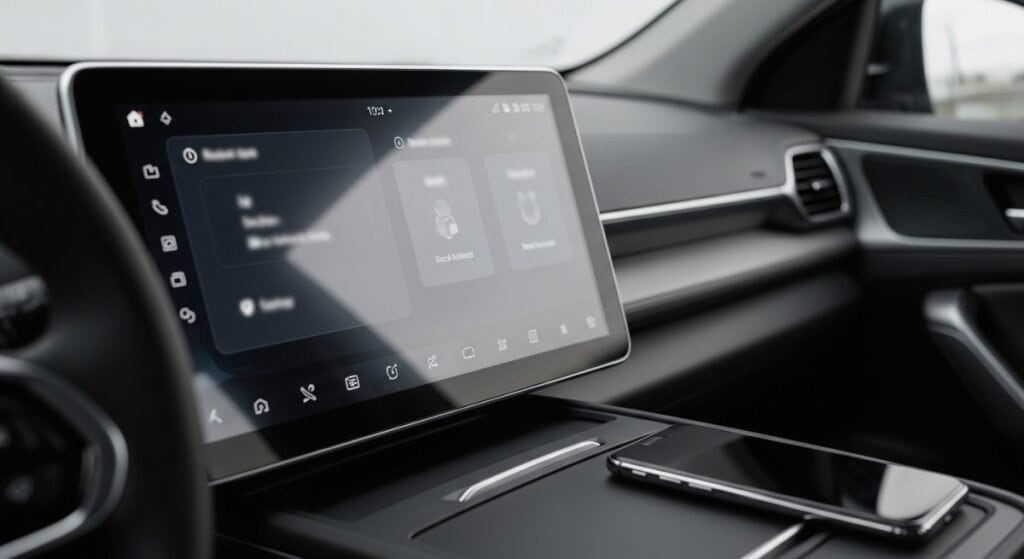
During a test drive or handoff, make sure:
- You can pair the app successfully
- Remote preconditioning works
- The seller discloses any paid features tied to an account
It’s not always a dealbreaker. It’s just something you want to know before you buy.
Total cost of ownership in 2026: the math that actually matters
The three costs that decide everything:
- Purchase price
- Charging costs (home vs public is huge)
- Insurance (this is the big swing factor in 2026)
A simple framework that works:
- Monthly payment
- Plus insurance
- Plus charging (or fuel)
- Compare that to the gas car you would have bought
If the monthly total is meaningfully lower, great. If insurance wipes out the fuel savings, the “cheap EV” can become a wash fast.
The insurance cliff: quote first, shop second
This is the “do not skip” section.
A Kelley Blue Book write-up of an Insurify analysis found EVs cost about 49% more to insure than comparable gas vehicles on average, and the gap varies a lot by state.
Why it happens (simple version):
- Repairs can be more specialized
- Parts and repair networks vary by model and location
- Some vehicles just have higher repair severity
The 10-minute insurance test:
- Pick 2 to 3 listings
- Get VIN-specific quotes
- Compare to a similar gas car
- If one model blows up your monthly total, cross it off and move on
Seriously, this one step can save you more money than negotiating another $500 off the sale price.
Battery health in 2026: what’s true, what to verify, what to avoid
Battery fear is often louder than battery reality.
Geotab’s analysis of battery health and degradation points to gradual degradation as the norm, and their EV battery health discussion highlights how most packs decline over time rather than “falling off a cliff.”
What to ask the seller or dealer:
- Any available battery health report (if offered)
- Remaining battery warranty terms
- Recall history, battery replacement history (if applicable)
Red flags that should make you walk:
- Seller dodges battery questions
- Range seems wildly inconsistent for the model and miles
- You cannot get clarity on warranty coverage
Used EV picks that make sense in 2026 (and who they’re for)
Keeping this tight on purpose. A few common “makes sense” picks, depending on your life.
Value commuter: Chevy Bolt EV / EUV
Great if you want cheap miles and you mostly charge at home.
Watch-outs: DC fast charging is not the star of the show.
What to check: recall or battery replacement history.
Balanced all-rounder: Tesla Model 3 Long Range
Strong choice for charging convenience and road trip coverage.
Watch-outs: wear items, tires, suspension, and what connectivity features you expect.
Practical crossover: Ford Mustang Mach-E
Comfortable, usable, and depreciation has made it easier to justify used.
Watch-outs: charging access details, adapter situation, included accessories.
Road trip nuance pick: Hyundai Ioniq 5 or Kia EV6
Awesome on the right fast chargers.
Watch-outs: charging speed differences depending on which stations you actually use.
Proceed with caution: the deals that turn into regret
This is less about “bad cars” and more about bad fits.
- Older EVs in hot climates without strong thermal management
- Low-range older EVs that do not fit modern driving
- Early production models that are hard to repair in your area
- The biggest trap: no charging plan
A cheap listing is only a deal if it works with your real life.
The used EV buyer checklist for 2026 (in the right order)
Save this. Follow it in this order.

- Get an insurance quote using the VIN
- Confirm your real charging plan (home, work, nearby fast charging)
- Verify battery health and warranty coverage
- Confirm connector type and adapter situation (port, access, apps)
- Check connectivity and subscription status (app, remote features)
- Use smart negotiation levers (days on lot, missing adapter, tires, 12V battery, paperwork)
- Run the monthly gas alternative comparison (payment + insurance + charging vs the gas car you would have bought)
If a car fails steps 1 or 2, it does not matter how clean the interior looks.
So, should you buy a used EV in 2026?
Yes, for the right buyer. The biggest deal-killers are charging reality and insurance. The biggest win is a low purchase price plus reliable home charging, especially while the home charger credit window is still open through mid-2026.
If you want, tell me your rough commute, whether you can charge at home, and the 2 to 3 models you’re considering, and I’ll help you sanity-check them the MotorHills way.
Related Resources:
- https://www.irs.gov/newsroom/one-big-beautiful-bill-provisions
- https://www.irs.gov/clean-vehicle-tax-credits
- https://www.irs.gov/newsroom/faqs-for-modification-of-sections-25c-25d-25e-30c-30d-45l-45w-and-179d-under-public-law-119-21-139-stat-72-july-4-2025-commonly-known-as-the-one-big-beautiful-bill-obbb
- https://www.irs.gov/credits-deductions/alternative-fuel-vehicle-refueling-property-credit
- https://www.irs.gov/pub/irs-pdf/i8911.pdf
- https://afdc.energy.gov/laws/10513
- https://coloradoenergyoffice.aptim.com/faq
- https://goclean.masscec.com/ev-rebates-and-incentives/
- https://mor-ev.org/eligible-vehicles
- https://insurify.com/car-insurance/report/electric-vehicle-insurance-costs
- https://www.kbb.com/car-news/study-evs-cost-49-more-to-insure
- https://www.geotab.com/blog/ev-battery-health
- https://www.tesla.com/support/charging/supercharging-other-evs
- https://www.coxautoinc.com/insights-hub/cox-automotive-2026-outlook/


