Skip to content

Having a heavy car might be helpful for demanding jobs like towing trailers, but when you’re trying to reduce weight on your car for more speed or fuel efficiency, every extra pound counts. Rather than trading your car in for something lighter, you can achieve these goals by reducing the weight of your current car.

The Top Five Best Ways To Reduce Weight On Your Car:
- Remove non-essential components and accessories
- Swap heavy components for lighter alternatives
- Replace your paneling and windows
- Reduce fuel levels
- Limit driver and passenger weight
In this article, we will discuss these methods in more detail by listing parts of your car you can alter, replace, or remove to significantly reduce its weight. We’ll also answer common questions regarding the benefits and drawbacks of altering your car in this way, how much weight you can remove without impacting the car’s safety, and more.
5 Best Ways To Reduce Weight On Your Car
There are several reasons why you might want to reduce the weight of your car (most of which we will discuss later), and these will dictate which methods are best suited for your car and overarching goals.
Ultimately, if you want to reduce the weight of your car, you’re going to have to make some sort of sacrifice in the form of:
- Removing
- Replacing
- Limiting
Below, we have listed the five best methods in more detail to help illustrate all your options regarding weight reduction. Various components and other aspects of your vehicle will need to be assessed as far as what stays and what goes.
Determining which methods to utilize will largely come down to your car’s purpose, your budget, and your experience with automotive mechanics.
1. Remove Non-essential Components and Accessories
One of the more common and straightforward methods of reducing weight on your car is to take off various components that are either non-essential or no longer necessary.
Remove components such as:
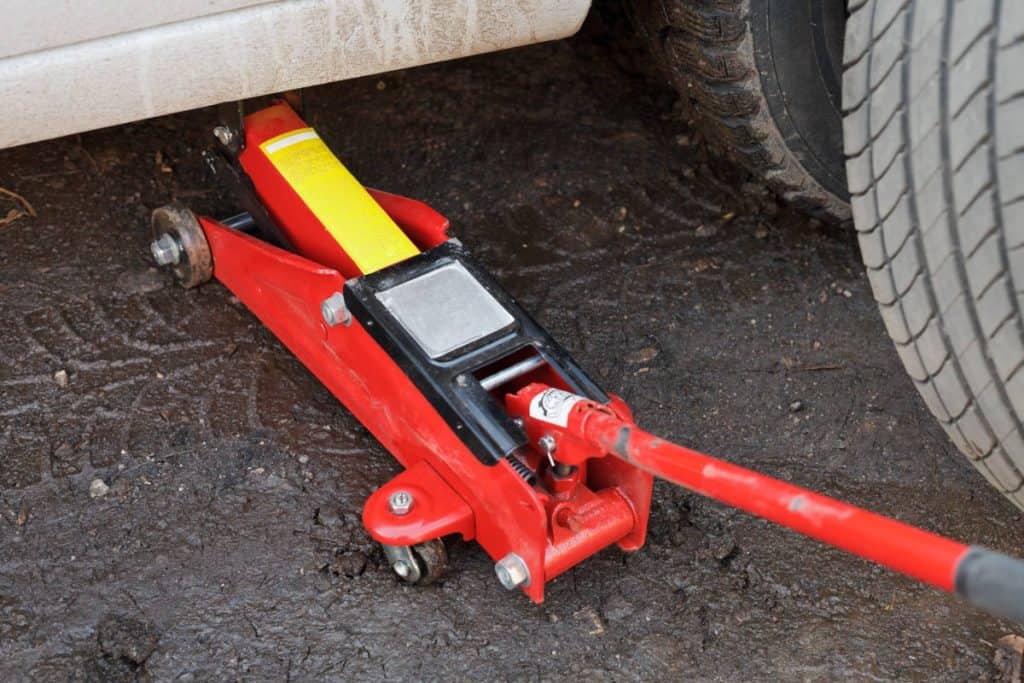
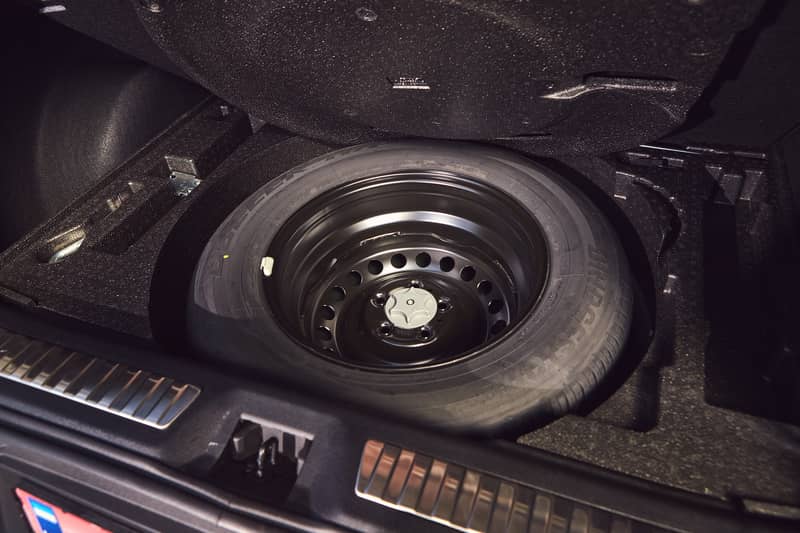
- Spare tires
- Car jacks
- Roof cargo boxes
- Audio equipment (ex. radio and speakers)
- Air conditioning and heating components and wiring
- Package trays
- Windshield wipers and wiper motors
Most of these are simple items you can easily take out of your car with simple or no tools. Others might require a little more knowledge and specialized tools but shouldn’t be too difficult for the everyday person.
Before you remove any component, confirm that it is safe and legal for your car to operate without it. For example, it is illegal in most states to drive a car without windshield wipers.
Another way you can help your car drop some major pounds is by removing elements of its interior. An easy place to start would be to remove any unnecessary seating, such as the back seat. More extreme options would be to essentially gut your car’s interior and remove its trim, carpeting, and other features.
2. Swap Heavy Components for Lighter Alternatives
There are some components that are crucial to your car’s functionality and, therefore, can’t be removed completely. Luckily, there is the alternative option of swapping heavier parts for a lighter choice.
Some of the most common options:


- Different seats
- New wheels
- Lightweight engine parts
- Lightweight carbon-ceramic brakes
- Disc brake rotors
- Aluminum hats
Oftentimes, swapping out these parts has the bonus benefit of being even more efficient than their heavier counterparts.
3. Replace Your Paneling and Windows
Another daring but highly effective option to reduce your car’s weight would be to replace its paneling and/or windows.
Polycarbonate Windows
Most cars feature windows made from highly durable glass, but few people know that not only is polycarbonate a viable, lightweight material and is more impact-resistant than standard glass. However, it can scratch more easily and degrade under UV light unless properly coated. It’s important to note that polycarbonate windows may not be street-legal for use in windshields in many regions due to safety regulations.
The same principle applies to your car’s paneling.
Carbon Fiber Panels

Components like the bonnet and boot are often made using heavy steel. However, If you have the budget, replacing these with carbon fiber panels can significantly reduce weight, often by as much as 50-70% per panel compared to steel. The exact weight savings will depend on the specific component and vehicle model.
A more cost-effective option would be to opt for fiberglass panels, but these might require painting and other additional steps.
4. Reduce Fuel Levels
Arguably the easiest way to immediately reduce your car’s overall weight would be to limit how much fuel it carries; a car with a full fuel tank is going to weigh more than the same car with less fuel.
Of course, having less fuel in your car is only going to reduce its weight by a few grams, but if you can manage to get by with half a tank of fuel or less, and every gram matters, then it’s an easy option. It is also easier to reverse than some of the more involved methods listed above.
5. Limit Driver and Passenger Weight
While there are countless alterations you can make to your car to ensure it weighs as little as possible on its own, you also have to consider how much weight its driver and passengers are adding.
If you’re simply trying to reduce your car’s weight to improve its fuel efficiency, then this method won’t really matter. In high-stakes racing, every pound counts, so minimizing the number of passengers and considering the driver’s weight can be important. However, for everyday driving, this factor typically has minimal impact on overall performance.
6. Legality and Safety Warnings:
Before removing any critical component, such as airbags, seatbelts, or AC/heating systems, ensure that your vehicle remains compliant with safety regulations and road laws. Removing certain components may significantly compromise your vehicle’s safety and legality for street use. Always prioritize safety and consult with a professional if unsure.
What Are the Pros and Cons of Reducing the Weight on My Car?
Before you start removing or replacing parts of your car to reduce its weight, it’s important to weigh the pros and cons of the decision. In reality, there are several additional benefits and drawbacks to having a lightweight car.
Pros of Reducing a Car’s Weight
There has been a noticeable shift in the world of automotive manufacturing from heavy, bulky models to lighter and more aerodynamic ones. This is due in large part to the reduction of a car’s weight through innovative body designs and the incorporation of lightweight materials, which delivers multiple advantages.
Pros:
- Increased fuel efficiency: A lighter car requires less energy to move at any given speed, resulting in improved fuel economy.
- Improved handling and performance: Light cars can turn faster and with greater precision than heavier vehicles, making them well-suited for city driving and tight turns.
- Enhanced Performance: With less weight to work against engine power, accelerations will be quicker, and brakes more responsive.
- Reduced wear and tear on components: Less weight means a reduced strain on parts, which equals longer service life and reduced maintenance costs.
- Increased safety: many alternative lightweight materials, such as carbon fiber, fiberglass, and aluminum, ensure improved handling that provide drivers with better control during extreme weather and road conditions, or when attempting to avoid crashes or obstacles.
- They also tend to have better energy absorption and are equally, if not more, durable than their heavier counterparts (ex. steel).
- Decreased emissions: Heavier vehicles emit more pollutants into the atmosphere than lighter ones because they require more fuel for acceleration.
Each of these can benefit any car or driver, regardless of your motivation to reduce your car’s weight. Many people will make this decision with the intent of creating a speedy race car, but even cars you use for everyday commutes can be altered to reap the rewards of a lightweight drive.
Cons of Reducing a Car’s Weight
You might be sold on the idea of reducing your car’s weight after reading the long list of pros we’ve provided. However, we strongly urge you to consider the drawbacks of the decision before you start making modifications.
Cons:
- Reduced crash protection: lightweight materials might make your car safer in terms of handling, but when it comes to crashes, heavier cars are almost always safer. While generally heavier vehicles have larger bumpers and can handle more energy in a collision, lightweight vehicles come out today with improved safety features and crumple zones to protect passengers much more effectively. Keep in mind that crash safety involves a lot more than just vehicle mass.
- The additional weight also means heavier cars carry more momentum, which allows them to continue moving past obstacles like lighter cars rather than taking full force from a dead stop.
- Increased noise and vibration: removing sound-dampening parts to reduce your car’s weight will increase the amount of vibration traveling through it. Light-weight materials also tend to create more noise and vibration, resulting in an overtly loud driving experience.
- Reduced comfort: if you’re essentially gutting your car to reduce its weight, you’re likely to remove comforts such as AC/heating machinery, seat cushions, stereos, etc.
- Cost of alterations: there are some ways you can reduce your car’s weight by yourself with little effort, but more extensive removals, replacements, and other alterations will come with a cost. This might include the cost of new materials, tools, or labor if you’re hiring a professional for help. For example, carbon fiber components, while highly effective at reducing weight, are often prohibitively expensive for the average car owner.
Considering these cons is crucial, as they involve the overall safety of your car as well as your driving experience. Budget is potentially the most important factor to consider, especially if you’re leaning more towards installing lightweight alternatives over stripping your car’s components.
Is It Worthwhile to Reduce the Weight on My Car?
Now that you know the most important pros and cons related to reducing your car’s weight, the only obstacle standing in your way might be the question of whether this process is worthwhile.
Generally, reducing a car’s weight is more beneficial than not, but this is also highly dependent on why you want a lighter car, and what you’re willing to do to achieve this.
For example, if you’re stripping an old, dingy car you don’t care about so you can race it recreationally or competitively, then you probably won’t mind if it’s a little uncomfortable or features a bare interior as long as it’s fast.
Of course, this isn’t ideal for most people thinking about reducing the weight of their everyday car to improve its fuel efficiency or handling. In these instances, we’d recommend opting for a smaller engine or using more lightweight materials for your windows and paneling before you start stripping your car of comfort.
Safety also plays a significant role in this decision. Statistically, heavier cars are safer as seen by the reduced number of fatalities recorded as a vehicle’s size increases.
If safety is your number one priority when it comes to your car, then you’ll want to either leave your car as it is or consider upgrading a large model, like a van or SUV, but consciously choose one made with a smaller engine or other lightweight designs and materials.
Can I Reduce My Car’s Weight By Myself?
As we mentioned previously, the cost can be a huge deterrent for reducing your car’s weight, as this process can become very expensive very quickly if you’re paying for professional help. But can you avoid this by going a DIY route?
There are several methods the everyday person can perform without professional help that can reduce their car’s weight significantly. If you have a decent number of automotive tools and knowledge, the possibilities increase even more.
Most weight-reducing options that involve removing parts of your car, such as interior carpets and seating, can be done with simple tools and dedication. Still, you might want to look up an online tutorial to ensure you don’t accidentally damage anything important.
If you’re intent on replacing older car parts and modifying them rather than strictly stripping them down, then you’ll want to be honest with yourself about what is within your skill level, what you could learn, and what is best left to the professionals.
There’s also the factor that some things aren’t easily acquired through your basic auto shop. If you want to replace your windows or even your windscreen, you’ll likely need a professional mechanic to order and install them for you.
Conclusion
Reducing your car’s weight can make a noticeable difference in its handling, fuel efficiency, and eco-friendliness amongst other benefits. This is why many companies are pushing to create lighter vehicles without sacrificing safety or performance. If you’re interested in reaping these benefits and reducing your car’s weight, even if it’s only by a few pounds, try some of the methods discussed here.
References:
ChrisFix
Official Website of Canada
Insurance Institue for Highway Safety
Motor Trend
We Can’t Weight: 17 Weight Reduction Car Tips
Are Bigger Cars Safer Than Smaller Cars? What About SUVs and Trucks?